

Korean · Side
Traditional kimchi (Pogi Kimchi)
From the zcook collection
This Korean kimchi recipe shows you everything you need to know about how to make traditional cabbage kimchi. With this small batch recipe, you’ll find it not that difficult to make good authentic kimchi at home.
- Dairy-free
- Korean
- Side
- fermented
- kimchi
- pogi kimchi
- side dish
- Serves
- 24 to 36
- Level
- Hard
- Energy
- 35 kcal
Method10 steps
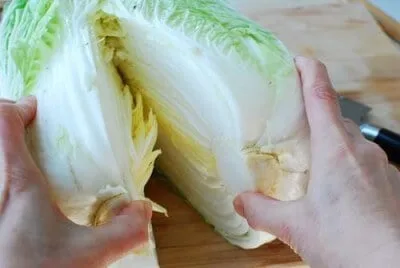
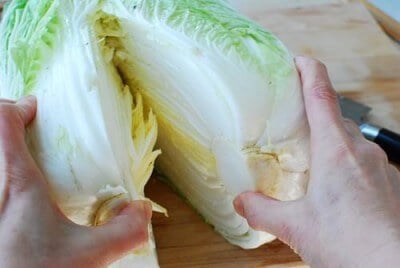
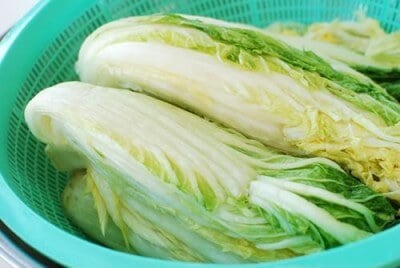
Step 1: Cut the thick white part of the cabbage in half lengthwise. Then, slowly pull it apart to separate into two pieces. Do the same for each half to make quarters. Running the knife through all the way would unnecessarily cut off the cabbage leaves.
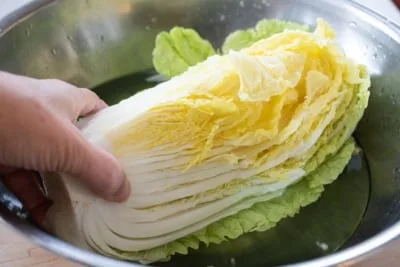
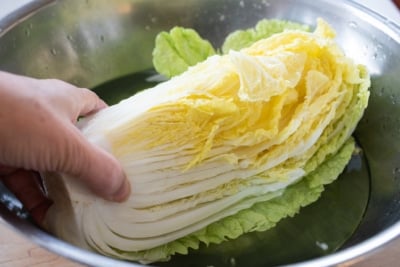
Step 2: In a large bowl, dissolve 1/2 cup of salt in 5 cups of water. Thoroughly bathe each cabbage quarter in the salt water one at a time, shake off excess water back into the bowl, and then transfer to another bowl.
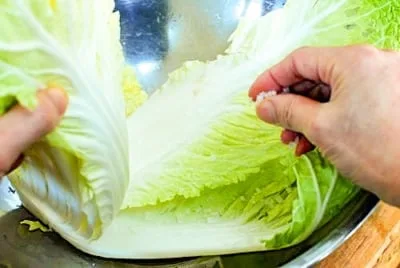
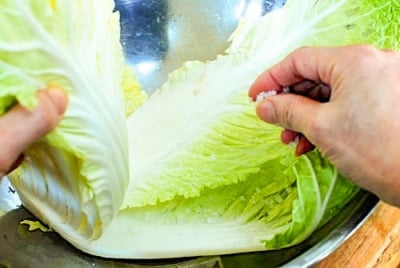
Step 3: Using the other half cup of salt and starting from the outermost leaf, generously sprinkle salt over the thick white part of each leaf (similar to salting a piece of meat). Try to salt all the cabbage quarters with 1/2 cup salt, but you can use a little more if needed. Repeat with the rest of the cabbage quarters. Pour the remaining salt water from the first bowl over the cabbage. Set aside for about 6 - 8 hours, rotating the bottom ones to the top every 2 - 3 hours.
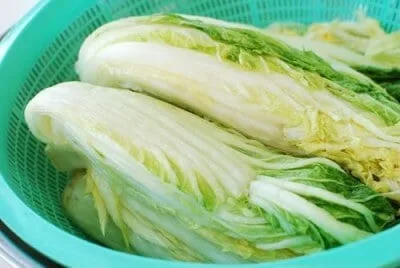
Step 4: The cabbages should be ready to be washed when the white parts of the leaves are bendable. It's okay to have a bit of resistance. Rinse thoroughly 3 times, especially between the white parts. Drain well, cut side down.
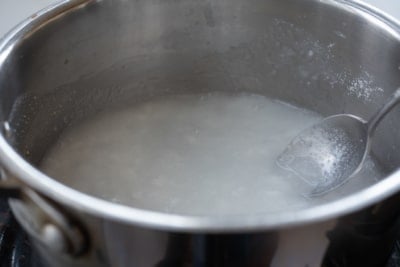
Step 5: Choose plain water OR optional kelp broth for the next three half-cup liquid uses. For kelp broth, boil the dried-kelp piece (1) in 1 1/2 cups water 5 minutes, remove kelp and cool. If less than 1 1/2 cups broth remains, top up with plain water as needed so there is enough for paste, seasoning and bowl swish. For the paste, mix 1 Tbsp glutinous rice flour with 1/2 cup selected water/broth and simmer low, stirring, until a thin paste forms. Cool the paste; reserve remaining broth if chosen.
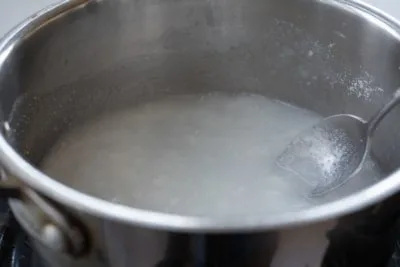
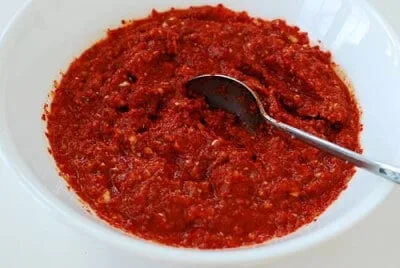
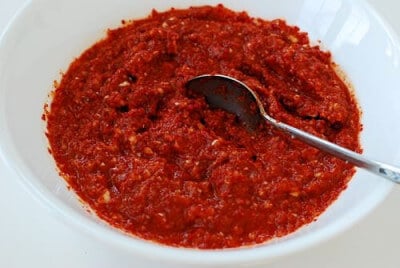
Step 6: Prepare garlic (3 tablespoons), ginger (1 teaspoon) and salted fermented shrimp (3–4). Mix gochugaru (1/2 cup), salted shrimp, fish sauce, garlic, ginger and optional finely minced raw shrimp with the cooled rice paste and the separate 1/2 cup selected plain water OR reserved kelp broth. Set aside until gochugaru hydrates and the seasoning becomes pasty.
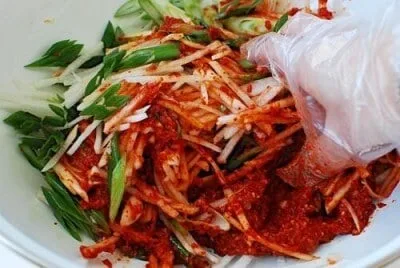
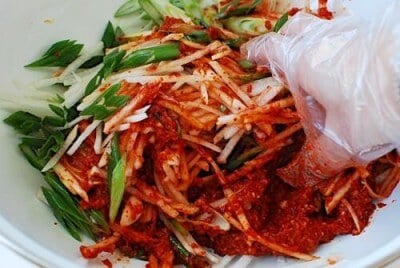
Step 7: Cut the radish and optional pear into matchsticks (use a mandoline if desired), transferring to a large bowl. Cut the scallions (3–4) diagonally into about 1-inch long pieces. Add the prepared seasoning mix to the radish, and mix well by hand. Throw in the scallions, and mix everything lightly. Taste a little bit. It should be a little too salty to eat as is. You can add salt, more salted shrimp or fish sauce, as needed. Let it sit for about 30 minutes to allow the flavors to meld nicely.
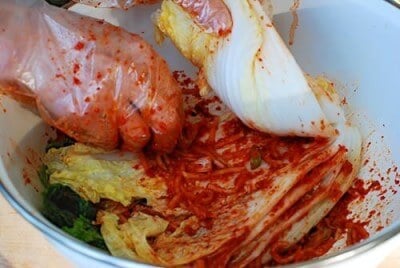
Step 8: Cut off the tough stem part from each cabbage quarter, leaving enough to hold the leaves together. Place one cabbage quarter in the bowl with the radish mix. Spread the radish mix over each leaf, one to two tablespoons for large leaves. (Eyeball the stuffing into 4 parts and use one part for each cabbage quarter.)
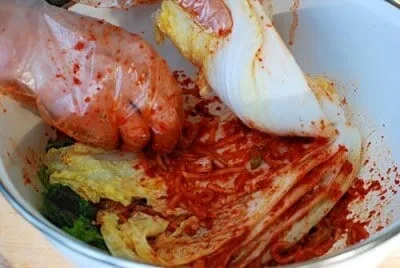
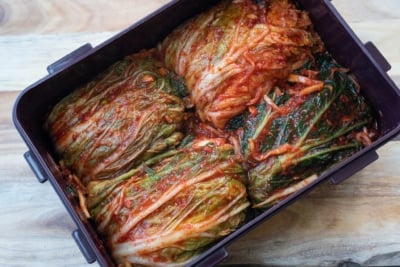
Step 9: Fold the stuffed leaf ends toward the stems and wrap each cabbage portion with its outermost leaf. Pack cut-side up in a suitable jar or airtight container and repeat all portions; loose large cabbage leaves may cover the top. Press down to remove air pockets. Swish remaining seasoning from the mixing bowl with the separate 1/2 cup plain water OR remaining kelp broth and pour over kimchi. Close the lid.
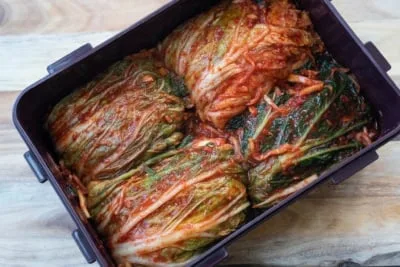
Step 10: Leave packed kimchi at room temperature for 1–2 days, depending on temperature and desired ripeness, then refrigerate.
Photos (1)
Comments
0 threadsSign in to join the discussion.


No comments yet. Start the discussion.