
Japanese · Dessert
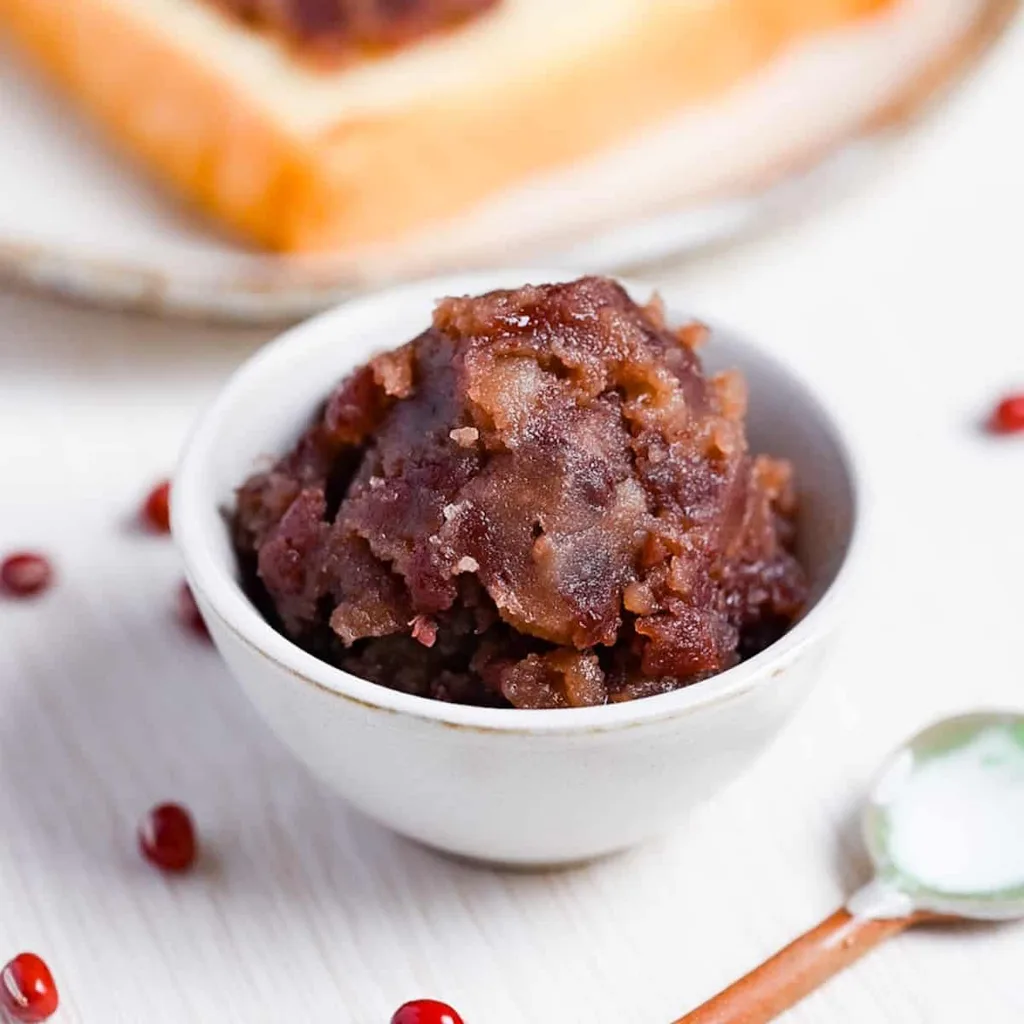
Homemade Tsubuan (Chunky "Anko" Sweet Red Bean Paste)
From the zcook collection
Chunky Japanese sweet adzuki paste made by boiling dry beans until completely soft, then lightly crushing them while adding sugar in quarters. Keep some beans whole, finish with a pinch of salt and chill the paste for use in a separate dessert.
- Vegan
- Gluten-free
- Dairy-free
- Japanese
- Tsubuan
- Anko
- Prepared Dessert Filling
- Prep
- 5 min
- Cook
- 1 hr 25 min
- Serves
- 1 batch of chunky bean paste; author reference of 4 filling portions (approximately 300 g)
- Level
- Easy
- Energy
- 182 kcal
Method15 steps
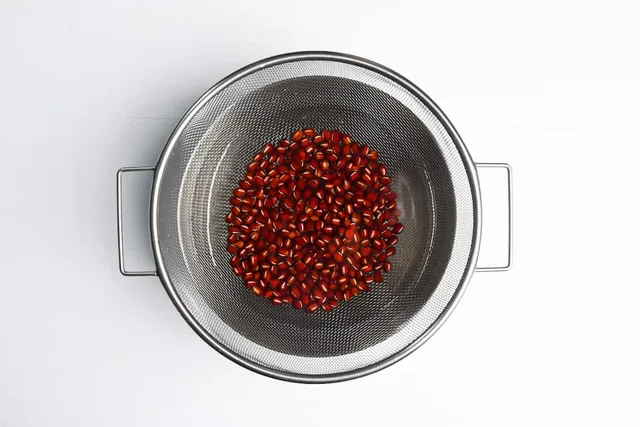
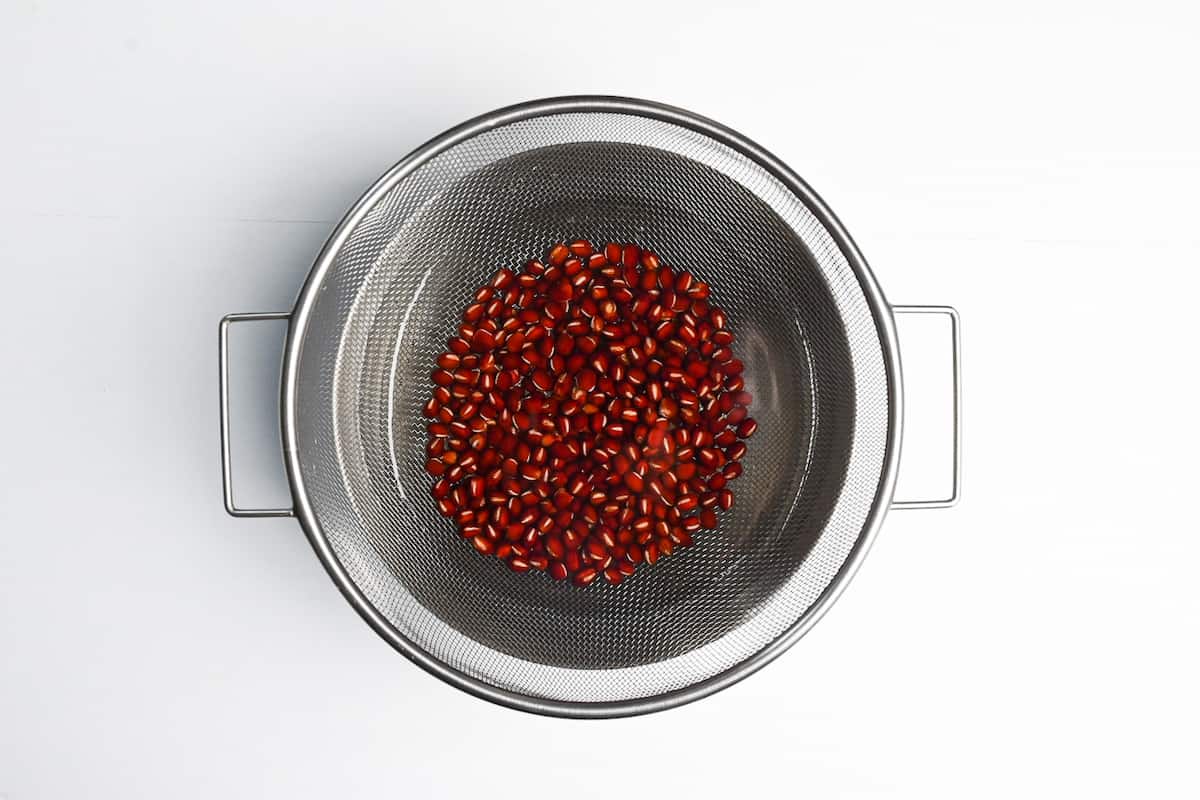
Step 1: Put the 100 g dry adzuki beans in a sieve over a bowl and cover with clean water. Swish, inspect and remove broken beans or debris, then drain. Repeat the washing two or three times.
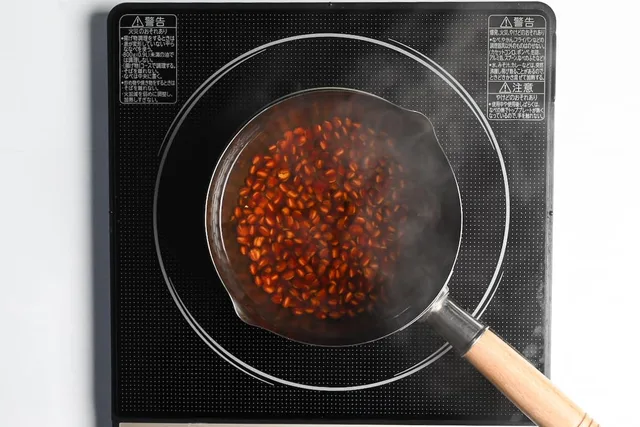
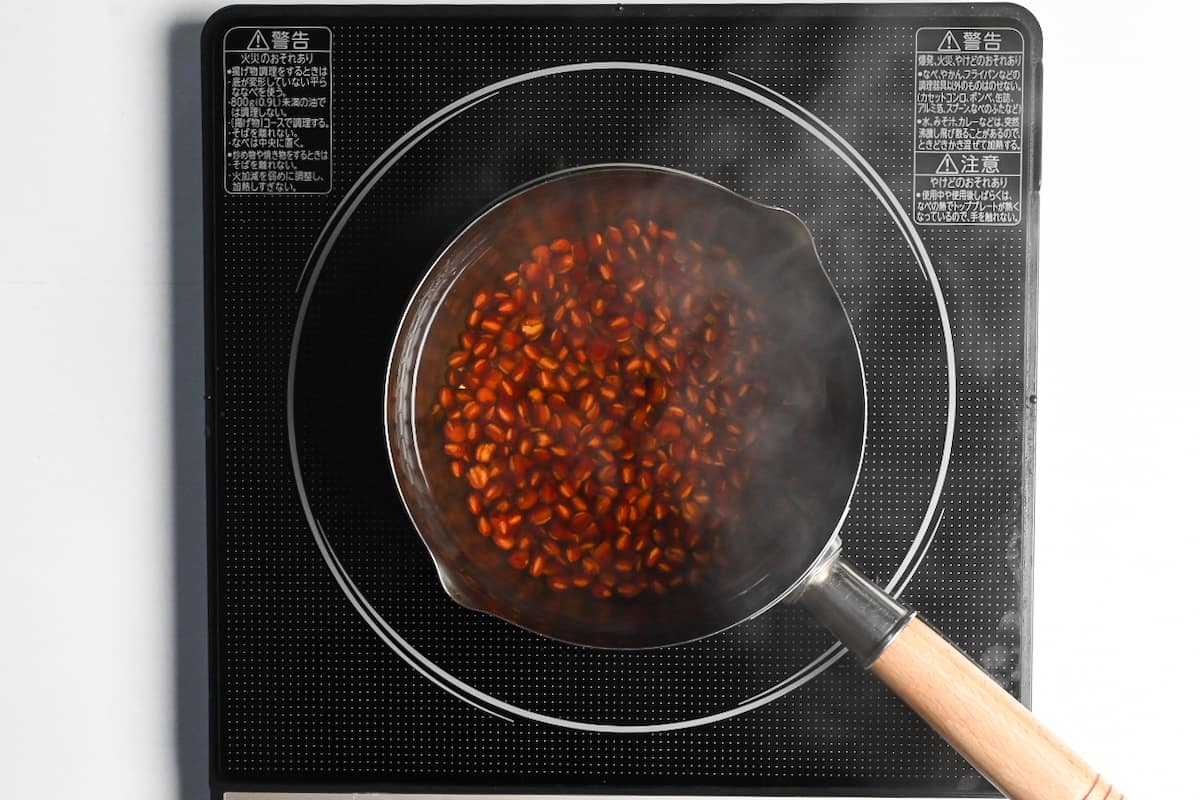
Step 2: Transfer the washed, drained beans from step 1 to a pot. Add fresh cold water, about three to four times the bean volume, to submerge them. Bring to a boil over medium heat, then boil for 10–15 minutes, checking from 10 minutes.
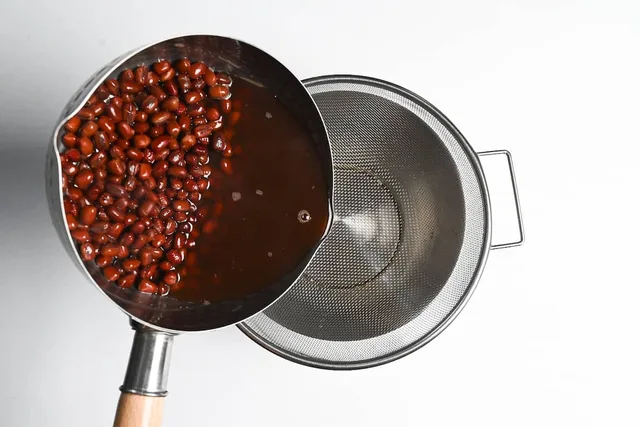
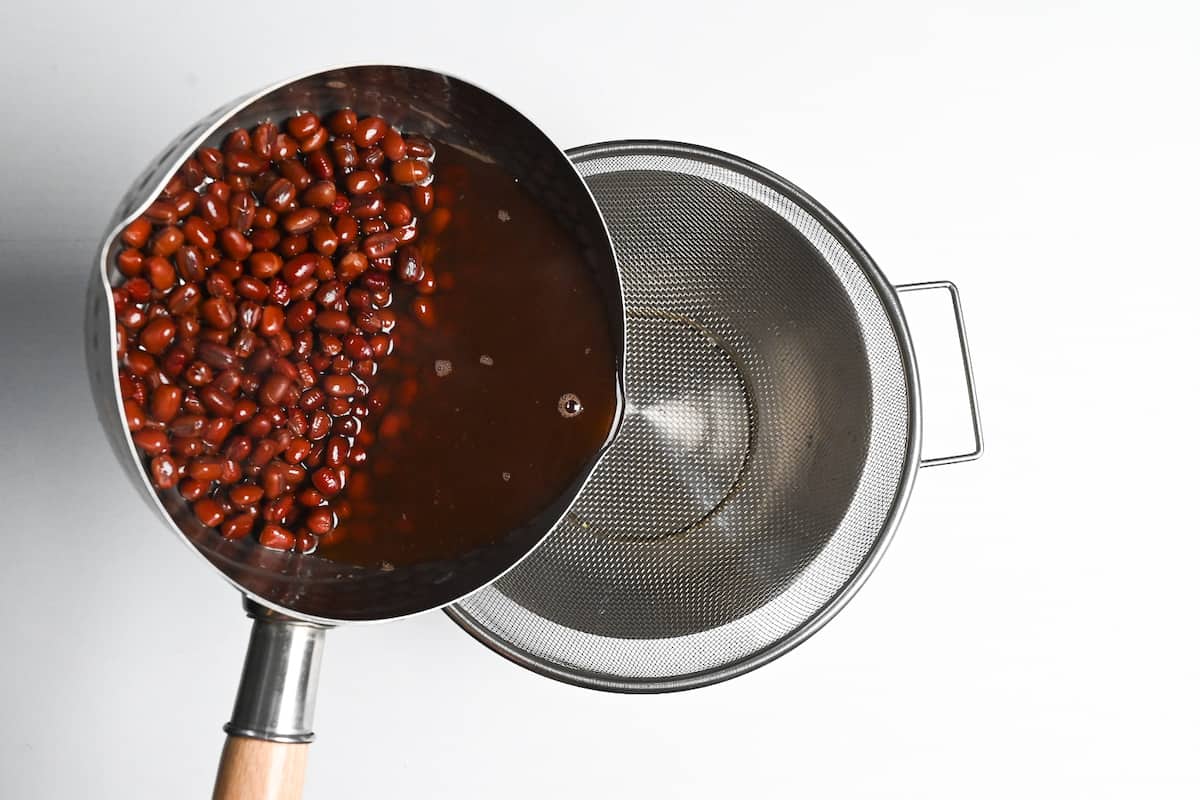
Step 3: Pour the beans and first-boil water from step 2 through a sieve, discarding this water.
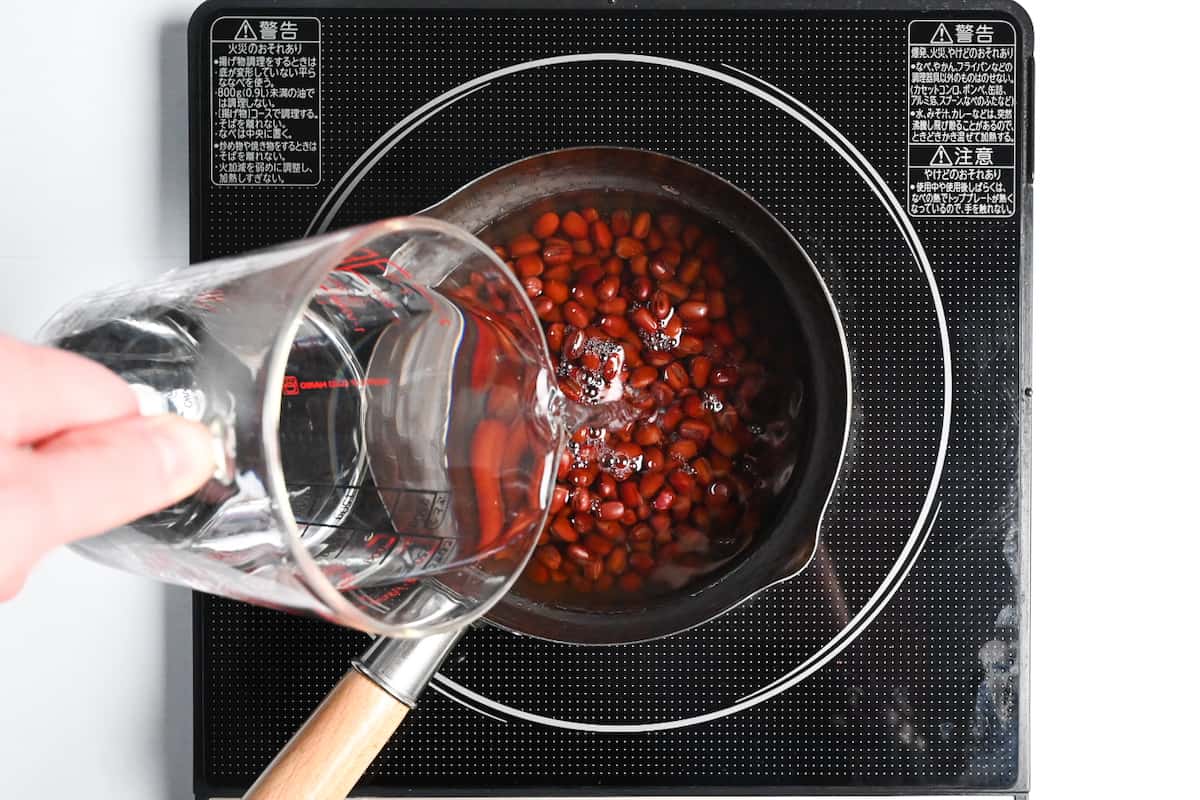
Step 4: Rinse out the pot, return the drained beans from step 3 and add the 750 ml fresh water for the second boil. Keep the beans submerged.
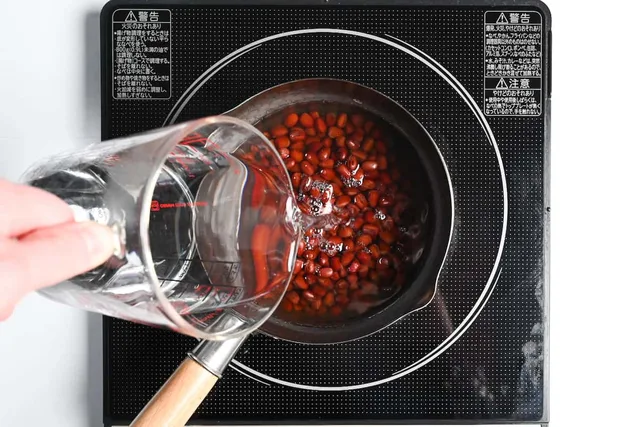
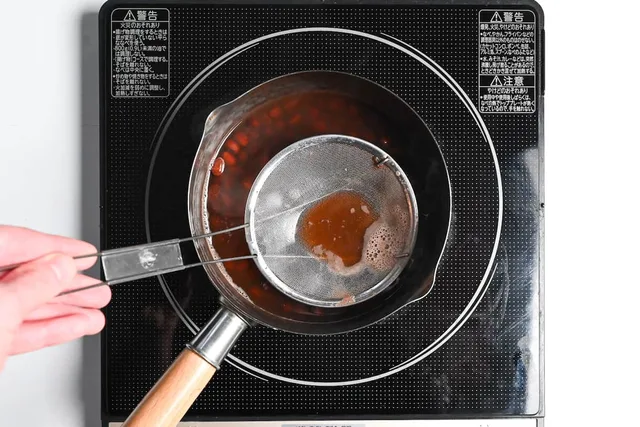
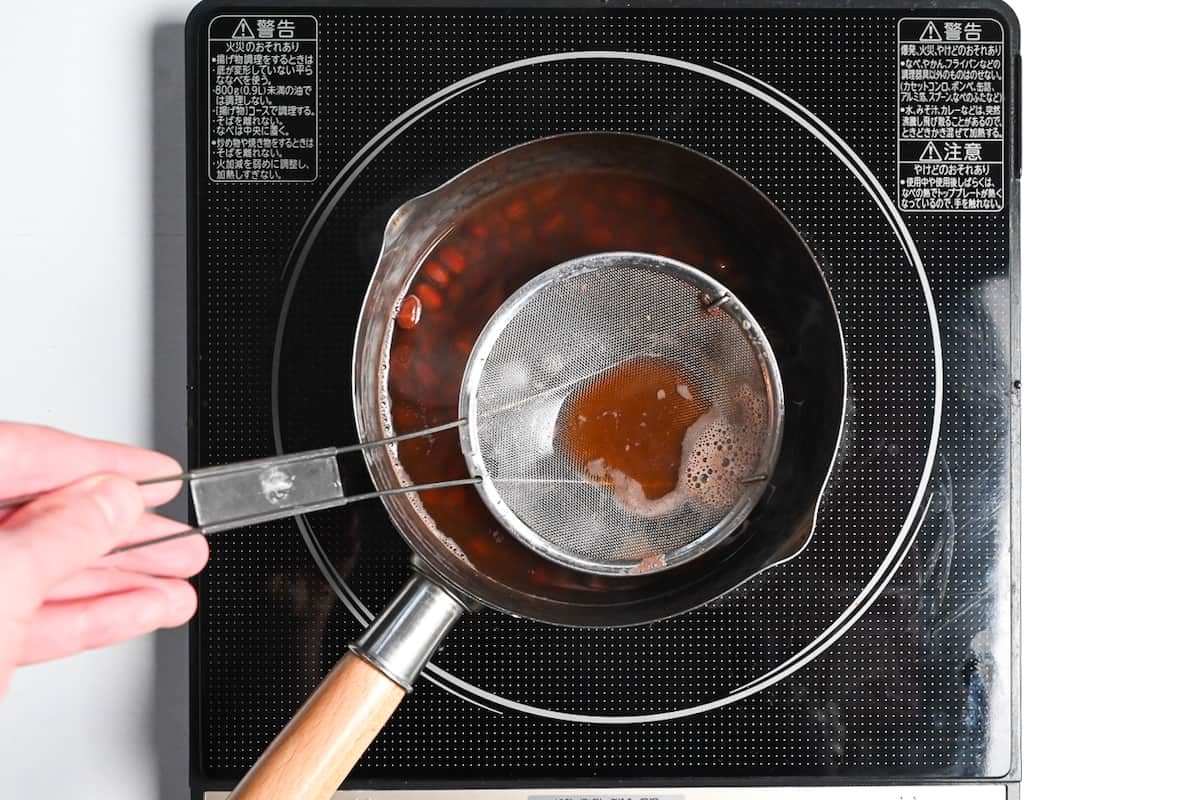
Step 5: Bring the beans and measured fresh water from step 4 to a boil over medium heat. Scoop off foam as it forms.
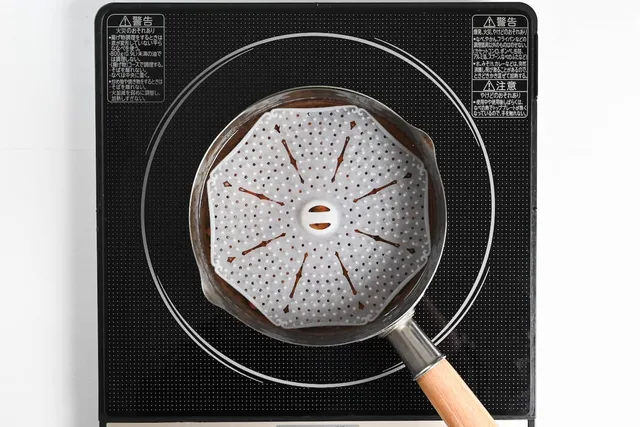
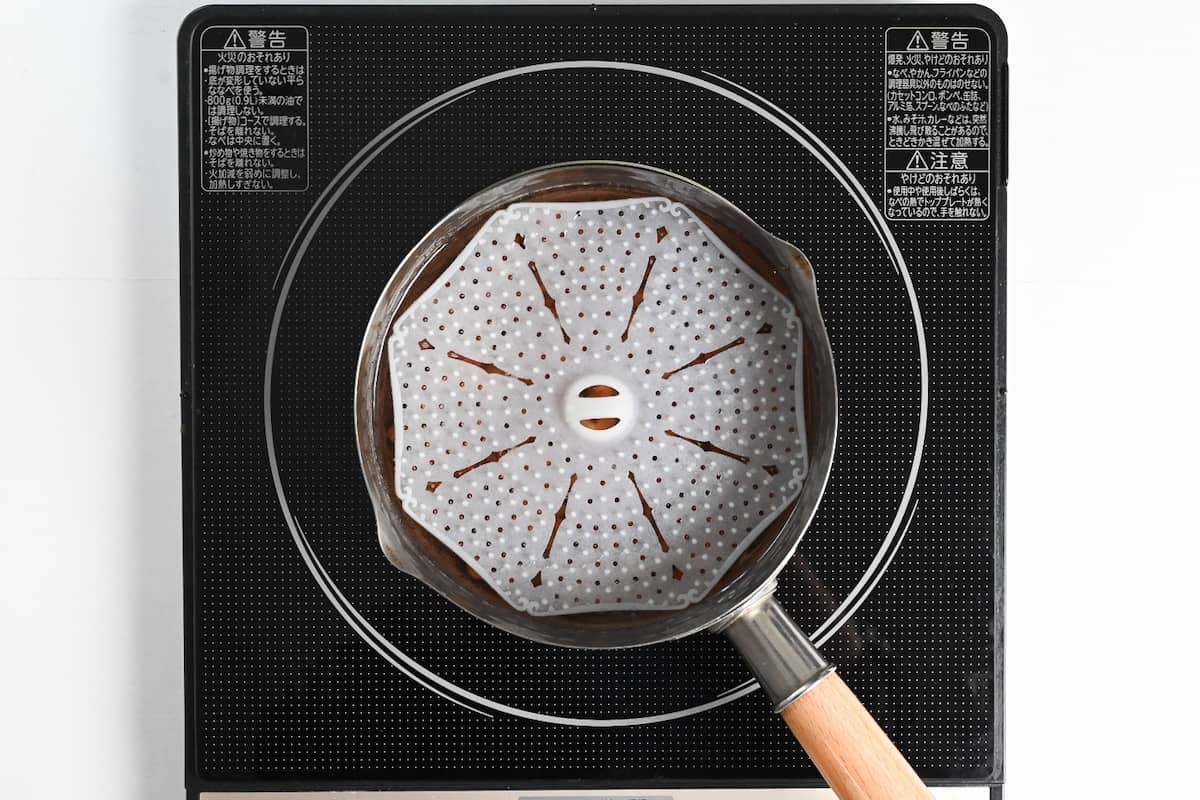
Step 6: Once boiling, lower the heat slightly and set a drop lid directly over the beans. Maintain a gentle boil, with visible bubbling rather than a rolling boil. Begin checking softness after 45 minutes; the author gives a 45–90-minute guide, usually about an hour. Stir and skim occasionally, adding small amounts of clean hot water as needed to keep the beans submerged.
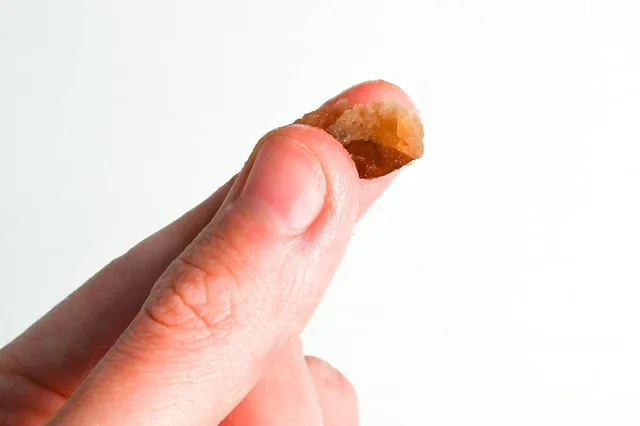
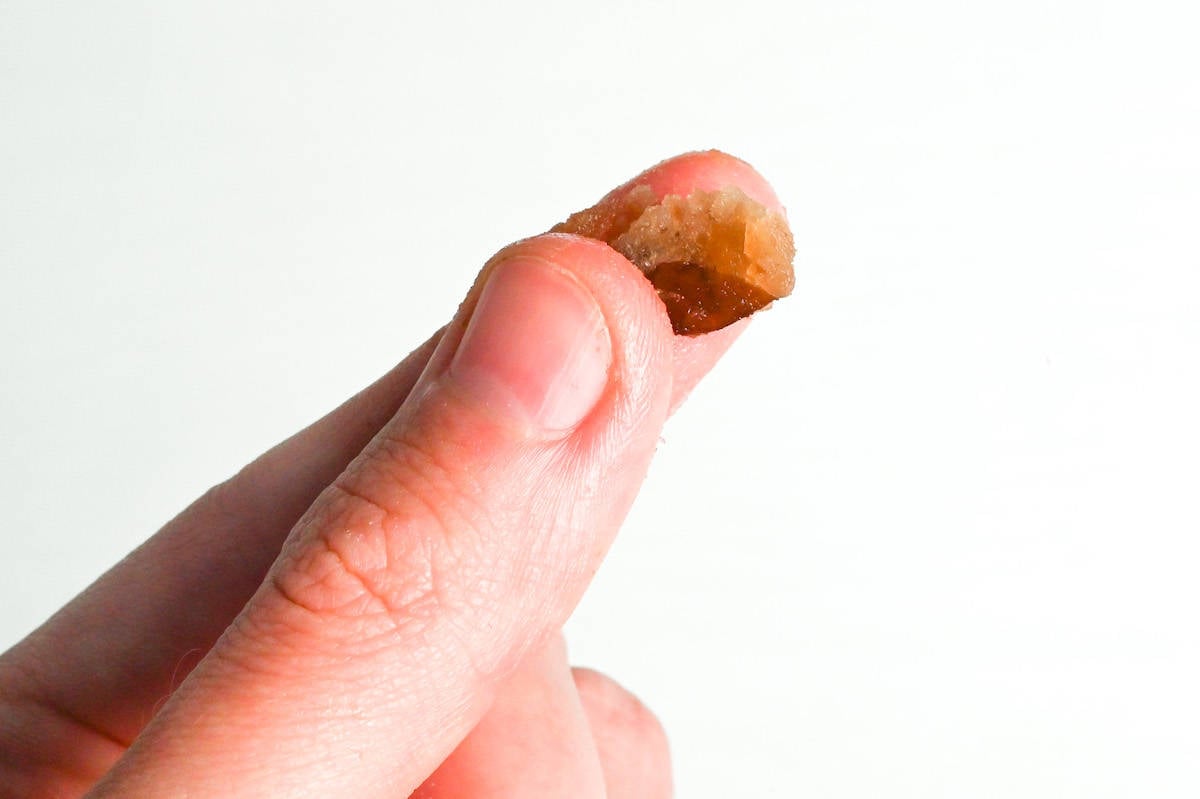
Step 7: At the 45-minute checkpoint, lift out a few large beans, rinse them briefly in cold water and press between thumb and forefinger. They are ready when they spread into paste with no firm core. If still firm, continue gently boiling and repeat the test every 10 minutes, keeping the beans submerged. Proceed only once fully soft.
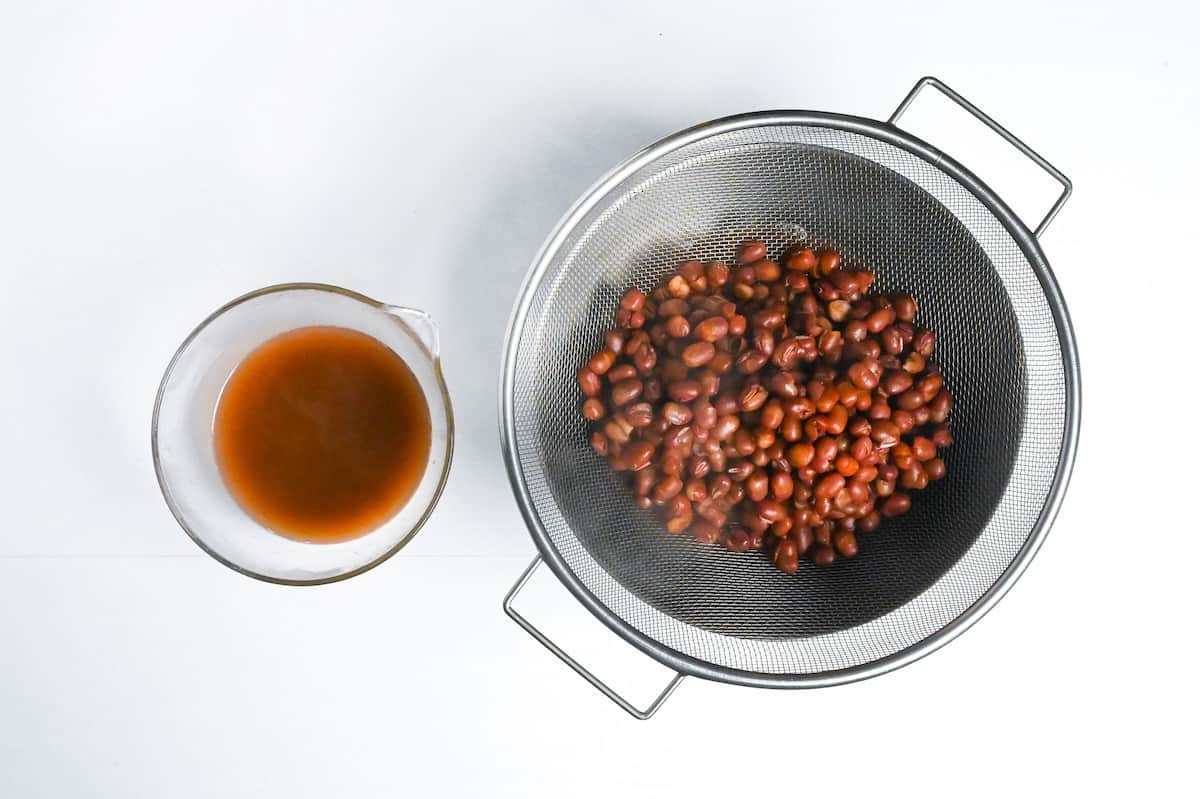
Step 8: Turn off the heat once the beans are fully soft. Reserve a few tablespoons of the cooking liquid in a heatproof bowl, then sieve the beans and discard the remaining liquid.
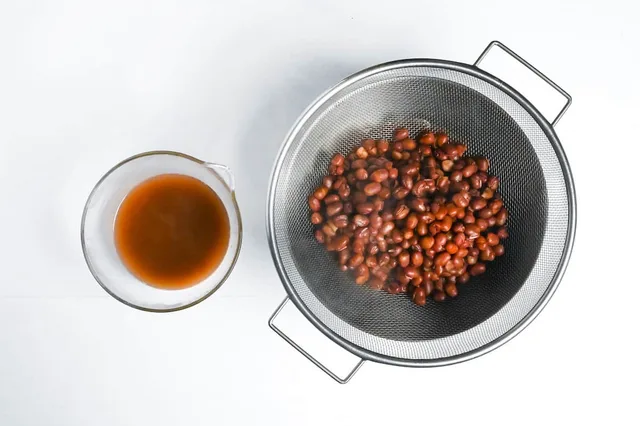
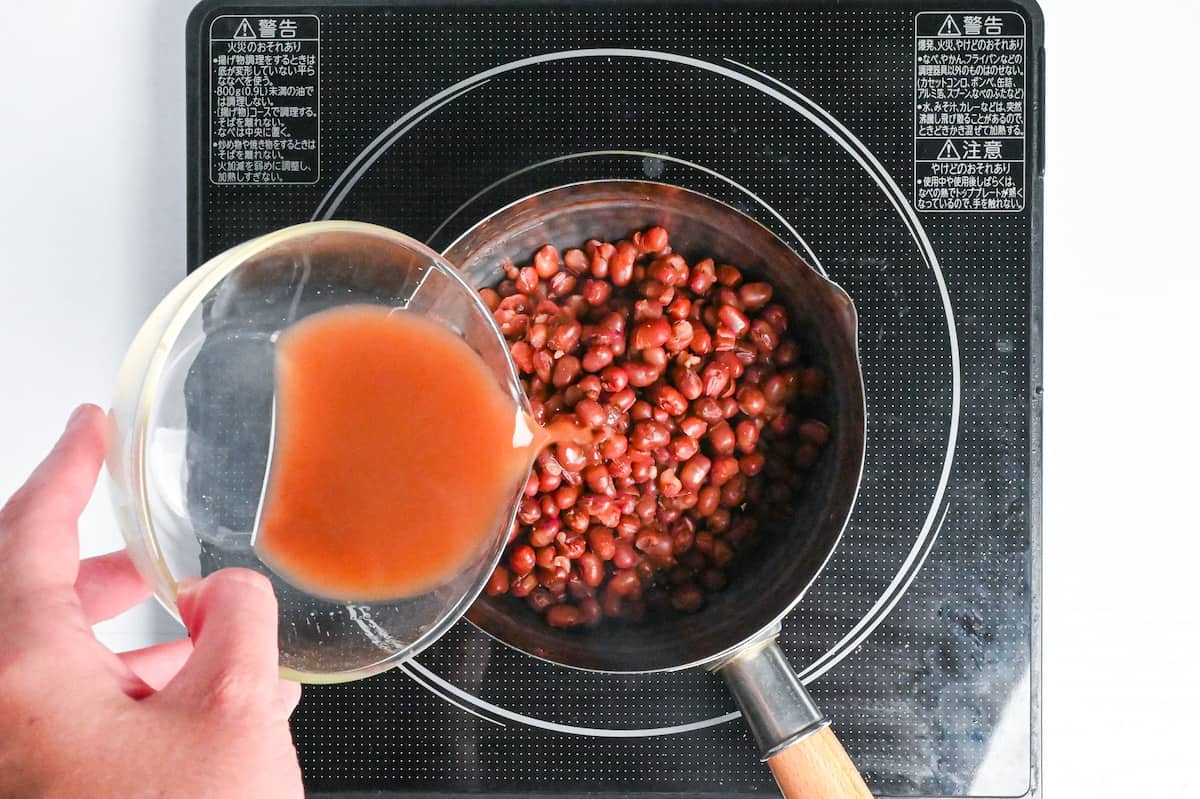
Step 9: Return the drained cooked beans from step 8 to the pot and add 1–2 tbsp of the reserved cooking liquid. Keep the rest of the reserved liquid for adjusting the paste later.
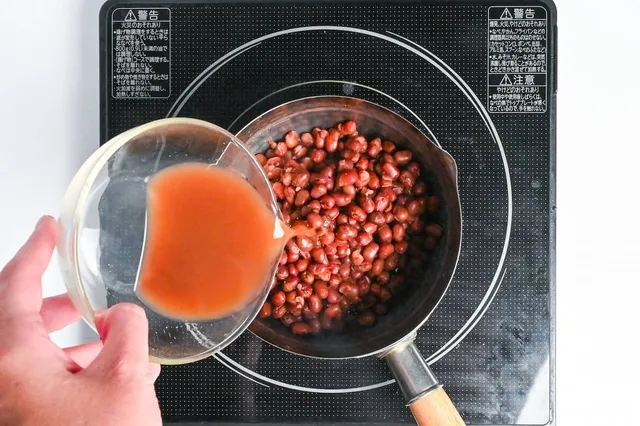
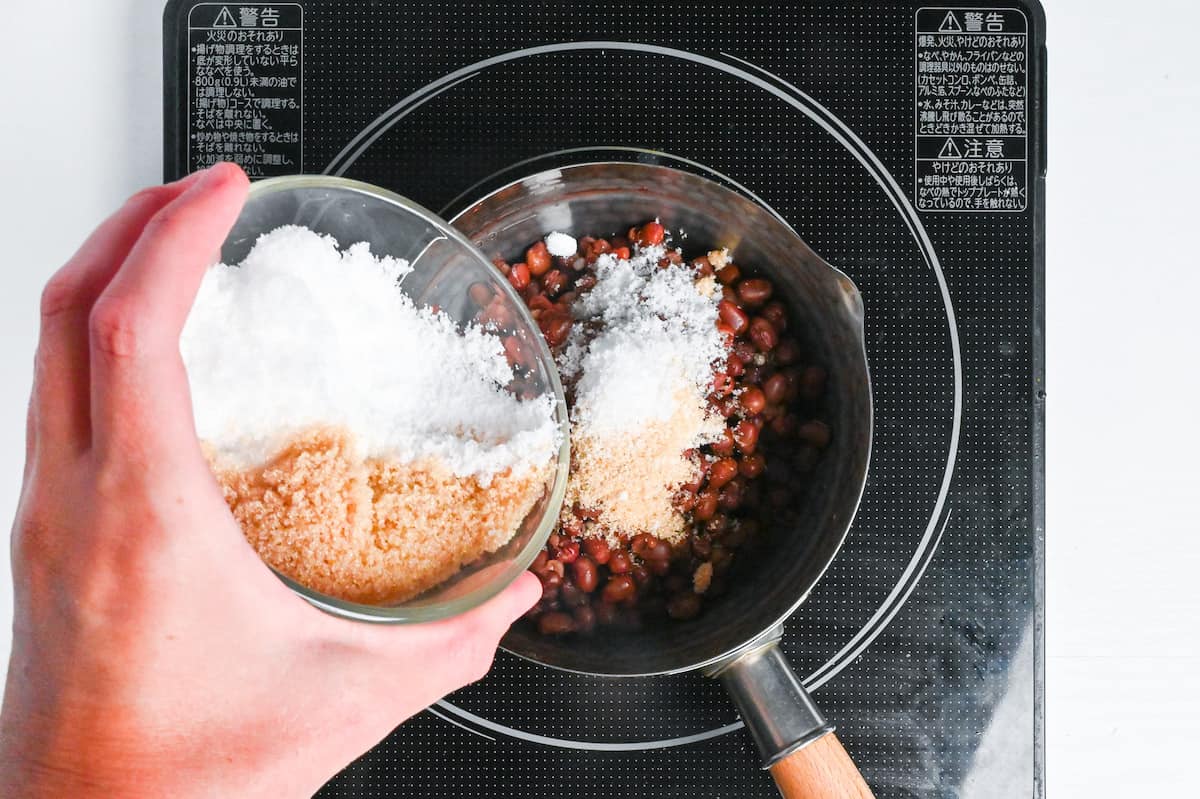
Step 10: Add about one-quarter of the 100 g sugar, about 25 g, to the cooked beans and returned liquid from step 9. Mix and heat over medium-low.
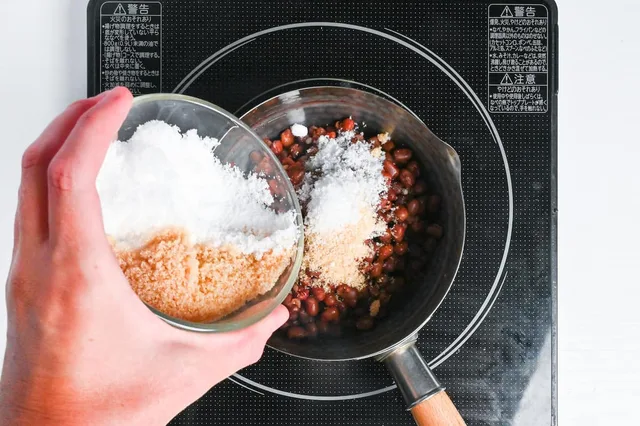
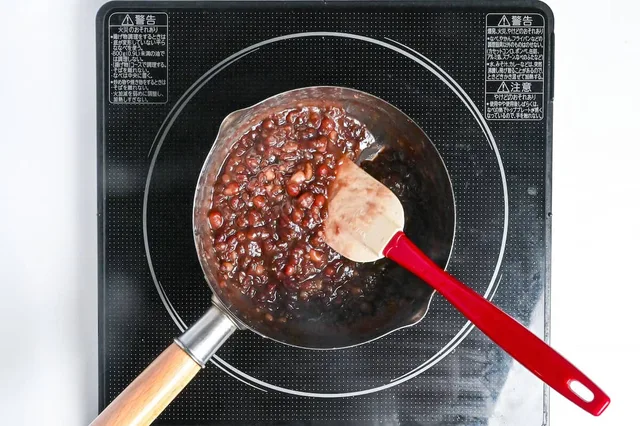
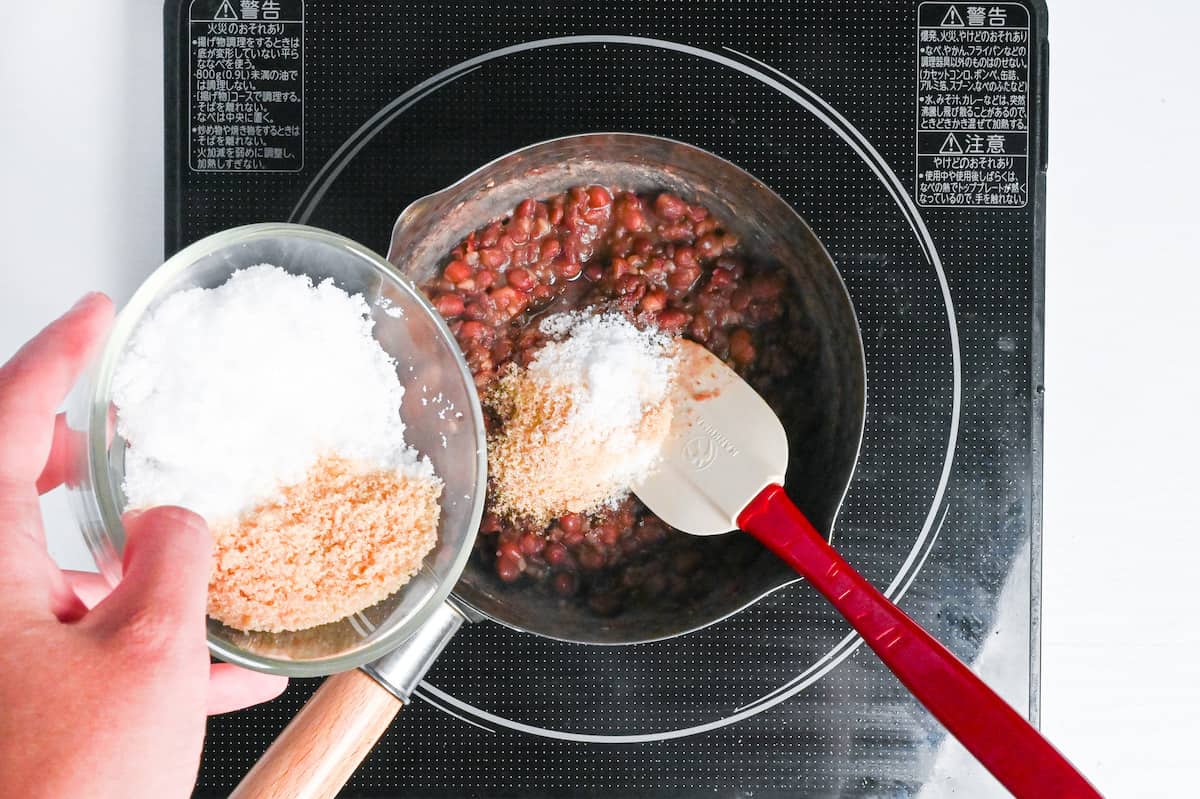
Step 11: Stir the sweetened beans from step 10 continuously, scraping the base and sides, and lightly crush some beans while leaving others whole. As the paste thickens, add the remaining sugar in three further quarter-stock additions, about 25 g each, until all 100 g has been added.
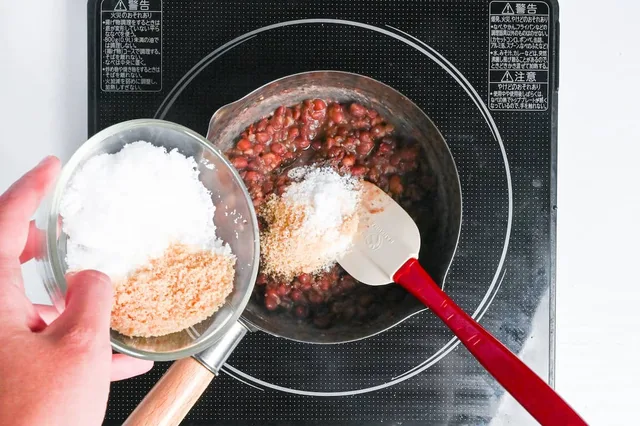
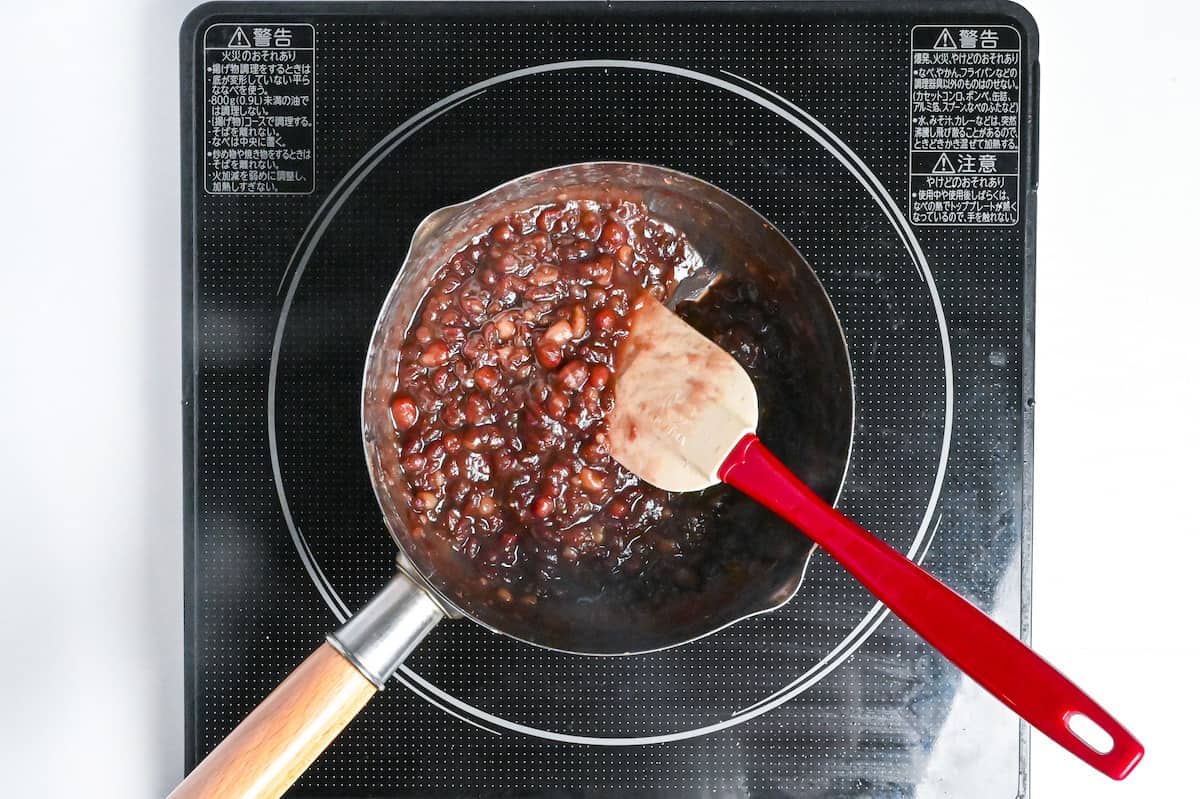
Step 12: Keep stirring the fully sweetened paste from step 11 over medium-low heat until slightly thickened but still loose, without watery separation. It thickens further as it cools. If too stiff, stir in a little more of the reserved cooking liquid from step 8.
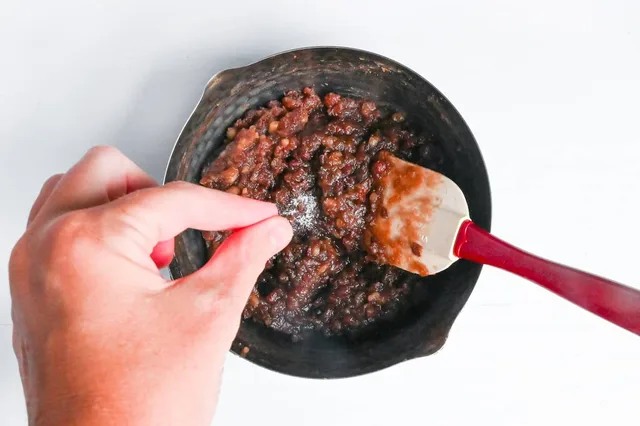
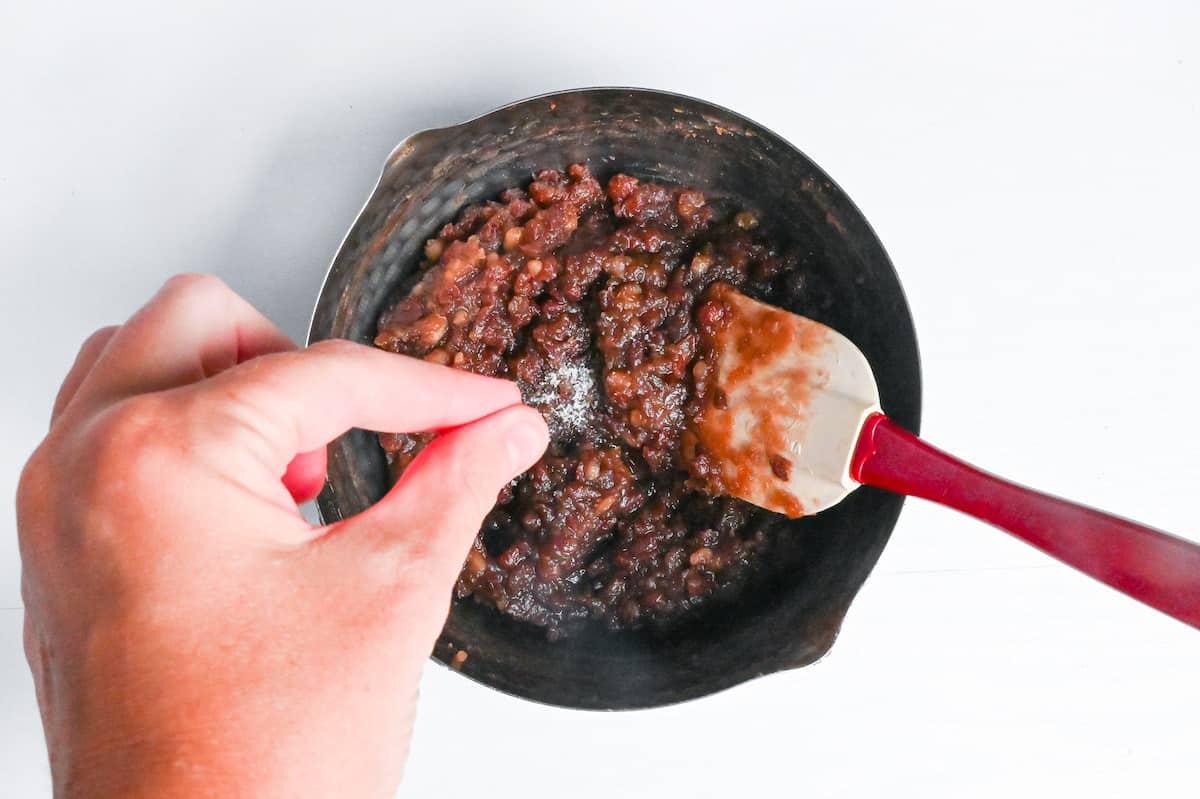
Step 13: Remove the pan from the heat, add the 1 pinch salt and mix it through the chunky paste from step 12.
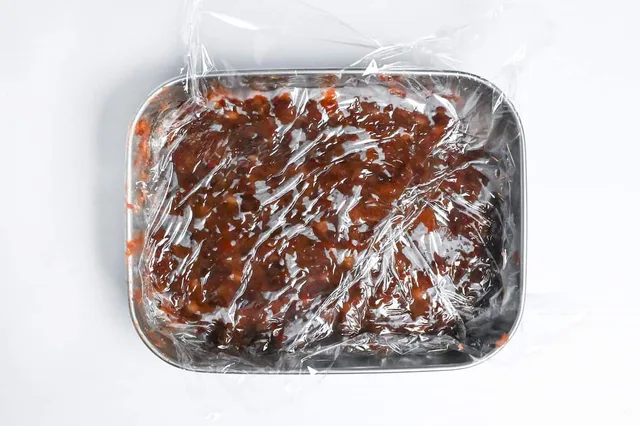
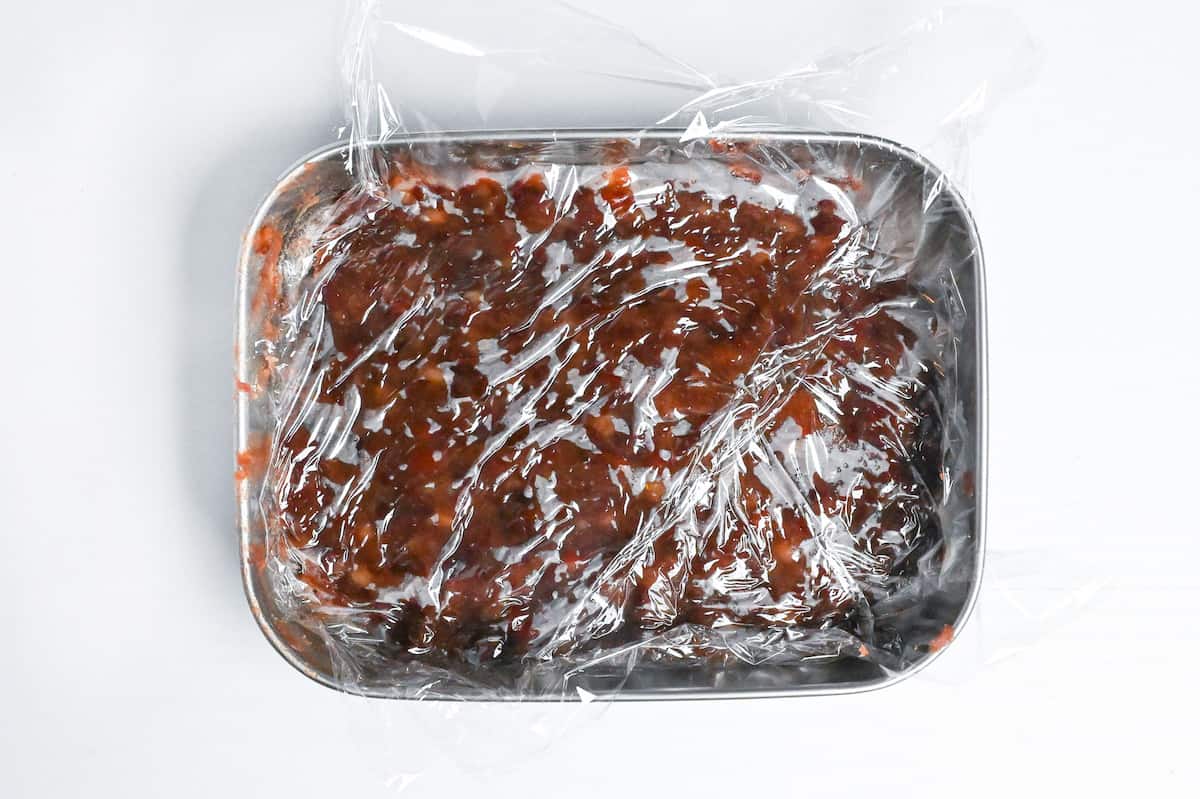
Step 14: Spread the finished paste from step 13 in a wide, shallow heatproof container and cover its surface to prevent drying. Refrigerate promptly after the initial steam subsides; the author’s 30-minute cooling guide is approximate, so keep cooling until cold. Seal and refrigerate for up to 3 days, or divide into convenient portions and freeze for up to 1 month.
Step 15: Use the chilled tsubuan from step 14 as a filling or topping in a separate dessert recipe. Thaw frozen portions overnight in the refrigerator, or in a microwave immediately before use; keep unused paste refrigerated.
Photos (1)
Comments
0 threadsSign in to join the discussion.
No comments yet. Start the discussion.