
Russian · Bread
Basic Russian Vareniki or Pelmeni Dough (Russian Pierogi)
From the zcook collection
A milk, egg and sour-cream dough for vareniki or pelmeni, with shaping and boiling guidance using one separately prepared filling of your choice.
- Russian
- Ukrainian
- Dough
- Dumplings
- pelmeni dough
- Serves
- 1 batch of dough
- Level
- Medium
Method10 steps
Step 1: Whisk the 1 large egg with 2 tablespoons sour cream until well combined.
Step 2: Whisk all 1¼ cups 2% milk and ¾ cup water into the egg-and-sour-cream mixture. This uses the article’s 2% milk version.
Step 3: Using a spatula, stir all 5 cups dough flour into the liquid mixture, adding it about 1 cup at a time until a dough forms. Keep the separate additional flour for dusting.
Step 4: Turn the dough onto a lightly floured surface. Knead by turning and folding it with a dough scraper for about 6–8 minutes, dusting with some of the separate additional flour as needed. Stop when the dough is soft and no longer sticks to your hands. The approximate 1-cup dusting allowance also supplies later rolling and the board; do not force it all into the dough.
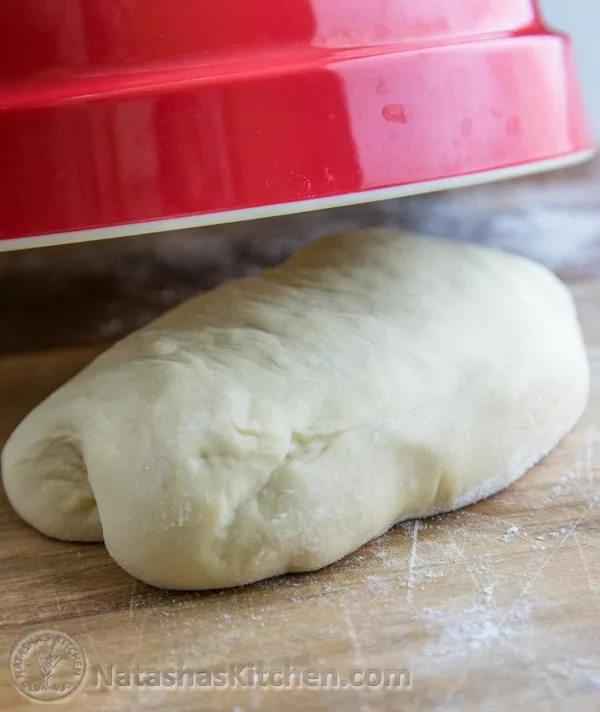
Step 5: Cover the kneaded dough with an overturned bowl and rest at room temperature for about 1 hour. This is the completed dough component; the following steps guide shaping and cooking with a separately prepared filling.
Step 6: Cut the rested dough into 4–6 portions. Work with one portion at a time and keep the others covered. Choose ONE separately prepared filling: potato-onion, blueberry, cherry, or pork-and-turkey dumpling filling. This recipe supplies the dough, not the filling formula.
Step 7: Take one covered dough portion and form it into a log. Cut off pieces slightly larger than a gumball. Dust the rolling pin and board lightly from the additional flour allowance, then roll each piece to about ⅛ inch (3 mm) thick and 3 inches (7.5 cm) across. Keep unworked dough covered.
Step 8: Add some of your ONE selected ready filling to each rolled circle, leaving enough clean dough at the edge to seal. Fold over into a crescent and pinch the edges tightly. For meat-filled pelmeni, bring the two corners together and pinch. Place this first batch on a board lightly dusted from the same additional flour allowance. No per-dumpling filling amount or whole filling yield is specified.
Step 9: Bring a large pot of water, salted to taste, to a boil. Add the first shaped batch without crowding and let the dumplings rise to the surface. Then boil for a further 2–3 minutes. This is a checkpoint after floating, not a guaranteed total: if the pork-and-turkey filling contains raw meat, continue as needed until a thermometer in the filling reads 74°C (165°F). Lift out with a slotted spoon. Drizzle with melted butter if desired. Potato dumplings may have the separately ready bacon-onion-butter topping; fruit dumplings may be dusted with sugar and served with sour cream; meat dumplings may be served with vinegar or ketchup.
Step 10: Repeat the rolling, filling and boiling in steps 7–9 with the remaining covered dough and the same selected filling. Use more of the additional dusting flour, boiling water and selected serving toppings only as needed. Keep the first cooked batch and later batches together for serving; the number of dumplings depends on the portions and filling. To freeze uncooked dumplings instead, freeze them separately on a floured board, then transfer the firm dumplings to a freezer bag; cooking time from frozen is not specified here.
Photos (1)
Comments
0 threadsSign in to join the discussion.

No comments yet. Start the discussion.