
Thai · Dinner
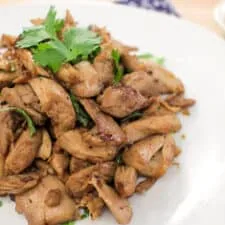
Grandma's Twice Cooked Chicken ไก่เค็ม
From the zcook collection
Chicken gently poached with aromatics, shredded and stir-fried with garlic, ginger and palm-sugar soy seasoning.
- Dairy-free
- Thai
- Dinner
- Total
- 55 min
- Prep
- 15 min
- Cook
- 40 min
- Serves
- 4 servings
- Level
- Hard
- Energy
- 310 kcal
Method10 steps · about 55 min
Step 1: If making the optional dipping sauce, pound its 2 tbsp chopped ginger, 2 garlic cloves, 2 Thai chillies and 2 tbsp cilantro stems into a paste. Stir in the separate 2 tbsp dip soy sauce, 2 tbsp lime juice and ½ tsp sugar.
Step 2: To poach the chicken (670 g): Add chicken, ginger (8 slices), garlic (3 cloves), and lemongrass top (if using) to a pot and add just enough cold water to cover the chicken. Add salt (½ tsp) and stir the water around a bit to mix the salt (so it's not just sitting as a pile on top of a piece of chicken!).
Step 3: Turn on the heat to medium high and bring the water to a VERY gentle simmer—water should be steaming lots but it should be very still, with few, gentle bubbles—175°F-185°F (80°C-85°C). Do not let the water boil.
Step 4: Poach about 20–30 minutes, until the chicken is fully cooked and its thickest part reaches 165°F (74°C). Remove from the broth and cool enough to handle. If not using straight away, refrigerate promptly. Reserve the broth for cooking rice if desired.
Step 5: Tear the chicken into small bite-sized pieces, making sure you take off all the meat even if the pieces are just tiny little shreds—that's the good part!
Step 6: To stir-fry the chicken: In a wok, add a little vegetable oil, garlic (6 cloves) and ginger (4 slices) and saute over medium heat for about 30 seconds or until you see the first sign of browning on the smallest pieces of garlic. Add palm sugar (4 tsp) and cook until the sugar is melted.
Step 7: Add the chicken, soy sauce (1½–2 tbsp), black soy sauce and black pepper (¼ tsp), then turn up the heat to high and keep tossing until the chicken has absorbed all the sauce and there is no more liquid pooling in the pan.
Step 8: Once the chicken is dry, let it sit on the pan for several seconds without stirring to get some caramelization on the chicken. Give it a flip and let it sit one more time to get more browning. Remove from heat.
Step 9: TASTE! Tasting is always important but it's more important in this recipe because all the seasoning is absorbed into the chicken, so the ratio between chicken to seasoning matters a lot. If you have larger chicken pieces, for example, you may need more salt, and vice versa. If you find that you need more salt at this stage, do not add soy sauce because it will create more liquid; add salt. If you need more sugar, add granulated sugar so it mixes in more easily.
Step 10: Once the seasoning is adjusted, toss in some chopped cilantro if you want (off heat) and serve with rice and dipping sauce. Enjoy!
Photos (1)
Comments
0 threadsSign in to join the discussion.


No comments yet. Start the discussion.