
Korean · Pasta
Bibim Guksu (Korean Spicy Cold Noodles with Gochujang Sauce)
From the zcook collection
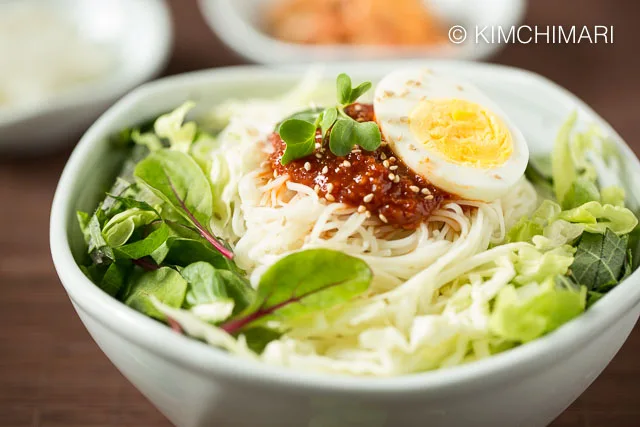
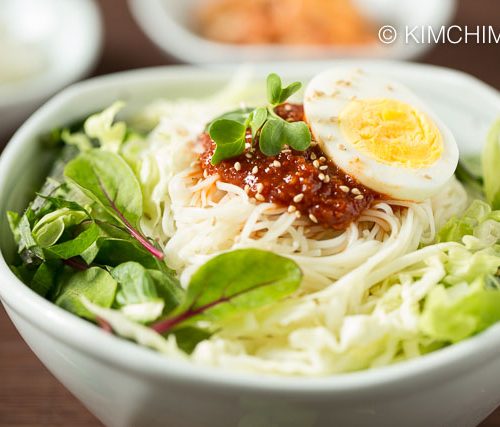
Bibim Guksu is a great summertime cold noodle dish that you can make with any kind of vegetables you have in your fridge. Sweet spicy sour Gochujang bibim sauce will wake up your appetite any time of the year!
- Dairy-free
- Korean
- noodles
- Total
- 18 min
- Prep
- 10 min
- Cook
- 8 min
- Serves
- 2 people
- Level
- Hard
- Energy
- 309 kcal
Method9 steps · about 18 min
Step 1: Bring the 5 cups noodle-cooking water to a boil and cook the 100 g somyeon according to the package; the source package specifies 2–3 minutes. Rinse the cooked noodles 3–4 times in cold water, then drain well.
Step 2: Peel the hard-boiled egg (1) and cut it in half. Reserve one half for each of the two noodle bowls.
Step 3: Clean and peel the onion (0.5 oz), garlic (1 clove) and apple. Cut the onion and apple into pieces that fit in your blender or chopper.
Step 4: Chop or blend until smooth. If you don't have a chopper, just grate all of them.
Step 5: Mix the pureed apple, onion and garlic with the bibim sauce’s 1 tablespoon rice vinegar, jin ganjang, guk ganjang (1 tsp), gochujang (1 Tbsp), gochugaru, 1 tablespoon sugar, honey (1 Tbsp) and 1 teaspoon sesame oil. Set aside or refrigerate until needed.
Step 6: Rinse the cabbage (1 cup), spring mix (1/2 cup), red-leaf lettuce (3) and cucumber (1/2 cup). If using, also rinse the perilla and chrysanthemum greens. Keep the optional sliced kimchi separate; it does not need rinsing.
Step 7: Thinly slice the cabbage, lettuce and optional perilla, julienne the cucumber and break optional chrysanthemum greens into smaller pieces. For the optional kimchi topping, mix the 1/4 cup sliced kimchi with its separate 1/2 teaspoon sesame oil and 1/4 teaspoon sugar.
Step 8: Optional radish pickle: sprinkle the 4 ounces thinly sliced radish with 1/2 teaspoon Korean sea salt and let stand for 10 minutes. Add the pickle’s separate 1 tablespoon sugar and 1 tablespoon rice vinegar, then mix.
Step 9: Divide the drained noodles between two bowls and arrange the prepared vegetables on top. Add bibim sauce and half a hard-boiled egg to each. Add the optional seasoned kimchi and pickled radish, or serve the pickle alongside. Garnish with daikon sprouts, sesame seeds and a swirl of additional sesame oil as desired, or offer the seeds and finishing oil at the table.
Photos (3)
Comments
0 threadsSign in to join the discussion.



No comments yet. Start the discussion.