
Vietnamese · Ingredient
Fresh Rice Noodles (Bun Tuoi)
From the zcook collection
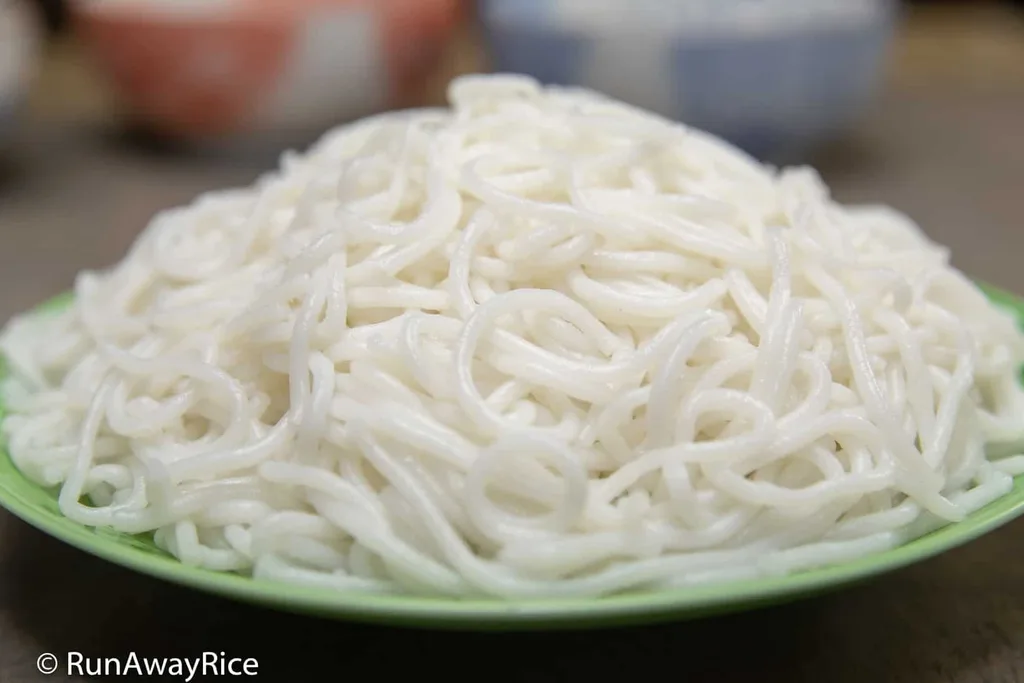
Fresh Vietnamese rice noodles made from a cooked rice-flour starter, tapioca starch and xanthan gum, extruded with a potato ricer and briefly boiled. A plain cooked-noodle component for soups, bowls, rolls or salads.
- Vegan
- Gluten-free
- Dairy-free
- Vietnamese
- Ingredient
- Rice Noodles
- Rice Vermicelli
- Prep
- 15 min
- Cook
- 15 min
- Serves
- About 2 1/4 lb fresh noodles; 4–6 portions
- Level
- Medium
- Energy
- 237 kcal
Method14 steps
Step 1: In a medium saucepan, whisk 1/2 cup of the divided regular rice flour (1/2 cup), 1/4 tsp salt, all 2 1/4 cups starter water and the separate 1 tsp vegetable oil until smooth and dissolved.
Step 2: Heat the starter from step 1 over medium-high heat, stirring constantly. It should thicken in about 2–3 minutes; keep stirring to a gentle bubbling boil. Turn off the heat and whisk for another minute until smooth. Set aside, then begin the 15–20-minute cooling wait, checking from 15 minutes before mixing the cooled starter into the flour.
Step 3: In a stand-mixer bowl, combine the remaining 1 1/2 cups regular rice flour, 1/2 cup tapioca starch and 1/2 tbsp xanthan gum. Mix on low for about 15 seconds to distribute the dry ingredients.
Step 4: Add the cooled starter from step 2 to the dry mix from step 3. With a flat beater, mix on low for about 30 seconds until mostly incorporated. Scrape the beater and bowl to work in all dry flour, then mix on medium for about 1 minute until fluffy.
Step 5: Fit the potato ricer with its smallest-hole disc for noodles, or a 1/16-inch-hole disc for thin vermicelli. Load some batter from step 4, filling the ricer three-quarters full. Keep the remaining batter for subsequent loads.
Step 6: Bring a large pot of the separate noodle-boiling water to a rapid boil. Add the separate 1/2 tbsp vegetable oil for boiling noodles.
Step 7: Prepare a large bowl or colander set in a bowl with ice and cold water beside the stove. Have a salad spinner or large draining colander ready in the sink before extruding the noodles.
Step 8: Swirl the boiling pot from step 6 with a spoon. Hold the loaded ricer from step 5 over the boiling water and press smoothly and quickly to extrude this load. Once empty, dip and swirl the ricer in the water to release hanging noodles. Gently stir; check from about 60 seconds and lift the noodles as soon as they float, usually within 60–90 seconds. Avoid overcooking and transfer them straight to the prepared ice bath in step 9.
Step 9: Swirl the floated noodles lifted from step 8 in the prepared ice bath from step 7 for 30 seconds. Drain this cooled load and transfer the noodles to the salad spinner or colander.
Step 10: Repeat steps 5, 8 and 9 with the remaining batter from step 4, keeping each ricer load three-quarters full. Bring the cooking water back to a rapid boil before each load; start a fresh 60-second floating check and a separate 30-second ice-bath swirl each time. Refresh the ice bath if needed and collect the drained noodles with the first load. The author obtains about three ricer loads, depending on the tool.
Step 11: Swirl all the collected noodles from step 10 in fresh cold rinse water for about 1 minute, then drain. Repeat with fresh water until the water is no longer cloudy.
Step 12: Use the salad spinner to remove remaining rinse water from the noodles, or drain thoroughly in the large colander.
Step 13: Use some of the fresh cooked noodles from step 12 in your chosen noodle soup, bowl, spring rolls or salad. Alternatively, arrange small noodle mounds on a plate. The author reports about 2 1/4 lb of fresh noodles and four to six portions; exact yield depends on draining and portion size.
Step 14: The noodles are best the day they are made. Refrigerate remaining cooked noodles promptly in shallow covered containers, within 2 hours, at 4 °C (40 °F) or below, and use within 3–4 days. If reheating leftovers in a hot dish, heat through to 74 °C (165 °F).
Photos (1)
Comments
0 threadsSign in to join the discussion.
No comments yet. Start the discussion.