
Chinese · Dinner
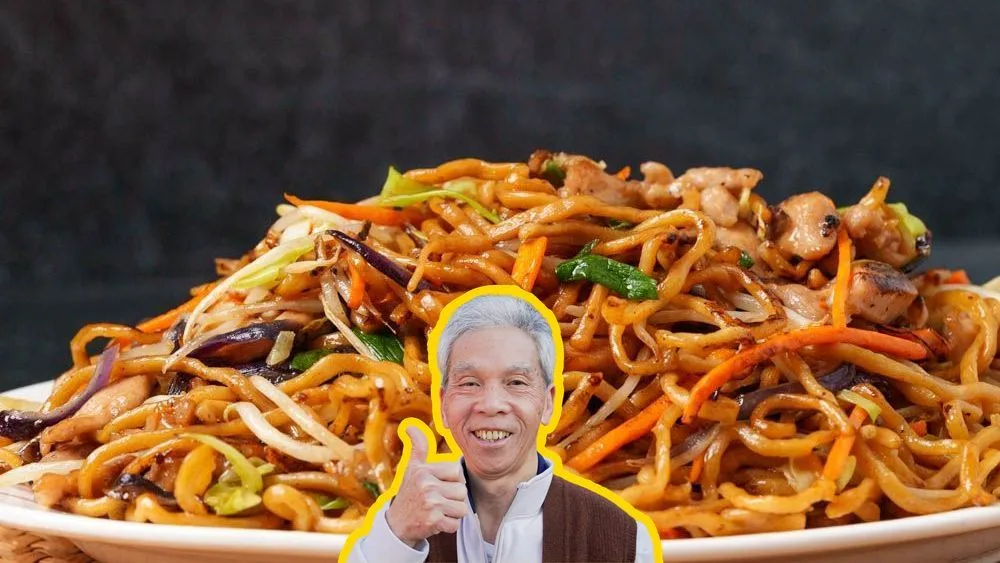
The Chow Mein My Dad's Made 100,000 Times (Takeout Style)
From the zcook collection
Learn how to make Chicken Chow Mein from a 2x James Beard Award Winning Chinese Chef with 60+ years of experience
- Dairy-free
- Chinese
- main course
- panda express copycat
- chinese home cooking
- Prep
- 20 min
- Serves
- 4
- Level
- Hard
- Energy
- 610 kcal
Method7 steps
Step 1: We always like to chop the vegetables before the cutting board is contaminated with raw meat. To harmonize with the long, thin shape of the noodles, we'll be cutting all our vegetables into long, thin strips. Cut the red onion (2 oz) into strips. Stabilize the carrot (2 oz) by cutting a thin slice along the side. Put the carrot with that base down, then cut into thin slices. Angle the slices so that they are more oblong than circular. Then, cut the slices into strips. Cut the cabbage (6 oz) into strips as well, about 1/2-inch thick. Cut the green onions (1 oz) into 1-inch long pieces.
Step 2: If you have bone-in chicken thighs (12 oz), begin by deboning the meat. To remove the bone, angle your knife towards it and slice down both sides. When the bone is more exposed, pull it up vertically and slice around it to release it from the flesh. Even out the thickness of the meat by slicing through the thicker parts of the flesh. Then, cut into thin strips, going along with the grain. Place the strips of chicken into a bowl. To this bowl, add oyster sauce (1 tbsp), cornstarch (3 tsp), water (3 tbsp) and white pepper (1/4 tsp). Mix well so all the seasonings are well-distributed and all of the chicken is well-coated. Refrigerate to marinate while preparing the sauce and noodles.
Step 3: In a clean bowl combine the noodle sauce's 2 tbsp oyster sauce, 2 tbsp light soy sauce, 2 tsp dark soy sauce, 1 tsp sugar and 1 tsp chicken bouillon powder.
Step 4: Place a steamer rack in a wok. Add separate cooking water to a depth of a couple of inches, but stop before you reach the top of the steaming rack. Turn the heat to high. Place the chow mein noodles on a plate or a perforated steamer basket. Put it into the wok and cover with the lid. Once the water is boiling, begin your timer (so if your water is already steaming nicely, start counting right away). Steam for 12-15 minutes with the stove on high heat. Once the time’s up, take out the noodles, remove the steamer rack, then dump the noodles directly into the boiling water in the wok. Loosen up the noodles and cook for 5-6 minutes on medium-high heat. If you break apart a strand of noodle and the center has a pale dot, the noodle is not fully cooked through and it needs a bit more time. If there’s no white dot, it’s ready. Drain the cooked noodles through a colander.
Step 5: Add 1 tbsp of the corn oil to the bowl of marinated chicken and mix to distribute. This oil helps the chicken pieces loosen up from one another, reduces sticking in the wok, and contributes to a softer, silkier texture on the surface of the meat itself. Heat the wok on high. When it just begins to smoke, add 2 tbsp of the corn oil and swirl to coat. Lower the heat to medium and add the chicken to the wok. Use chopsticks or a spatula to spread the chicken out in the wok so that more surface area can sear. Let the bottom of the chicken pieces sear before stirring. After 30-40 seconds, when the chicken pieces have developed a good sear, they’ll begin to release from the wok on their own. Increase the heat to high, stirring and separating the chicken pieces with a spatula. Stir-fry the chicken like this for 40-50 seconds until the chicken is cooked through, its centre reaching 74°C/165°F; continue beyond the short time guide if needed. Wok cooking: Turn the heat down to medium and transfer the chicken to a clean dish; we’ll bring it back later. Large frying pan cooking: Turn the heat down. Do not remove the chicken.
Step 6: There should be plenty of residual oil left in the wok after stir-frying the chicken, so we won’t need to add any additional oil at this point. Add the red onions and cook until they’re aromatic. Add the cabbage and stir-fry together for 20-30 seconds. Add the carrots and stir-fry together for 30 seconds on high heat. Wok cooking: Remove the vegetables from the wok. You can transfer them into the dish that’s holding the cooked chicken. Large frying pan cooking: Remove the chicken and the vegetables from the wok, transferring them into a clean dish.
Step 7: Add the remaining 1 tbsp corn oil to the wok or pan. Add noodles and turn the heat up to high. Use chopsticks to loosen the noodles up and quickly spread them out over the surface of the wok. Don’t stir or mix them up yet; give the noodles time to sear and take on some lovely golden-brown coloring. After 1 minute of pan-frying the noodles, stir and flip the noodles around so that a new side of the noodles can sear. Pan-fry for another minute so this side can also get golden-brown. Lower the heat to medium and let the noodles pan-fry for a final 40 seconds. (Last chance for that crispy golden-brown goodness!) Add sauce: Give the sauce a stir to make sure that it’s still well-combined. Turn the heat to low, and pour the sauce into the wok. Stir until the sauce is well-distributed. Add everything else & serve: Add the pre-cooked chicken and vegetables back into the wok. Mix and stir-fry all together until well-combined, or for 30 seconds. Turn the heat up to medium-high and add the bean sprouts (4 oz) and the prepared green-onion pieces. Stir-fry until the bean sprouts are warmed up and mixed into the noodles, or about 1 minute. For a finishing note of nutty aroma and a glossy shine, drizzle sesame oil (1 tbsp) over the chow mein. Mix and stir-fry on high heat until it’s just distributed, about 1 minute. Check that the chicken remains fully cooked, with its centre reaching 74°C/165°F, then plate and serve.
Photos (1)
Comments
0 threadsSign in to join the discussion.

No comments yet. Start the discussion.