
Japanese · Dinner
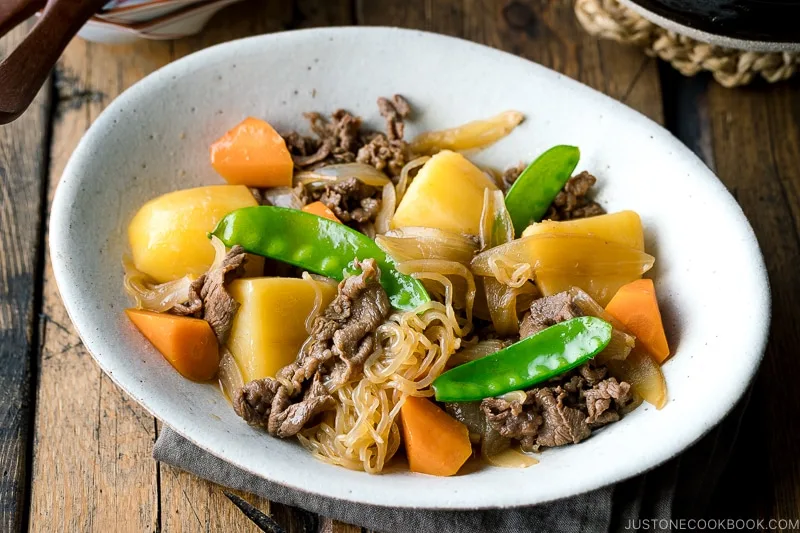
Nikujaga (Japanese Meat and Potato Stew)
From the zcook collection
Japanese Meat and Potato Stew (Nikujaga) is one of the most iconic home-cooked dishes in Japan. This comforting dish features thinly sliced beef and chunks of potatoes simmered in a savory and sweet broth. It's easy to make and tastes even better the next day!
- Dairy-free
- Japanese
- Dinner
- Just One Cookbook
- Prep
- 25 min
- Serves
- 4 servings
- Level
- Hard
- Energy
- 330 kcal
Method22 steps
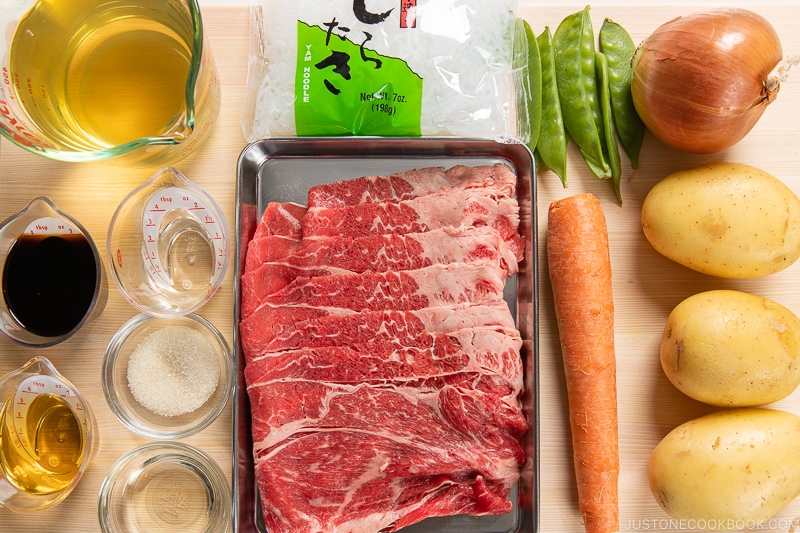
Step 1: Gather all the ingredients. Allow an additional 30–60 minutes for the cooked stew to rest and absorb the seasoning before reheating and serving.

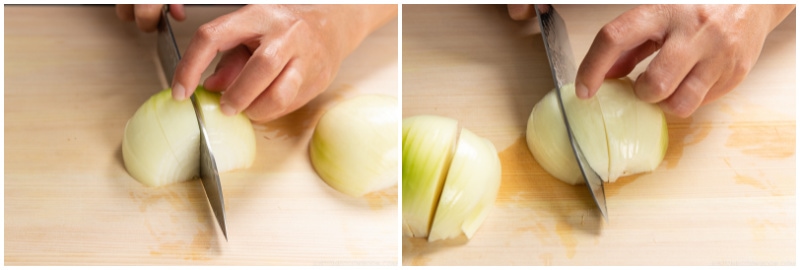
Step 2: Cut 1 onion in half, and cut each half into ½-inch (1.3 cm) wedges.

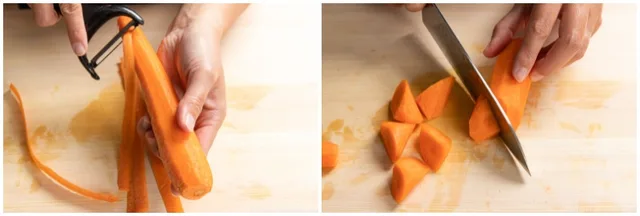
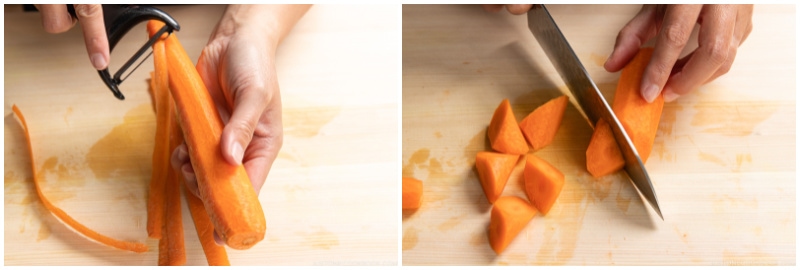
Step 3: Peel 1 carrot and cut it into 1-inch (2.5 cm) pieces. Here, I use a Japanese cutting technique called rangiri where we cut the carrot diagonally while rotating it a quarter turn between cuts. This helps to create more surface area so it will cook faster and absorb more flavor.
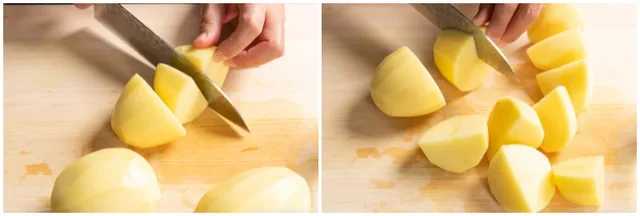
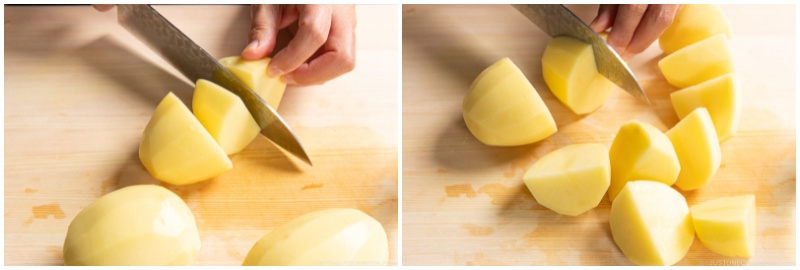
Step 4: Peel the Yukon gold potatoes (3) and cut them into quarters.
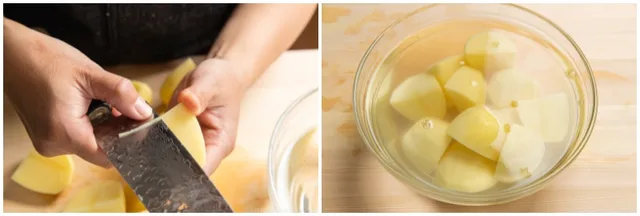
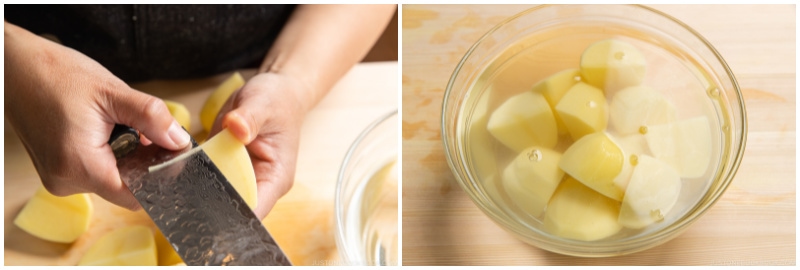
Step 5: Remove the sharp edges of the potatoes with a knife to create smooth corners. Then, soak the potatoes in water to remove the starch. Tip: We call this Japanese cutting technique mentori. This prevents the potatoes from breaking into pieces. If the potatoes have sharp edges, they are likely to bump into each other and break while simmering.
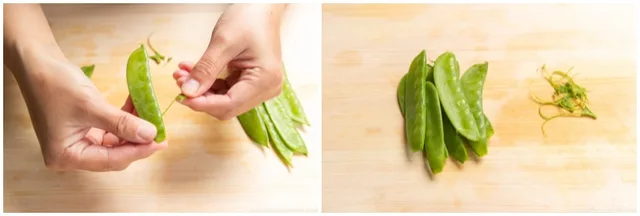
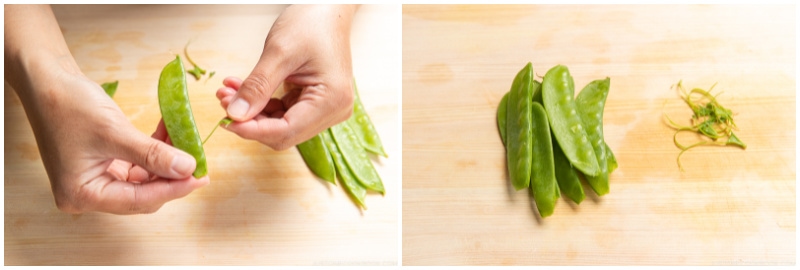
Step 6: Remove the strings from 8 pieces snow peas.
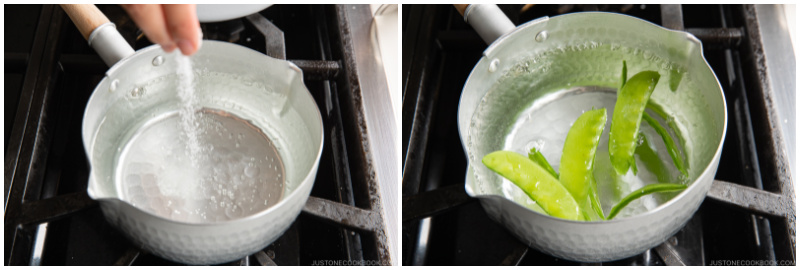
Step 7: Bring a small pot of water to a boil and add a pinch of salt. Add the snow peas.
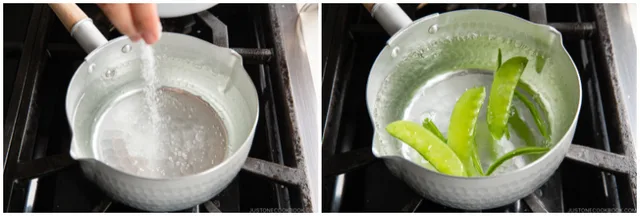
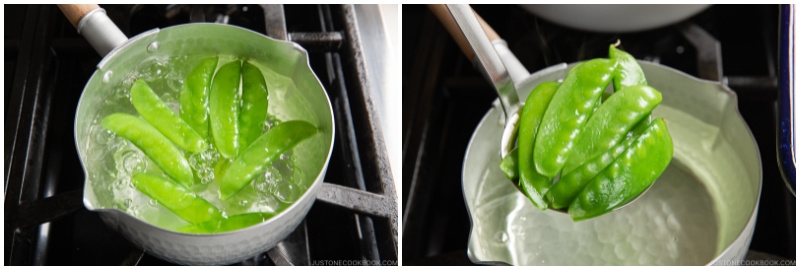
Step 8: Blanch them in the boiling water for 1 minute and take them out. Keep the water boiling.

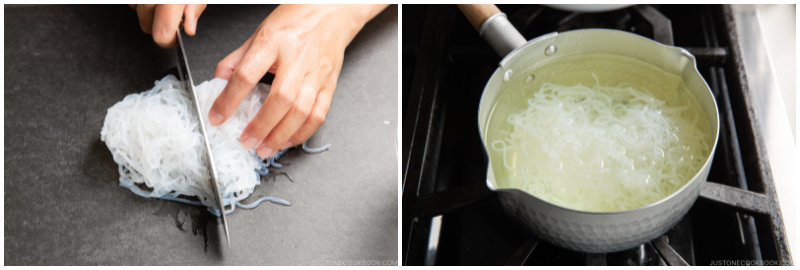
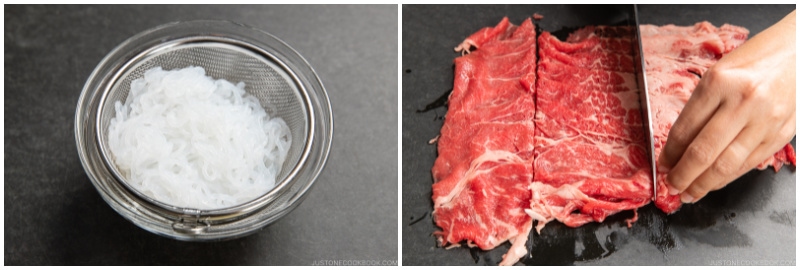
Step 9: Drain 1 package shirataki noodles and cut them roughly in half. Blanch the noodles in the pot of boiling water for 1 minute to remove any odor.
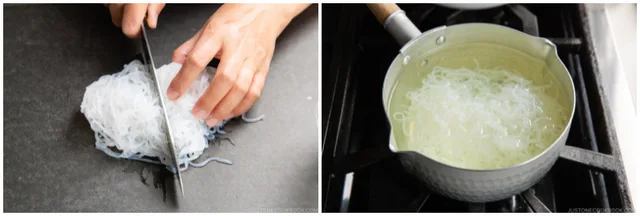
Step 10: Drain well and set aside. Cut the thinly-sliced beef (½ lb) in half or thirds (depending on the size) so that the pieces are about 3 inches (7.6 cm) wide.

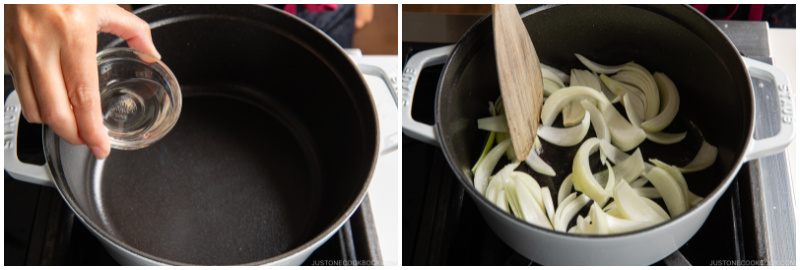
Step 11: Preheat a large pot or Dutch oven (I used a 4-QT Staub cocotte) on medium heat. Then, add 1 Tbsp neutral oil and sauté the onion wedges.

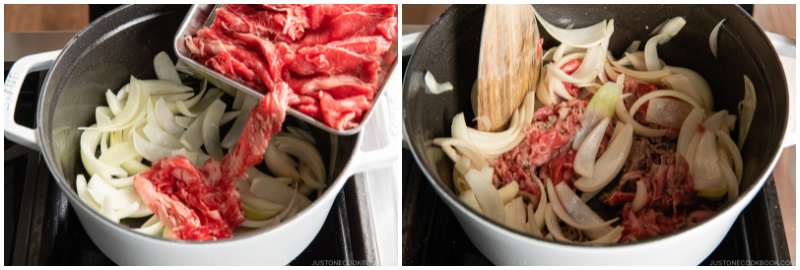
Step 12: When the onion wedges are coated with oil, add ½ lb thinly sliced beef (such as ribeye) and cook until no longer pink.
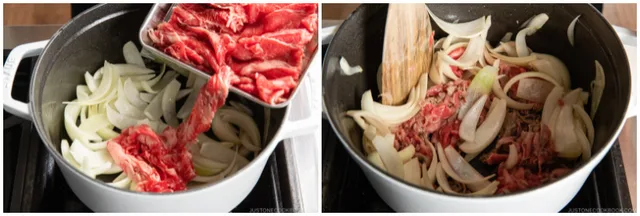
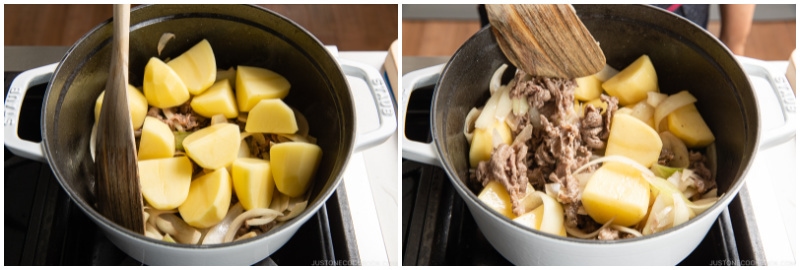
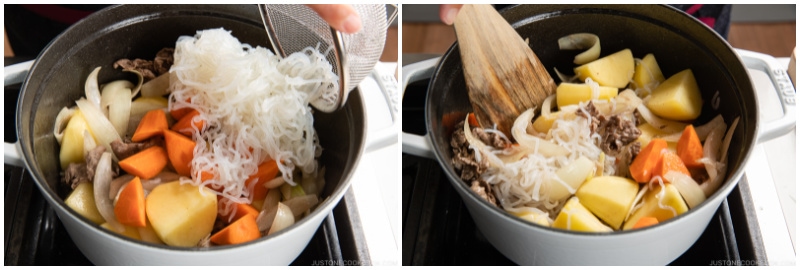
Step 13: Drain the soaked potatoes, then add them to the beef and onion. Stir to coat the potatoes with the pan juices.
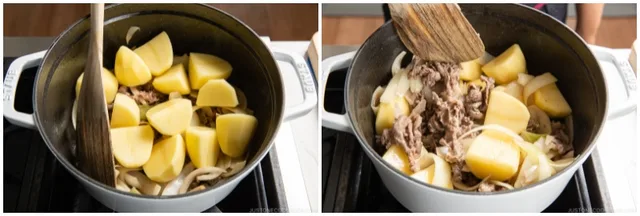
Step 14: Add the carrot pieces and shirataki noodles and mix everything together.
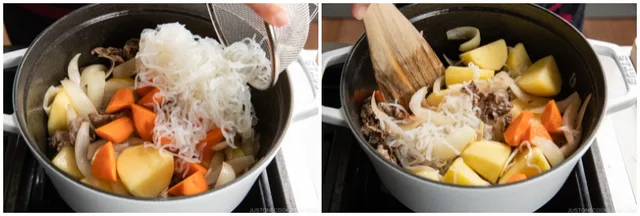
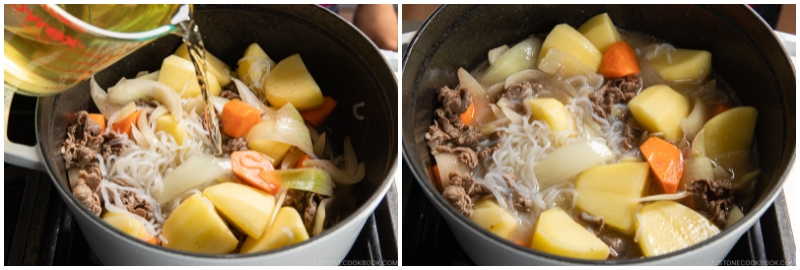
Step 15: Add 2 cups dashi (Japanese soup stock), making sure there‘s enough liquid to almost cover the ingredients (it doesn‘t have to fully cover the ingredients). If there‘s not enough liquid, add water.

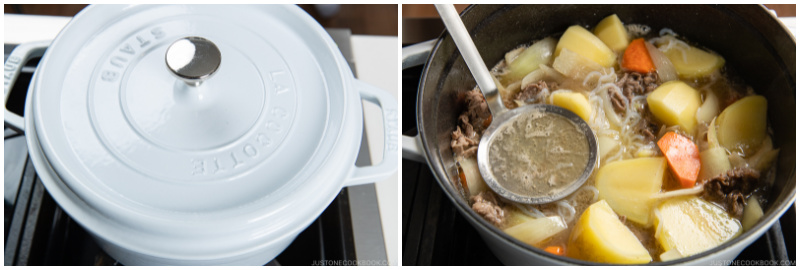
Step 16: Cover with a lid and continue to cook. Once boiling, skim the scum and foam from the surface with a fine-mesh skimmer.
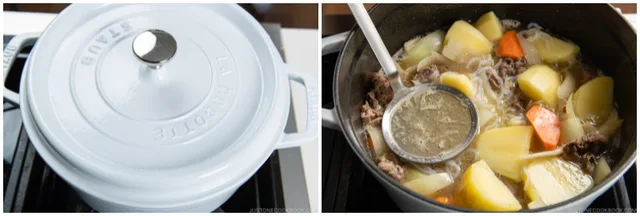
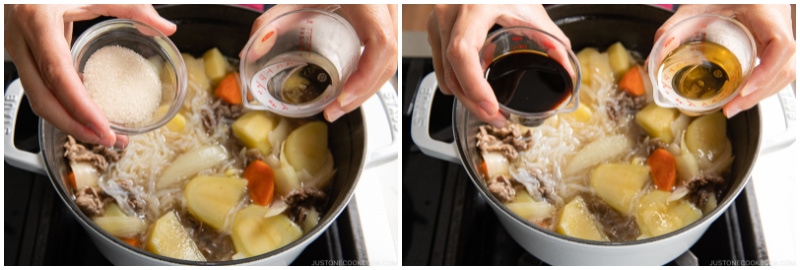
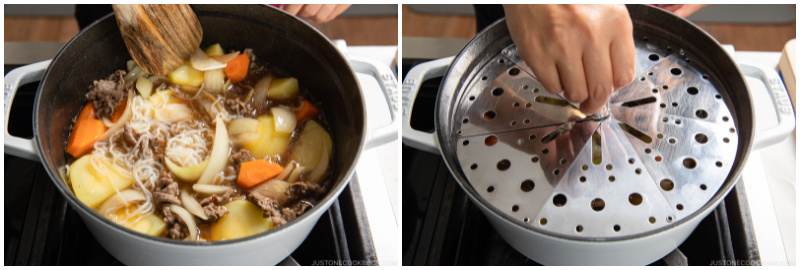
Step 17: Add 1 Tbsp sugar, 2 Tbsp sake, 4 Tbsp soy sauce, and 4 Tbsp mirin.
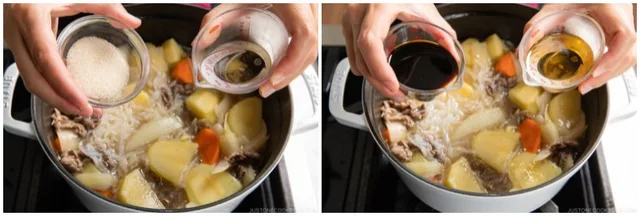
Step 18: Mix it all together and place an otoshibuta (drop lid) on top of the ingredients.
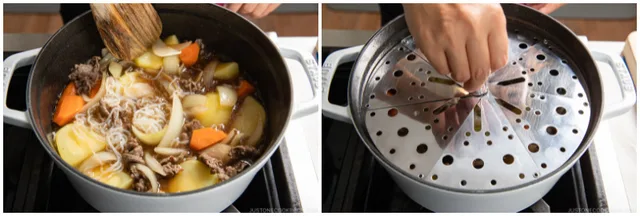
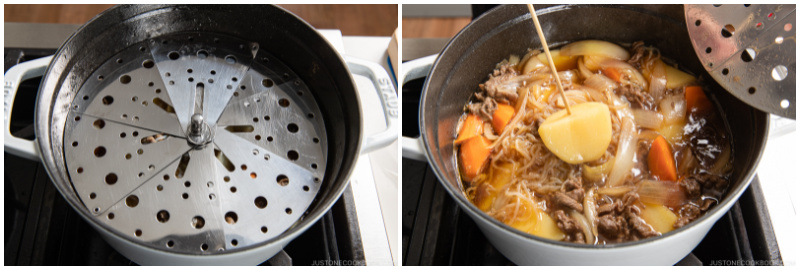
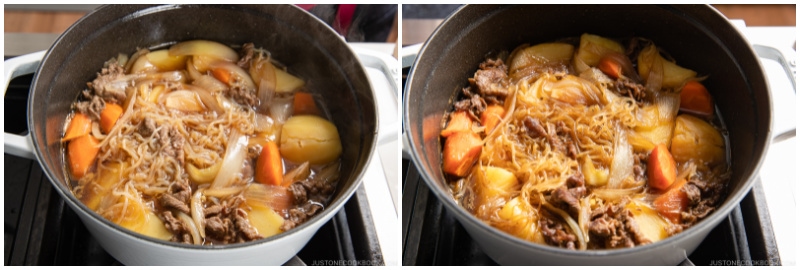
Step 19: Simmer on low heat for 12–14 minutes, or until a skewer pierces a potato easily. Tip: The otoshibuta holds the ingredients in place and is necessary to maintain the shape of the vegetables. They bump into each other and break easily when they are loose. Do not mix the ingredients while cooking; the otoshibuta will help distribute the cooking liquid and its flavors.
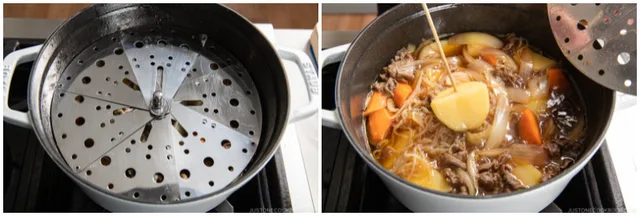
Step 20: Turn off the heat and remove the otoshibuta. Ideally, let the Nikujaga rest (uncovered) for 30–60 minutes before serving. The flavors will soak into the ingredients while cooling down.

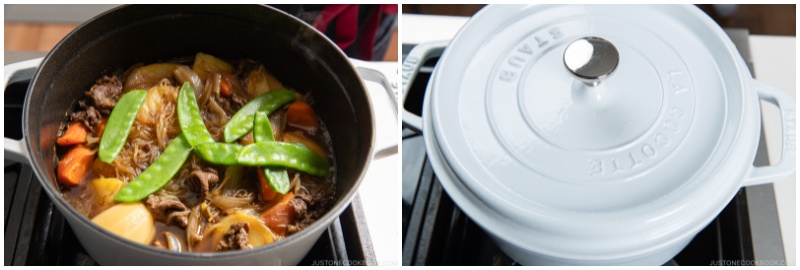
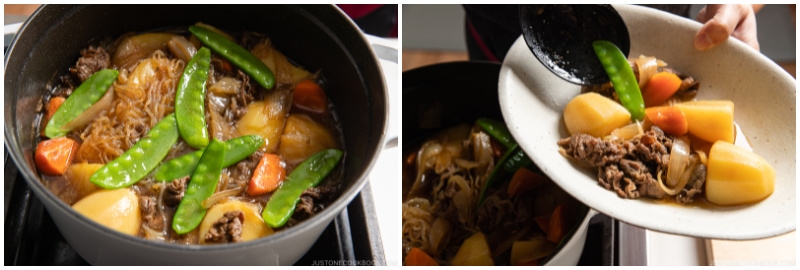
Step 21: When you are ready to serve the Nikujaga, add the blanched snow peas to the pot and cover to reheat on medium heat. When simmering, reduce the heat and let it simmer for a few minutes. Tip: Add the snow peas right before serving to keep their bright color.
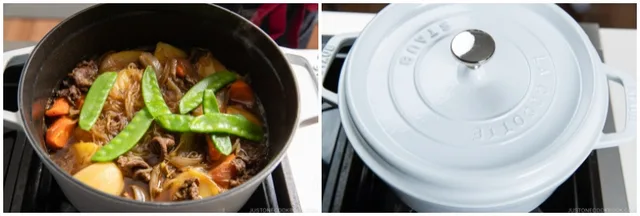
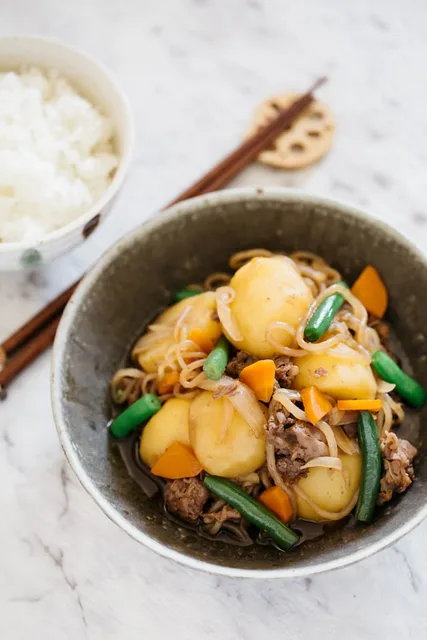
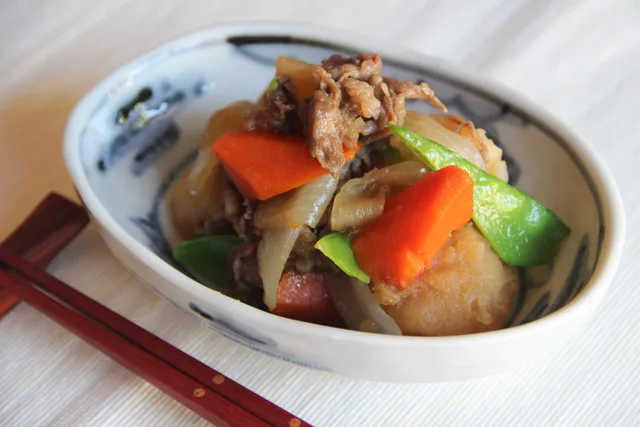
Step 22: Turn off the heat and serve the Nikujaga with some cooking liquid in a large serving bowl or individual bowls.

Photos (1)
Comments
0 threadsSign in to join the discussion.

No comments yet. Start the discussion.