
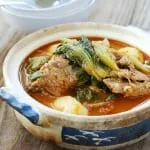
Korean · Soup
Gamjatang (Spicy Pork Bone Stew)
From the zcook collection
Spicy, hearty Korean stew made with pork bones, potatoes and other vegetables
- Dairy-free
- Korean
- Soup
- Cook
- 1 hr 20 min
- Serves
- 3
- Level
- Hard
- Energy
- 310 kcal
Method9 steps
Step 1: Soak the bones for an hour or longer in cold water. Change the water half way through if you can. Drain.
Step 2: Bring a medium pot of water to a boil. Drop the bones in. Let it come back to a boil. This will take about 7 to 8 minutes.
Step 3: Drain the parboiled bones and discard the water. Rinse the bones under running water and clean the pot. Return the bones to the pot with 8 cups water, the onion (1/2 small), whole garlic cloves (5), ginger (4) and scallion white. Bring to a boil and boil uncovered over medium-high heat for 10 minutes. Reduce to medium-low, cover and simmer for 50–60 minutes, until the meat is tender and the broth is milky.
Step 4: Mix the gochugaru (1 Tbsp) (with the optional extra 1–2 tsp if desired), gochujang (1 tablespoon), doenjang (1 tablespoon), soup soy sauce (1 Tbsp) or fish sauce, and 1 Tbsp minced garlic. Reserve the mixture for the cabbage and stew.
Step 5: Bring a medium pot of water to a rapid boil. Blanch the cabbage until the white parts turn soft, 4 to 5 minutes. Remove the cabbage from the pot (keep the hot water to boil the potatoes) and shock in cold water to stop the cooking. Drain and squeeze out water. Cut into 2 to 3-inch lengths.
Step 6: Mix the drained, cut cabbage with 1 Tbsp of the prepared seasoning mixture. Reserve the remaining seasoning for the stew.
Step 7: Cut the potatoes in half with the skin on. In the pot of water used to blanch the cabbage, boil the potatoes until almost cooked. Peel the potatoes.
Step 8: Lift the meat-bearing bones out of the broth. Discard the aromatic vegetables, reserving the broth (about 5 cups). Return the bones with their meat to the pot with the broth. Add the seasoned cabbage, cooked peeled potatoes and all the remaining prepared seasoning. Boil for about 10 minutes.
Step 9: Add the sliced perilla leaves (6–8) and 2 roughly sliced scallions. Add salt (to taste) and black pepper (to taste) to taste. Boil for another couple of minutes, then stir in the crushed perilla seeds (1 Tbsp) or sesame seeds.
Photos (1)
Comments
0 threadsSign in to join the discussion.

No comments yet. Start the discussion.