
Japanese · condiments, Soup
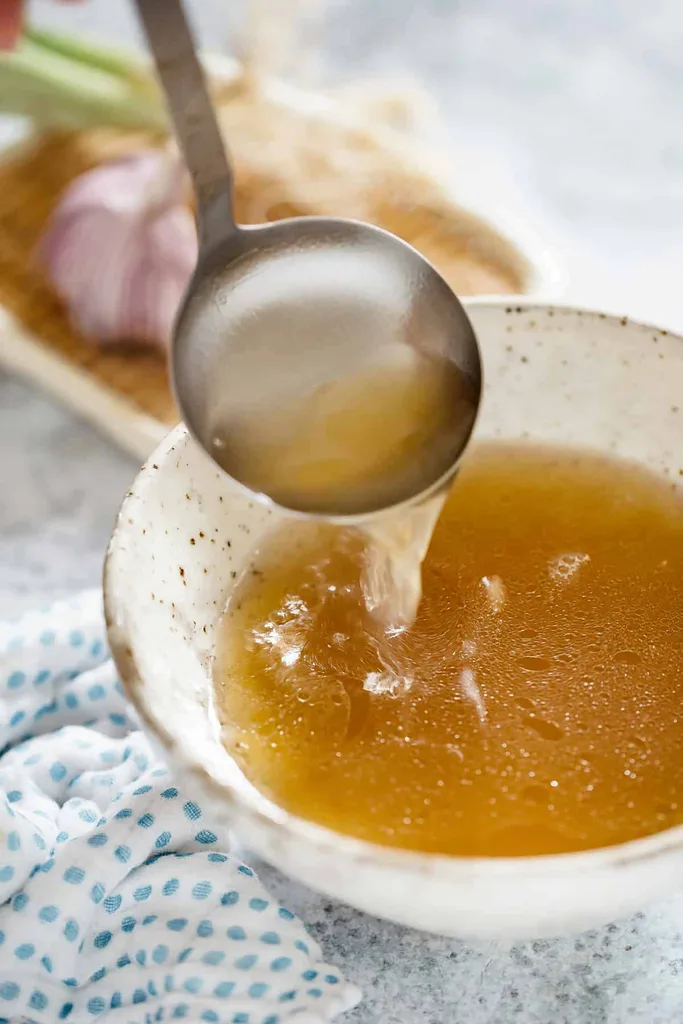
Basic Ramen Broth ラーメンスープ
From the zcook collection
Chicken and kombu-bonito-shiitake ramen broth with alternative shio, reduced-chashu shoyu or miso seasonings.
- Dairy-free
- Japanese
- Prep
- 10 min
- Cook
- 5 hr
- Serves
- 5 ramen bowls
- Level
- Medium
- Energy
- 126 kcal
Method24 steps
Step 1: Combine only the overnight-stock ingredients: ten grams kombu, ten grams bonito flakes, twenty grams dried shiitake and one-and-a-half litres water in a large container.
Step 2: Cover and soak overnight in the refrigerator. If making shio tare, reserve a quarter cup of the prepared stock before using the remaining stock for broth.
Step 3: Trim and remove any remaining organs from the chicken carcasses. Prepare the wings without rinsing raw poultry under running water.
Step 4: Boil separate blanching water in a large pot and blanch the carcasses and wings for about thirty seconds, just until their surfaces turn white. This is a preparatory blanch; continue directly to the long stock cooking.
Step 5: Strain the the chicken carcasses and wings. Discard the poaching water.
Step 6: Put the drained poultry, quartered half onion, smashed two garlic cloves, thirty grams sliced ginger, two scallions cut into thirds and half cup sake in a large pot. Add the separate three litres cold broth water and bring to a boil.
Step 7: Once it has begun to boil, reduce the heat to low. Remove the scum that forms on the top of the soup. *8
Step 8: Simmer gently uncovered over low heat for about three hours.
Step 9: During the three-hour simmer, skim as needed and add some prepared overnight dashi stock to replace evaporation. Keep any reserved quarter cup for shio tare separate.
Step 10: After the three-hour simmer, add the remaining prepared overnight dashi and its soaked kombu, bonito and shiitake. Take off the heat and strain into another large pot or bowl. Remove the spent carcasses and vegetables; cooked meat and mushrooms may be reserved separately if desired.
Step 11: Simmer gently again for further 2 hours.
Step 12: Remove from heat and strain the soup into another large pot or bowl with a sieve lined with kitchen paper towel. *10
Step 13: The finished broth should be reduced to about two-and-a-half litres, enough for five five-hundred-millilitre broth portions.
Step 14: Use the hot broth with one chosen seasoning below, or cool promptly in smaller containers and refrigerate or freeze. Shio, shoyu and miso are alternatives per bowl.
Step 15: For a shio-tare batch, combine the reserved quarter cup dashi, two tablespoons sake, tablespoon mirin (1 tbsp) and tablespoon salt (1 tbsp) in a small saucepan over low heat, stirring until the salt dissolves.
Step 16: For one shio bowl, measure two-and-a-half tablespoons prepared shio tare into a ramen bowl. Reserve any unused tare separately.
Step 17: Pour 2 cups/500ml of ramen broth into the ramen bowl and stir all together.
Step 18: Alternatively, make shoyu tare from enough cooked leftover chashu sauce: strain it and reduce it over low heat until half its starting volume remains. For one shoyu bowl, measure three tablespoons of this finished reduced tare, add five hundred millilitres hot prepared ramen broth and stir.
Step 19: For a separate miso-tare batch, blend the finely chopped half onion, single garlic (1 clove) clove, tablespoon ginger (1 tbsp), white part of one scallion, two tablespoons smooth peanut butter, tablespoon sake (1 tbsp), two tablespoons mirin and teaspoon rayu until creamy. Keep the half cup miso paste aside.
Step 20: Transfer the mixture into a small saucepan and cook over low heat for about 3 minutes.
Step 21: Keep stirring constantly to avoid it burning.
Step 22: Turn the heat off and add miso paste (1/2 cup). Combine all together well. *13
Step 23: For one miso bowl, measure two tablespoons finished miso tare and add five hundred millilitres hot prepared ramen broth. Reserve remaining tare separately.
Step 24: Stir well to dissolve the miso tare into ramen broth.
Photos (1)
Comments
0 threadsSign in to join the discussion.


No comments yet. Start the discussion.