
Japanese · Soup
Kitsune Udon
From the zcook collection
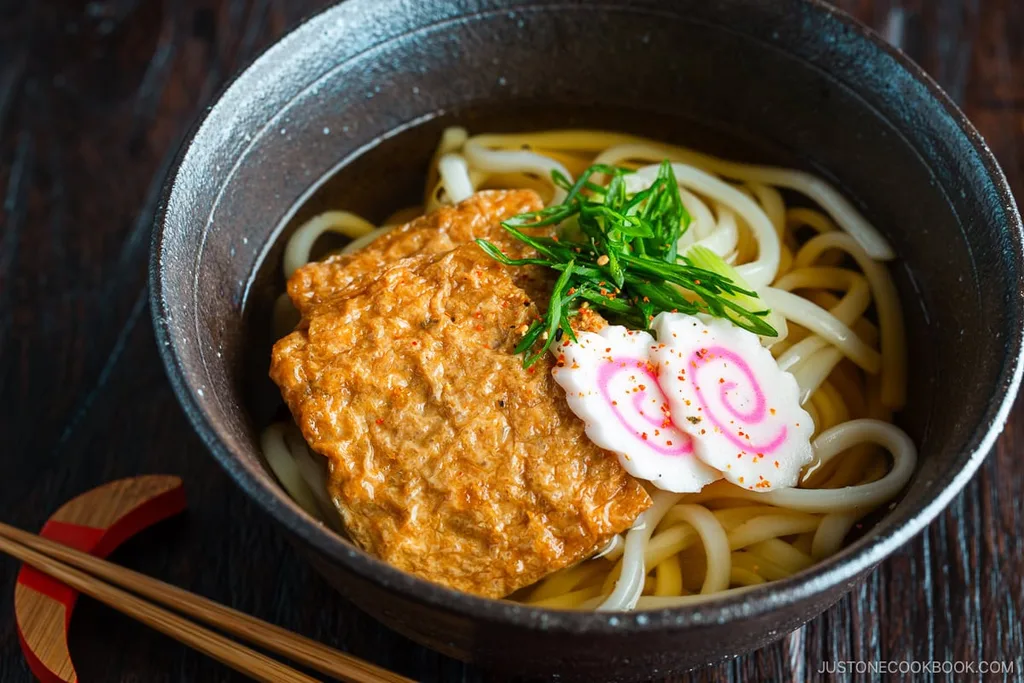
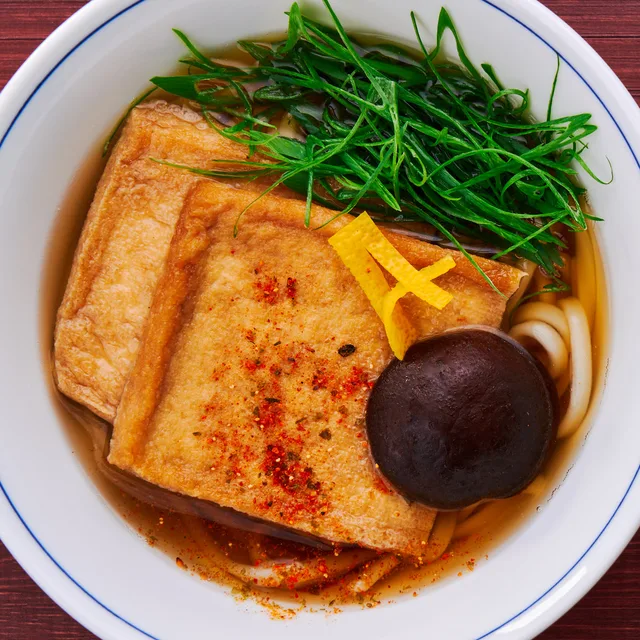
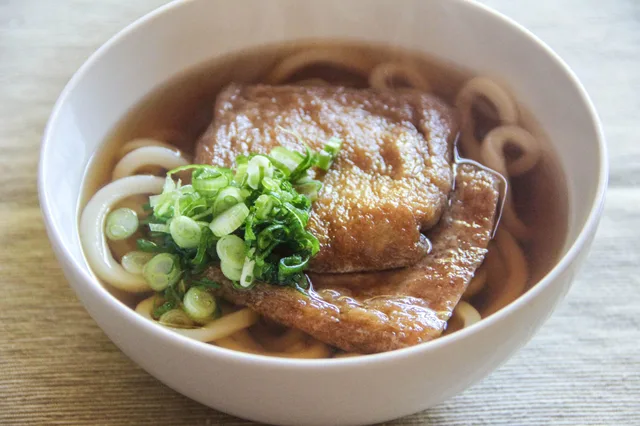
Kitsune Udon is a Japanese noodle soup in dashi broth topped with seasoned fried tofu pouches, pink-swirl narutomaki fish cake, and sliced scallions. This comforting udon soup is one of the most popular and classic Japanese noodle recipes of all time.
- Japanese
- Soup
- Just One Cookbook
- Prep
- 35 min
- Cook
- 25 min
- Serves
- 2 servings
- Level
- Hard
- Energy
- 620 kcal
Method10 steps
Step 1: Choose one stock route. Make homemade dashi with the kombu, 2½ cups water and optional bonito flakes in steps 2–5, OR use 2½ cups prepared dashi and skip those steps. For a kombu-only version omit the bonito flakes and optional fish cake. Gather the prepared seasoned tofu pouches and your chosen udon type.
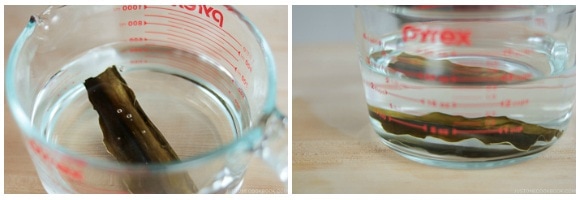
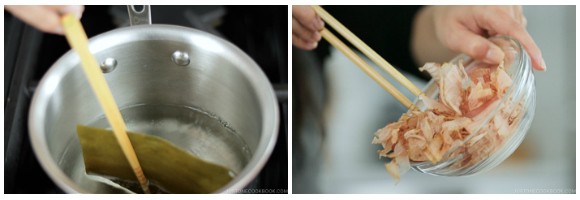
Step 2: Put 1 piece kombu (dried kelp) and 2½ cups water in a measuring cup for at least 30 minutes. If you have time, soak for 3 hours or up to half a day. The kombu’s flavor comes out naturally from soaking it in water. If you don’t have time, skip soaking.
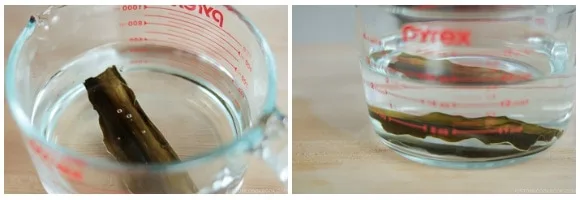
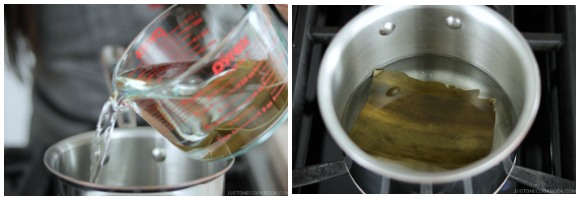
Step 3: Transfer the kombu and water to a saucepan. Slowly bring to a boil over medium-low heat.

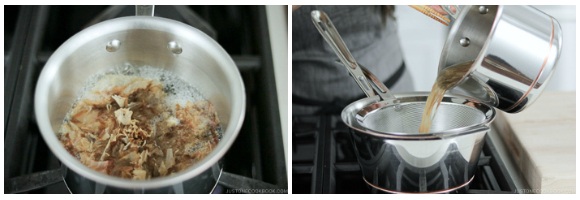
Step 4: Just before the kombu water boils, remove the kombu. For kombu-only dashi, the stock is ready; skip the bonito simmering and settling in step 5. For awase dashi, add the 1½ packed cups bonito flakes and bring to a boil again.

Step 5: For awase dashi, reduce the heat once boiling, simmer for 15 seconds and turn off the heat. Let the bonito flakes settle for 10–15 minutes, then strain through a fine-mesh sieve. For the kombu-only route, simply use the stock after removing the kombu.

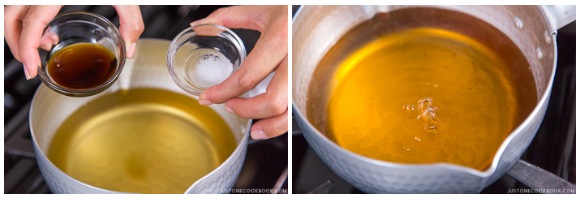
Step 6: Measure 2½ cups homemade dashi, topping up the strained stock with a little water only if needed to reach that amount. Alternatively, use the 2½ cups prepared shortcut stock. Add 1 Tbsp mirin, 1 tsp sugar, 1 Tbsp usukuchi soy sauce and ½ tsp Diamond Crystal kosher salt. Bring to a boil, then turn off the heat or cover and keep at a low simmer.

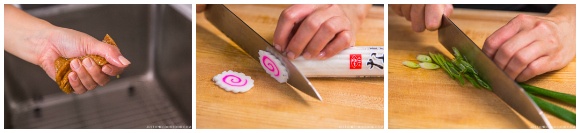
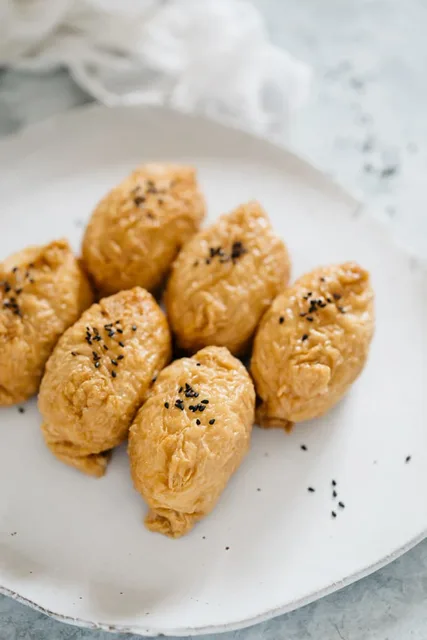
Step 7: Squeeze the excess liquid from 4 Inari age (seasoned fried tofu pouch) (or you can keep the liquid as is, if you prefer). Cut 1 green onion/scallion into thin slices. Cut 4 slices narutomaki (fish cakes) into ⅛-inch (3-mm) slices.

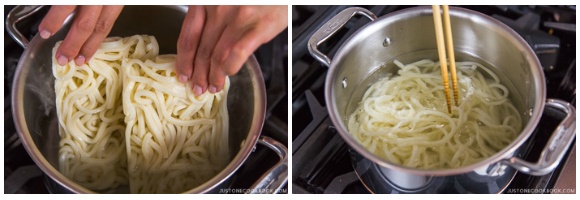
Step 8: Bring a large pot of additional water to a boil. Add 500 g frozen or parboiled udon; frozen Sanuki udon can be reheated without defrosting for about 1 minute, until hot. If choosing dry udon instead, use 180 g and follow its package cooking time.

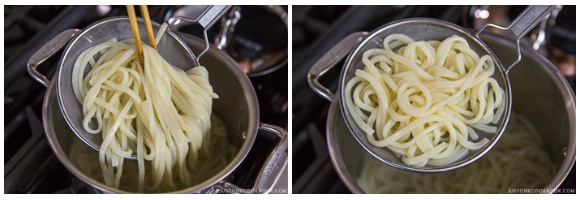
Step 9: Pick up the noodles in a strainer or drain the hot water. Make sure to shake off the excess water (which will end up diluting your soup).

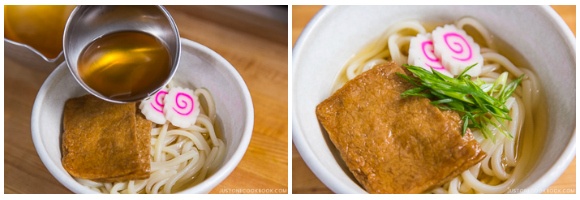
Step 10: Divide the drained udon noodles into individual serving bowls. Pour the hot broth over the noodles to cover. Top with the Inari age, narutomaki, and green onions. Sprinkle shichimi togarashi (Japanese seven spice) on top (optional).

Photos (1)
Comments
0 threadsSign in to join the discussion.

No comments yet. Start the discussion.