

Japanese · Dinner
Crumbed Pork Tenderloin Medallion with Miso Sauce
From the zcook collection
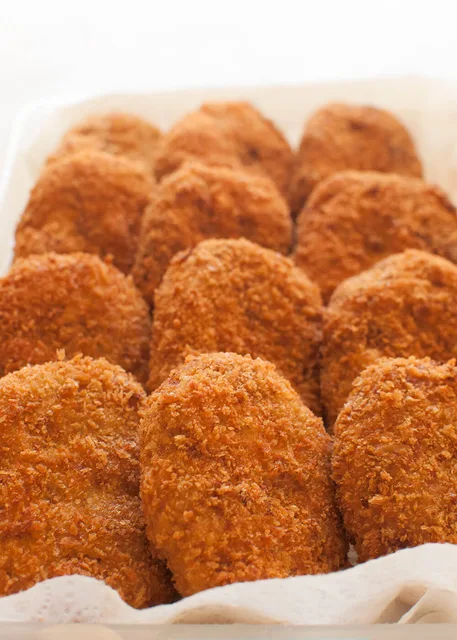
Tender pork medallions with a crisp panko coating and a concentrated red-miso dipping sauce. The source cooking estimate assumes two frying batches; allow longer for three batches and the pork rest.
- Dairy-free
- Japanese
- Main
- Total
- 25 min
- Prep
- 15 min
- Cook
- 10 min
- Serves
- 3 servings
- Level
- Medium
- Energy
- 522 kcal
Method20 steps · about 25 min
Step 1: Mix the ¼ tsp cornstarch with ½ tsp water until smooth.
Step 2: Put the red miso, sugar (1 tbsp), mirin (2 tbsp), cooking sake (1 tbsp) and prepared dashi in a small saucepan. Whisk until the miso is dissolved.
Step 3: Bring the miso mixture to a boil over medium heat, stirring occasionally.
Step 4: Stir the slurry again, add it to the boiling sauce and mix well. Remove from the heat as soon as the sauce thickens slightly; avoid reducing it further, as it will become too salty.
Step 5: If the tenderloin has silver skin, slide a thin sharp knife beneath it with the blade angled slightly upwards and trim it away. Remove any tough surface membrane as well.
Step 6: Starting at the thick end, slice the trimmed tenderloin diagonally at about 45 degrees, making slices 2.5–3 cm wide. A very thick tenderloin can be sliced straight across.
Step 7: Cut wider slices from the narrow tail end so they can be flattened to a similar size as the other medallions.
Step 8: Arrange the medallions without overlapping on a cutting board. Gently pound them with your fist to an even thickness, pressing the smaller tail pieces more firmly so their size matches the others.
Step 9: Season both sides of all the medallions with the ¼ tsp salt and ¼ tsp pepper.
Step 10: Set up three separate shallow bowls with the flour (2 tbsp), beaten egg (1) and 1–1¼ cups panko, in that order. Put a clean plate or tray beside the breadcrumbs for the coated pork.
Step 11: Working one medallion at a time, coat it with flour and shake off the excess. Dip it in beaten egg, allow the excess to drip off, then transfer it to the panko bowl.
Step 12: Press panko over the medallion so both sides are well coated. Repeat the flour, egg and panko sequence for all remaining medallions and place them on the clean tray. Discard the leftover raw-pork-exposed coating ingredients.
Step 13: Heat enough oil in a deep frying pan for a depth of 2–2.5 cm to 170–180°C / 338–356°F.
Step 14: Gently lower a batch of coated medallions into the hot oil without overcrowding. Fry in two or three batches according to the size of the pan.
Step 15: Fry the first side for about 2–2½ minutes, until golden brown underneath.
Step 16: Turn the medallions over and fry for about another 2 minutes, until golden on the second side. Check that the centre of each reaches 63°C / 145°F on a food thermometer; continue cooking if needed.
Step 17: Transfer the cooked medallions to a clean rack or paper-towel-lined tray to drain, and let them rest for at least 3 minutes. Repeat the two frying phases with the remaining coated medallions, allowing the oil to return to 170–180°C between batches. Check the same temperature endpoint and rest each batch.
Step 18: Arrange shredded cabbage on three serving plates and place one parsley sprig beside each portion.
Step 19: Divide all the rested medallions among the three plates beside the cabbage. If your tenderloin made twelve pieces, this will be four per plate; the number depends on the size of the tenderloin.
Step 20: Serve the miso sauce in a small container alongside the pork. Use a small amount to taste; the sauce is concentrated and need not all be used.
Photos (1)
Comments
0 threadsSign in to join the discussion.


No comments yet. Start the discussion.