

Korean · Dinner
Bibimbap Recipe – Korean Mixed Rice with Vegetables and Meat
From the zcook collection
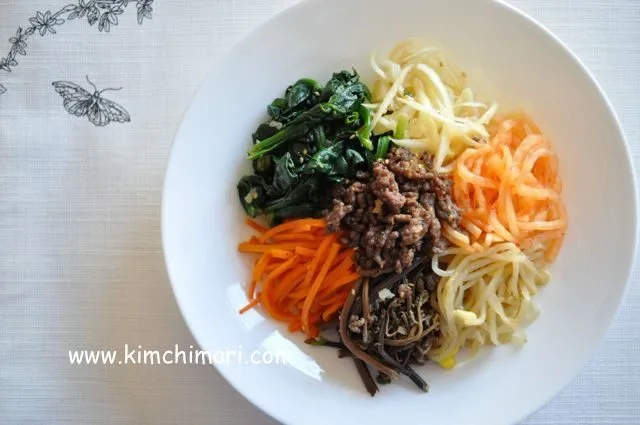
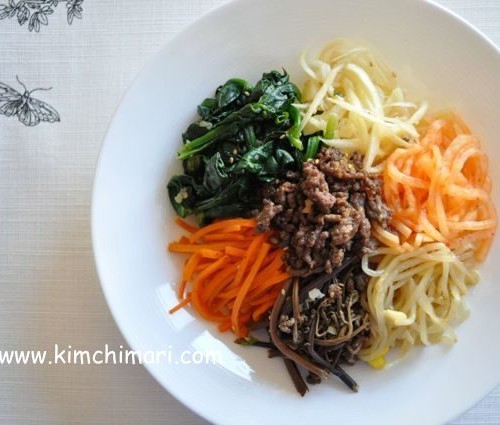
Bibimbap is a traditional Korean rice dish with vegetables and meat all mixed together in a yummy spicy gochujang based bibimbap sauce.
- Dairy-free
- Korean
- Dinner
- bibimbap
- Prep
- 6 hr
- Cook
- 1 hr
- Serves
- 6 servings
- Level
- Hard
- Energy
- 421 kcal
Method18 steps
Step 1: Measure 4 ounces already reconstituted doraji (bellflower roots). If starting with dried roots, soak them in water overnight and drain before weighing. Rub the reconstituted roots with a little sea salt to draw out bitterness; this rubbing salt is separate from the measured 1/2 teaspoon for sautéing.
Step 2: Split the doraji roots into strips about 2 inches long and 1/8 inch thick, keeping the blade directed away from your hands. Wash and rinse the strips thoroughly to remove the rubbing salt, then drain.
Step 3: Prepare the gosari well ahead of the final cooking. Boil the bracken in enough water to cover for 20–30 minutes until soft, then drain. Soak in fresh cold water for 6–8 hours to draw out bitterness, then drain. Keep the stated 4-ounce quantity as the reconstituted amount, not the dry weight.
Step 4: Trim the reconstituted Gosari by going through each piece and cutting off any hard stems.
Step 5: Cut them into bite size pieces (2 in long)
Step 6: Cook the 2 cups dry short-grain rice with the water and method recommended by its package or rice cooker, then keep it warm. Separately mix the ground beef (1/3 lb) with the beef seasoning’s soy sauce (2 tsp), sugar (1 tsp), rice cooking wine (2 tsp), sesame oil (1 tsp), minced garlic (1 tsp), optional garlic powder (1/8 tsp) and black pepper (1/8 tsp). Sauté over medium heat until fully cooked and set aside.
Step 7: Heat the doraji’s 1/2 teaspoon vegetable oil over medium heat. Sauté the prepared roots with their 1/2 teaspoon chopped garlic and 1/2 teaspoon sea salt for 3–4 minutes, until tender but still slightly crunchy. Turn off heat and add their 1/4 teaspoon green onion and 1/4 teaspoon sesame oil. Set aside.
Step 8: Boil a pot of salted water (6 C or so + 1 tsp salt) and quickly blanch the spinach (1 bunch). Do not cook the spinach more than 1 minute. Spinach should be still a bit chewy and not mushy. Shock the cooked spinach in cold or ice water to stop the cooking process.
Step 9: Drain the water and squeeze out any excess water from the spinach by squeezing them gently in your hand.
Step 10: Season the blanched spinach with some salt (1 tsp) and sesame oil (1 tsp). Set aside.
Step 11: Heat the gosari’s separate 1/2 teaspoon vegetable oil over medium heat. Add the prepared bracken and its 1/2 teaspoon chopped garlic, the listed 1/4 teaspoon sea salt and 3/4 teaspoon guk ganjang. Sauté on low heat for about 5 minutes. Turn off heat and add the separate 1/4 teaspoon green onion and 1/4 teaspoon sesame oil. Set aside.
Step 12: Toss the 3 cups julienned Korean radish with its 2 teaspoons sea salt and let it stand briefly to release moisture. Mix in the radish salad’s 3 1/2 teaspoons sugar, 3 1/2 teaspoons rice vinegar and 2 1/2 teaspoons Korean red-pepper powder. Set aside for the bowls.
Step 13: Add 1 T oil in frying pan on medium heat. Add julienned carrots (1 large) and a pinch of salt. Saute carrots until they are soft and tender.
Step 14: Wash and clean the soybean sprouts (3 cups). Optionally break off the root ends if they are brown.
Step 15: Put the 1/3 cup sprout water, washed soybean sprouts, their separate 1/2 teaspoon sea salt and 1/2 teaspoon chopped garlic in a small covered pot. Bring to a boil and simmer about 8 minutes, until the sprouts are cooked and most water has evaporated. Keep covered during cooking and watch that the small amount of water does not boil completely dry.
Step 16: Turn off heat and sprinkle the sesame oil (1/2 tsp). Set aside.
Step 17: Lightly grease the egg (1) pan and fry or scramble the single listed egg as preferred. This inventory provides one egg total: divide it among the bowls or use it as the topping on one bowl.
Step 18: Divide the warm cooked rice among six bowls, using about 1 cup per bowl as available. Arrange portions of all six prepared vegetables and cooked beef on top, then add the cooked egg as desired. Choose plain gochujang, adjusted to taste, or mix the separate 1 tablespoon gochujang, 1 teaspoon rice vinegar and 1 teaspoon honey for a tangy bibim sauce. Offer the serving sesame oil (1-2 tsp) with the bowls and mix before eating.

Photos (3)
Comments
0 threadsSign in to join the discussion.

No comments yet. Start the discussion.