
Japanese · Sauce
Homemade Teriyaki Sauce
From the zcook collection
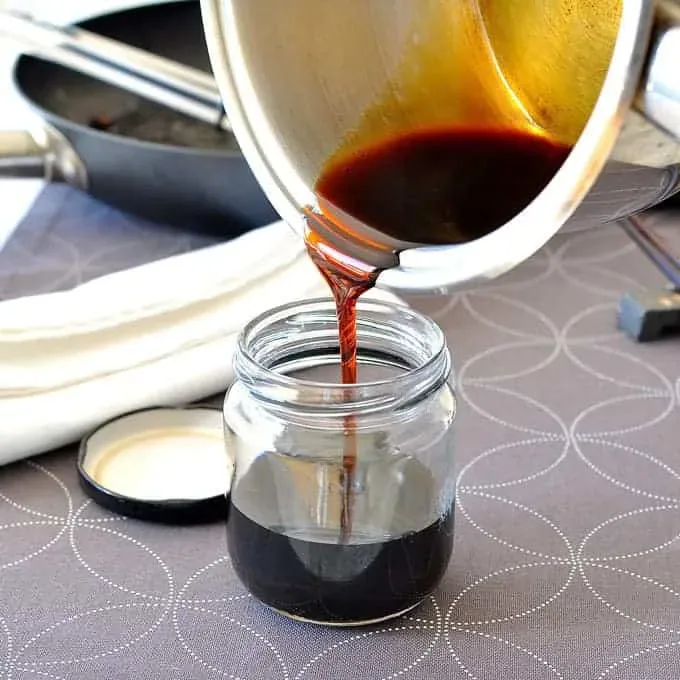
Soy sauce, mirin, sake and water reduced to a light-syrup teriyaki marinade. The ten-minute reduction is an initial large-pan guide; allow cooling before using the sauce with a separate protein recipe.
- Vegan
- Dairy-free
- Japanese
- Sauce
- Marinade
- Prep
- 2 min
- Cook
- 10 min
- Serves
- 8 sauce portions; reduce the initial liquid by about half
- Level
- Easy
- Energy
- 17 kcal
Method8 steps
Step 1: Combine all the soy sauce (¼ cup), mirin (¼ cup), sake and sauce-making water (¼ cup) in a large saucepan over high heat.
Step 2: Bring to the boil, then reduce the heat and simmer until the liquid has reduced by about half and has a light-syrup consistency. The author’s large-pan guide is about 10 minutes; pan size and heat change the actual reduction time.
Step 3: Take the saucepan off the heat and let the sauce cool before using as a marinade. The sauce component is complete at this point; keep it separate from any raw protein.
Step 4: If keeping the sauce for later, transfer it to a clean airtight container and refrigerate promptly. Use a clean spoon to take out only the amount needed.
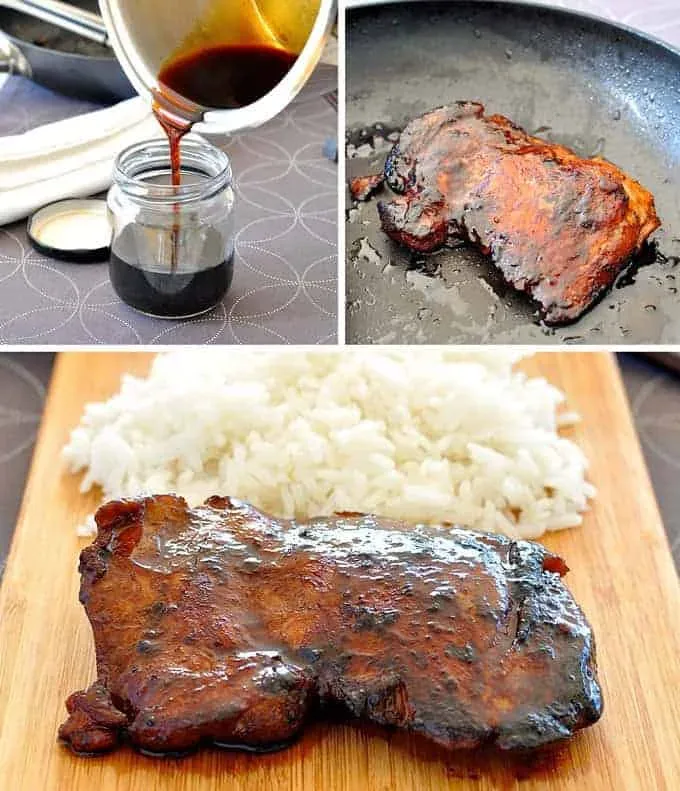
Step 5: For a separately prepared teriyaki meal, the author’s guide is 3–4 tbsp of this sauce per 500 g of chicken, beef or suitable fish. Those protein ingredients and their portions belong to that separate meal, rather than this sauce batch.
Step 6: For that separate meal, marinate the chosen protein in the refrigerator using its own recipe: the author suggests at least 20 minutes for meat, preferably overnight, and about 20 minutes for fish because a long marinade can overpower it. Cook the protein fully using directions appropriate to its type and thickness.
Step 7: If grilling or broiling that separate meal, reserve clean sauce before raw-protein contact and baste each side during cooking. Keep raw-contact marinade separate; do not pour it onto cooked food as a finishing sauce.
Step 8: For the optional later stovetop meal, add the extra 2 tbsp water to the cooking pan near the end and loosen the sauce and browned bits. Bring any liquid that contacted raw protein to a full boil before simmering to a thick glaze, and ensure the protein is fully cooked before coating and serving. This is a use suggestion for a separately cooked meal.
Photos (3)
Comments
0 threadsSign in to join the discussion.
No comments yet. Start the discussion.