
Italian · Dinner
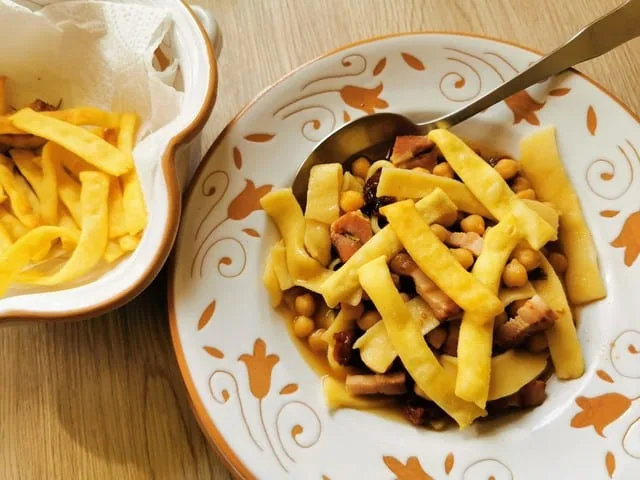
Fried Sagne Pasta with Chickpeas
From the zcook collection
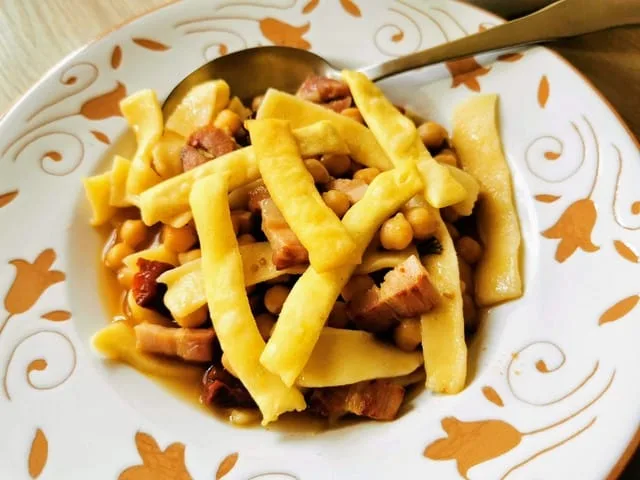
Abruzzese chickpea soup with homemade egg-free semolina sagne: two thirds cook in the soup and one third is fried until crisp for serving. Start the dried chickpeas ahead: the source 75-minute prep and 30-minute cooking guides exclude their 12-hour soak and 60–90-minute boil. For a vegetarian version omit pancetta and use vegetable broth throughout.
- Dairy-free
- Abruzzo
- Central Italy
- Italian
- Homemade Pasta
- Main Course
- Soup
- Prep
- 1 hr 15 min
- Cook
- 30 min
- Serves
- 4
- Level
- Medium
Method12 steps
Step 1: Cover the dried chickpeas (250 g) generously with water and soak overnight for about 12 hours. Discard the soaking water and rinse the chickpeas. Refill the pot with fresh water to cover them, add the separate chickpea-cooking pinch of salt (1 pinch) and cook for about 60–90 minutes until tender but still holding their shape. Skim foam as needed. Before draining, reserve 1 cup of the chickpea cooking water. The timer is for cooking after the overnight soak, not for soaking.
Step 2: Choose a dough-mixing route. By hand, mound all 400 g semolina, make a well and add the dough pinch of salt (1 pinch). Add water gradually from the approximately 200 ml supply while mixing until a firm, non-sticky rough dough holds together; you may not need it all. Alternatively mix the flour, salt and gradually added water in a stand mixer until it resembles wet sand, then bring it together by hand.
Step 3: For the hand-mixed route, knead the rough dough vigorously for about 10–15 minutes until smooth and firm. If you used a stand mixer, tip the combined dough onto a lightly floured surface, bring it together and knead by hand for 2–3 minutes.
Step 4: Wrap the single kneaded dough batch in plastic wrap and rest it at room temperature for 30 minutes.
Step 5: For the pasta-machine route, cut off one third of the rested dough and keep the other two thirds wrapped. Flatten this piece and pass it through the machine’s widest setting three or four times, folding it into thirds between passes. Use a thinner setting if you want thinner sagne. If choosing the rolling-pin route, follow step 6 instead.
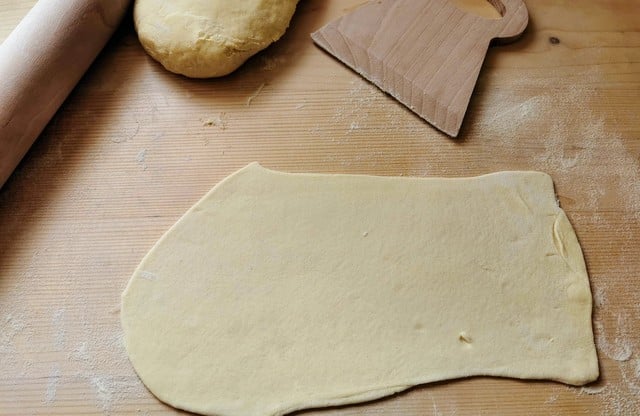
Step 6: For the rolling-pin route instead of step 5, take one third of the rested dough, keeping the rest wrapped, and roll it into a rustic sheet on a lightly floured board. If you chose the machine route in step 5, keep that rolled sheet for step 7 and skip this alternative rolling action.
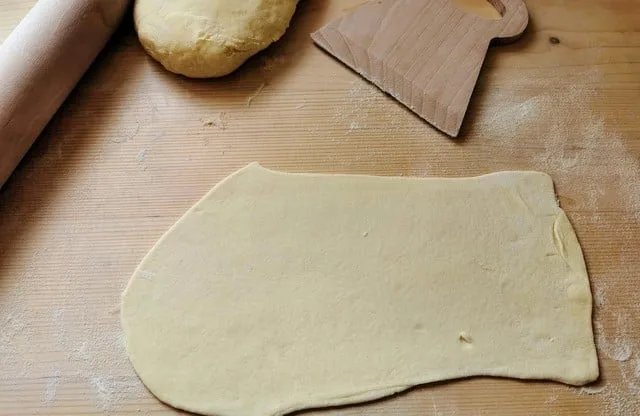
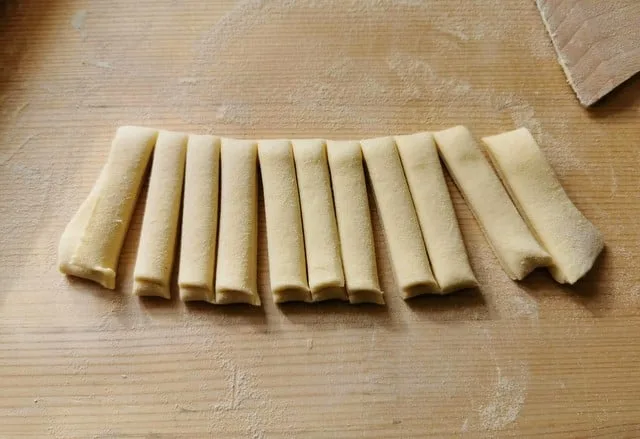
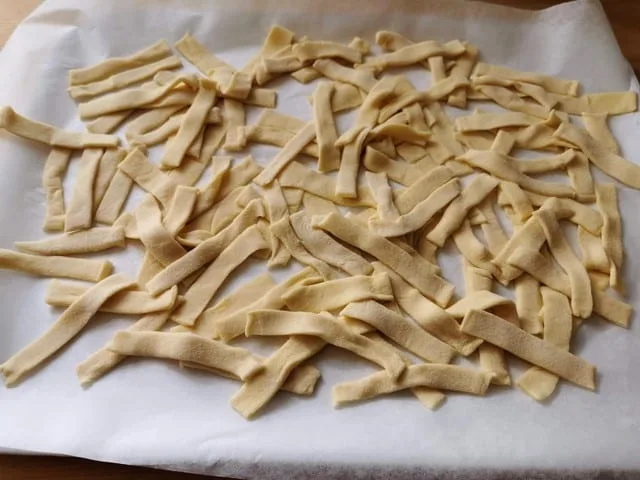
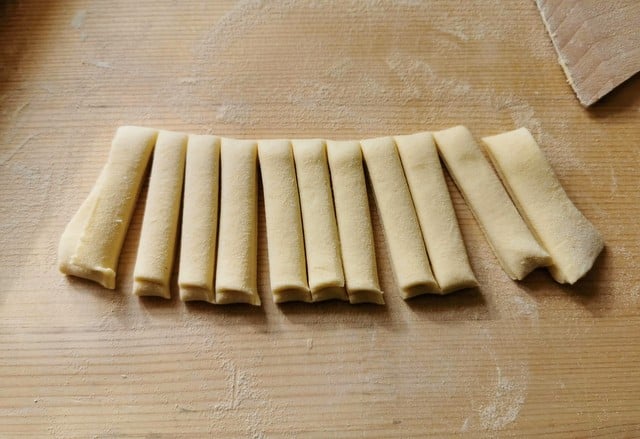
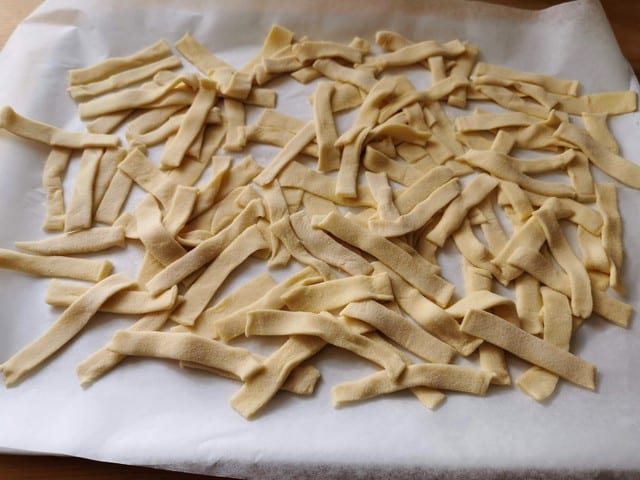
Step 7: Take the sheet from your chosen rolling route, cut it into two pieces and lay one over the other. Cut rustic sagne strips about 6–7 mm wide and 5–6 cm long, separating them on a lightly floured tray. Repeat the chosen rolling and cutting actions with the remaining two thirds until all the dough is cut.
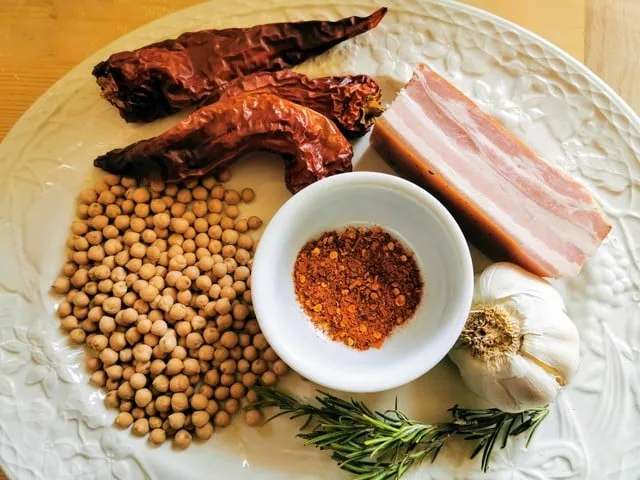
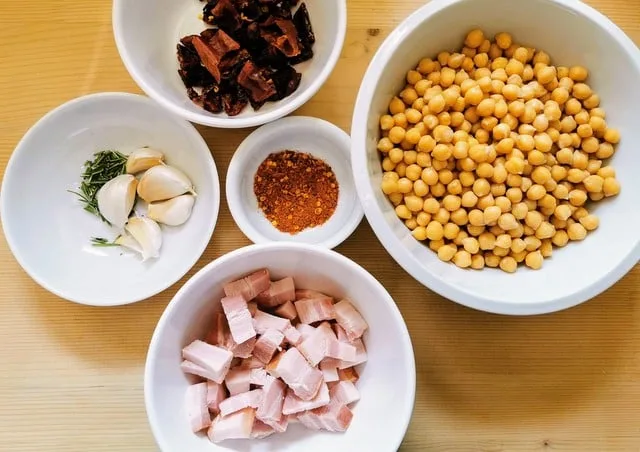
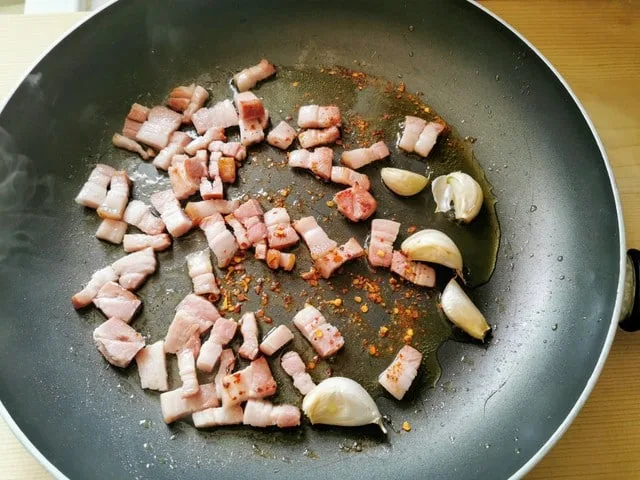
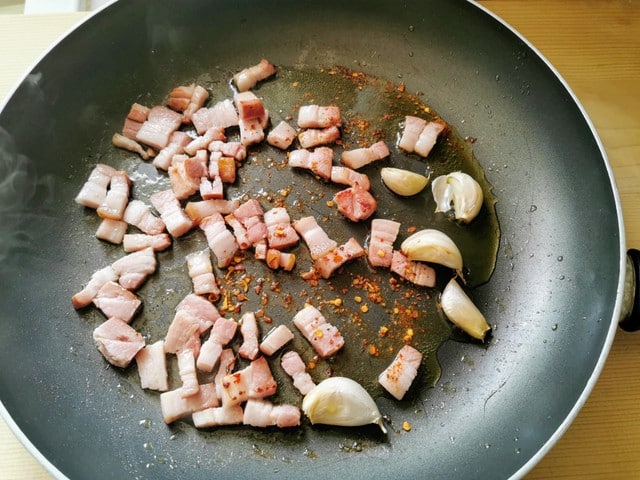
Step 8: Cook the pancetta cubes with the measured chickpea-broth olive oil (2–3 tablespoons) in a deep pan over moderate heat until the pancetta changes colour. Add all 4–5 unpeeled garlic cloves and the chili flakes and cook for a couple of minutes until the garlic starts to soften. For the vegetarian variation omit the pancetta and use vegetable broth throughout steps 9–10.
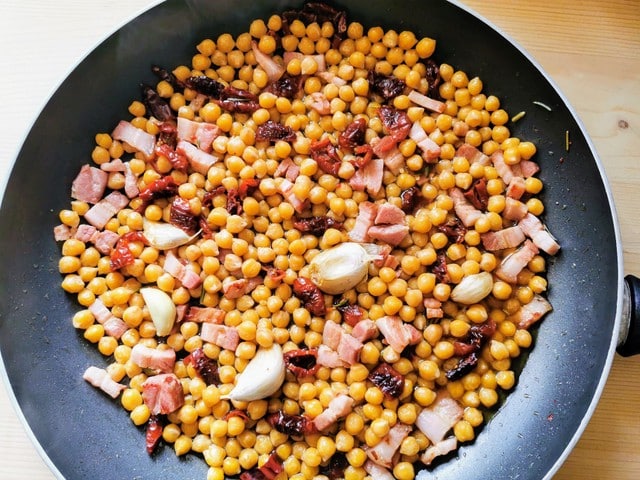
Step 9: Add the half-glass of wine and let it reduce until its sharp aroma subsides. Wash and chop the rosemary (1), keeping a little aside for frying. Cut the 3–4 dried sweet peppers into pieces, or use 8–10 sun-dried tomatoes instead, not both. Add all the cooked chickpeas, the soup portion of rosemary, the selected peppers or tomatoes and sauce salt to taste. Add the 1 cup hot selected broth and some of the reserved chickpea cooking water. Bring to the boil and simmer for 10 minutes. Lift one softened whole garlic clove from this pan and keep it for frying in step 11.
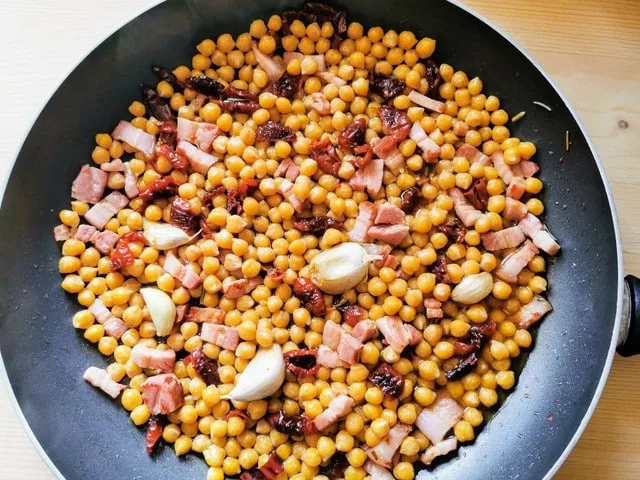
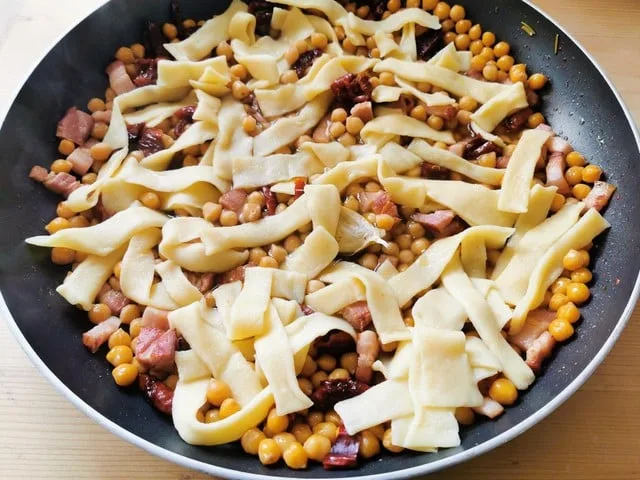
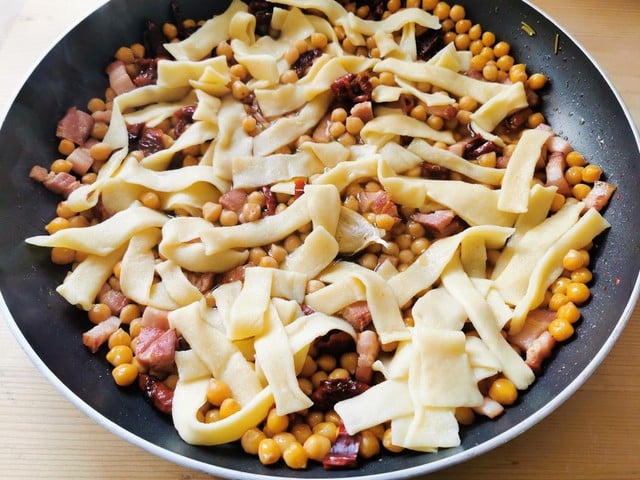
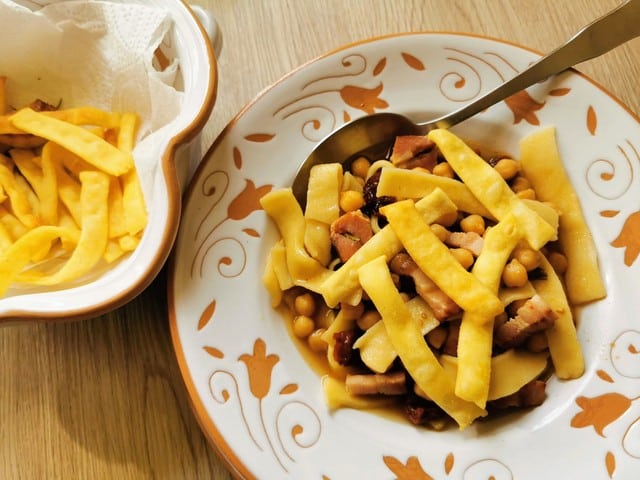
Step 10: Set aside one third of the fresh cut sagne from step 7 for frying. Add only the other two thirds directly to the chickpea broth, following the source’s direct-in-broth route. Cook until tender, about 5–7 minutes in total according to thickness, tasting to check. Heat and add additional selected broth only as needed to keep it soupy. Fry the held raw one-third portion in parallel as directed in step 11 so it is crisp for serving.
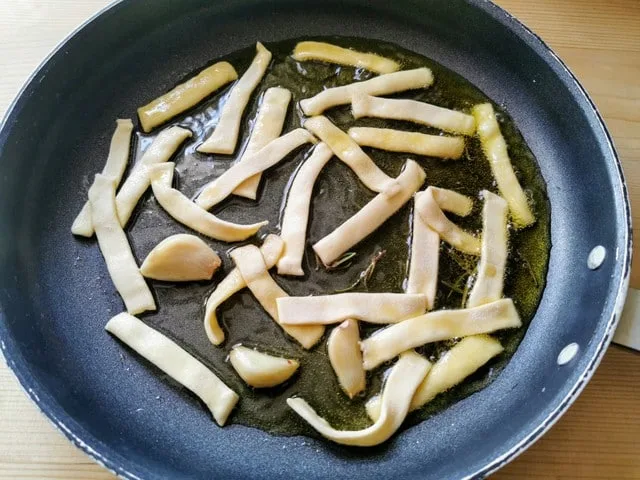
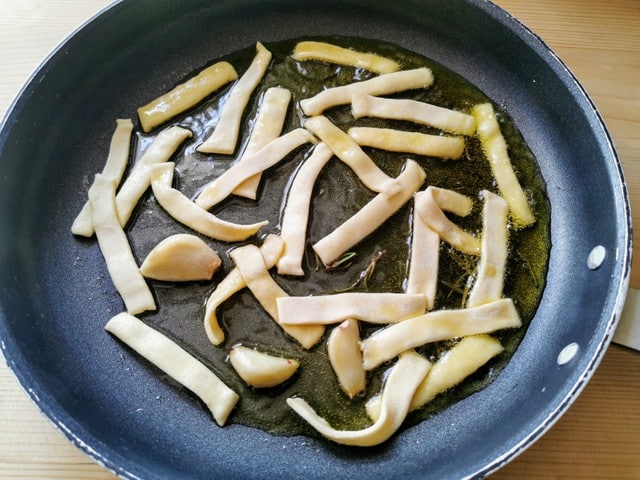
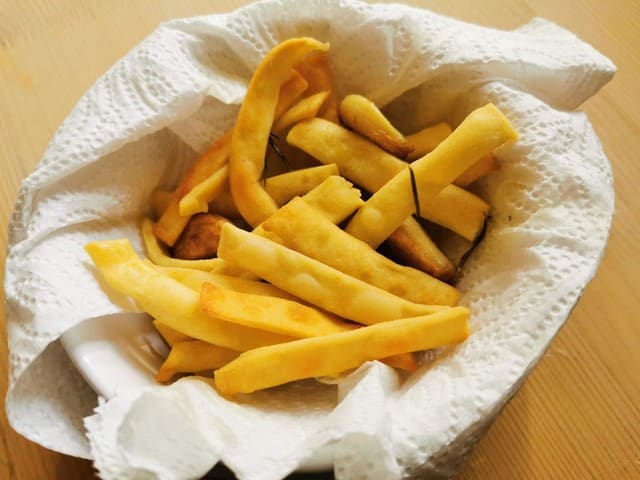
Step 11: Heat the frying olive oil in a pan with the softened unpeeled garlic clove taken from the chickpea broth and the reserved chopped rosemary. Fry the held raw one-third portion of fresh sagne until golden and crisp, in batches if necessary; the fresh pasta browns quickly, so watch it closely. Drain the fried pieces on kitchen paper.
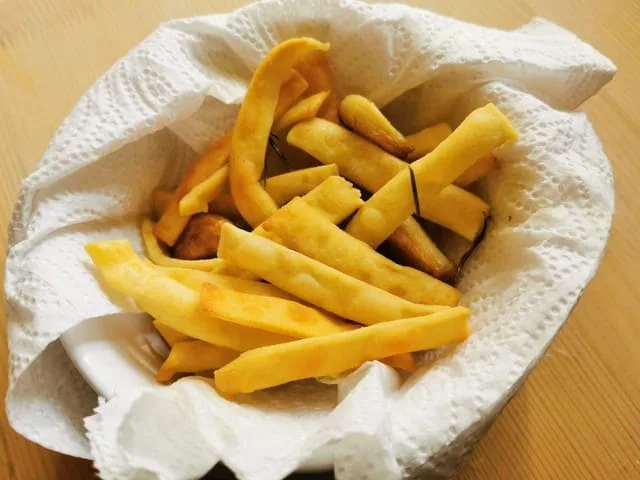
Step 12: Remove the remaining whole garlic cloves from both the soup and the fried-pasta pan. Divide the chickpea soup among four bowls. Add the crisp fried sagne only in the final minute before serving and serve immediately so the topping stays crisp.
Photos (4)
Comments
0 threadsSign in to join the discussion.

No comments yet. Start the discussion.