
Chinese · Dinner
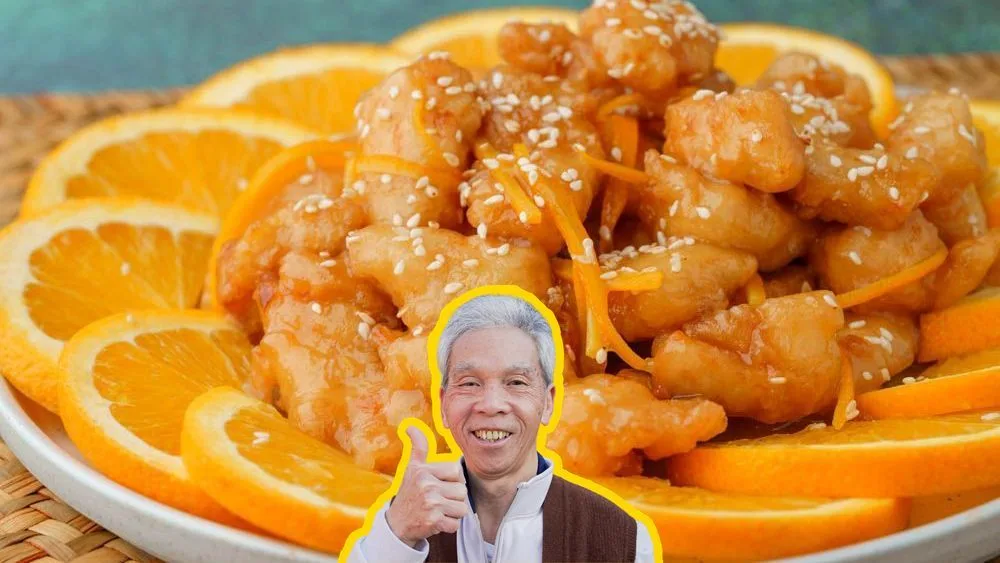
The Orange Chicken My Dad's Made 100,000 Times
From the zcook collection
Learn how to make Orange Chicken from a 2x James Beard Award Winning Chinese Chef with 60+ years of experience
- Dairy-free
- Chinese
- main course
- Chinese American food
- Panda Express
- Total
- 45 min
- Prep
- 15 min
- Cook
- 30 min
- Serves
- 4
- Level
- Hard
Method8 steps · about 45 min
Step 1: Because chicken breast (12 oz) is usually thicker on one end and thinner on the other, take the chicken breast and cut it in half horizontally to even out the thickness. Then cut it into roughly 1/2 inch thick strips. Put the chicken into a medium-sized bowl and push it to the side, so that you have room to mix together salt (1 tsp), cornstarch (1 tbsp), and water (1 tbsp). Dissolving the dry ingredients into the water first will make the marinade easier to distribute evenly. Then mix it all together. Beat one egg. Measure half for the marinade, reserve one quarter for the batter, and reserve the unused last quarter for another use. Add and mix in the measured half egg, which will help the batter adhere to the chicken later on. Refrigerate while preparing the remaining components.
Step 2: Using a clean board and knife, cut one of the two oranges into eighths, and then squeeze out the juice into a small bowl. Put the juiced slices aside for later. If your juice has debris in it, you can strain it. Add sugar (1.3 tbsp) and white vinegar (1 tbsp). You can adjust the amounts now, or later on, to your liking. Add salt (1/2 tsp) and oyster sauce (1 tbsp) to enhance the orange sauce.
Step 3: Mix the sauce slurry's 1 tbsp cornstarch with its separate 3 tbsp water until smooth. Reserve for thickening the orange sauce.
Step 4: For presentation (and a refreshing snack between bites of chicken), use a clean board and knife to cut the remaining whole orange for garnish. Cut the orange in half, and then into 1/4 inch slices. We also want to use the peel from the orange slices that we juiced earlier, although this is optional. Turn your knife horizontal and carefully cut off leftover orange flesh and as much of the white pith as you safely can, until you are left with only the orange part of the peel. The pith tastes bitter and can really affect the flavor of your dish. Then, slice the orange peel into very thin strips. You'll probably only want to use about half of this prepared peel, reserving or discarding the rest, because too much of the peel will make the dish taste bitter. Again, it's optional to use the peel at all.
Step 5: Mix the batter's 3 tbsp flour, 1 tbsp cornstarch and 1 tsp baking powder. Stir in the batter's separate 5 tbsp water, then the reserved quarter beaten egg and the batter's 1 tsp oil. Mix until smooth, with thin ribbons that melt back into the batter; add a little optional extra water only if needed so it coats the chicken.
Step 6: Turn up your fan, because we're going to deep-fry this chicken! In a deep pot, pour in enough oil so that the chicken will be submerged completely. Heat up the oil to 300°F. While the oil heats up, mix the batter in with the chicken. Then, they're ready for the first fry. Carefully place individual pieces of chicken into the oil, keeping them separate so they don't stick together. Fry the pieces until slightly golden and the chicken centre reaches 74°C/165°F, using the source's 2.5–3-minute guide and continuing as needed, and then scoop them carefully out of the pot and into a bowl or dish. We recommend doing this initial fry in two or more batches, because it'll be easier to keep them from sticking together, and because bigger batches of chicken will make the temperature of the oil fall more rapidly, which may result in greasier, soggier chicken. When all of the chicken has gone through the first fry, heat up the oil to 400°F. This is the fry that gets us the much-coveted crunch. Put all of the chicken back in (if it fits, there's no need to split this into batches), and fry for another 2.5-3 minutes, until they're golden brown. Take the fully cooked chicken out and drain. Discard excess batter that contacted raw chicken. Reserve the oil for cooking with later. We'll use some of it in the next step.
Step 7: We're going to cook the sauce first, and then toss in the fried chicken. Turn the stove on high, and add the orange-peel 1/2 tbsp oil to the wok. You can use the oil that you reserved from frying the chicken in the previous step. If using peel, add about half of the thinly sliced prepared orange peel and give it a quick stir. Then, pour in the orange sauce. Let it come to a boil. Meanwhile, begin garnishing the serving dish by arranging the orange slices in a tidy pattern around the outside edge of the plate. Once the sauce has come to a boil, lower the heat and slowly drizzle in the cornstarch slurry. Be sure to stir constantly so that you don't end up with a big lump of cornstarch in your wok. Add the separate 1 tbsp sauce oil. If you want to cook off more of the water for a thicker sauce, keep the sauce cooking for a bit longer before adding the chicken. When you're ready to add the chicken, turn the heat back up and add the chicken pieces back in. Toss the chicken around in the sauce for 15-20 seconds, and then turn off the heat. Drizzle the finishing 1 tsp oil for added shine, mix quickly, and plate.
Step 8: Arrange the sauced-up chicken onto the plate with your neatly-arranged orange slices, and if you have sesame seeds (1 pinch), sprinkle them on top.
Photos (1)
Comments
0 threadsSign in to join the discussion.


No comments yet. Start the discussion.