
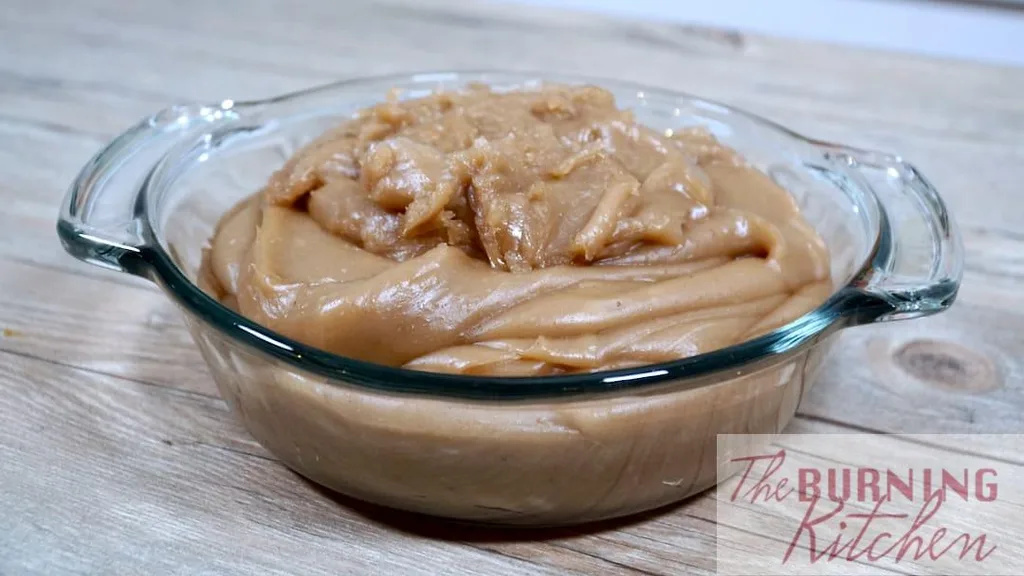
Chinese · Dessert
Homemade Lotus Seed Paste (莲蓉馅料)
From the zcook collection
Lotus seed paste, which is derived from lotus seeds, is a filling commonly used in Chinese desserts and pastries. Such delicacies include the lotus bun/'lian rong bao', and the decadent mooncake that we enjoy during Mid-Autumn Festival.
- Vegan
- Dairy-free
- Chinese
- Dessert
- Snack
- Total
- 2 hr
- Prep
- 1 hr
- Cook
- 1 hr
- Serves
- One batch of lotus-seed paste; weigh the finished paste for use in pastries
- Level
- Medium
- Energy
- 893 kcal
Method11 steps · about 2 hr
Step 1: Bring the separate 1,500 ml first-boil water to a boil. Add the unwashed halved lotus seeds and 1 tbsp food-grade alkaline water. Boil for 20 minutes.
Step 2: Lift the seeds out of the first boiling liquid into a bowl of clean water. Discard the boiling liquid. Remove the skins, any remaining bitter cores and the ends, rubbing the seeds in the water as needed.
Step 3: Rinse the peeled seeds thoroughly with clean water and drain.
Step 4: Bring the separate 1,000 ml fresh second-boil water to a boil. Add the rinsed seeds and 1 pinch salt. Cook for about 30 minutes, until the seeds are soft.
Step 5: Lift out the soft seeds and blend while still hot until completely smooth, using a blender suitable for hot food and following its venting instructions. Discard unused cooking liquid.
Step 6: Take about 5 tbsp from the single 500 g sugar supply and keep its remainder aside. Heat a wok over moderate heat and stir this sugar until it melts and caramelises to golden; avoid high heat and watch it closely.
Step 7: As soon as the caramel is golden, add the smooth lotus paste and combine thoroughly.
Step 8: Turn the heat to low. Add all the sugar remaining from the 500 g supply after the first about 5 tbsp draw, stirring until it dissolves completely.
Step 9: Continue stirring until the paste thickens. Gradually incorporate the full 2¼ cups peanut oil in three batches, mixing each addition in well before adding more. Keep the heat gentle and scrape the wok constantly to prevent burning.
Step 10: Add the 2 tbsp maltose and continue stirring until the paste is glossy, thick and no longer sticks to the wok.
Step 11: Transfer the finished paste to shallow containers and cool promptly. Refrigerate within 2 hours, or within 1 hour above 32°C, then let it firm up in the fridge. Store covered or transfer to sealed bags once cooled, or freeze for later use. Weigh the finished batch if a pastry recipe needs a measured amount.
Photos (1)
Comments
0 threadsSign in to join the discussion.
No comments yet. Start the discussion.