
Thai · Dessert
Thai Red Ruby in Coconut Milk (Tub Tim Grob)
From the zcook collection
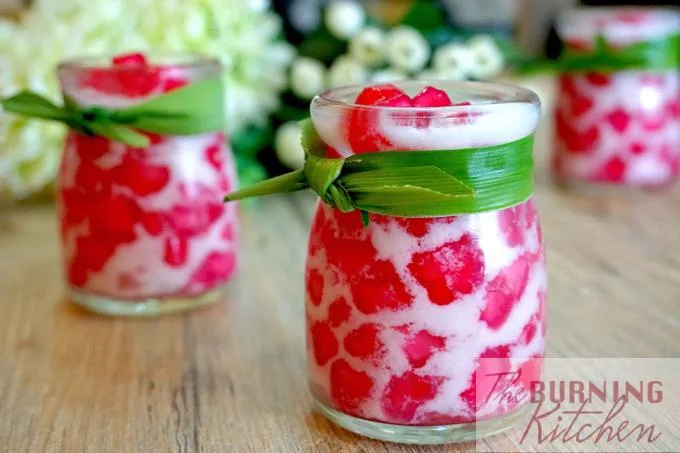
Crunchy water chestnut cubes in red tapioca jelly, served chilled with freshly extracted coconut milk and pandan. The thicker second coating is optional.
- Vegan
- Dairy-free
- Thai
- Dessert
- Prep
- 30 min
- Cook
- 25 min
- Serves
- 4
- Level
- Medium
- Energy
- 474 kcal
Method16 steps
Step 1: Wash the pandan leaves, twist to bruise their fibres and tie into a knot.
Step 2: Brush mud off the fresh water chestnuts (300 g), then wash thoroughly. Cut off both ends, peel and remove any remaining eyes with a knife tip.
Step 3: Dice the peeled chestnuts into roughly 1 cm cubes; keep their crunchy texture rather than crushing them.
Step 4: Mix the red colouring and 4 tbsp colouring water in a bowl. Add the diced chestnuts and turn until evenly stained. Let stand for 20 minutes while extracting the coconut milk.
Step 5: Mix the fresh grated coconut (250 g) with the 150 ml warm first-extraction water and squeeze several times. Press through a sieve over a bowl to collect the first coconut cream, or santan. Reserve this cream separately and keep the pressed coconut solids for the second extraction.
Step 6: Add the 1.1 litres warm second-extraction water to the same pressed coconut solids. Squeeze and strain into another bowl to collect the thinner second coconut milk. Discard the spent solids and keep the first cream separate.
Step 7: Drain the stained chestnuts, discarding excess colouring liquid. Put the chestnuts in a clean food-safe bag, add the ¾ cup first-coating tapioca flour, leave some air in the bag and seal. Shake firmly until every cube is coated.
Step 8: For a thicker jelly coating, spritz the coated chestnuts with a little optional clean water and shake with the separate optional ¼ cup tapioca flour. Otherwise keep the single coating.
Step 9: Shake off and discard excess loose tapioca flour, then spread the coated chestnuts on a plate.
Step 10: Put the thinner second coconut milk, sugar, salt (¼ tsp) and prepared pandan in a pot. Heat gently over medium heat for about 10–15 minutes, until the sugar dissolves and the pandan is fragrant. Check at 10 minutes and reduce heat if vigorous bubbling starts.
Step 11: Add the reserved first coconut cream and heat over medium-low heat, stirring constantly, for about 5 minutes. Turn off as soon as the mixture begins to bubble; do not let it boil vigorously. Lift out and discard the pandan knot.
Step 12: Cool the coconut soup promptly in shallow containers and refrigerate covered at 4°C (40°F) or below within 2 hours, or 1 hour above 32°C. Chill until cold. Serve it the same day for best flavour; if retained separately, the author allows up to 2 days in a sufficiently cold refrigerator.
Step 13: Before boiling the rubies, put the two trays of ice cubes (2) in a clean bowl and add enough cold water to make an ice bath. Have it ready beside the stove for the cooked rubies.
Step 14: Bring the 2.5 litres ruby-boiling water to a full boil in another pot. Add the coated chestnuts and stir constantly to keep them separate. Boil for about 5–7 minutes, checking at 5 minutes, until the jelly coating is cooked and the rubies float. Once floating, continue for another 1–2 minutes as the author’s tip directs, then lift them into the prepared ice bath.
Step 15: Lift the fully cooked rubies out of the boiling water with a slotted spoon and plunge into the prepared ice bath. Keep the rubies in clean cold water in the refrigerator until serving so they do not stick together. Serve the same day rather than keeping them overnight.
Step 16: Drain a serving of the chilled rubies just before eating, put in an individual bowl and add a portion of the chilled coconut soup. Divide among four servings and serve cold; mix the soup and rubies only at serving so the soup stays white.
Photos (1)
Comments
0 threadsSign in to join the discussion.
No comments yet. Start the discussion.