


Italian · Dinner
Eggplant Parmigiana Lasagna (lasagne alla Parmigiana)
From the zcook collection
Layers of egg pasta, fried eggplant, homemade tomato sauce, basil, mozzarella and béchamel combine lasagne al forno with eggplant parmigiana. Use labelled vegetarian hard cheese for a vegetarian version.
- Italian
- Mediterranean
- Southern Italian
- Dinner
- lunch
- Main Course
- Total
- 1 hr 30 min
- Prep
- 10 min
- Cook
- 1 hr 20 min
- Serves
- 6
- Level
- Medium
Method11 steps · about 1 hr 30 min
Step 1: Wash and slice the three eggplants. Peel the three garlic cloves and keep them whole. Drain the 10 oz fresh mozzarella and cut it into half or quarter slices. Grate the measured 150 g Parmigiano or Grana, keeping enough for the top. Wash the fresh basil leaves, if using.
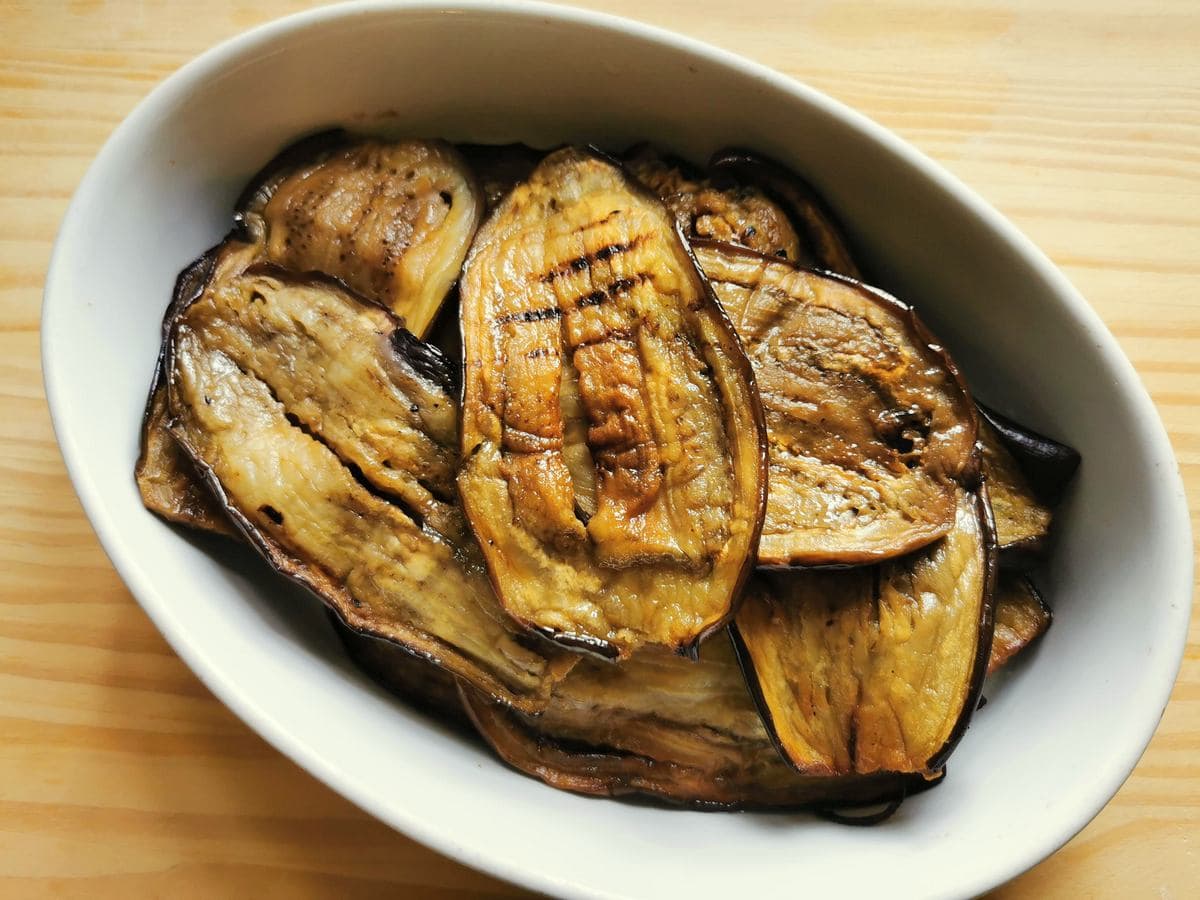
Step 2: Heat enough of the unmeasured frying oil in a deep frying pan or large skillet. Fry all the eggplant slices from step 1 until golden on both sides. Lift onto kitchen paper to drain excess oil. Keep the fried slices for the layers.

Step 3: If you used vegetable oil (3 tbsp) in step 2, remove it from the pan, wipe the pan with kitchen paper and add the 3 tablespoons sauce olive oil. If you fried in olive oil instead, pour out any excess and leave just enough in the pan for the tomato sauce; do not add another 3 tablespoons on top of that retained oil.
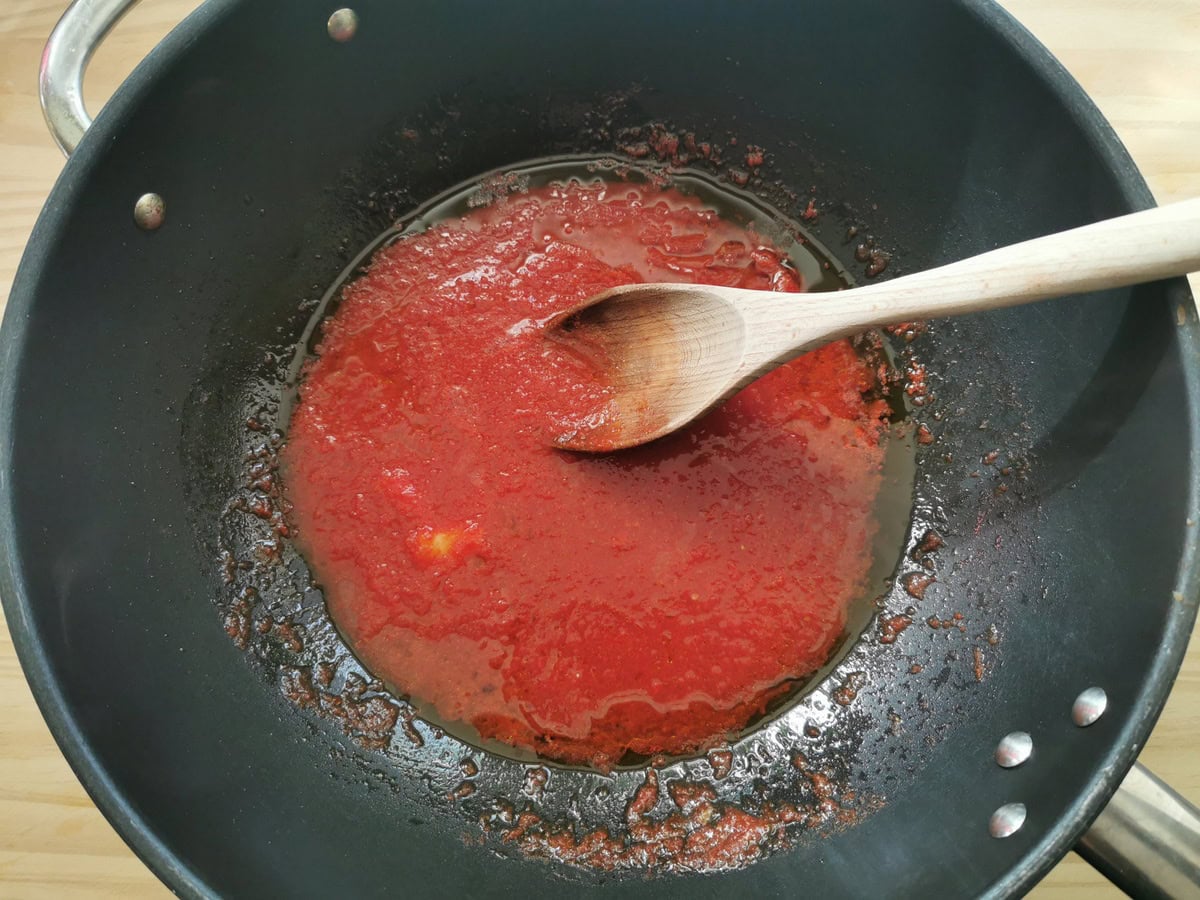
Step 4: Heat the sauce oil prepared in step 3. Add the peeled garlic cloves from step 1 and sauté until they start to soften. Add all 700 ml passata and simmer over medium heat for about 20 minutes, until slightly reduced and thickened. Season with tomato-sauce salt and black pepper. Remove the garlic cloves and set the sauce aside to cool.

Step 5: For homemade béchamel, melt the 70 g béchamel butter over low heat. Stir in 70 g flour to form a roux, then remove from the heat and slowly whisk in all 500 ml milk until smooth. Return to low-moderate heat and stir constantly until it begins to simmer and thicken. For the ready-made alternative, omit these homemade ingredients and skip steps 5–6; use the 475 ml ready-made sauce in the layers instead.
Step 6: For homemade béchamel only, lower the heat, stir in the pinch of béchamel salt, black pepper and pinch of nutmeg, and stir for 1 minute. Take off the heat and allow to cool and thicken. Keep this sauce for steps 8–10; the homemade batch is an alternative to the 475 ml ready-made sauce, not an extra sauce.
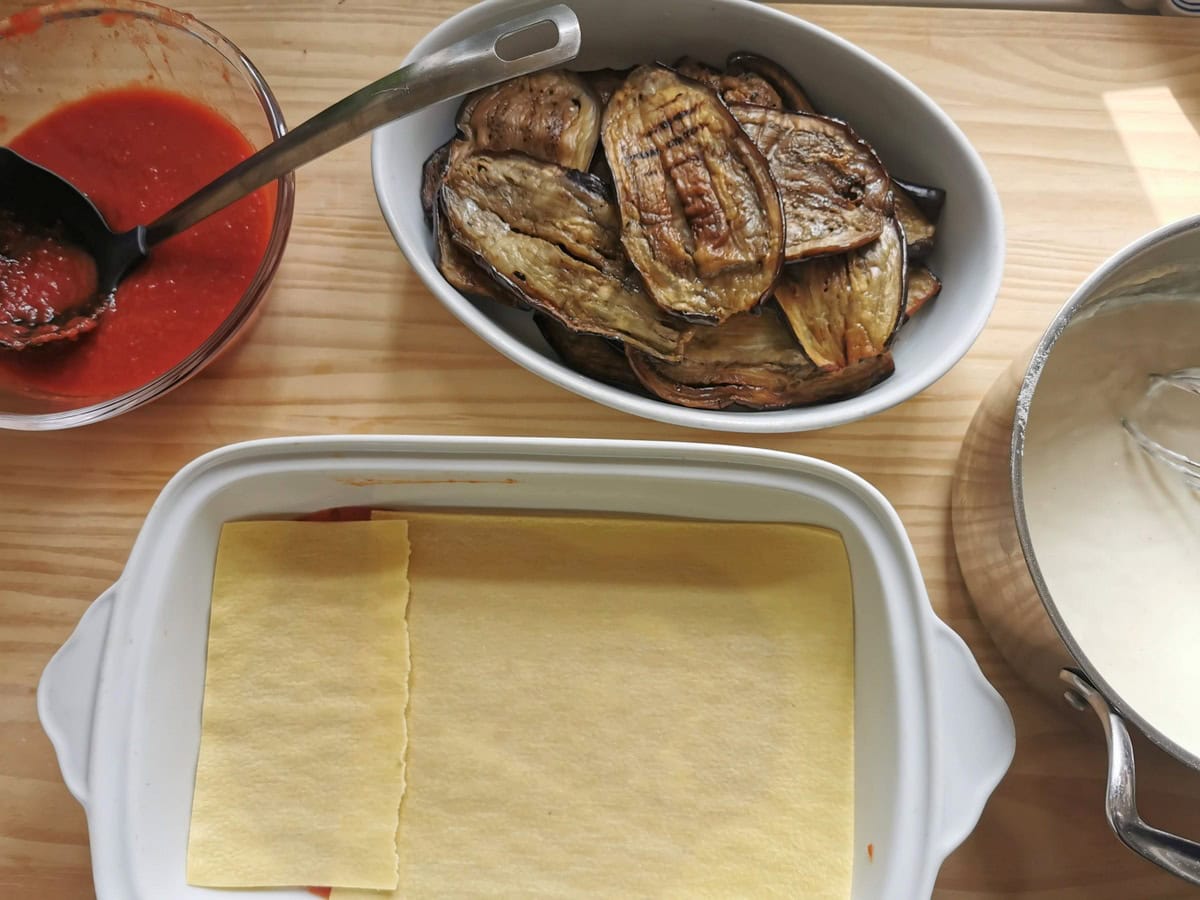
Step 7: If using dried lasagne sheets, blanch the entire 300 g batch in boiling salted water according to the packet until pliable, drain and separate the sheets; keep them ready for all the layers. Fresh or previously made fresh sheets need no precooking. Spread a thin layer of the tomato sauce from step 4 over the bottom of a rectangular lasagna dish, then add a single layer of the chosen pasta sheets. Keep the remaining sheets and tomato sauce for the following layers.

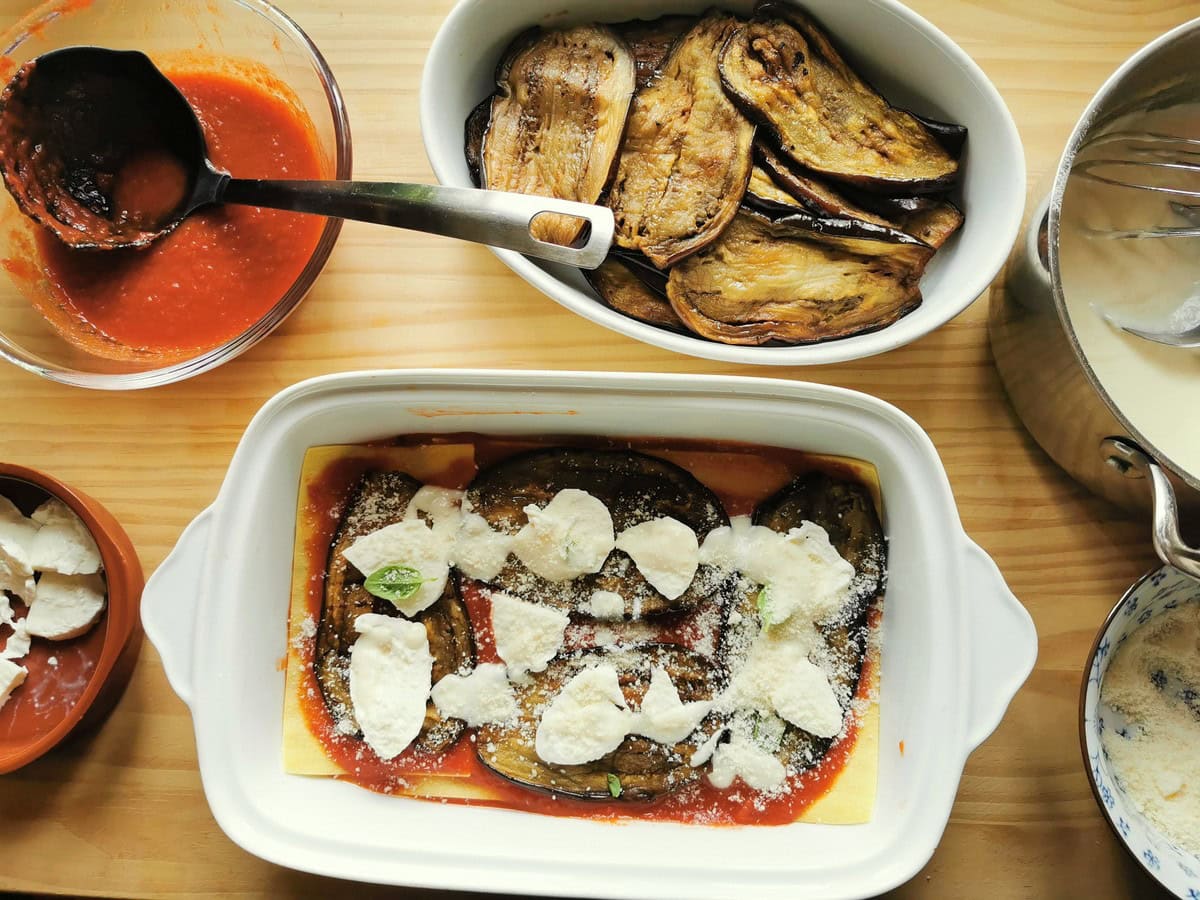
Step 8: If choosing ready-made béchamel (2 tbsp), check its consistency before layering; thin it with a little extra milk only if necessary. Cover the first pasta layer from step 7 with some tomato sauce from step 4, fried eggplant from step 2, sliced mozzarella and basil prepared in step 1. Sprinkle with some of the hard cheese grated in step 1 and spoon over 2 tablespoons of your chosen béchamel: homemade sauce from step 6 OR ready-made sauce. Keep the remaining ingredients for further layers.

Step 9: Add another layer of the prepared dried sheets from step 7 or uncooked fresh sheets from the measured stock. Add a thin layer of the cooked tomato sauce, then fried eggplant, prepared mozzarella, basil, grated cheese and 2 tablespoons of the chosen béchamel as in step 8. Repeat once or twice more according to the depth of the dish, using the inner-layer ingredients across the layers. Reserve enough pasta, chosen béchamel and grated hard cheese for the final top layer; do not restart any measured stock.
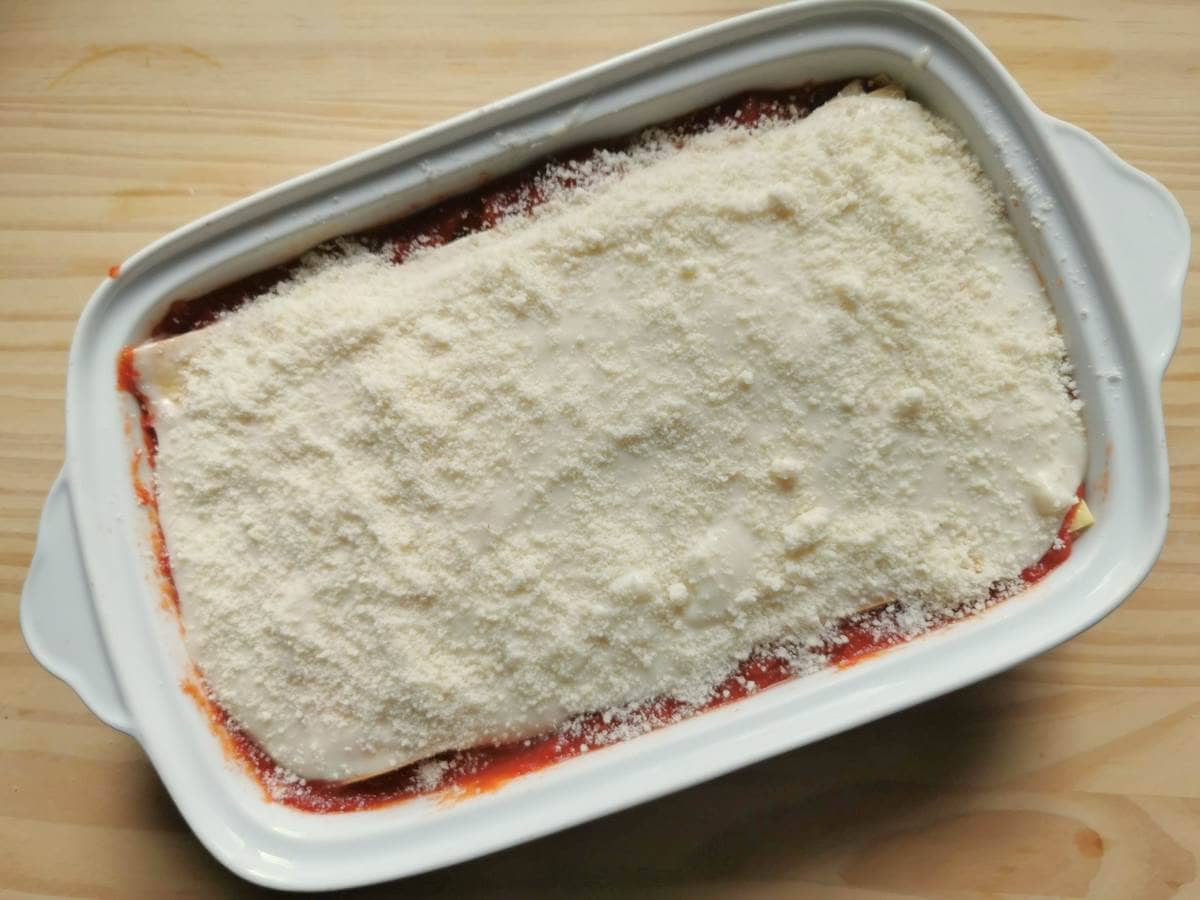
Step 10: Finish the layered lasagna from step 9 with the last pasta sheets, the remaining chosen béchamel and the hard cheese reserved from the original 150 g stock. Add extra grated cheese beyond that stock only if needed. Keep the homemade and ready-made béchamel routes mutually exclusive.

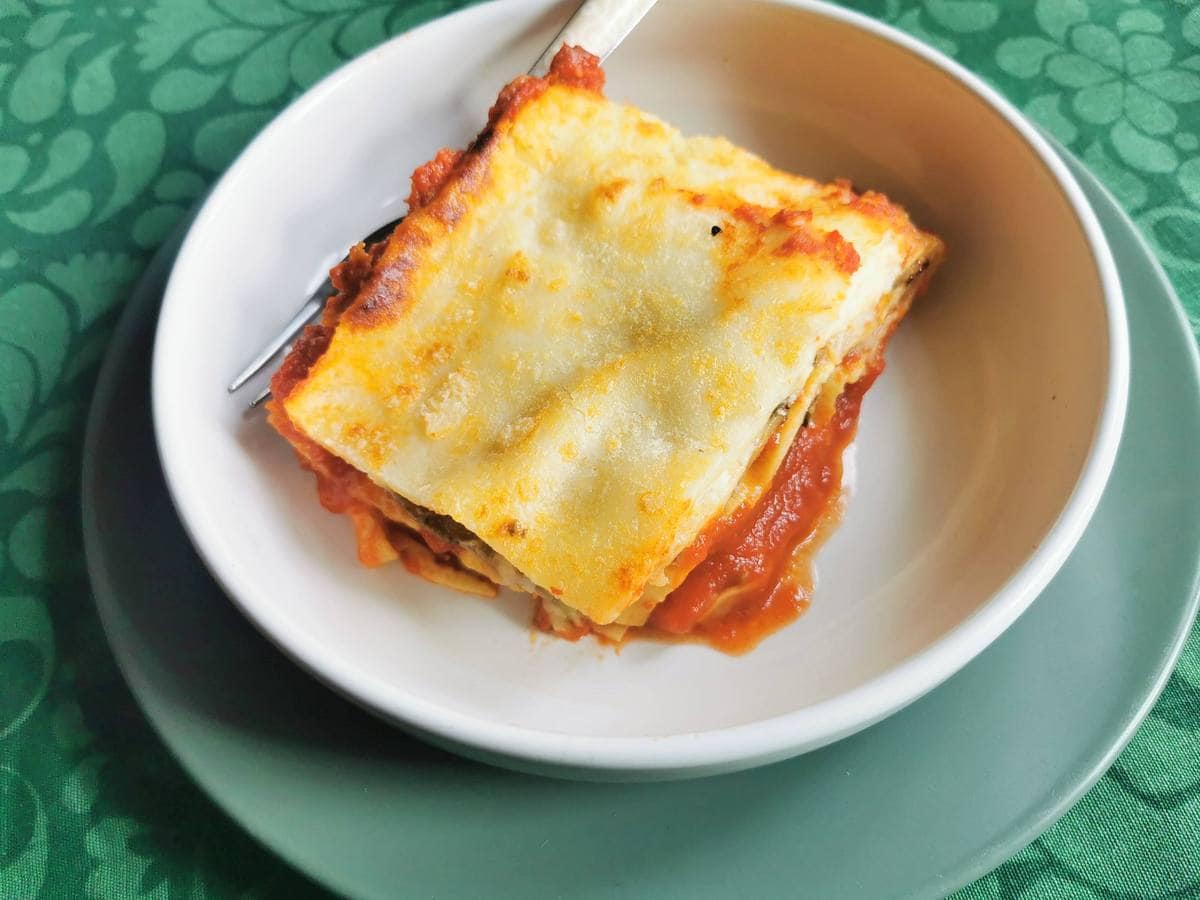
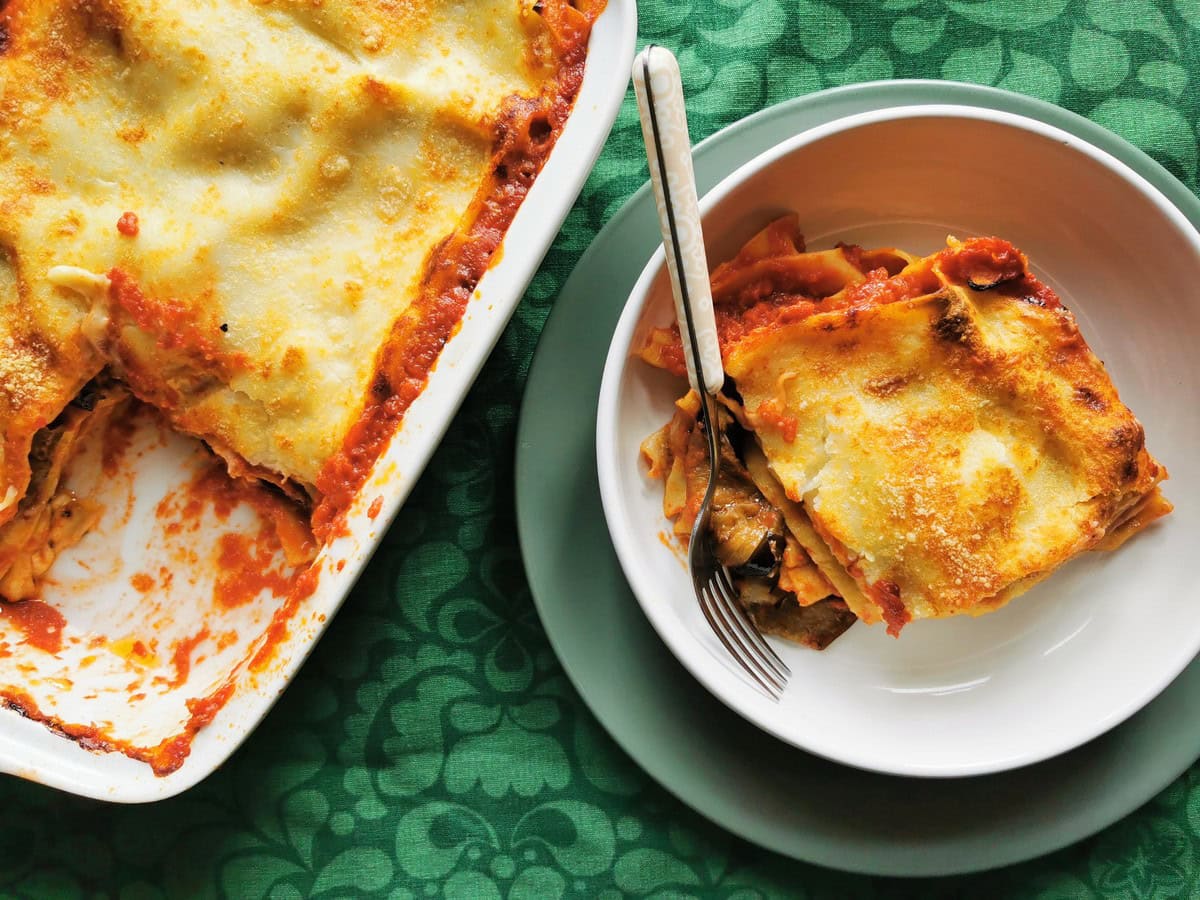
Step 11: Bake the assembled lasagna in a preheated oven at 180°C (356°F) until the pasta is tender and the top is golden brown and slightly crisp; turn the dish if needed for even cooking. The author gives no numeric baking duration. Once baked, let it rest for at least 5 minutes before cutting into six portions and serving.


Photos (5)
Comments
0 threadsSign in to join the discussion.


No comments yet. Start the discussion.