
Chinese · Side dish
Easy Homemade Noodles (No Machine Required)
From the zcook collection
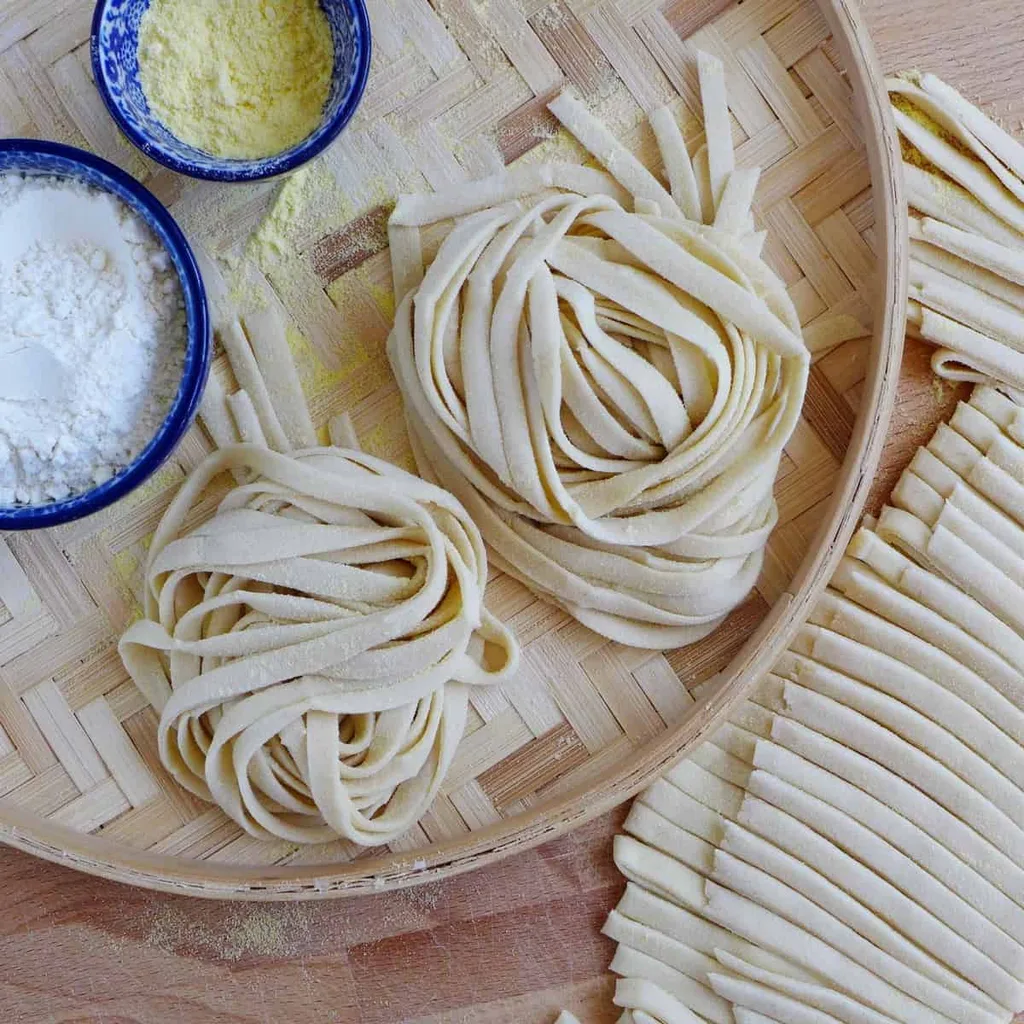
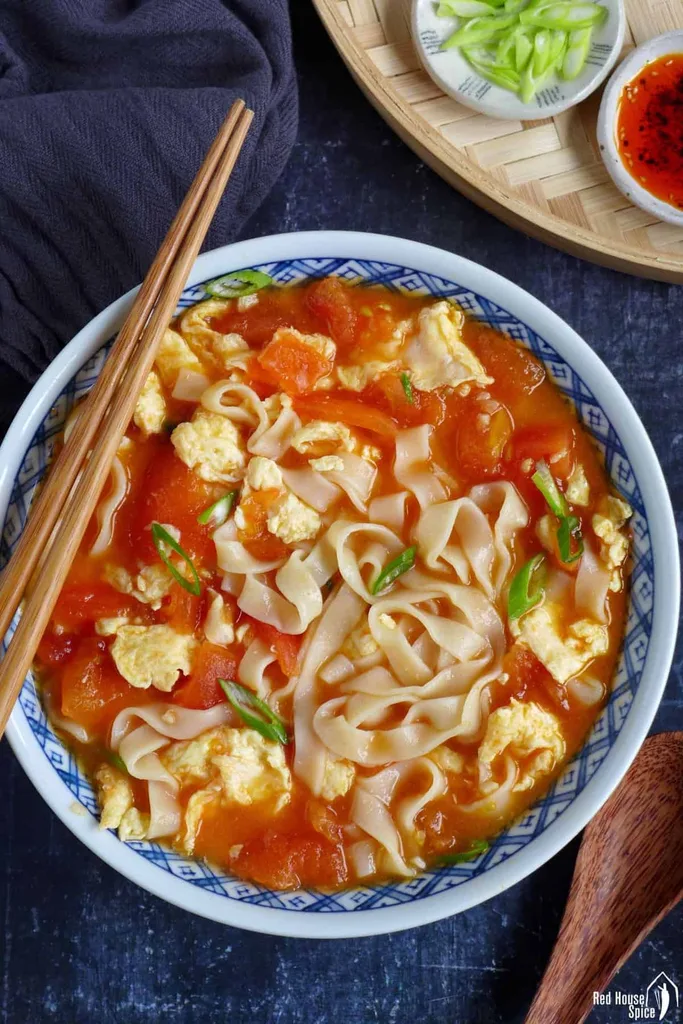
Plain Chinese wheat noodles made by hand from a firm dough, rolled, knife-cut and briefly boiled. Makes about three noodle portions for a separately prepared soup or sauce.
- Vegan
- Dairy-free
- Chinese
- Homemade noodles
- Wheat
- Total
- 45 min
- Prep
- 40 min
- Cook
- 5 min
- Serves
- 3 portions of plain noodles
- Level
- Medium
- Energy
- 306 kcal
Method9 steps · about 45 min
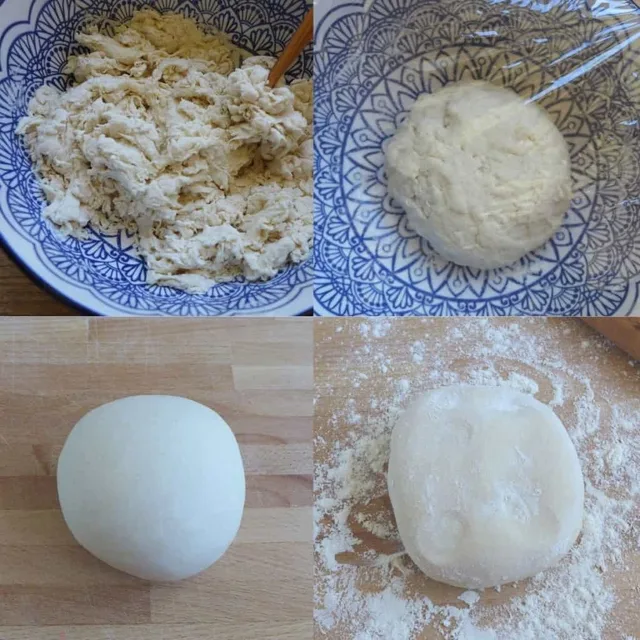
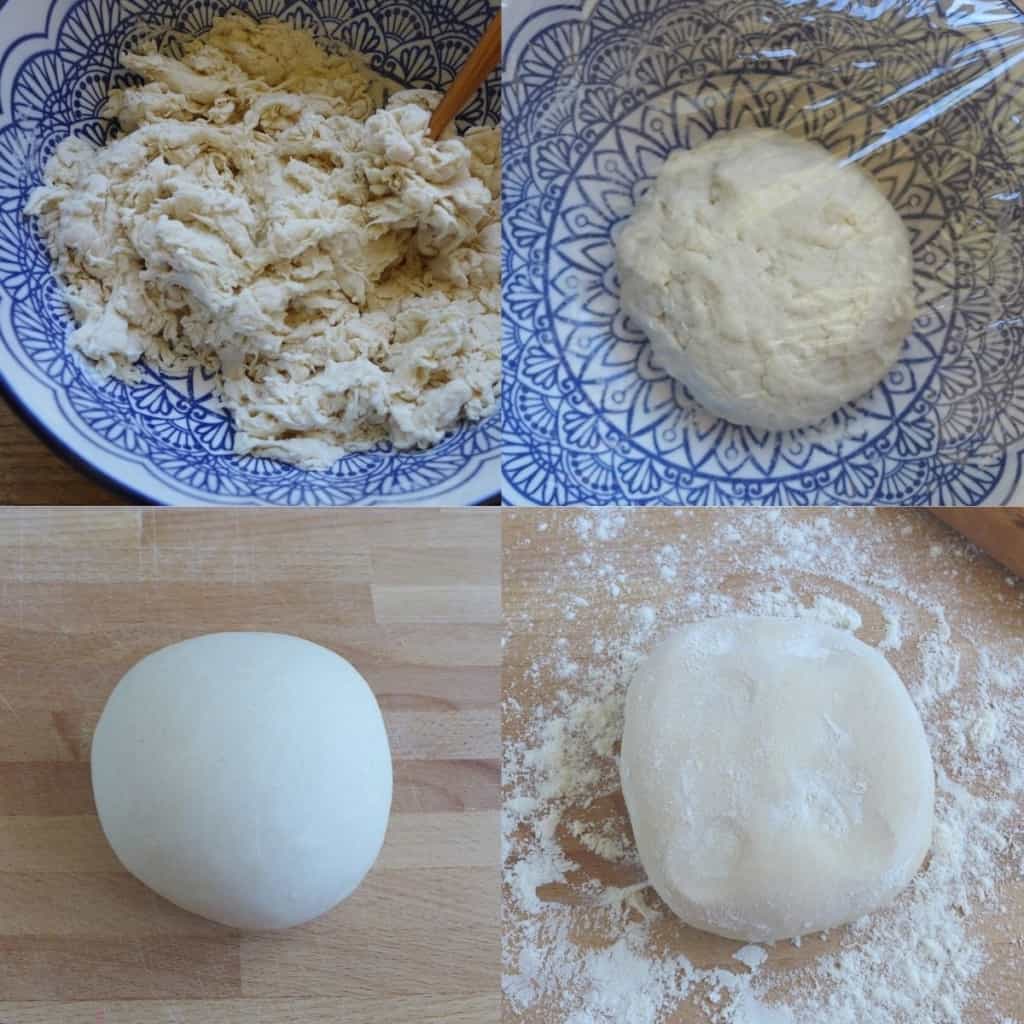
Step 1: In a large bowl, mix the 250 g all-purpose flour with the ¼ teaspoon salt. Gradually stir in the 115 g room-temperature dough water to distribute it evenly. Adjust with a little optional extra water only if needed: the dough should be firm and not crumbly.
Step 2: Gather the mixture from step 1 into a rough dough, cover and rest for 30 minutes. Avoid extending this rest beyond 1 hour, as the dough will become too soft and sticky for easy rolling.
Step 3: Knead the rested dough from step 2 for about 3 minutes, until very smooth.
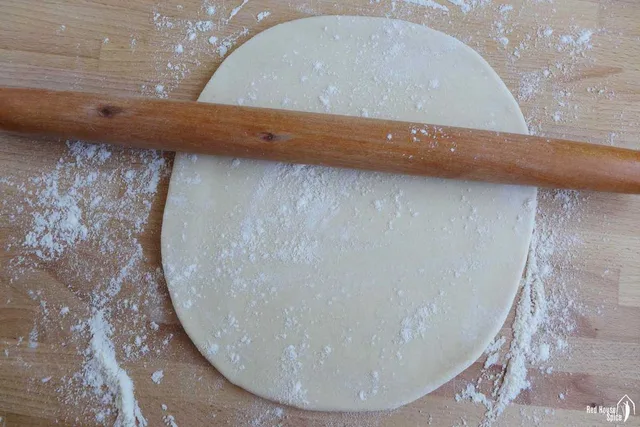
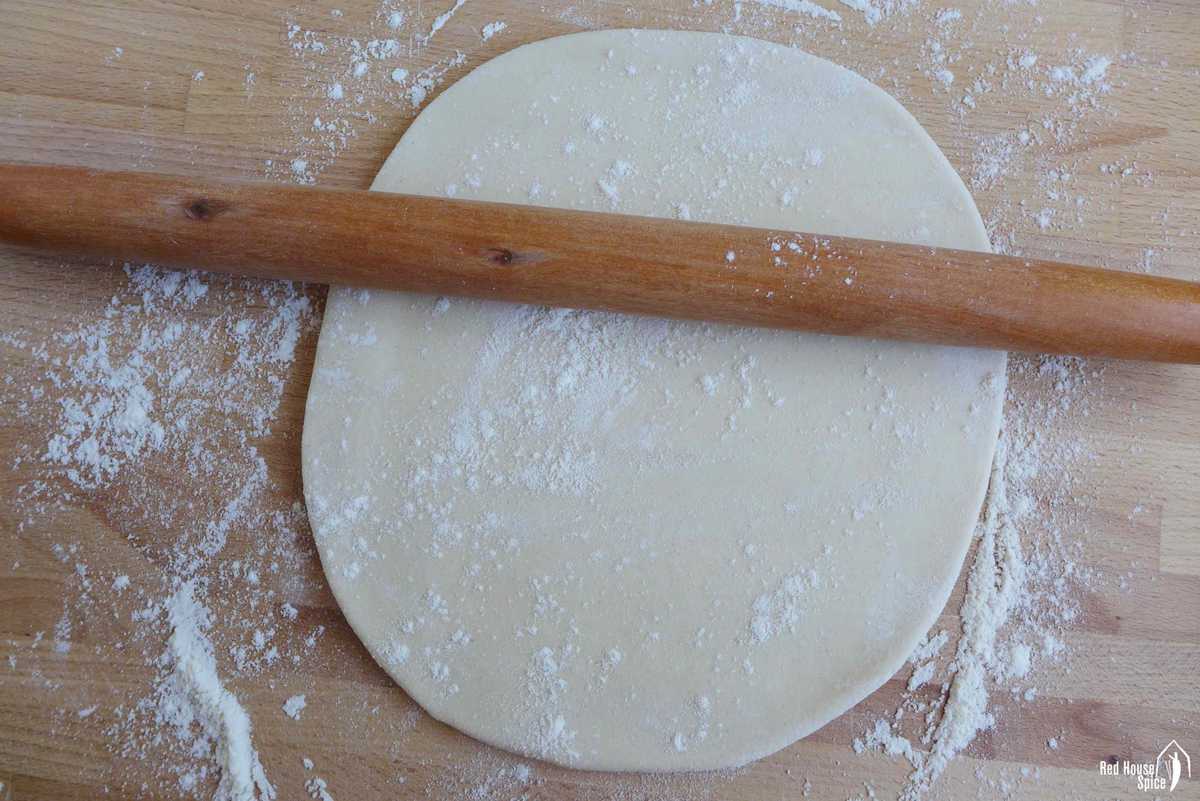
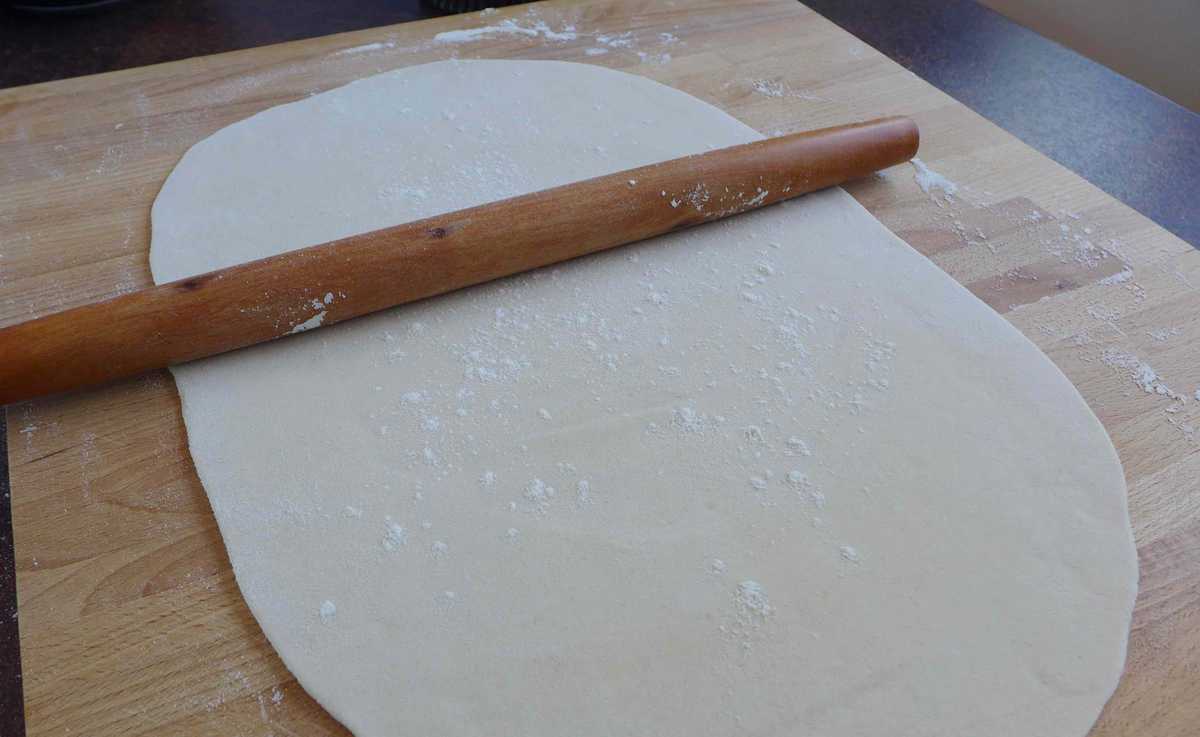
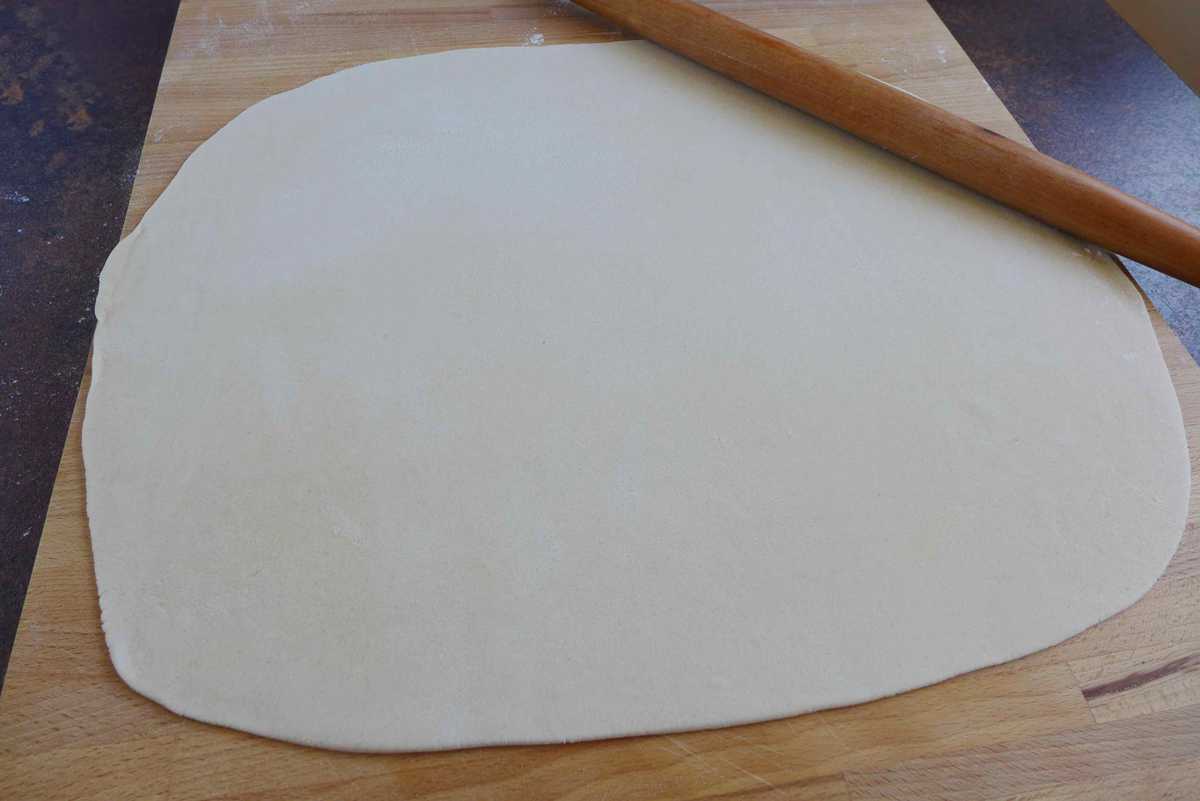
Step 4: On a lightly floured work surface, roll the smooth dough from step 3 into an even sheet about 2 mm thick. Turn and flip it as needed, dusting the surface and dough with extra flour to prevent sticking. If easier, divide it into two pieces and roll each separately.
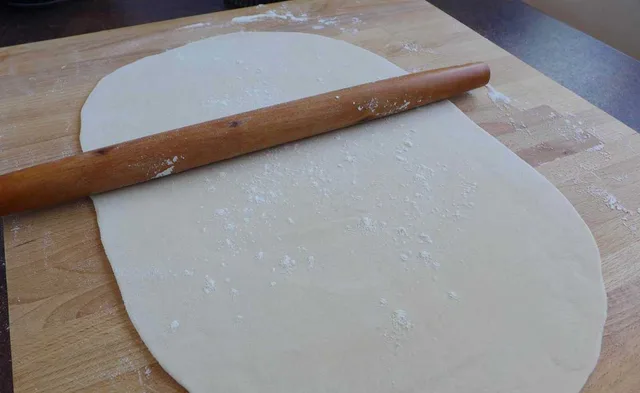
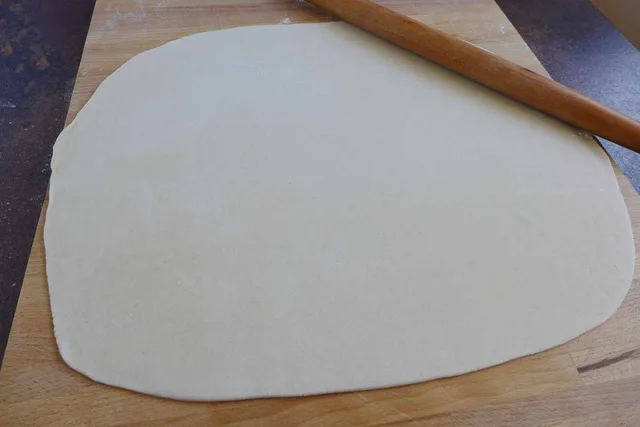
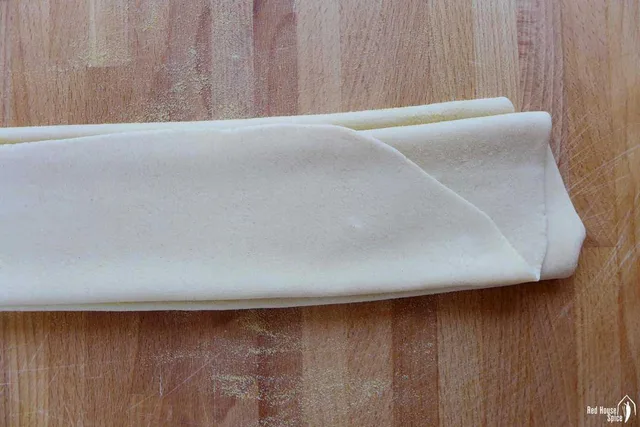
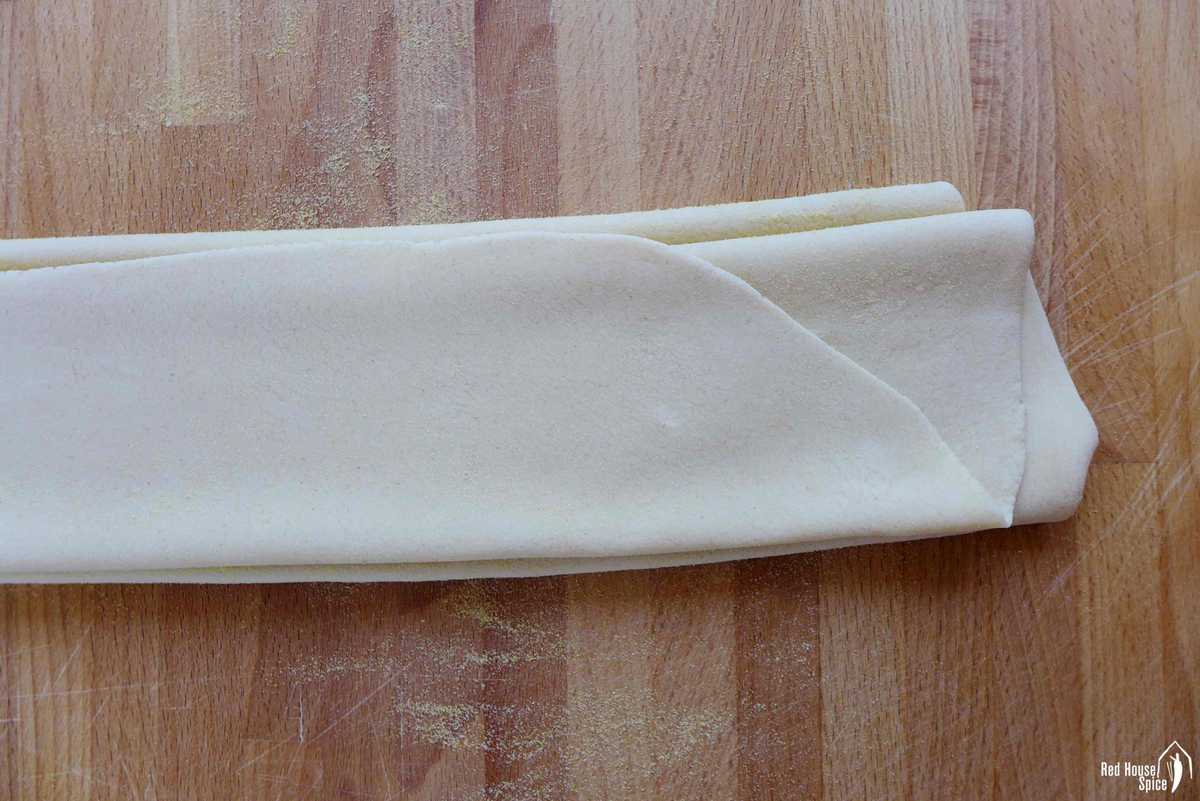
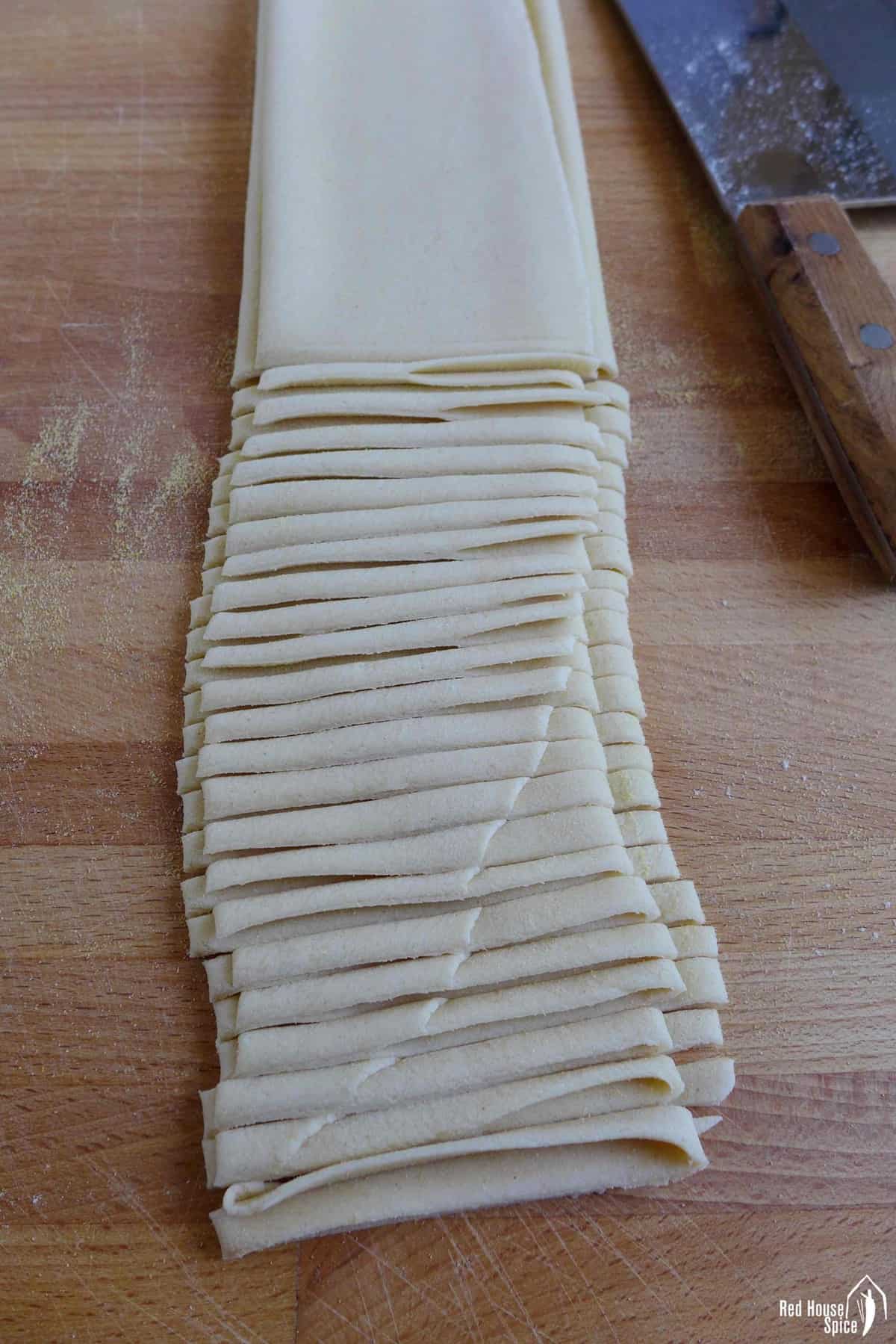
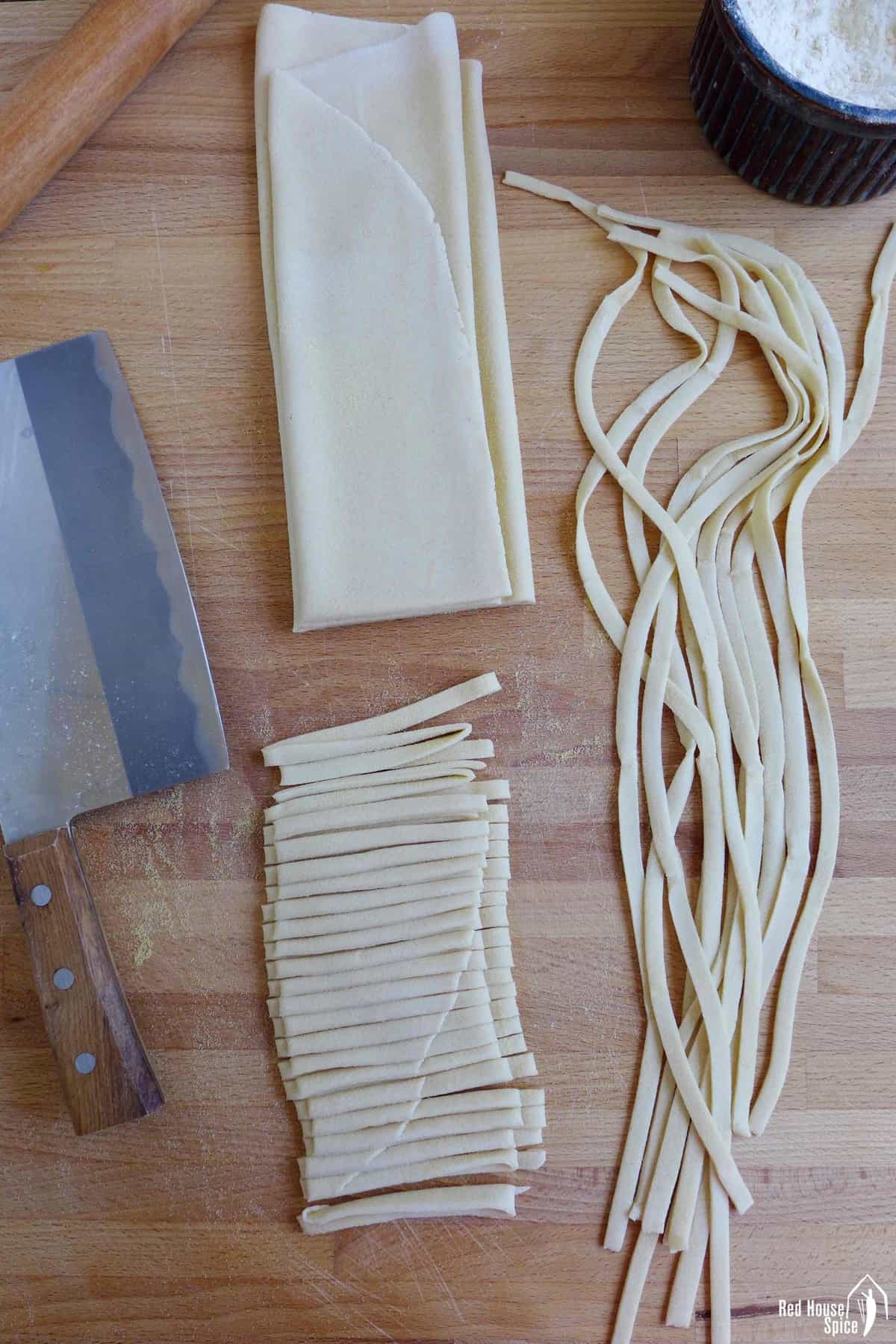
Step 5: Dust over and underneath the rolled sheet or sheets from step 4 with the optional tablespoon cornmeal (1 tbsp). Fold into a band of 4–5 layers. With a sharp, dry knife, press straight down to cut thin strips; avoid sawing back and forth.
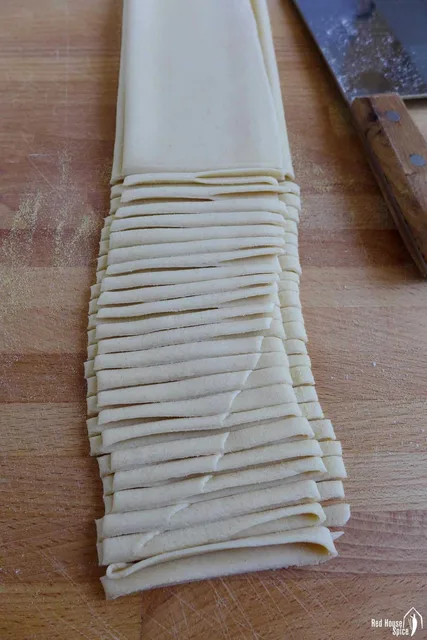
Step 6: Gently unfold and loosen the cut noodles from step 5, adding a little optional extra cornmeal if needed. Cook them fresh in step 7. To save any uncooked portions, arrange them in a single layer on a tray and freeze immediately; once solid, transfer to an airtight bag or container. Cook saved frozen portions through steps 7–9 without thawing.
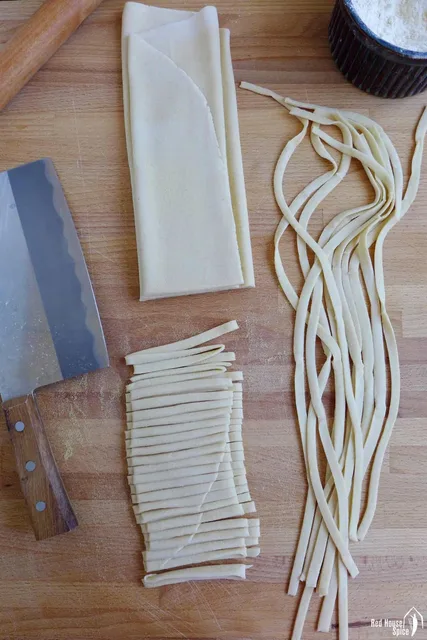
Step 7: Bring a large pot of the separate noodle cooking water to a full boil. Add the fresh noodles from step 6, or frozen portions without thawing, and cook over high heat. Once the pot boils again, pour in the separate 120 ml cold water.
Step 8: Continue cooking the noodle pot from step 7 over high heat for about 1–2 minutes, checking a strand from 1 minute. Cook until done to your taste; the time depends on strand thickness.
Step 9: Drain the cooked noodles from step 8 and discard the cooking water. Briefly rinse under drinking water to remove excess surface starch, then drain well. The plain noodles are ready for your separately prepared soup, sauce or toppings.
Photos (2)
Comments
0 threadsSign in to join the discussion.
No comments yet. Start the discussion.