
Chinese · Dessert
Tang Yuan (Sweet Rice Balls with Peanut Butter Filling)
From the zcook collection
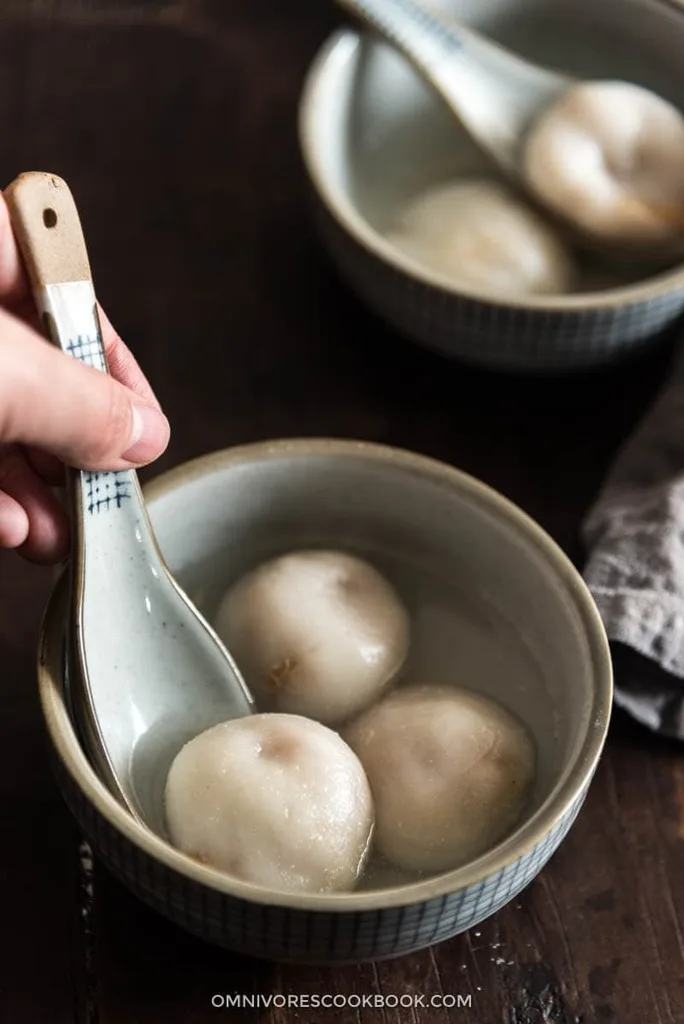
Learn how to make the best Tang Yuan with a runny filling that will melt in your mouth.
- Vegetarian
- Chinese
- Dessert
- Prep
- 40 min
- Cook
- 10 min
- Serves
- 24 to 32 rice balls
- Level
- Hard
- Energy
- 520 kcal
Method15 steps
Step 1: Spread peanuts in a pan and heat over medium heat on stove. When the pan turns warm, turn to medium low heat. Shake the pan occasionally for even cooking. Toast until the peanuts turn golden but not darkly browned. Alternatively, you can roast the peanuts in 350 F oven for 8 to 15 minutes, or until the surface turns golden. Shake the pan occasionally during baking.
Step 2: Grind the toasted peanuts finely in batches, without turning them into paste. Mix with the peanut butter (½ cup), caster sugar (1 cup) and softened butter, or the chosen source-listed alternative fat. Refrigerate for about 30 minutes or longer until firm enough to shape. If chilled too firmly, let soften briefly at room temperature.
Step 3: Scoop about 1–1½ teaspoons filling per ball, shape quickly and set on a small tray. Reserve any extra filling after making the batch.
Step 4: Transfer the peanut butter balls into the freezer while making the dough.
Step 5: Slowly stir the measured warm dough water (1 cup) into the glutinous rice flour (250 g). Work with your hands until it forms a dough. Add extra glutinous rice flour a tablespoon at a time only if too sticky. Stop kneading once the dough holds together, and keep it covered to prevent drying.
Step 6: Divide the dough into 4 equal pieces. Shape each piece into a round ball. Work on one dough ball at a time and return the three dough balls back into the large bowl, then cover with plastic wrap.
Step 7: Roll one dough quarter into an even strip, cut into 8 pieces and roll each piece into a small ball. Keep the other quarters covered.
Step 8: Work on the dough balls one by one. Flatten the dough into a round disk that has a dent in the center. Place the filling in the center of the dough. Seal the filling carefully by wrapping and spreading the dough. When you cannot see the filling anymore, roll the dough into a round ball by using both hands.
Step 9: If the remaining portions are too small to seal easily, knead the unfilled dough from that quarter together and divide into 5–6 larger portions instead. Flatten, fill and seal each tightly so it does not leak while boiling.
Step 10: Keep most filling balls in the freezer while wrapping, taking out only a few at a time so the filling stays firm.
Step 11: Repeat the portioning, filling and sealing with the remaining dough quarters.
Step 12: Cook the formed rice balls now, or freeze uncooked balls spaced apart on a covered tray until firm, then transfer to an airtight freezer container.
Step 13: Bring a pot of water to a boil. Carefully add the number of rice balls you plan to serve. Cook and stir occasionally until the rice balls float on top and the skins look translucent.
Step 14: Immediately transfer the rice balls to small serving bowls with just enough boiling water to cover them. We usually eat the rice balls with some boiling water. If it’s not sweet enough for you, add a few drops of honey or osmanthus syrup into the boiling water to sweeten it.
Step 15: Eat the cooked tang yuan warm, soon after cooking. Store extra formed balls uncooked in the freezer for 2–3 months. Seal any unused filling tightly and refrigerate for up to 1 week or freeze for up to 3 months.
Good to know
Store
Step 1: Place leftover filling in a ziplock bag, squeeze out as much as air as possible, and seal. Store in the fridge for 1 week or in the freezer for up to 3 months.
Step 2: To store the raw tang yuan, place them on a tray, 1 finger apart, and cover with a plastic wrap. Freeze until completely frozen. Transfer to a ziplock bag or airtight container, store in the freezer for 2 to 3 months.
Step 3: Always store the extra tang yuan in the raw form in freezer.
Photos (1)
Comments
0 threadsSign in to join the discussion.


No comments yet. Start the discussion.