
Indian · Breakfast
Masala Dosa Recipe
From the zcook collection
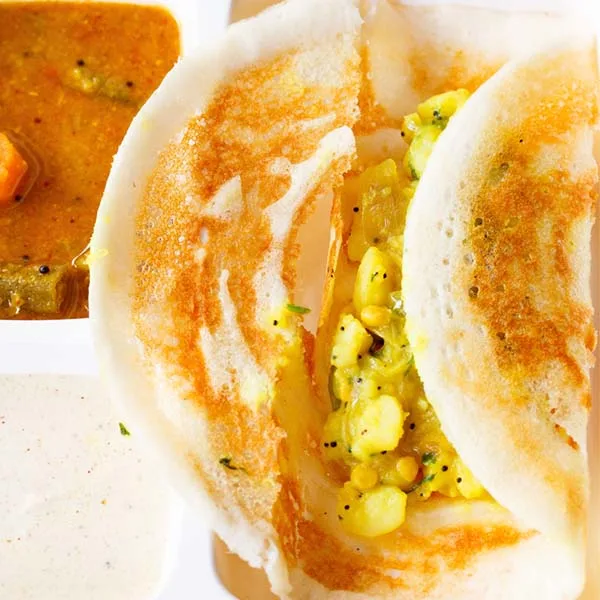
Masala Dosa are crisp rice and lentil crepes stuffed with a spiced potato filling. They are a popular breakfast dish from South Indian cuisine. This recipe makes hotel-style masala dosa that is crispy on the outside and soft inside.
- Vegan
- Dairy-free
- Indian
- Breakfast
- South Indian
- masala dosa
- Cook
- 30 min
- Serves
- 20
- Level
- Hard
- Energy
- 111 kcal
Method41 steps
Step 1: Set the batter rice and poha in separate bowls, and the urad dal (½ cup), batter 1 tbsp chana dal and twenty fenugreek seeds (20) together in a third bowl. Keep the optional filling chana dal separate.
Step 2: Rinse the urad dal, chana dal and fenugreek seeds a couple of times. Then soak them in 1 cup water for 4 to 5 hours.
Step 3: Rinse the rice a couple of times and keep aside.
Step 4: Rinse flattened rice once or twice and then add to the rice.
Step 5: Pour 2 cups water. Stir and soak both rice and flattened rice together for 4 to 5 hours.
Step 6: Drain the soaked batter lentils and fenugreek. This route uses the source’s fresh-water grinding option, so discard their soaking water.
Step 7: Put the drained lentils and fenugreek in the grinder and add the separate ½ cup fresh lentil-grinding water.
Step 8: Grind the urad dal, chana dal and fenugreek seeds till you get a batter which is light and fluffy. The urad dal has to be ground really well, so that the batter ferments well.
Step 9: Remove the batter in a bowl or pan with a spatula.
Step 10: Drain the rice and poha well. Grind them in one or more batches with the separate 1 cup fresh rice-grinding water, dividing that one dose between batches if needed.
Step 11: Grind the rice and poha to a fine-grained or smooth batter.
Step 12: Now pour the batter in the same pan or bowl containing the urad dal batter.
Step 13: Add ½ teaspoon edible rock salt or add as per taste. You can also use sea salt or pink salt.
Step 14: Mix both batters and the salt thoroughly. Cover and ferment at room temperature until doubled or tripled in volume with tiny bubbles and a light sour aroma. The source’s 8–9 hours is a guide; the actual wait varies with temperature and may be longer. Refrigerate the fermented batter if not using it immediately.
Step 15: For the filling, rinse the 300 g raw potatoes and boil them in an ordinary saucepan with enough separate potato-boiling water to cover, until completely fork tender.
Step 16: If using the optional filling 1 tbsp chana dal, soak it in its own ¼ cup hot water for 30 minutes while the potatoes cook, then drain and reserve.
Step 17: Drain the cooked potatoes and let them cool enough to handle, then peel and chop or crumble them.
Step 18: Thinly slice the onion (1¼ cups) and prepare the chopped ginger (1 teaspoon), green chilli and coriander leaves (3 tablespoons). Keep curry leaves (8–10) ready and reserve coriander separately for finishing.
Step 19: Heat the 2 tbsp filling oil in a skillet. If using the optional cashews (2 tablespoons), fry them in this oil and lift them out to reserve; keep the same remaining oil in the skillet for tempering.
Step 20: Lower the heat, add mustard seeds (½ teaspoon) to the same prepared frying oil and let them splutter. Add the optional soaked, drained filling chana dal if using.
Step 21: If using filling chana dal, fry it over low heat for 2–3 minutes until light golden. Add the prepared sliced onion, curry leaves, chopped green chilli and ginger.
Step 22: Saute the onions stirring often till they soften and turn translucent.
Step 23: Add the turmeric powder (¼ teaspoon) and asafoetida (1 pinch) (hing). Mix very well.
Step 24: Add water (½ cup). Mix well and simmer for 2 to 3 minutes or till the mixture thickens a bit.
Step 25: Next add the boiled chopped potatoes and mix very well. You can also mash the potatoes if you like while cooking them.
Step 26: Season the filling with its separate salt to taste. If using optional sugar (¼–½ tsp), begin with ¼ tsp and adjust within the source’s ¼–½ tsp range.
Step 27: Simmer on a low flame for 3 to 4 minutes stirring occasionally. The water will reduce and the consistency will thicken.
Step 28: Turn off the heat, then mix in the reserved chopped coriander and any cashews fried earlier. The filling should be moist and spreadable without free liquid, rather than a gravy.
Step 29: Stir and keep the potato filling aside.
Step 30: Lightly stir the fully fermented batter. It should pour and spread readily: only if too thick, mix in a splash of separate fresh adjustment water; only if too thin, add a little optional rice flour.
Step 31: Heat a cast-iron or flat nonstick pan until medium hot. Lightly smear separate dosa oil on cast iron; do not smear it on nonstick before spreading, as the source advises.
Step 32: Reduce the heat to low while spreading each dosa.
Step 33: Spread the batter in a circular way on the pan.
Step 34: On a medium flame, cook the dosa.
Step 35: Sprinkle some oil on top and edges.
Step 36: Cover and cook until the crepe is cooked through and its base is golden and crisp. Spread the oil already sprinkled with a spoon if needed; optionally flip to cook the top side.
Step 37: When you see the base has become golden and the edges separate from the pan, place a portion of the potato filling on the dosa. You can spread it a bit if you want.
Step 38: Fold the filled dosa and serve promptly. Repeat cooking and filling dosas with the remaining batter and filling.
Step 39: Serve the finished masala dosas hot with optional ready coconut chutney and sambar.
Step 40: Alternatively, serve the cooked dosas plain with the prepared potato filling alongside instead of placing it inside.
Step 41: Ready onion, tomato OR peanut chutney is an alternative to coconut chutney for serving; choose whichever accompaniment you prefer.
Good to know
Storage and Leftovers
Step 1: The batter stays good for 3 to 4 days in the fridge. You can opt to freeze the batter for a few weeks too. Store any leftover potato filling in the refrigerator for a day only.
Photos (1)
Comments
0 threadsSign in to join the discussion.

No comments yet. Start the discussion.