
Italian · Dinner
Creamy fava bean pesto (marò) recipe from Liguria
From the zcook collection
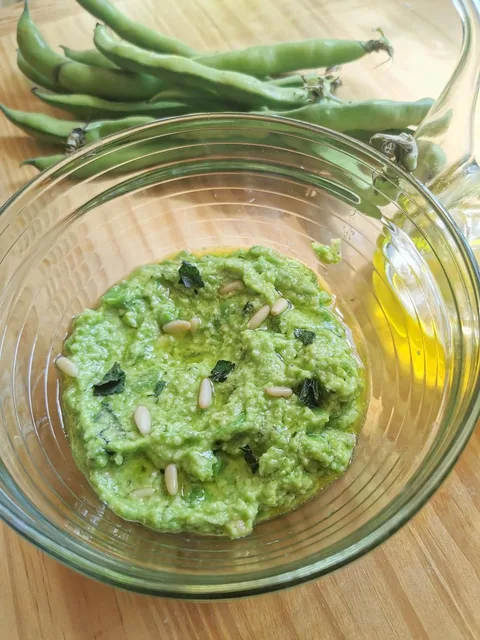
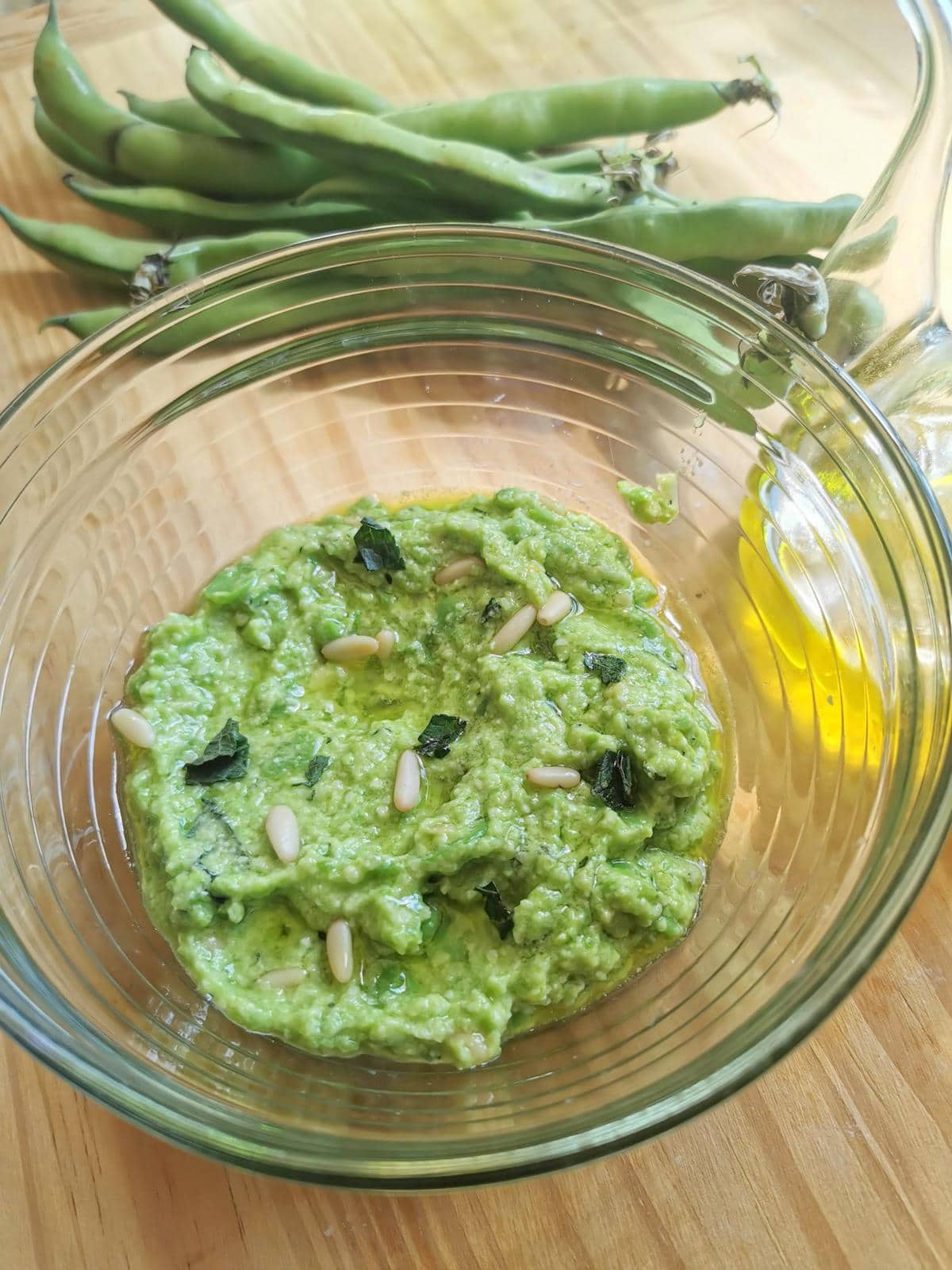
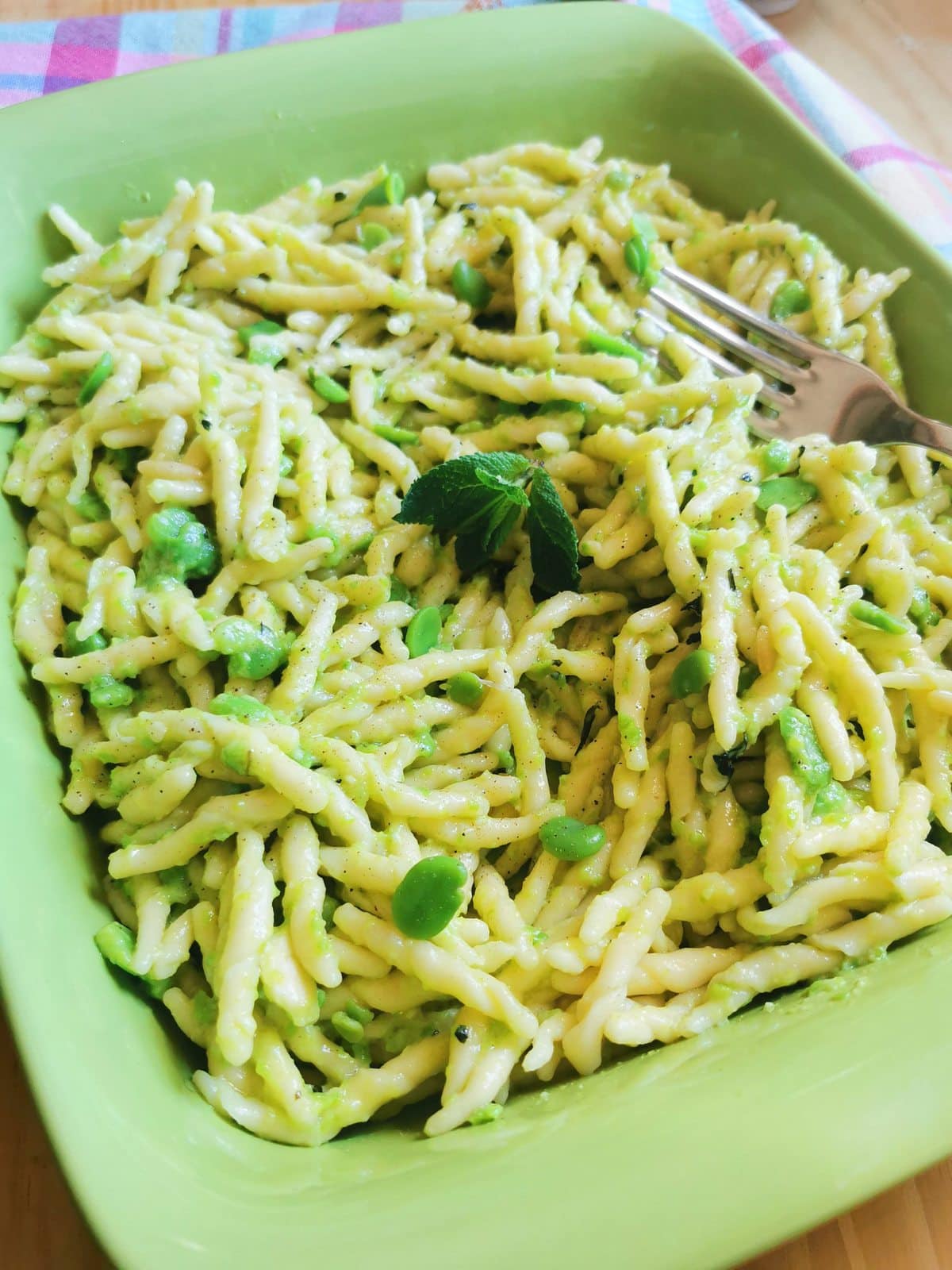
Known locally as marò or pesto di fave, this fava bean pesto is an ancient recipe from Liguria made with fresh fava beans, garlic, mint, pecorino, pine nuts and extra virgin olive oil. This pesto is delicious on bruschetta and as a pasta condiment.
- Liguria
- Mediterranean
- Northern Italy
- Appetizer
- Main Course
- fava bean pesto
- Prep
- 20 min
- Cook
- 10 min
- Serves
- 4
- Level
- Easy
Method6 steps
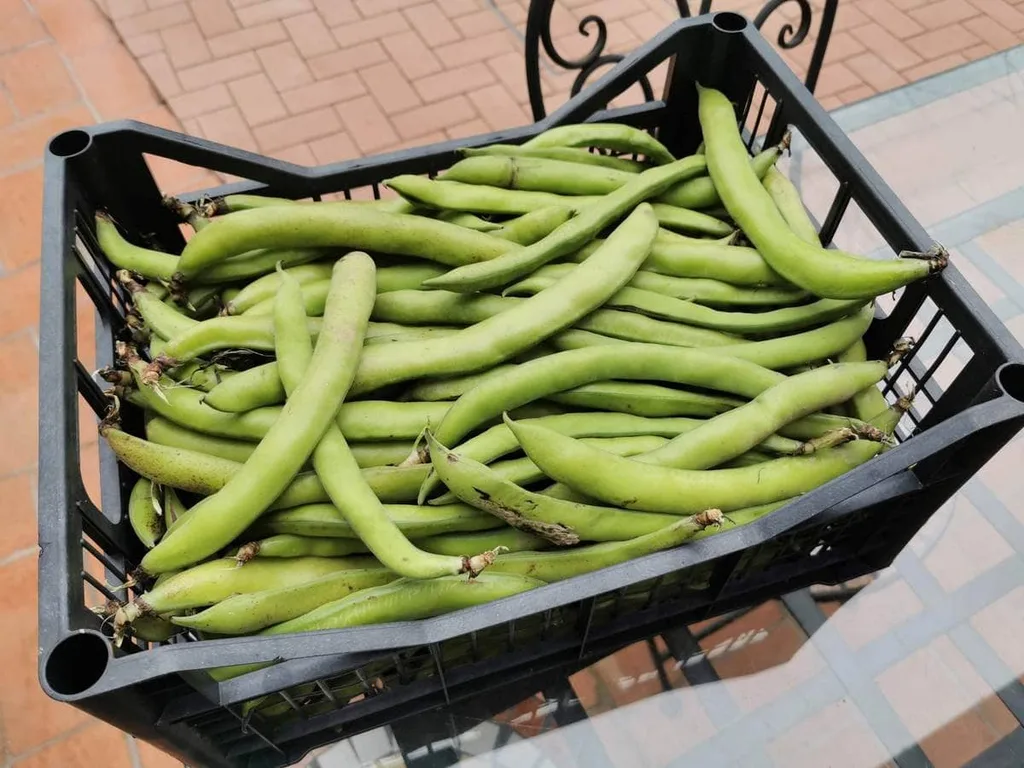
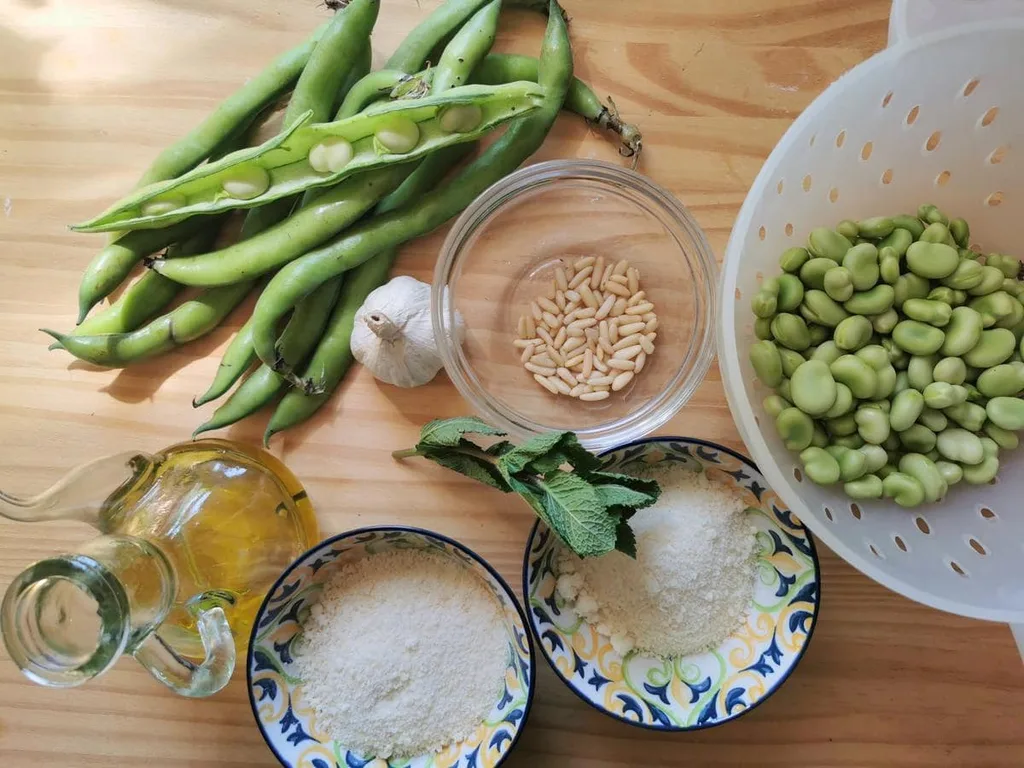
Step 1: Pod the fresh fava beans. The source suggests starting with about 1 kg (2.2 lb) in pods to obtain 7 oz (200 g) peeled beans. Boil the shelled beans for 30 seconds, then transfer to cold water. Slit each outer skin and squeeze out the bean. Keep a few peeled beans aside for garnishing the pasta route.
Step 2: Peel the two garlic cloves and wash the 5–7 fresh mint leaves. Keep a few mint leaves aside for garnishing and use the rest in the pesto.
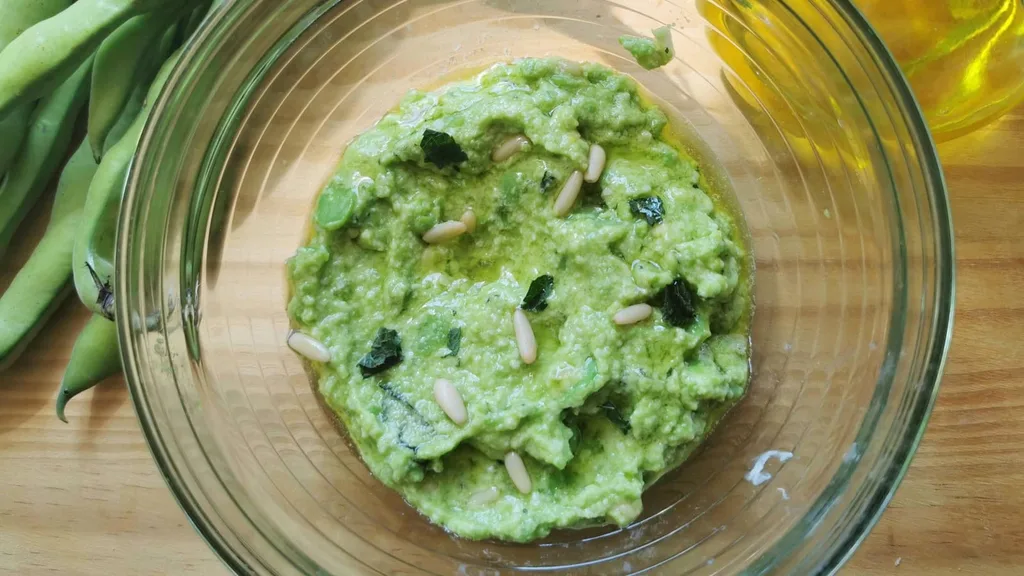
Step 3: Put the peeled beans, except the few reserved for garnish, in a blender or food processor. Add both peeled garlic cloves, a pinch of coarse salt, the tablespoon of pine nuts (1 tbsp) or almonds, and some of the measured 80 ml olive oil. Pulse briefly to mash the beans.
Step 4: Add both grated cheeses, the mint leaves intended for the pesto and the rest of the measured olive oil. Pulse to a rough purée. If a smoother or looser pesto is needed, add a little warm water or extra olive oil and pulse again. Adjust seasoning with black pepper and a little extra pesto salt if necessary. Traditional Pecorino (1.2 oz) and Parmigiano use animal rennet; choose labelled vegetarian cheese for a vegetarian version.
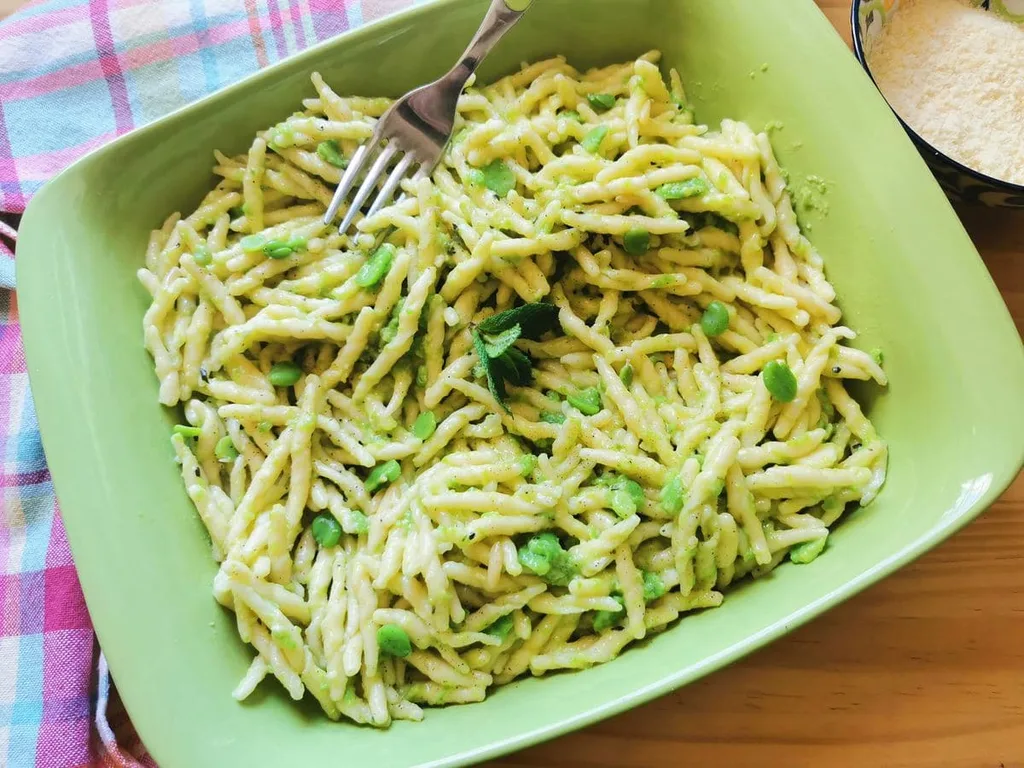
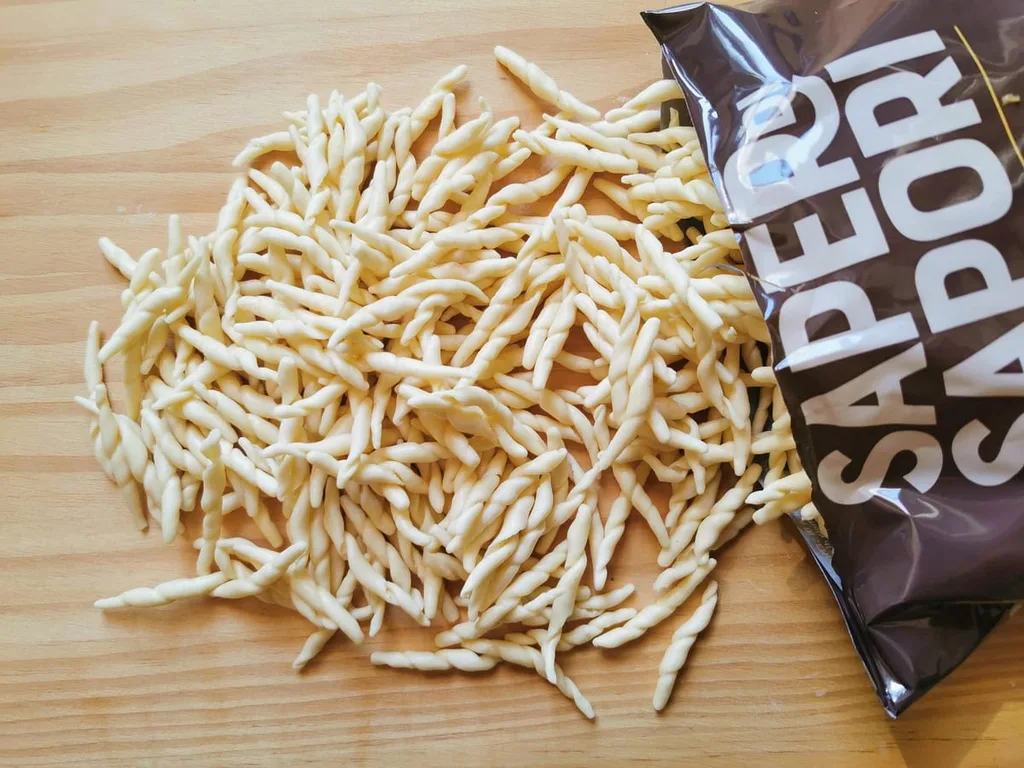
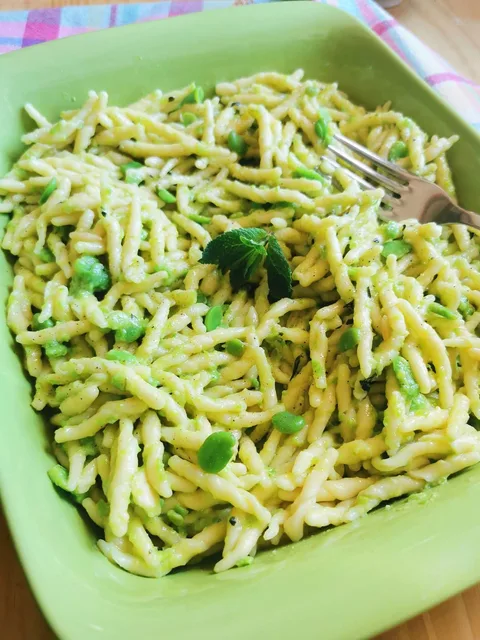
Step 5: For the pasta route, bring a pot of salted water to a boil and cook the 12 oz trofie according to the packet until al dente. Before draining, save some hot cooking water. Toss the drained pasta with the pesto from step 4 and a little of the saved cooking water to loosen it. Garnish with the peeled beans and mint saved in steps 1 and 2, and serve immediately. Skip step 6.
Step 6: For the bread route instead of the pasta route, put the finished pesto from step 4 in a sealed jar and chill for about 1 hour so its flavours meld. Serve it on bruschetta or toasted bread. The pasta ingredients in step 5 are not needed for this route.
Photos (5)
Comments
0 threadsSign in to join the discussion.



No comments yet. Start the discussion.