
Vietnamese · Dinner
Bánh Cuốn (Vietnamese Rice Rolls)
From the zcook collection
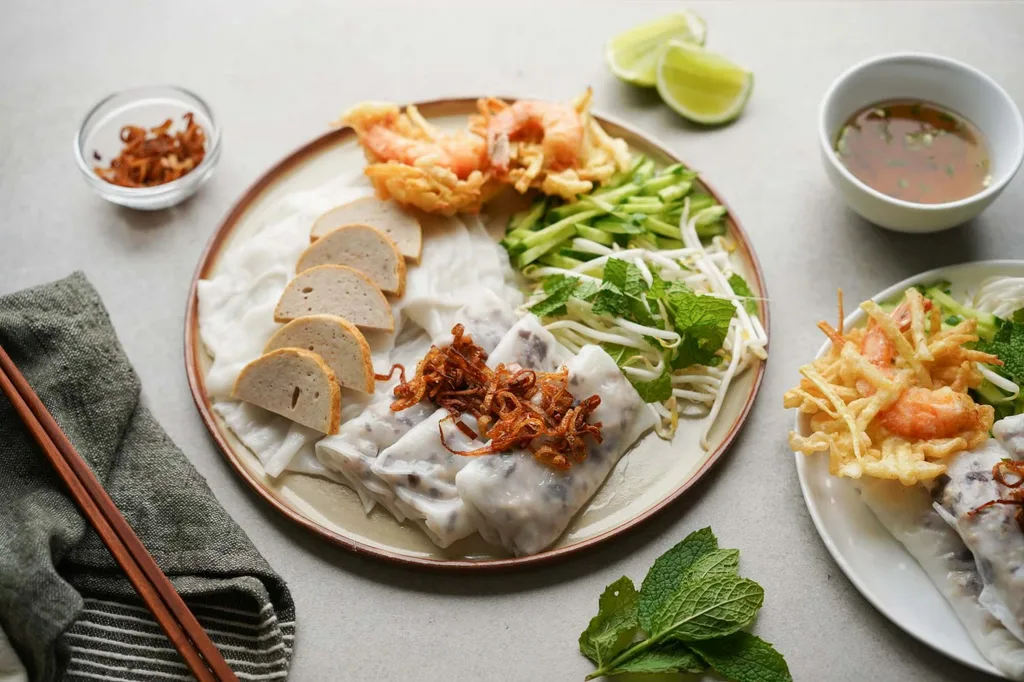
There's nothing like warm sheets of bánh cuốn fresh off of the steamer. This recipe shows you how to steam these and fill them with classic pork and veggie filling.
- Dairy-free
- Vietnamese
- Dinner
- steamed rice rolls
- pork
- wood-ear mushrooms
- Total
- 9 hr 30 min
- Prep
- 30 min
- Cook
- 1 hr
- Serves
- 4 servings
- Level
- Hard
- Energy
- 380 kcal
Method15 steps · about 9 hr 30 min
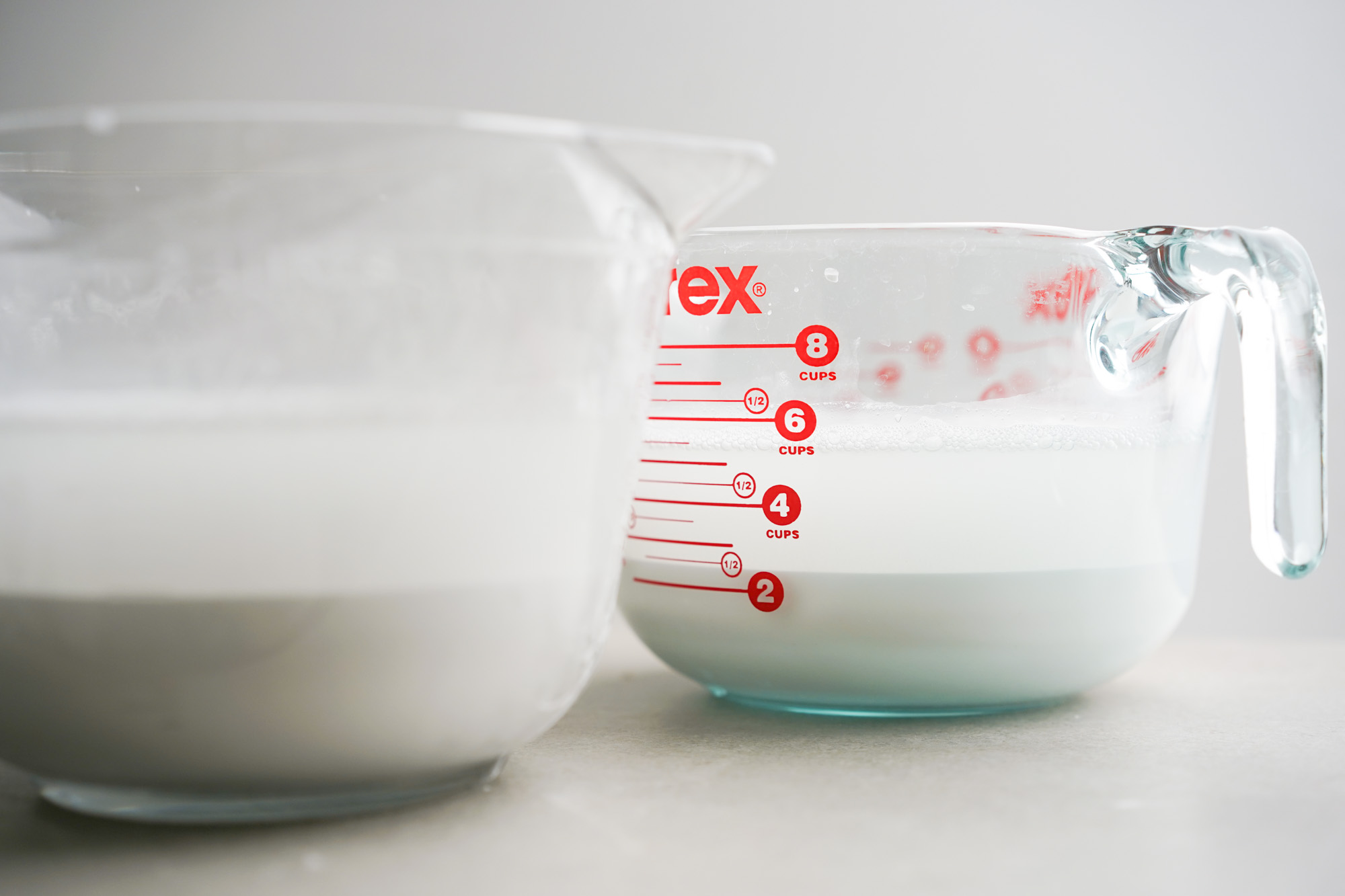
Step 1: Combine all flours into a large bowl or container with the water. Mix to combine and soak for eight hours or overnight.
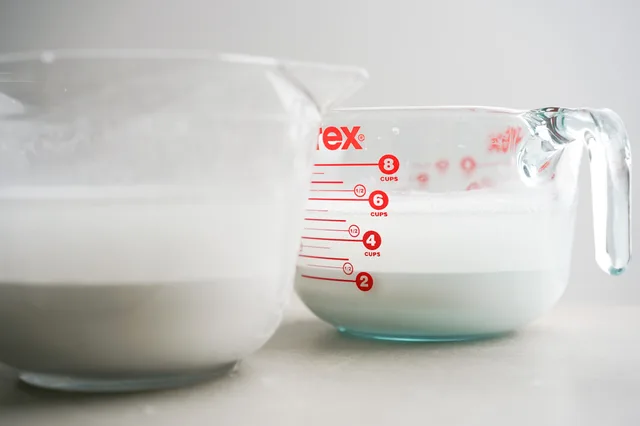
Step 2: With a ladle, carefully remove and discard half of the water (660g if you didn't scale the recipe) making sure to NOT disturb the flour.
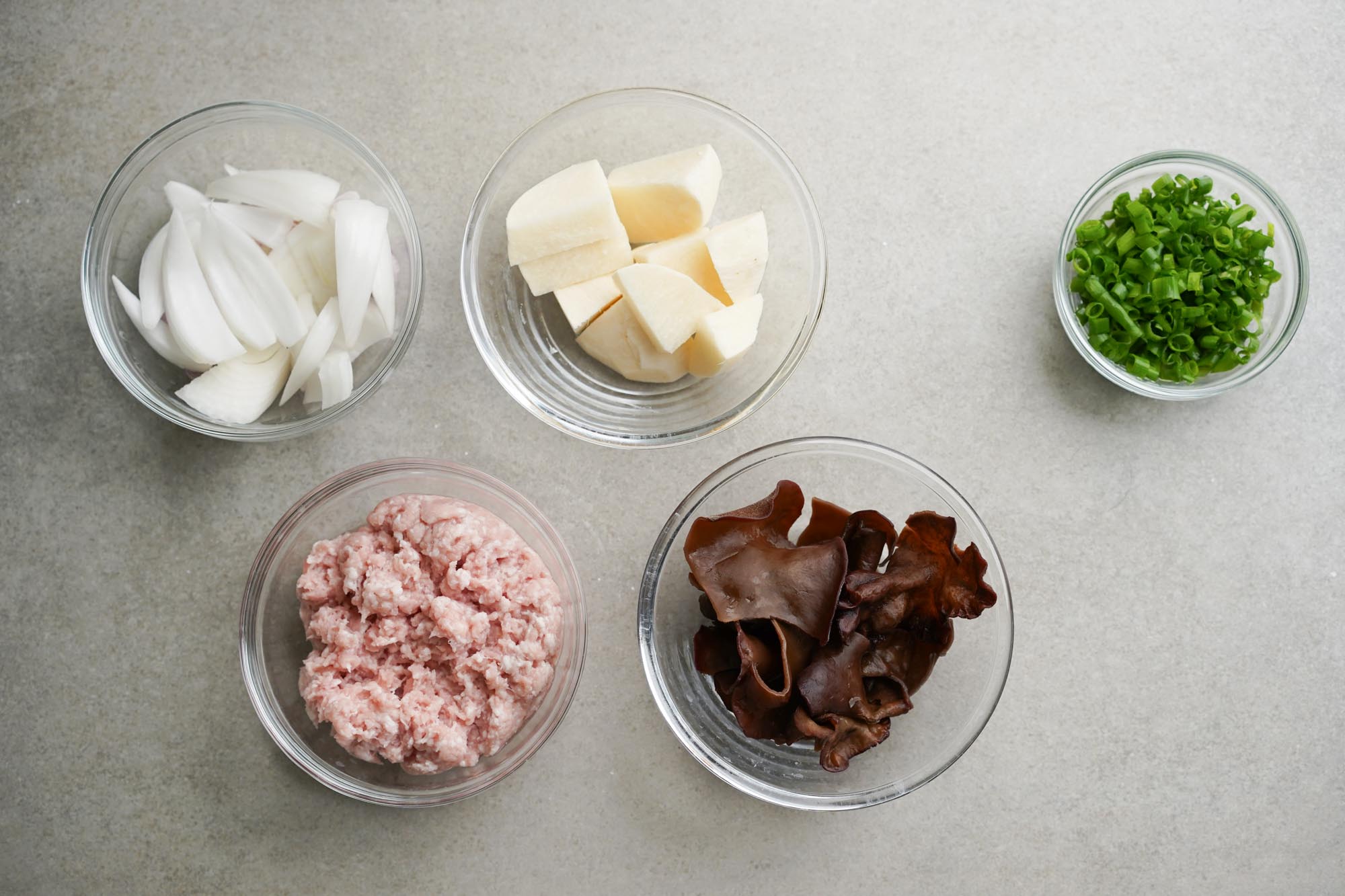
Step 3: Hydrate the dried wood-ear mushrooms (15 g) in filtered hot water about 30 minutes until fully softened. Rinse and finely chop. Peel and finely chop the onion (127 g) and jicama (172 g). Squeeze the chopped jicama by hand to remove as much moisture as possible and set it aside.

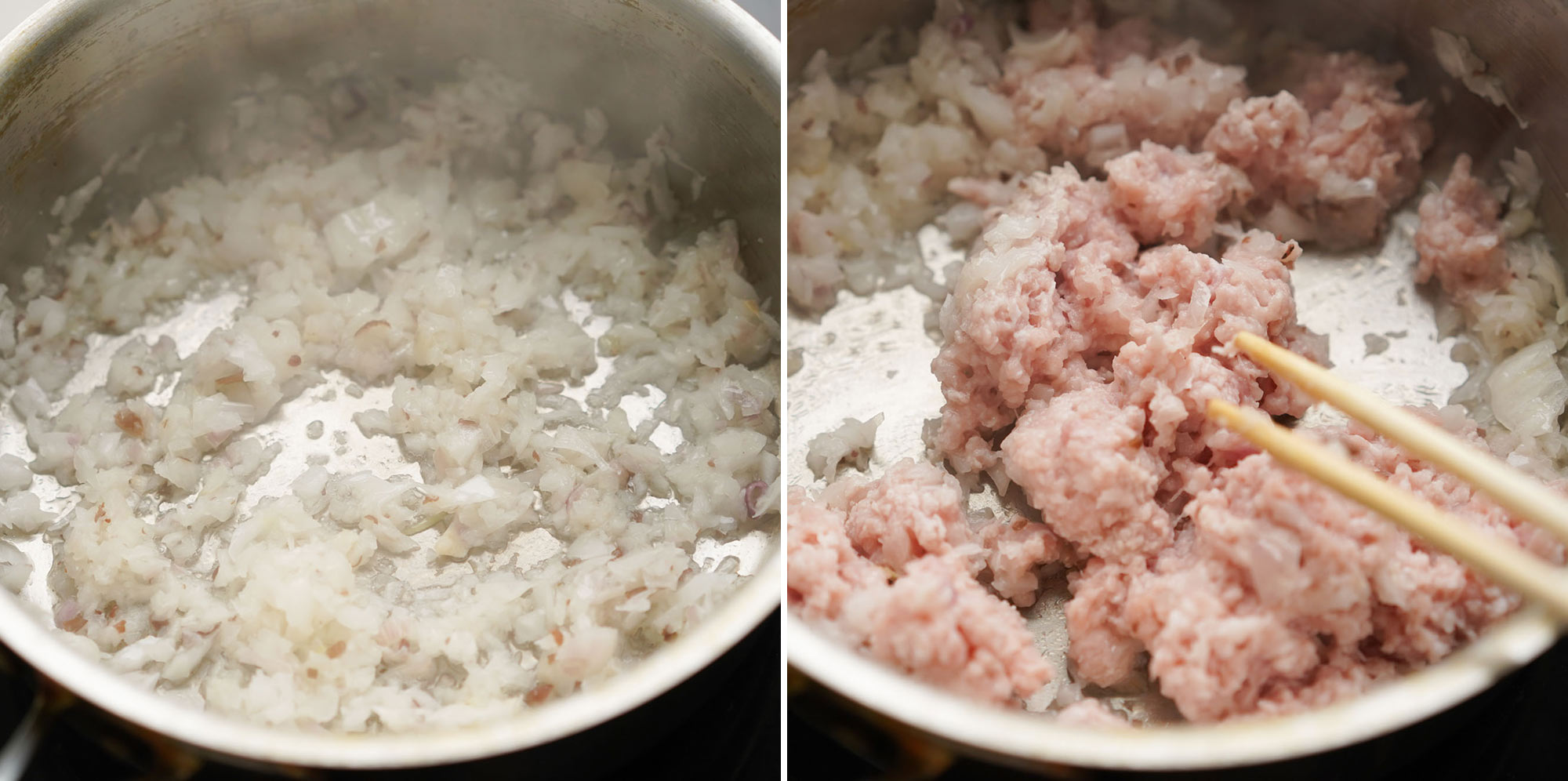
Step 4: Heat a pan over medium heat, then add oil (2 tbsp) and onion. Saute until lightly browned. Then add pork (300 g), salt (1 tsp), MSG (1/2 tsp), and pepper (1 tsp) to the pan then saute on medium, continually separating the pork so it's not clumped and cooks more evenly.

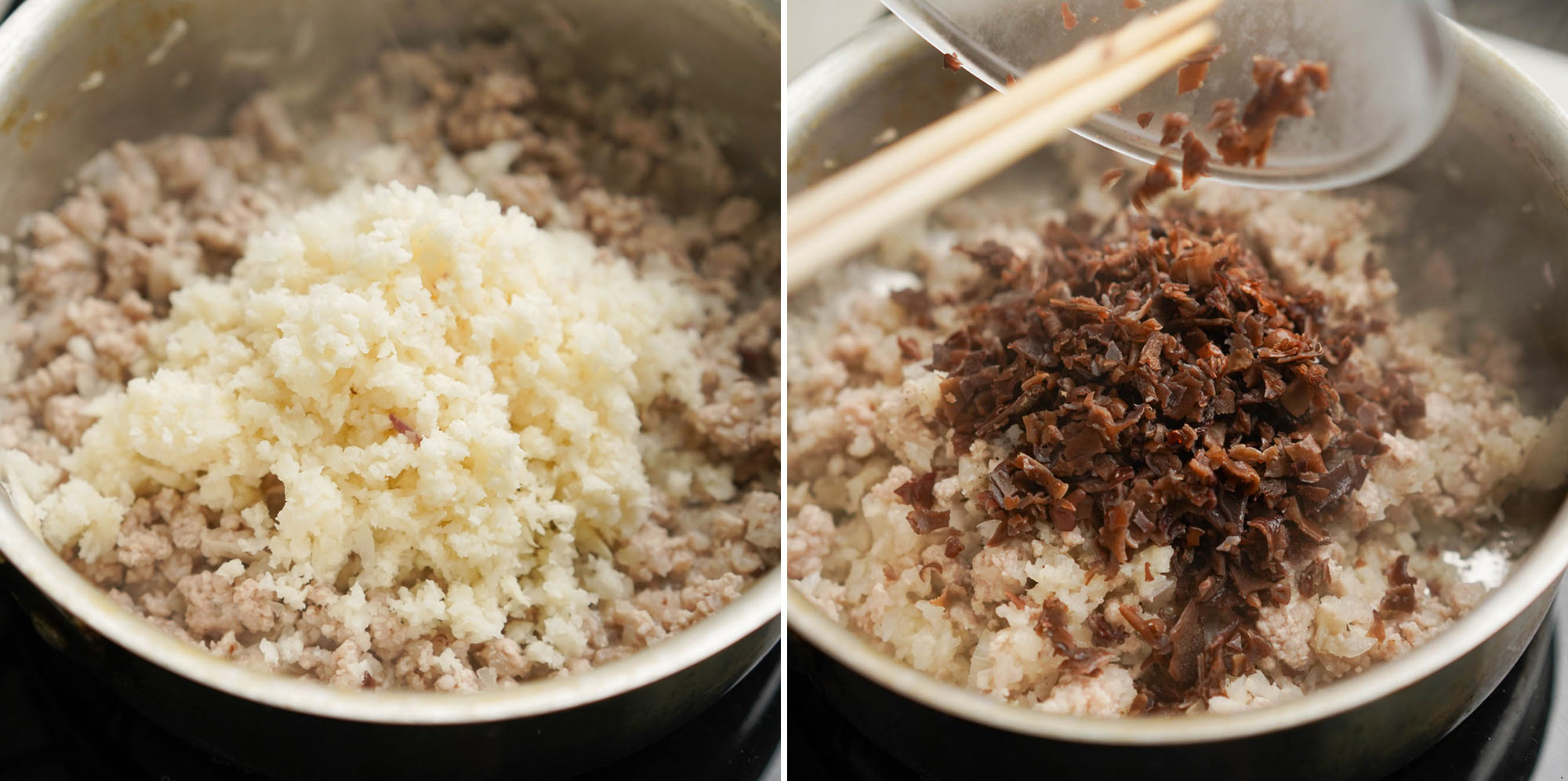
Step 5: When the pork is mostly cooked, add the squeezed chopped jicama and sauté until almost no liquid remains in the pan. Add the hydrated chopped mushrooms and sauté 2–3 minutes so they retain a slight crunch. Cook until the ground pork is fully cooked through, reaching 160°F (71°C).

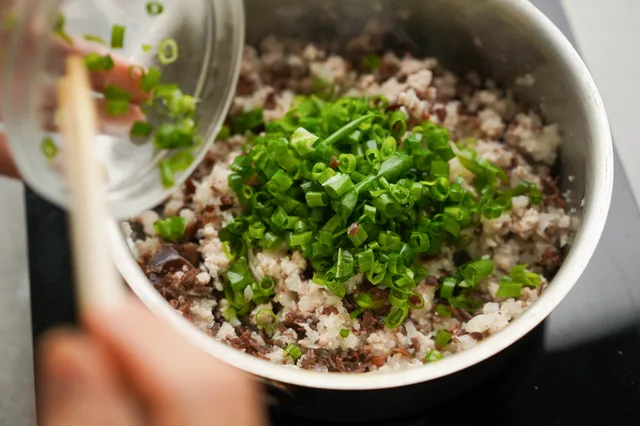
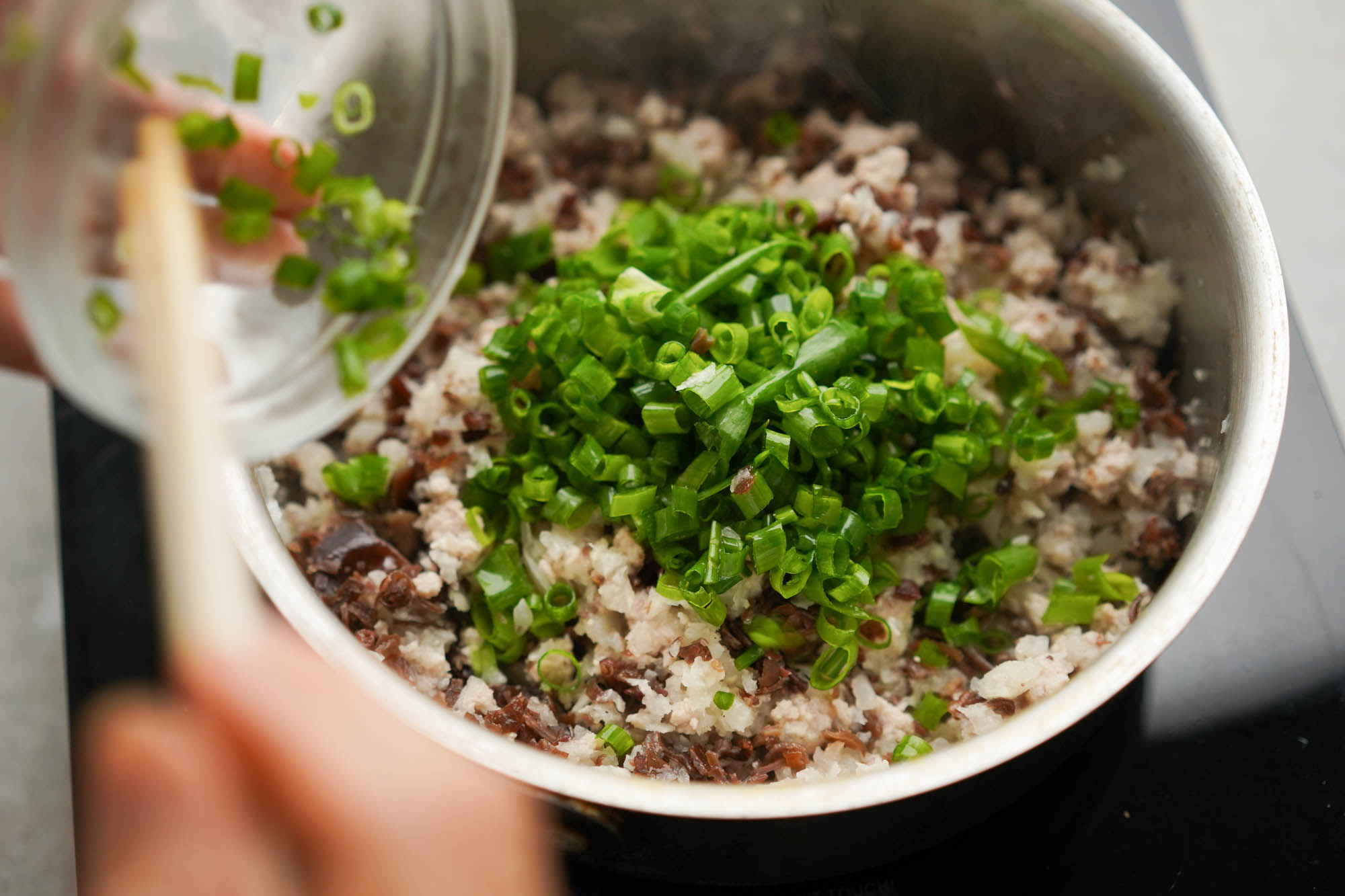
Step 6: If using green onions (29 g), add now and shut off the heat. Mix to combine and reseason to taste.
Step 7: Just before you're ready to cook, add the salt (1 tsp) to the batter and mix to thoroughly combine.
Step 8: Place your steamer pot on the stove filled 2/3 of the way with water and get it boiling on max heat.
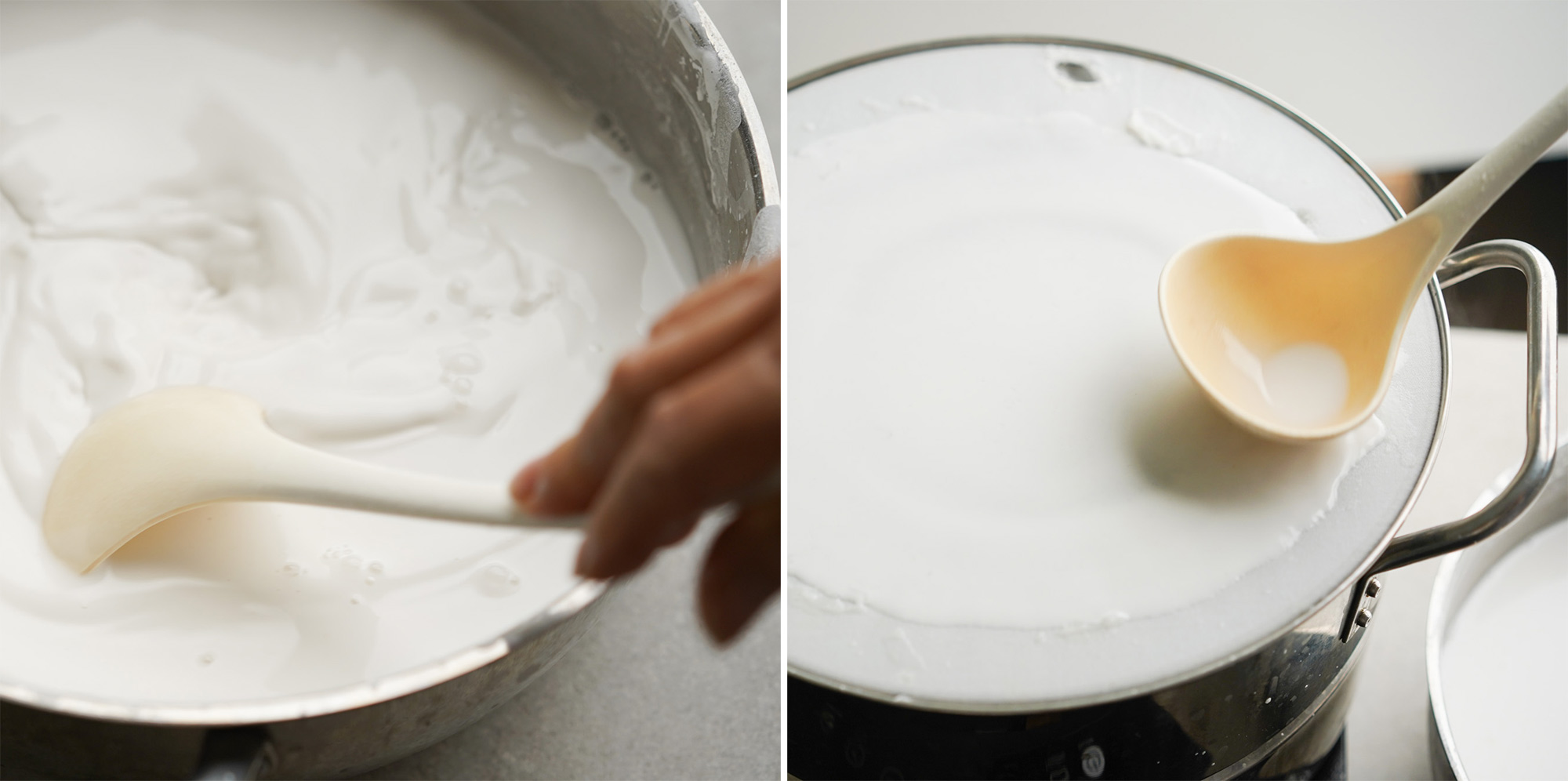
Step 9: Stir the bowl of batter EVERY time just before taking a ladle out to make sure the flour and water is mixed evenly. Pour a thin layer onto the steaming screen and quickly spread out the batter out evenly. It may pool in the center if the fabric isn't fully taut, so don't let it. You can tell that you've taken too long to spread the batter if the ladle starts to stick to the steaming cloth.

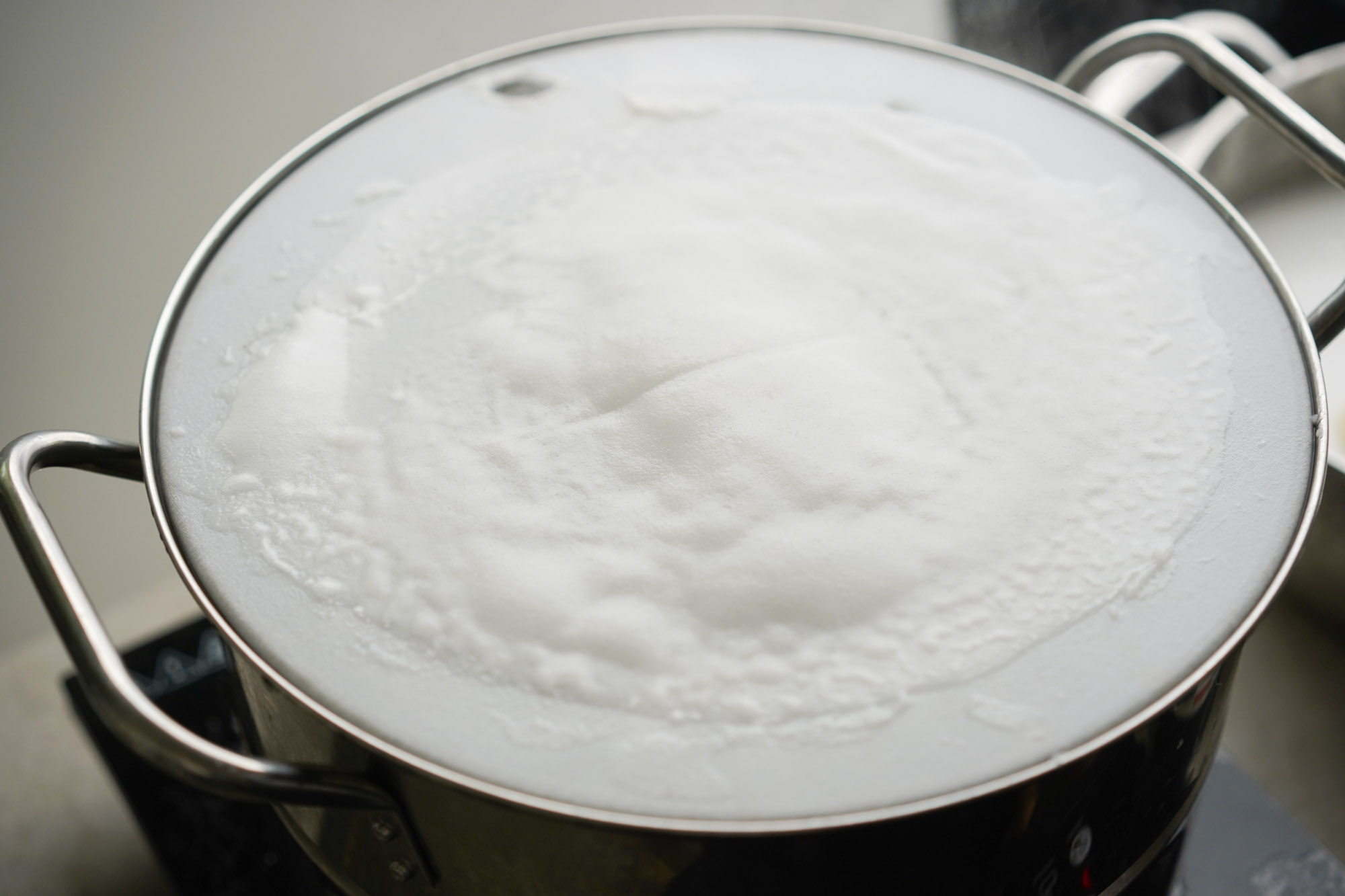
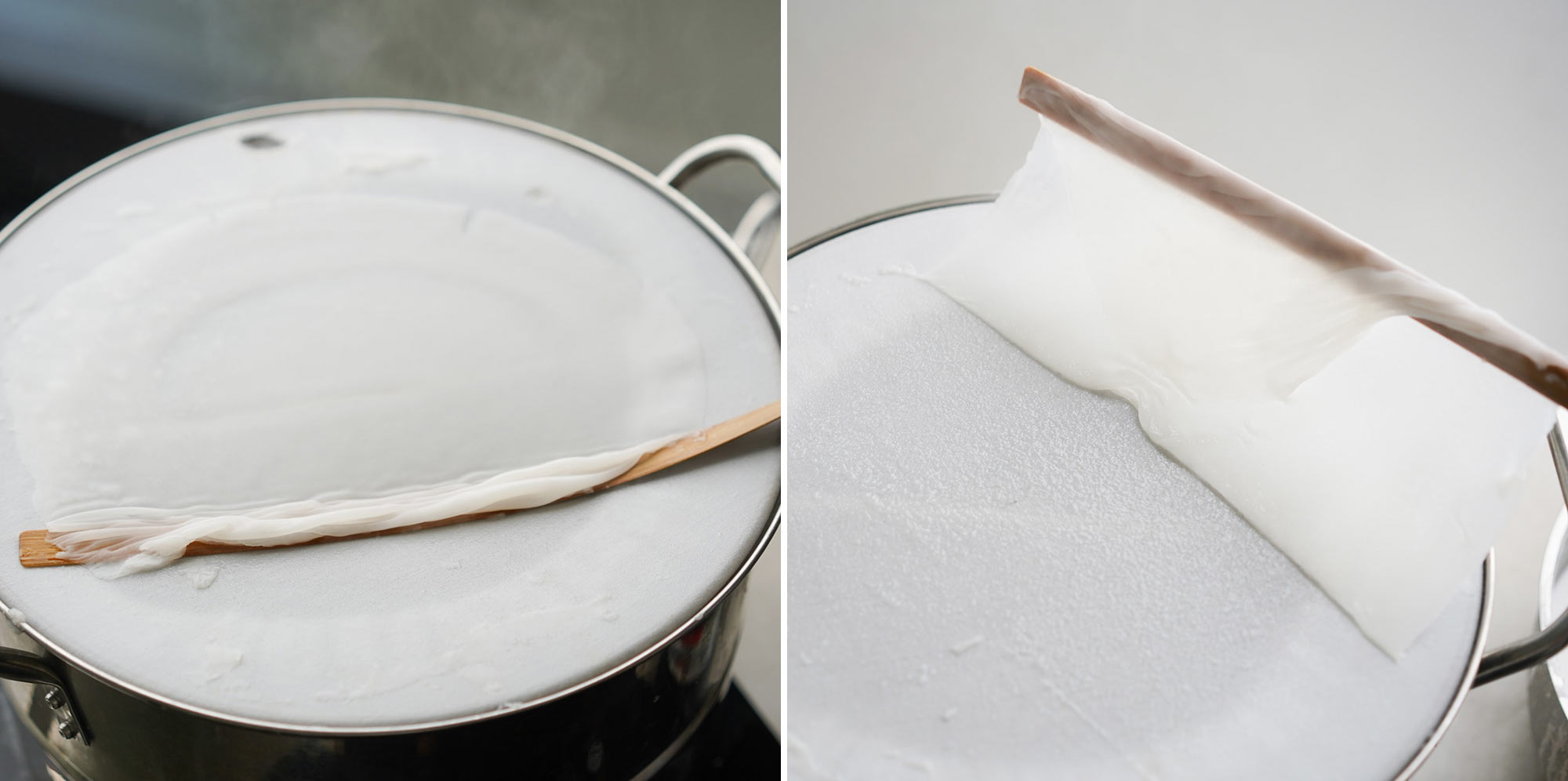
Step 10: Close the lid and let it steam for about 40 seconds, open the lid and check. When you open the lid, you know it's done when the cake is starting to bubble on the fabric. Its also more clear after cooking and not as white.

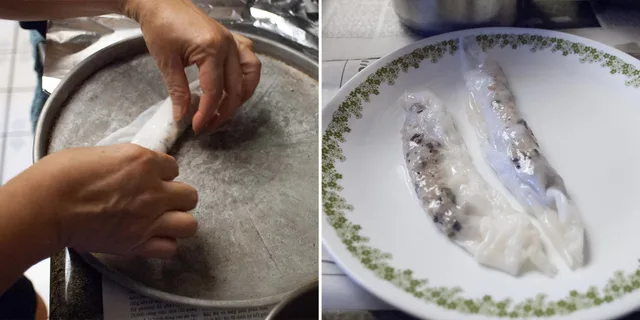
Step 11: Remove the rice cake. Use your stick to dig under one side of the circle in about 2 inches and lift up from left to right. The first few are typically not as good as the steamer fabric is still priming, so don't judge the result until you get to your 3rd one.

Step 12: Now's the time to adjust the batter. If the final steamed roll is too thick, add 1-2 tbsp cold water to the batter. If it's too thin you can add 1 tbsp rice flour. It's too thin if you can't spread the batter to make a sheet without any holes. It's too thick if it doesn't spread easily and is unwieldly to remove from the screen.
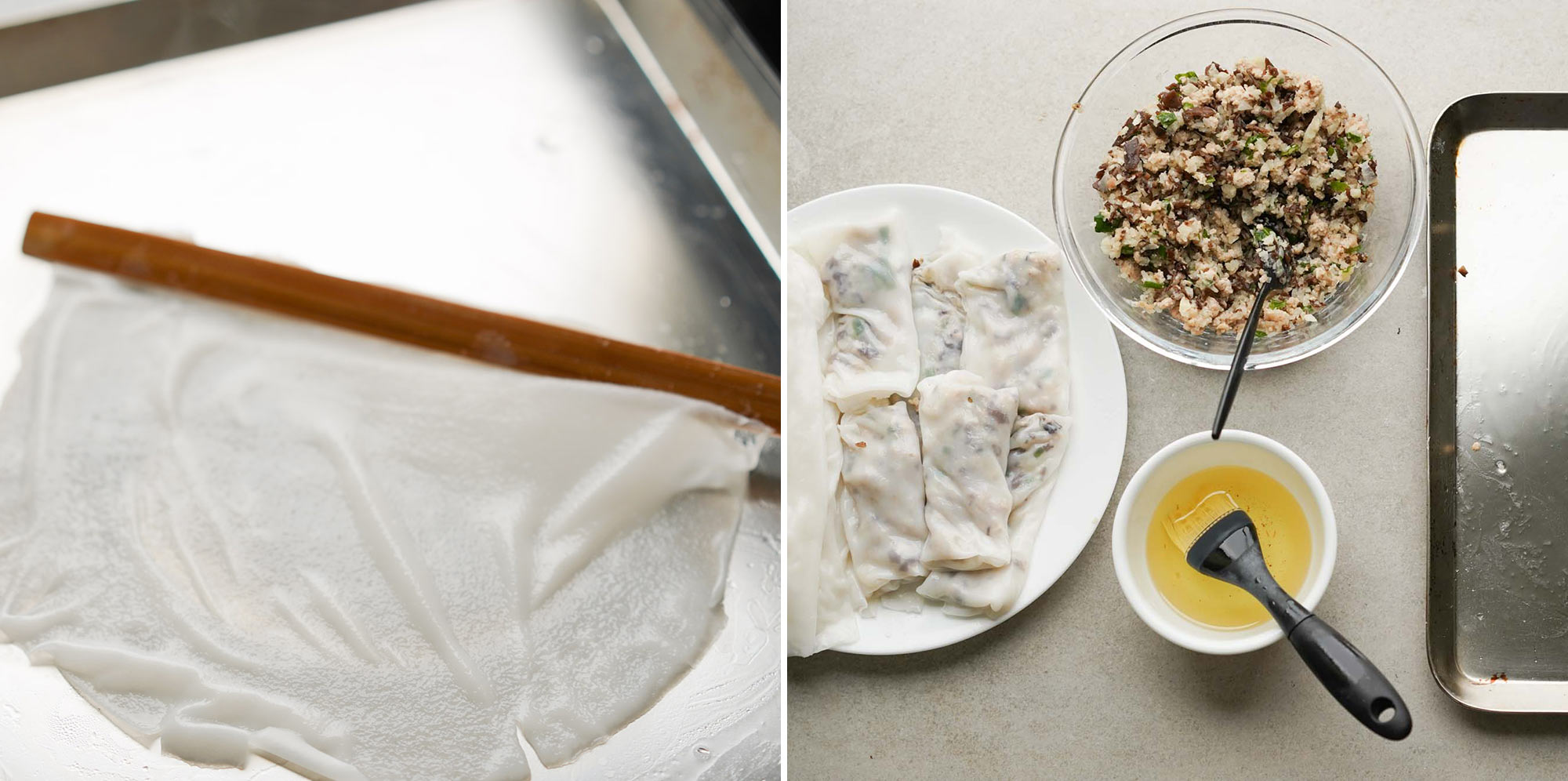
Step 13: Lay it on an oiled plate or tray (oiling each time before laying down bánh cuốn so it doesn't stick)

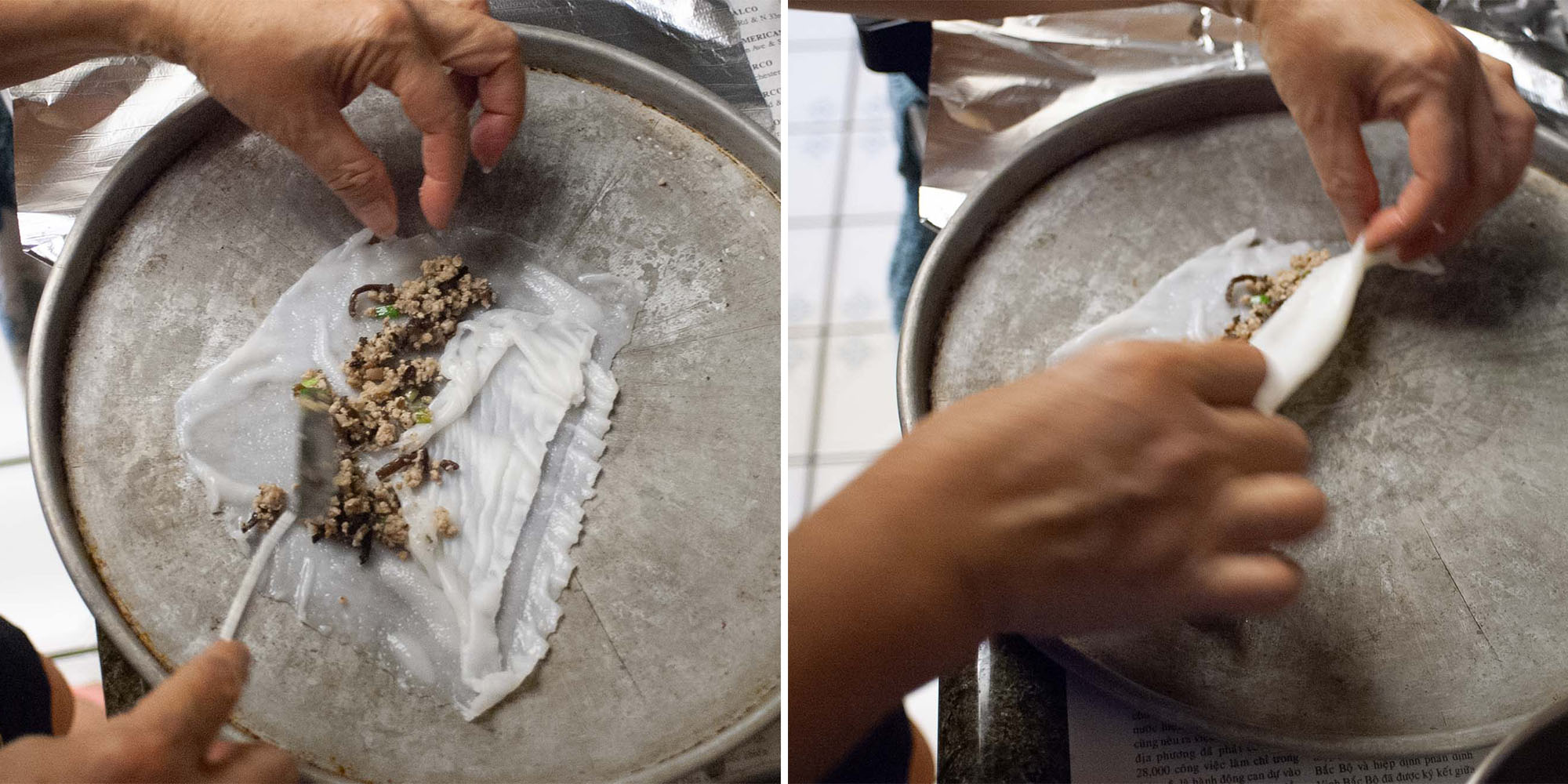
Step 14: Here's one way to make longer bánh cuốn quickly. Remove the rice sheet from the stick by cutting it along the stick length with a spoon or knife. Add about 1 full tsp of filling into each sheet, and fold about 1/4 of the way in.
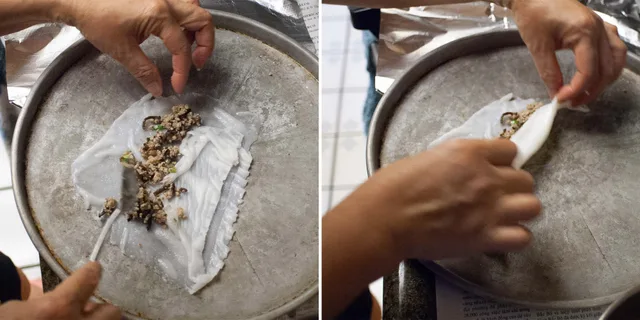
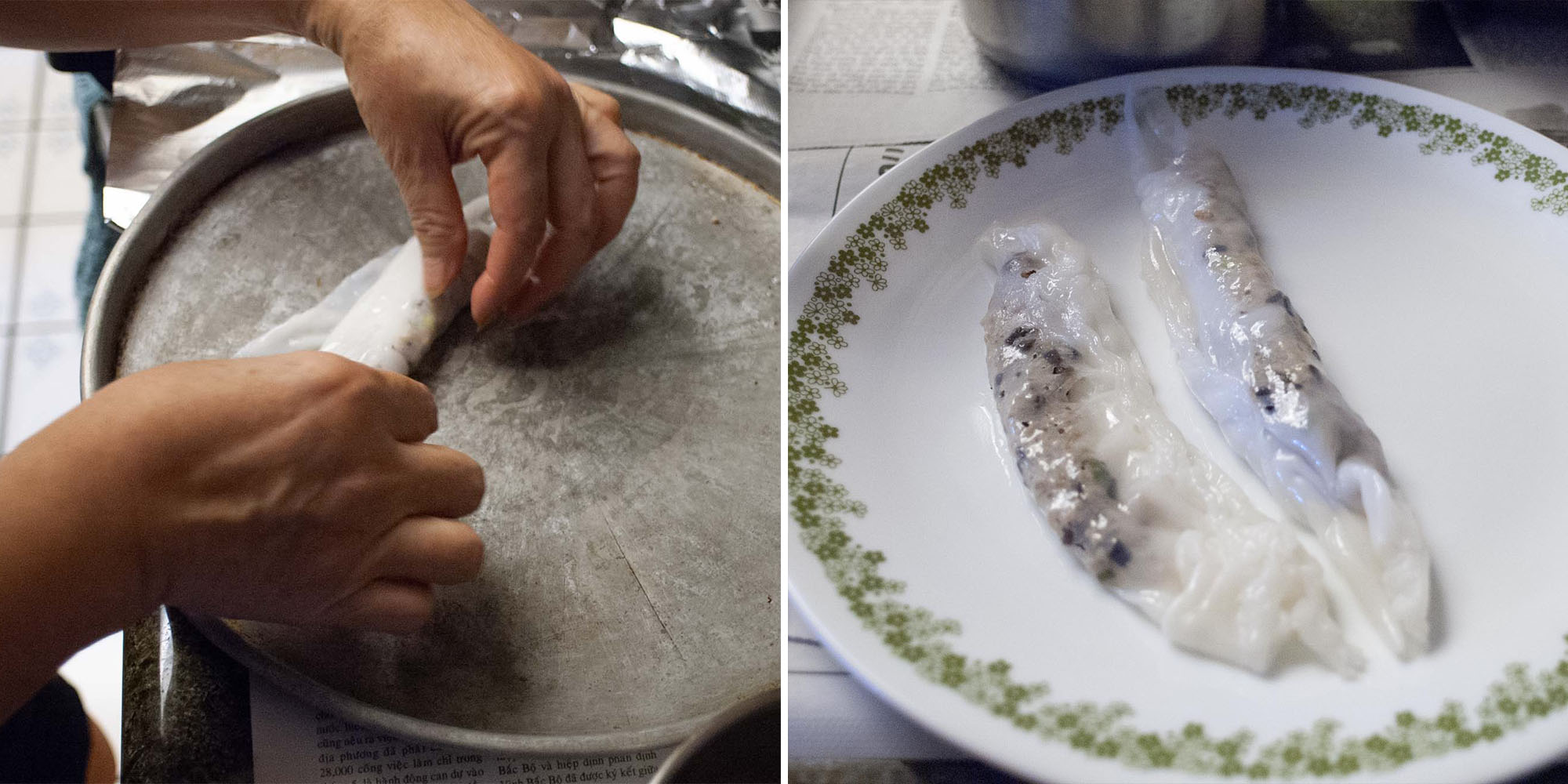
Step 15: Continue folding about 3 times until the sheet is used. Repeat with the remaining batter and cooked filling, stirring the batter thoroughly before every ladle. Serve immediately with cucumber, already-blanched bean sprouts, ready-fried shallots, sliced ready-cooked cha lua, chopped mint and prepared fish-sauce-based dipping sauce.
Photos (1)
Comments
0 threadsSign in to join the discussion.


No comments yet. Start the discussion.