
Japanese · Dinner
Tonkatsu (Japanese Pork Cutlet)
From the zcook collection
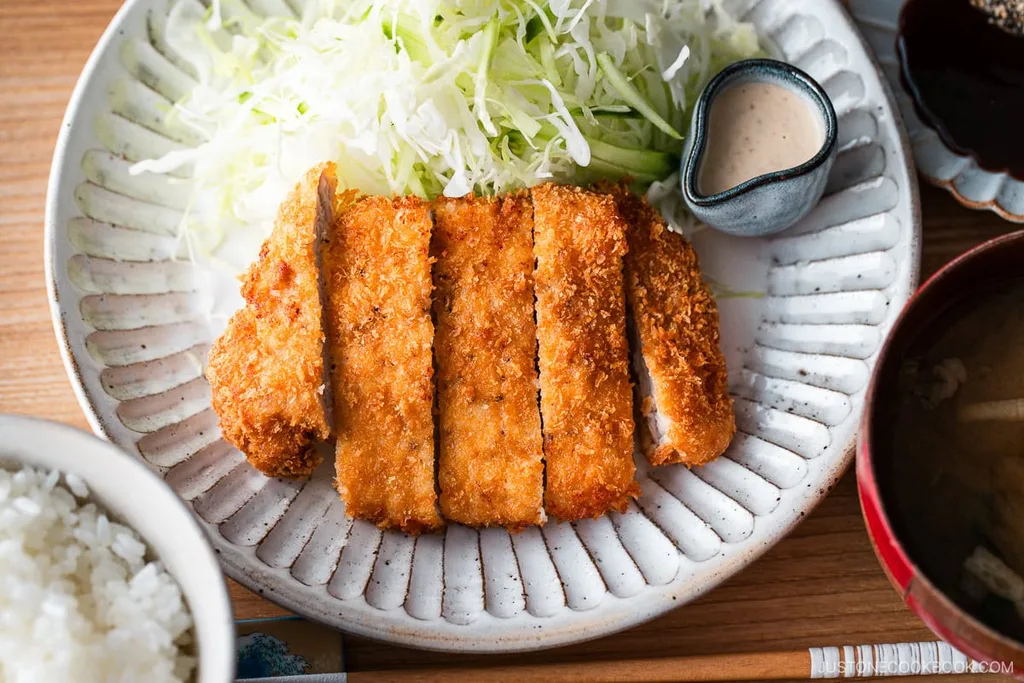
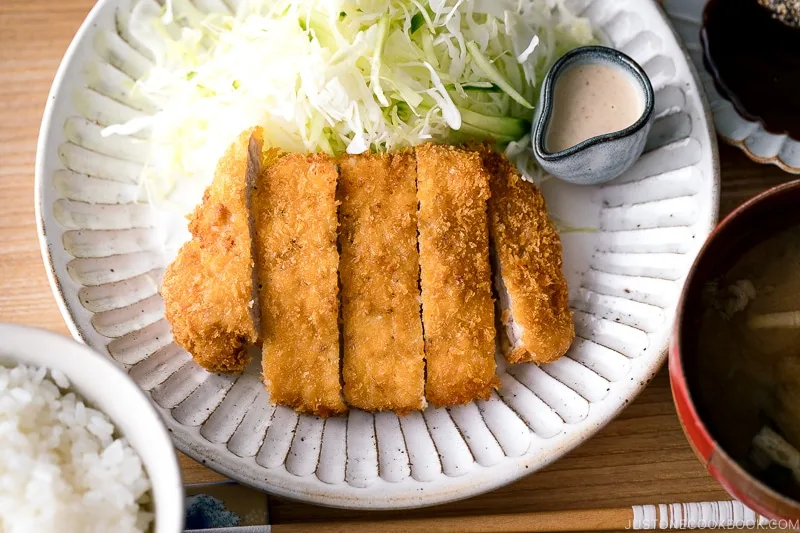
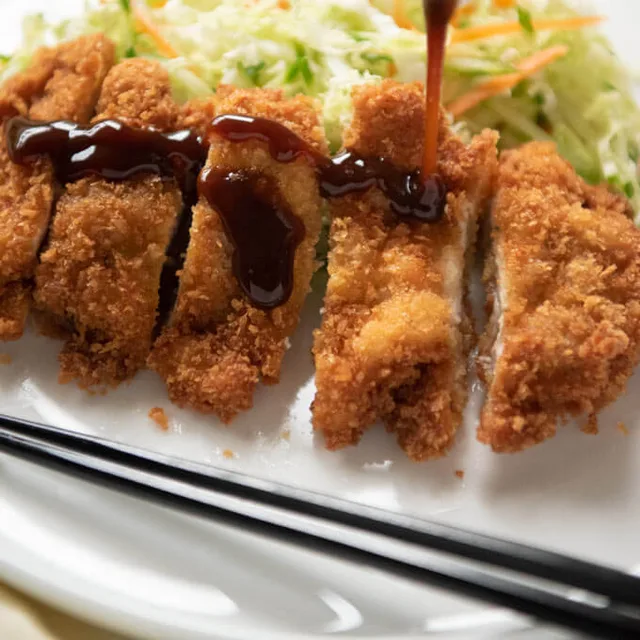
Crispy on the outside and juicy inside, my homemade Tonkatsu (Japanese Pork Cutlet) is a family favorite! Learn my secret for a light, airy, and supercrisp crust. Serve it with my irresistible sesame tonkatsu sauce for an extra savory punch!
- Japanese
- Dinner
- Just One Cookbook
- Total
- 45 min
- Prep
- 25 min
- Cook
- 20 min
- Serves
- 2 servings
- Level
- Hard
- Energy
- 540 kcal
Method26 steps · about 45 min
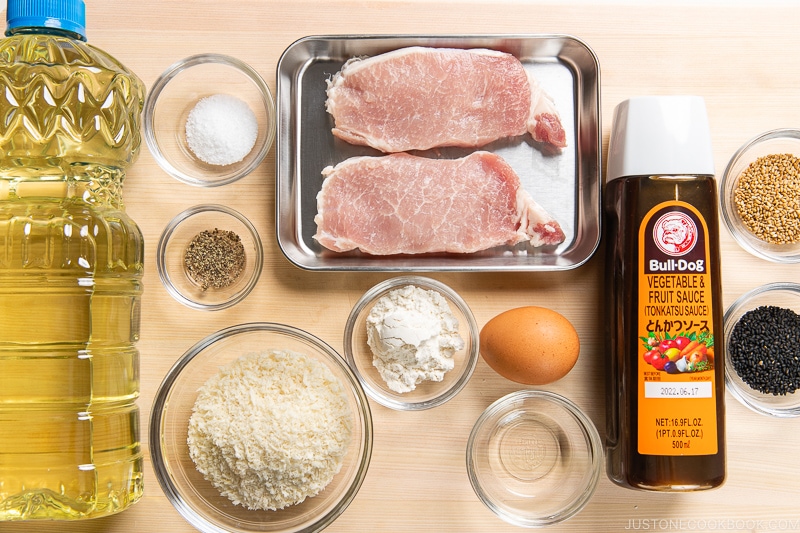
Step 1: Prepare two boneless pork loin chops, each about 100 g (3.5 oz) and 1/2 inch (1–1.3 cm) thick. This method double-fries the cutlets; prepare the optional cabbage side and sesame dipping sauce while the coating ingredients are ready.
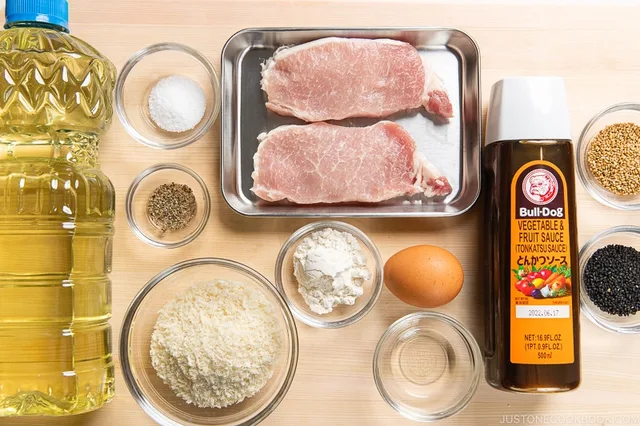
Step 2: Gather the ingredients. Use fresh panko directly, or soften dry panko as described in step 6.
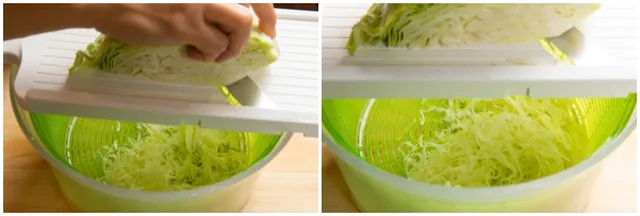
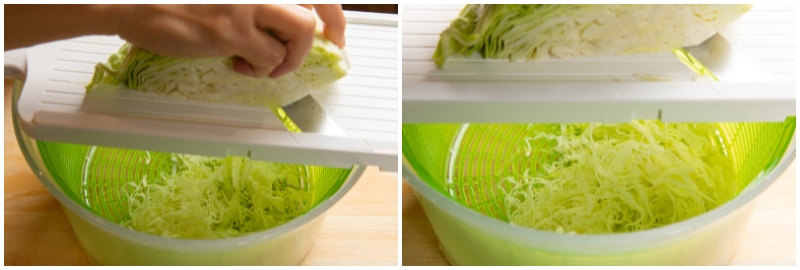
Step 3: For the optional side, shred the 1/4 head cabbage very finely and slice the cucumber thinly. Divide between two serving plates and set the Japanese sesame dressing aside to add when serving.
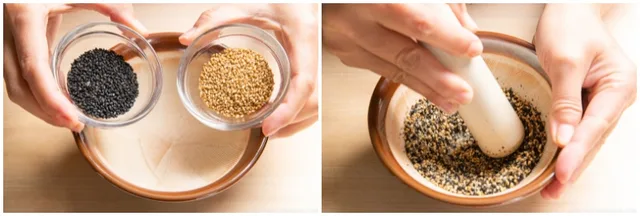
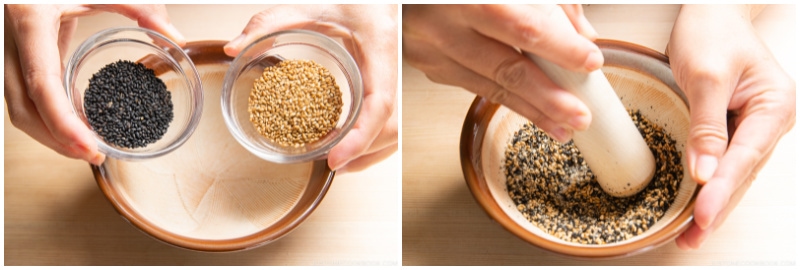
Step 4: Grind 1 Tbsp toasted white sesame seeds and 1 Tbsp toasted black sesame seeds with a Japanese mortar and pestle. Leave some seeds unground for texture.
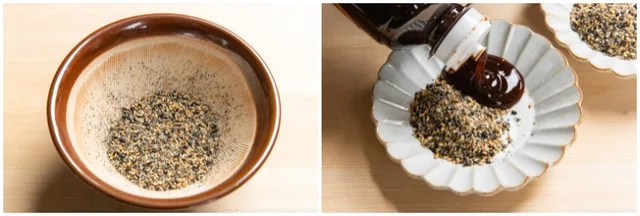
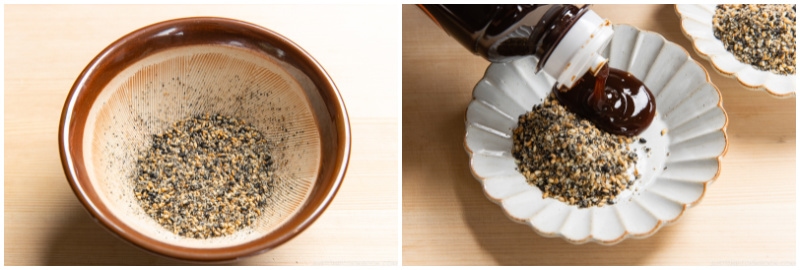
Step 5: Divide the ground sesame between two small dipping bowls and add the tonkatsu sauce (4 Tbsp). Alternatively, omit the sesame seeds and serve the tonkatsu sauce plain.
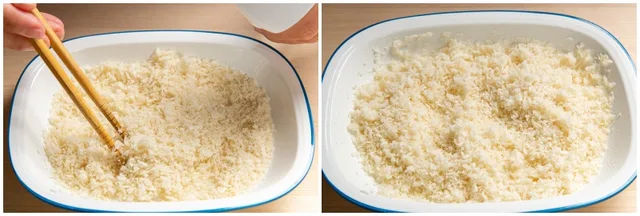
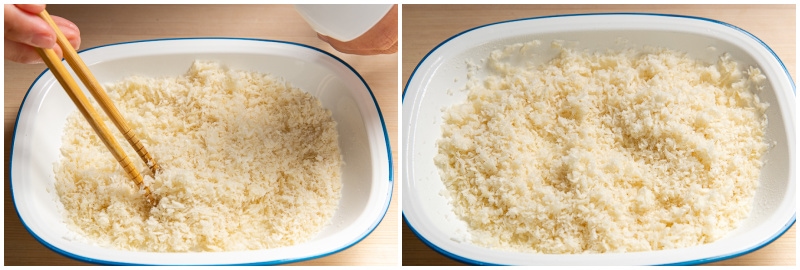
Step 6: If using dry panko, place it in a shallow dish and mist lightly with water without soaking it. Let it soften for 15 minutes. Skip moistening if using fresh panko.
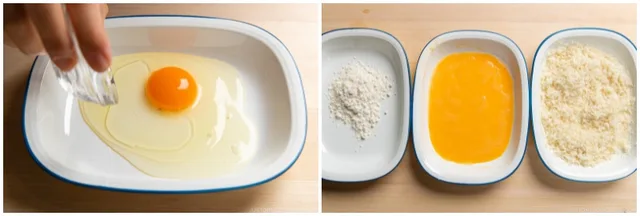
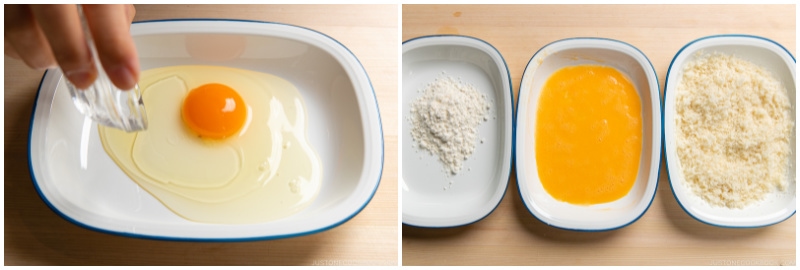
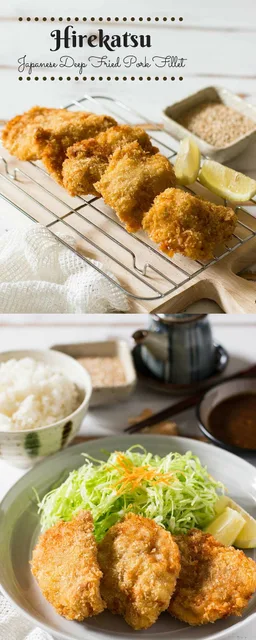
Step 7: Whisk the egg (1 large) with the separate 1/2 tablespoon neutral oil in a shallow dish. Put the flour in another dish and keep the prepared panko beside it.
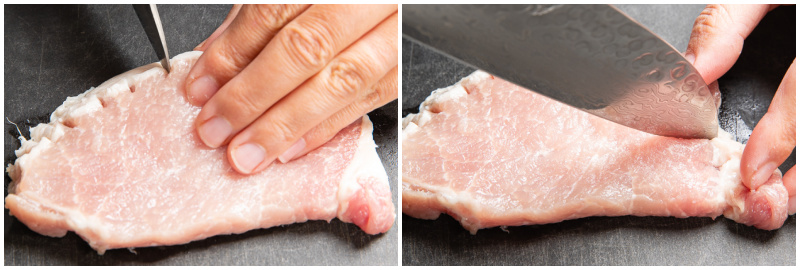
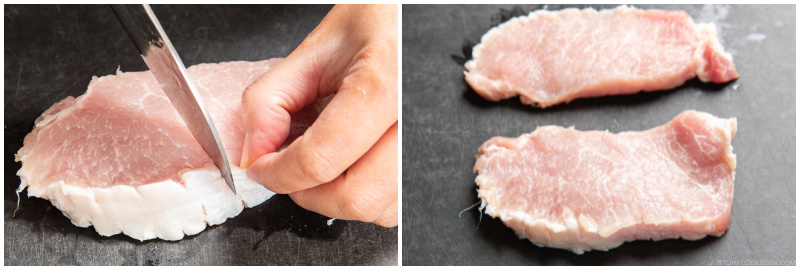
Step 8: Use a sharp knife to remove the extra fat from 2 boneless pork loin chops (½ inch thick). Then, make several small slits on the connective tissue (the white area) between the meat and fat. Tip: Red meat and fat have different elasticities, and they shrink and expand at different rates while cooking. These slits will allow the tonkatsu to stay flat during cooking instead of curling up.
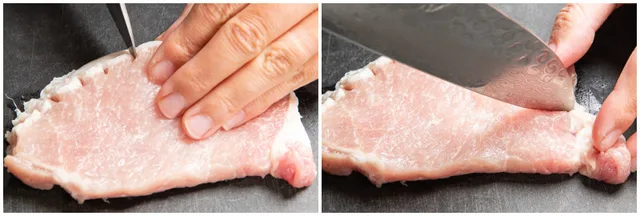
Step 9: Flip the meat and make several slits on the other side of the connective tissue.
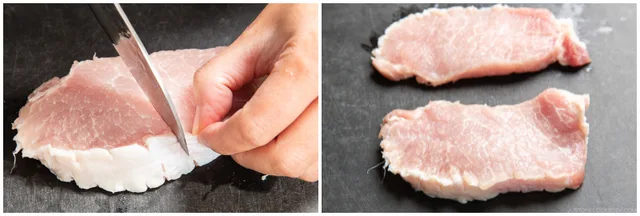
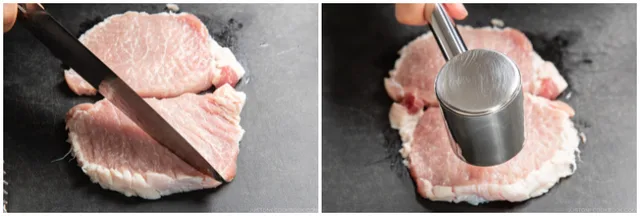
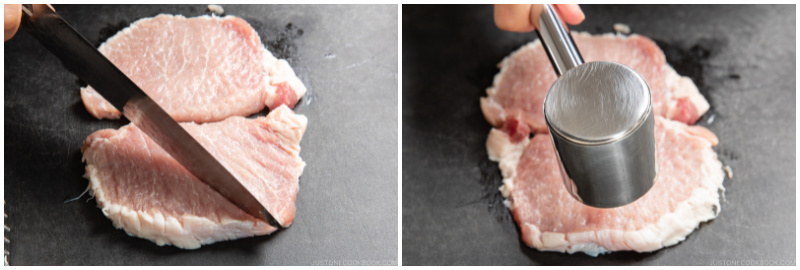
Step 10: Pound both sides of the meat with the back of a knife or a meat tenderizer/mallet.
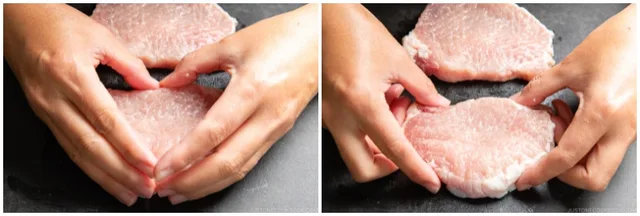
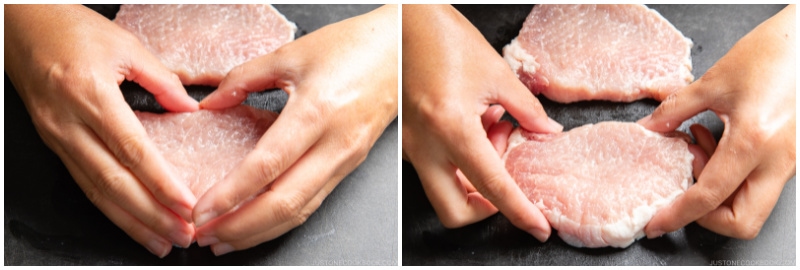
Step 11: Mold the cutlet back into its original shape with your hands.
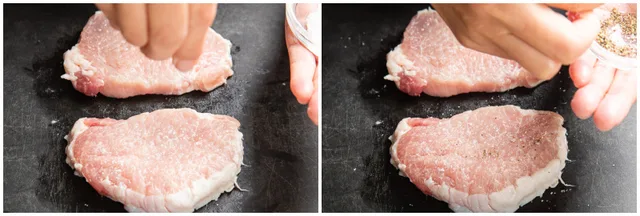
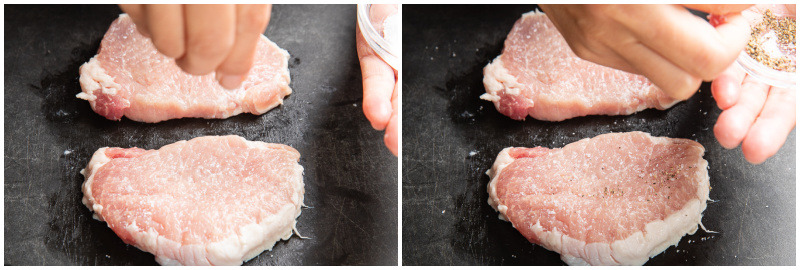
Step 12: Season both sides with ½ tsp Diamond Crystal kosher salt and ⅛ tsp freshly ground black pepper.
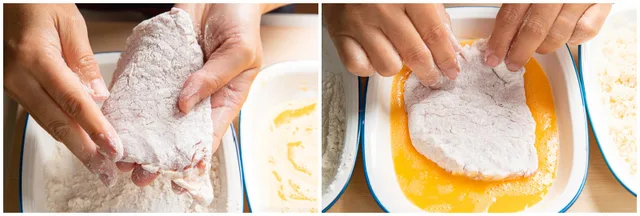
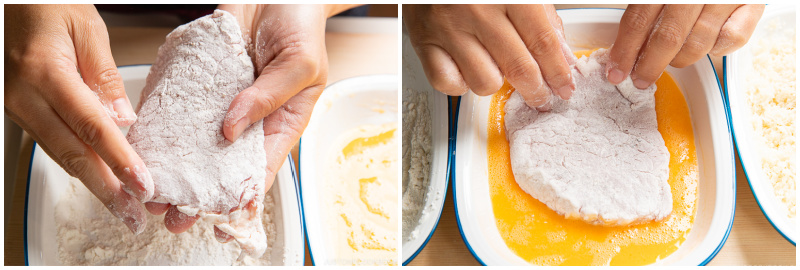
Step 13: Coat both seasoned pork chops lightly with flour, shaking off excess, then dip them in the prepared egg-and-oil mixture.
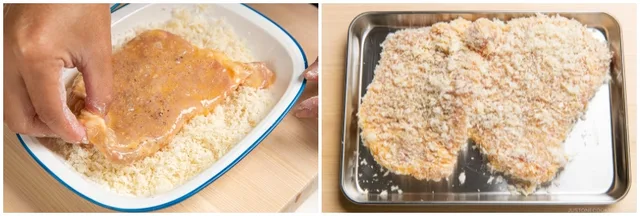
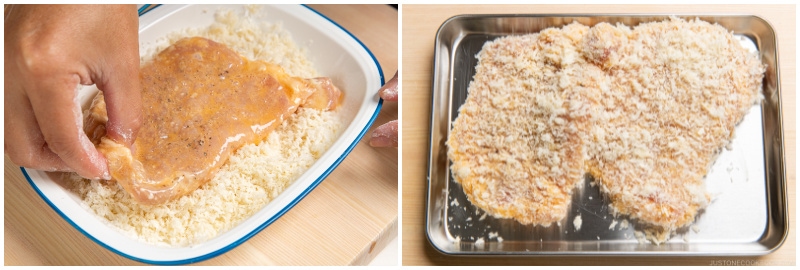
Step 14: Lastly, dredge the pork in the fresh panko and gently press it to adhere to the cutlet. Gently shake off any excess, then place the breaded cutlets onto a tray or plate. Set them aside for 5–10 minutes to set the breading. Tip: The panko will “puff up” while deep-frying, so it doesn't have to be fluffy at this stage.
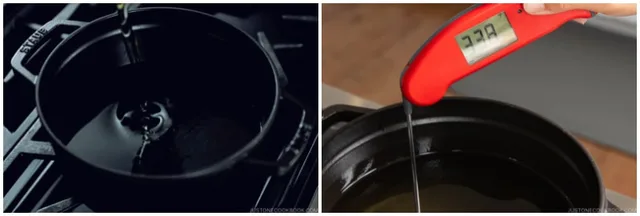
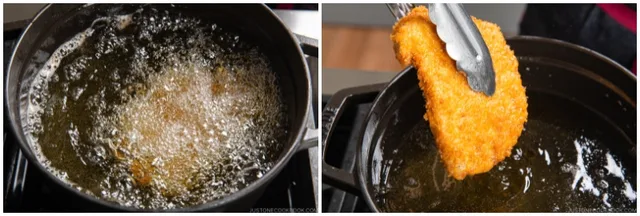
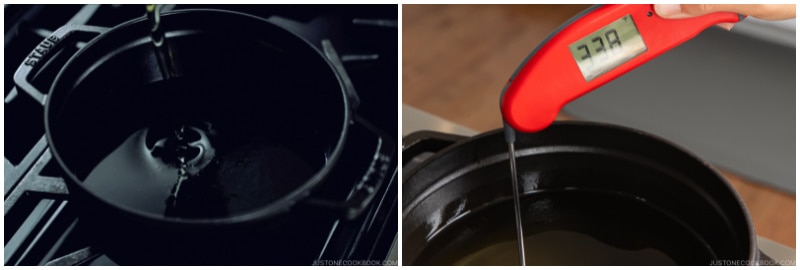
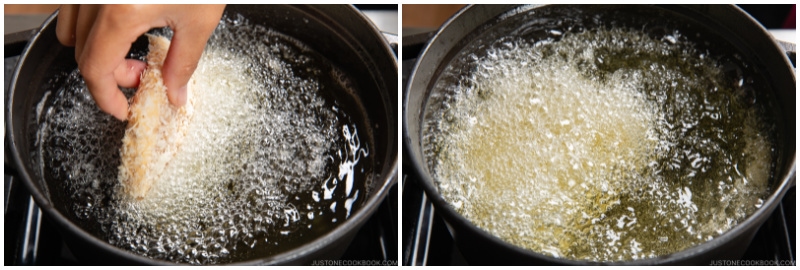
Step 15: Heat the deep-frying oil in a suitable pot to 340°F (170°C), with a depth of about 1 3/4–2 inches (5 cm). Use the same oil throughout, skimming loose crumbs between cutlets. A small panko crumb should bubble gently and rise; reserve the coating panko for the cutlets.
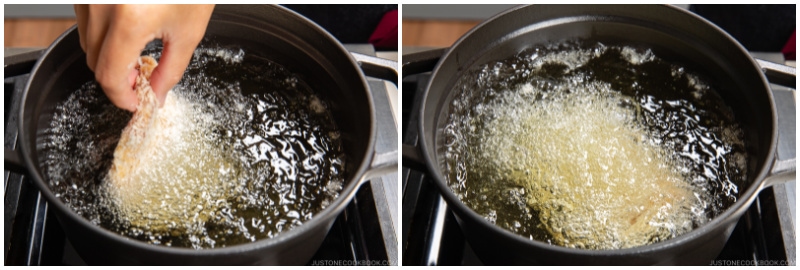
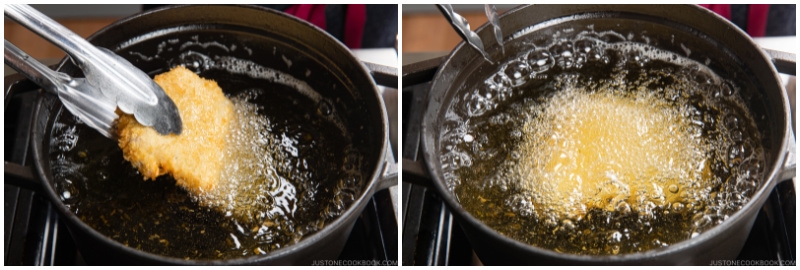
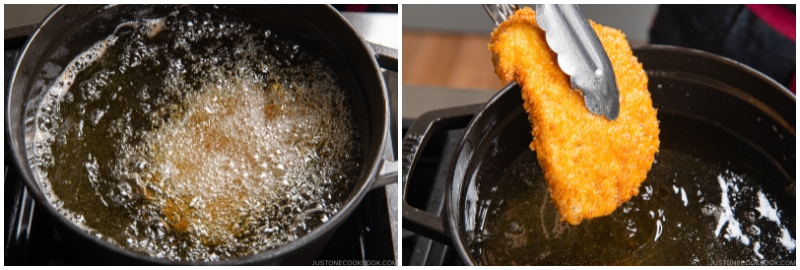
Step 16: Gently lower the first breaded cutlet into the 340°F (170°C) oil. Fry its first side for about 1 minute; leave it undisturbed for the first 30 seconds so the coating sets.
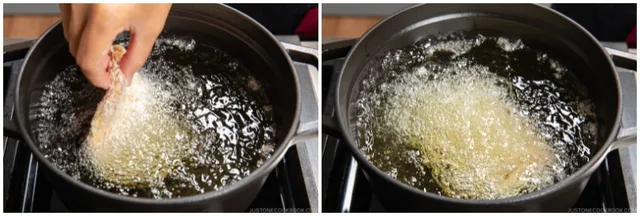
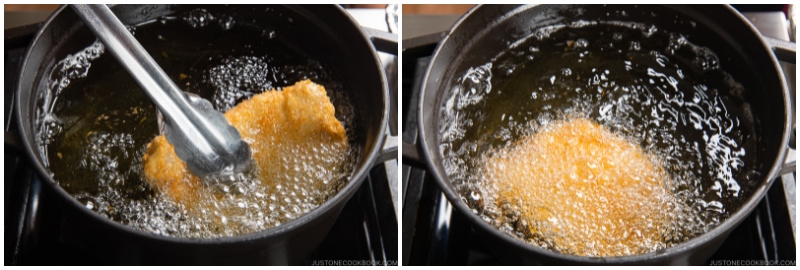
Step 17: After a minute, flip the pork and cook the other side for 1 minute.
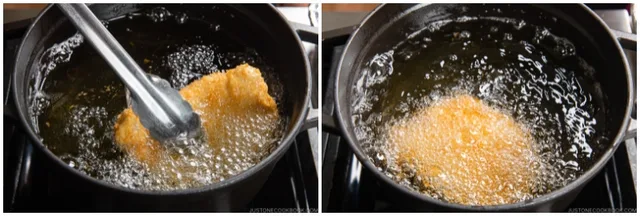
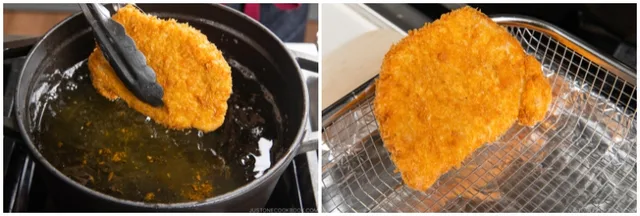
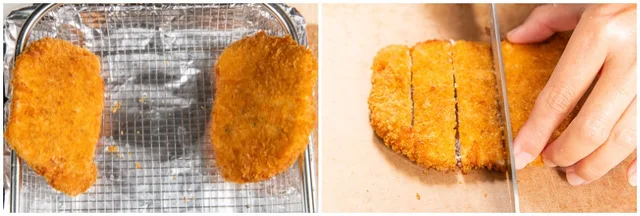
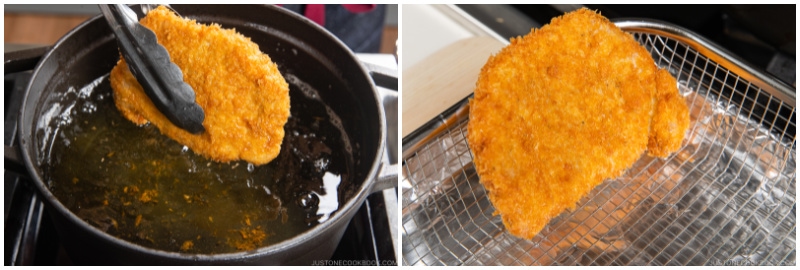
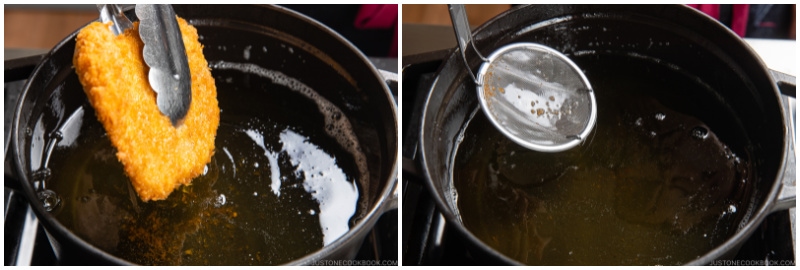
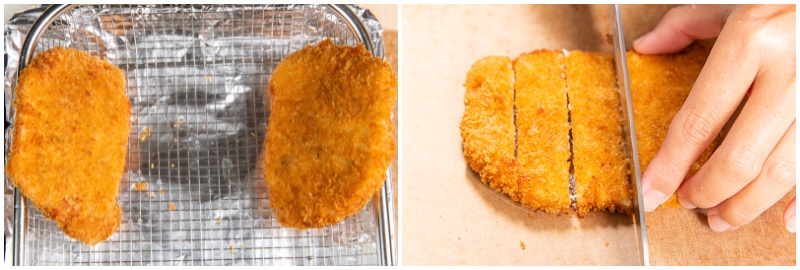
Step 18: Remove the pork and let the excess oil drip off by holding the cutlet vertically over the pot for a few seconds. Place it on a wire rack or paper towel and prop it on its side, if possible, to drain excess oil. Let it sit for 4 minutes. The residual heat will continue to cook the meat as it rests.
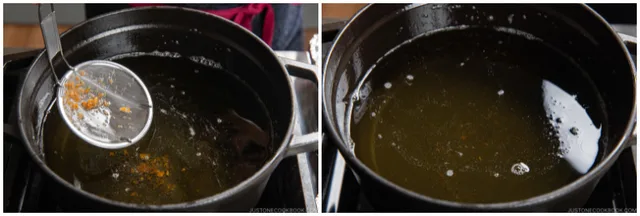
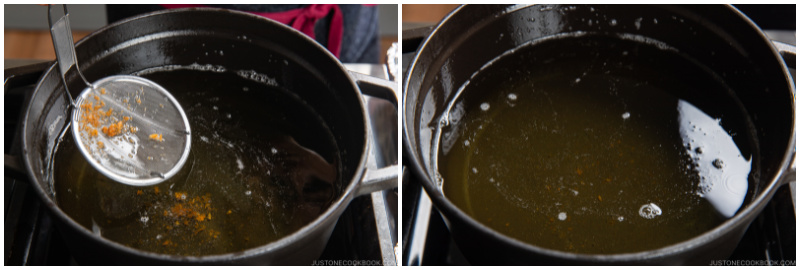
Step 19: Turn off the heat temporarily. Scoop up and discard any fried crumbs in the oil with a fine-mesh strainer. Keep the oil clean of fried crumbs, which can burn and make the oil dark and dirty. Then, turn on the heat again to medium and bring the oil back to 340ºF (170ºC).
Step 20: While the first cutlet rests, reheat the skimmed oil to 340°F (170°C) and lower in the second breaded cutlet. Fry its first side for about 1 minute.
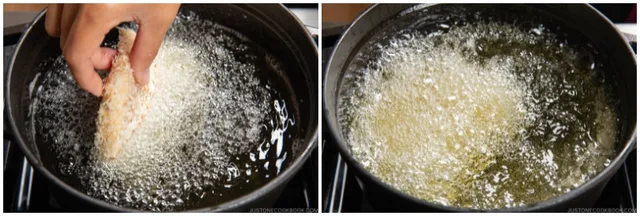
Step 21: Flip and cook the other side for 1 minute.
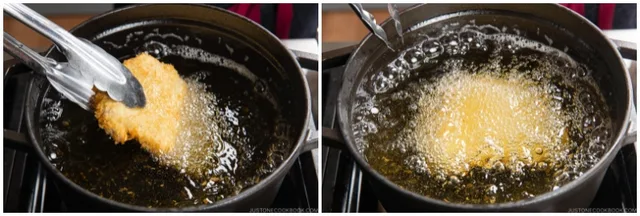
Step 22: Take out the pork and drain the excess oil as before. Place it on the wire rack and let it rest for 4 minutes. Clean the oil of fried crumbs.
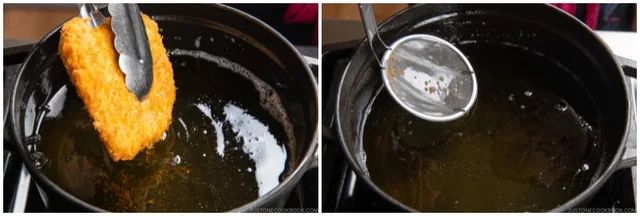
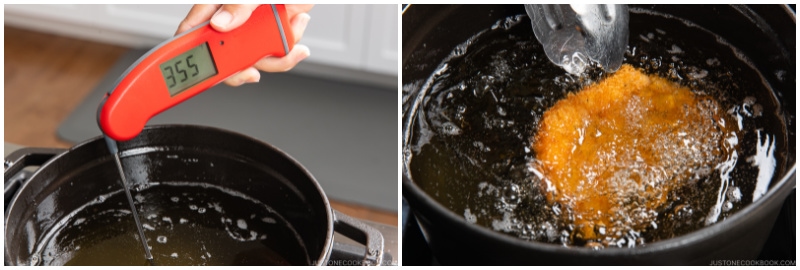
Step 23: After the first cutlet has rested for 4 minutes, heat the oil to 355°F (180°C). Fry that cutlet again for about 30 seconds per side, until crisp and at least 145°F (63°C) at its centre, checking with a thermometer. Drain upright briefly, then place on a wire rack and rest for at least 3 minutes after this final fry.
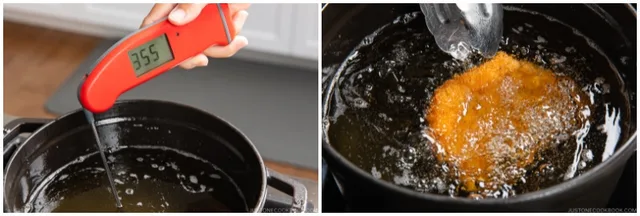
Step 24: Skim loose crumbs and keep the oil at 355°F (180°C). Once the second cutlet has completed its 4-minute initial rest, fry it again for about 30 seconds per side, until crisp and at least 145°F (63°C) at its centre. Drain upright briefly, then place on the rack and rest for at least 3 minutes after its final fry.
Step 25: Once each cutlet has rested for at least 3 minutes after its final fry, slice crosswise into pieces about 3/4 inch (2 cm) wide.
Step 26: Serve the sliced tonkatsu with the prepared dipping sauce and optional cabbage and cucumber side. Add the Japanese sesame dressing to the side when serving.
Photos (2)
Comments
0 threadsSign in to join the discussion.

No comments yet. Start the discussion.