

Korean · Soup
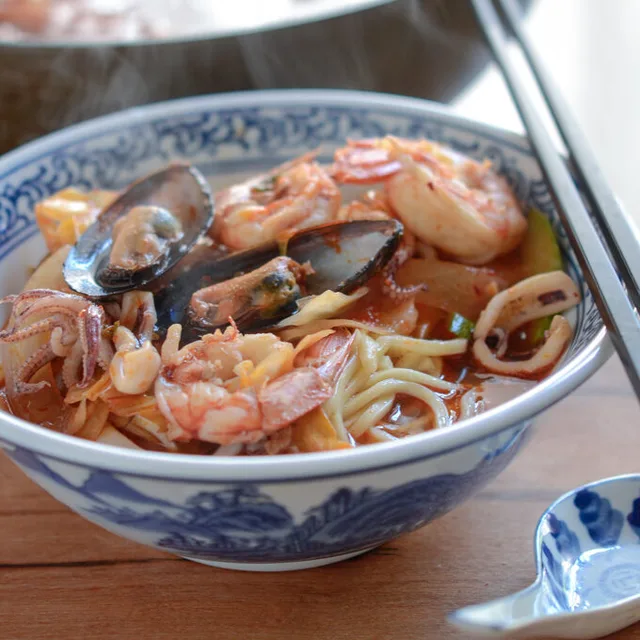
Jjamppong (spicy seafood noodle soup)
From the zcook collection
Korean Chinese noodle soup with pork, seafood, vegetables and a gochugaru broth.
- Dairy-free
- Korean
- Soup
- Main Course
- Total
- 30 min
- Prep
- 20 min
- Cook
- 10 min
- Serves
- 2
- Level
- Hard
- Energy
- 580 kcal
Method10 steps · about 30 min
Step 1: Have a separate pot of water ready for the noodles. Turn on its heat when you start cooking the soup, then follow step 9 once so the drained noodles and soup finish together. Do not cook the noodles twice.
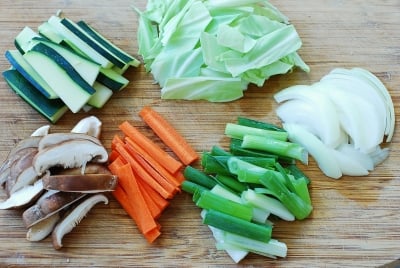
Step 2: Thinly slice the onion (1/4). Cut carrot (1/2 small) and zucchini (1/2) into thin 2-inch strips, cabbage into 2-inch lengths and scallions (2) into 2-inch lengths. Thinly slice the optional fresh shiitake, or soak the two dried shiitake until plump and slice them instead. Prepare the julienned or minced ginger (1 teaspoon) and minced garlic (1 tablespoon).

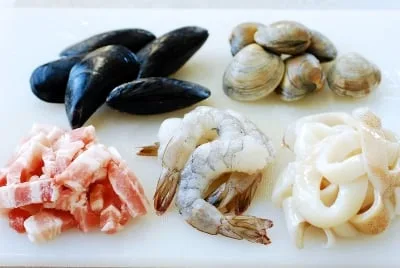
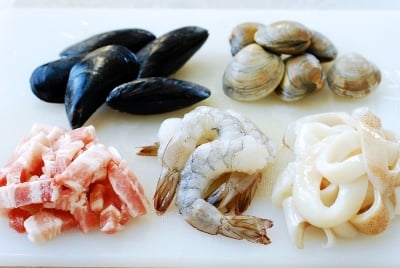
Step 3: Thinly slice the pork. Clean the clams and mussels (4–6), peel the shrimp (4–6) as desired, and clean and cut the squid (3 ounces) into bite-size pieces; do not cut it too small because it shrinks during cooking.
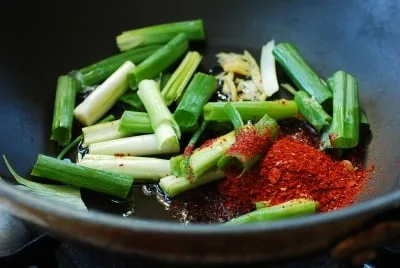
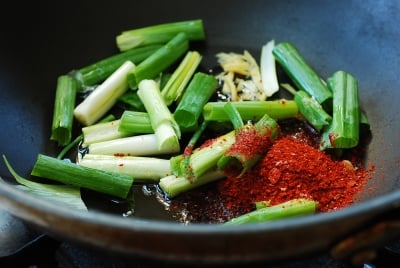
Step 4: Heat a wok or large pot over high heat. Add the oil (1 tablespoon), ginger, minced garlic (1 tablespoon), prepared scallions (2), gochugaru (2 tablespoons) and soy sauce (1 tablespoon) and stir-fry for about 1 minute. Use 1 Tbsp rather than 2 Tbsp gochugaru for a milder soup.
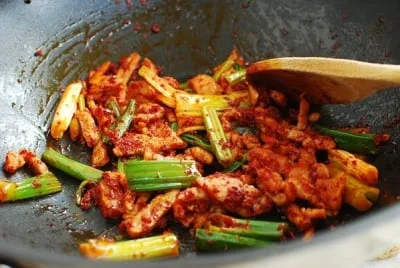
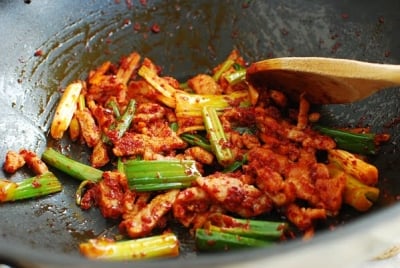
Step 5: Add the pork and stir-fry until the pork is almost cooked, about 2 minutes.
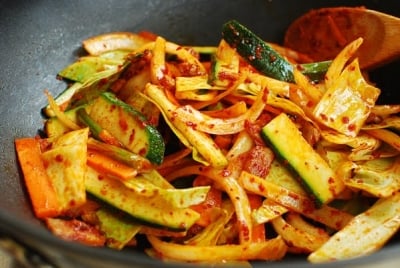
Step 6: Stir in the onion (1/4), carrot (1/2 small), cabbage, zucchini (1/2) and optional mushrooms. Lightly salt, and cook until the vegetables are slightly softened, about 2 minutes, stirring occasionally.

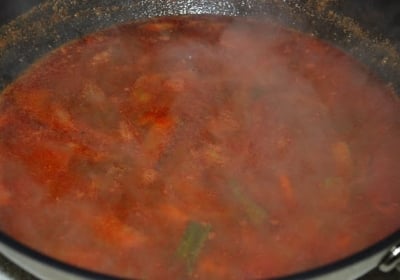
Step 7: Pour in the chicken stock (5 cups) (or anchovy broth/water) and boil until the vegetables are completely cooked.

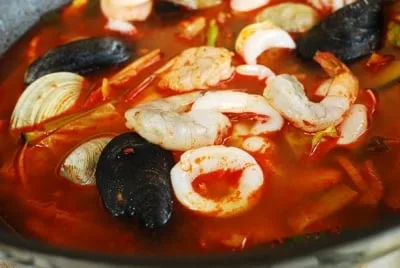
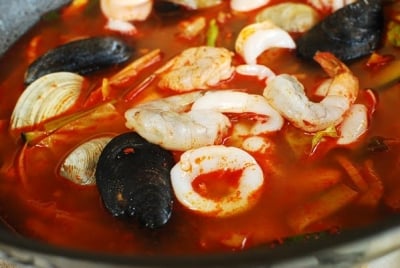
Step 8: Add the prepared seafood, starting with clams, followed by mussels, shrimp and squid. Return to a boil and cook until the shells have opened and the seafood and pork are cooked through; discard any shells that remain closed. Season the soup with salt (to taste) and black pepper (to taste) to taste.
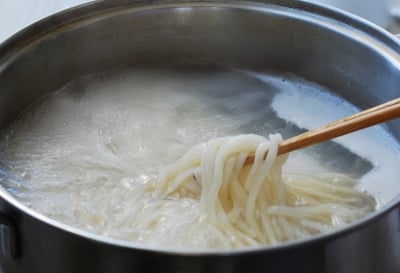
Step 9: While the soup cooks, boil the fresh noodles once in the separate pot according to their package directions. Rinse with cold water and drain, timing this so they are ready when the soup finishes.

Step 10: Place a serving of the noodles in a large soup bowl and ladle the soup on top. Serve immediately while piping hot.
Photos (1)
Comments
0 threadsSign in to join the discussion.

No comments yet. Start the discussion.