

Bavarian · Side
Oma’s Bavarian Bread Dumplings (Semmelknödel)
From the zcook collection
Stale crusty bread soaked in milk makes these Bavarian dumplings with bacon, onion, parsley and egg. Test one dumpling before shaping the rest, and simmer gently so they hold together. Allow 30–60 minutes for the bread soak, 20 minutes to cook the test dumpling fully, and about 20 minutes for the main dumplings.
- German
- Side
- German bread dumplings
- how to make Semmelknödel
- traditional Bavarian dumplings
- Prep
- 45 min
- Serves
- 6 side-dish servings; dumpling count depends on shaping
- Level
- Medium
Method11 steps
Step 1: Cut about 454 g stale crusty bread or rolls, including the crusts, into small pieces and put them in a large bowl. Use firm good-quality bread rather than soft packaged sandwich bread.
Step 2: Pour the 360 ml hot milk over the cut bread and let it soak for about 30–60 minutes until softened. Pour off any excess milk; keep the actual soaked, drained bread.
Step 3: During the soak, fill a large approximately 5-quart pot with fresh water to about 5 cm (2 inches) below the rim. Add the 18 g bath salt, or adjust to taste. Bring to a boil, then cover and reduce to a gentle simmer.
Step 4: While the bread soaks, melt the 28 g butter in a frying pan. Fry the diced bacon (3) and onion (1 small) for about 5–7 minutes, stirring, until the bacon is crisp and the onion is translucent. Stir in the 8 g chopped parsley.
Step 5: Stir the cooked bacon, onion and parsley mixture into the soaked, drained bread. Taste and season with a little additional dough salt and black pepper if needed, before adding the raw eggs.
Step 6: Mix the 2 lightly beaten eggs thoroughly into the seasoned bread mixture. Do not taste the uncooked egg dough.
Step 7: Check the egg dough. If it is too soft to hold a dumpling shape, add breadcrumbs, 10 g (1 tablespoon) at a time, mixing after each addition, until it can be shaped. Use only the amount needed.
Step 8: Take a small portion of the adjusted dough, form a test dumpling and lower it into the gently simmering salted water. Keep the remaining raw dough aside. Check the test after 10 minutes. If it breaks up, check the remaining dough: add a little extra milk only if it is dry and crumbly; if it is too soft, add a little more breadcrumbs as in step 7. Mix and repeat the test after a correction. Keep the water gently simmering.
Step 9: If the test holds together at the 10-minute check, simmer it for another 10 minutes (20 minutes total), until cooked through, then lift it out and taste it. Adjust the seasoning of the remaining dough with additional salt and pepper if needed. With wet hands or wet spoons, shape the remaining dough into dumplings about 5 cm (2 inches) across.
Step 10: Lower the shaped dumplings into the gently simmering water and cook for about 20 minutes until cooked through. Keep a gentle simmer so they hold together; avoid a rolling boil.
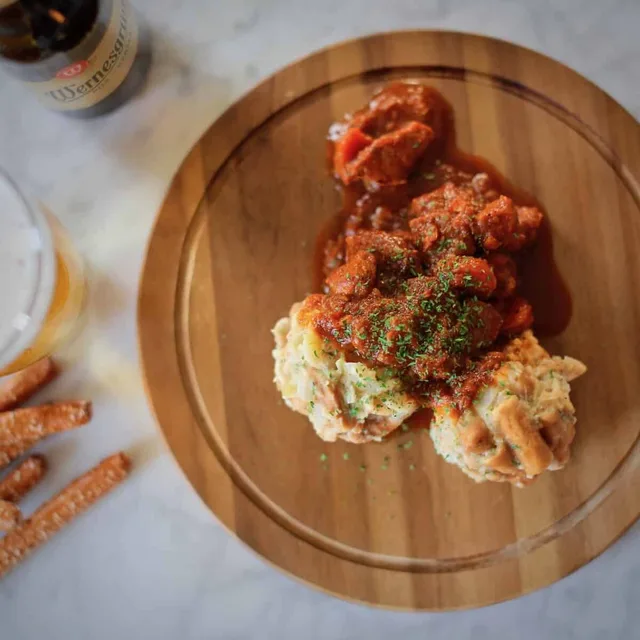
Step 11: Lift the cooked dumplings out with a slotted spoon or spider and drain briefly on paper towels. Serve as a side dish, with ready gravy or red cabbage if desired.
Photos (1)
Comments
0 threadsSign in to join the discussion.


No comments yet. Start the discussion.