
Singaporean · Dinner
FRIED HOKKIEN PRAWN MEE
From the zcook collection
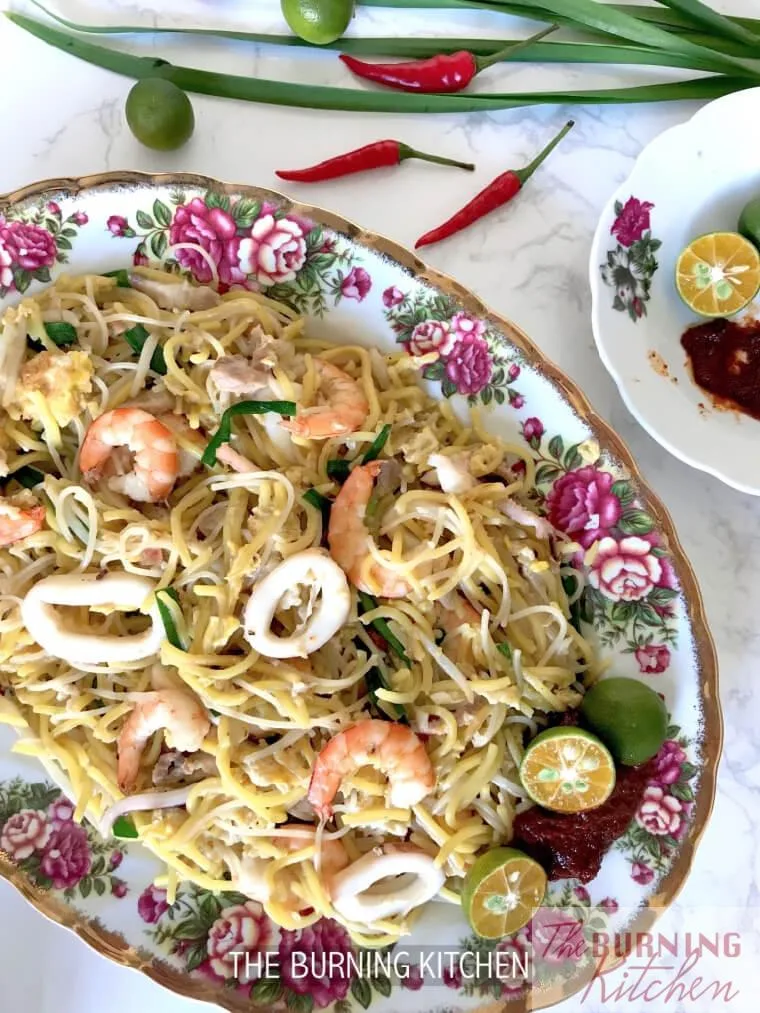
Singaporean fried Hokkien mee with yellow noodles, rice vermicelli, prawns, squid, pork and crisp rendered pork garnish. Cook the six portions in two three-portion wok batches.
- Dairy-free
- Singaporean
- Dinner
- Chinese
- Main Course
- fried hokkien mee
- fried hokkien prawn mee
- Prep
- 40 min
- Serves
- 6
- Level
- Hard
Method31 steps
Step 1: Soak the 250 g dried thick vermicelli in tap water while preparing the other ingredients. Use the packet’s soaking guidance and let the strands soften enough to stir-fry without breaking. Drain before frying; keep this soaking water separate from the measured stock water.
Step 2: Separate the heads from the whole prawns (½ kg) and retain them for stock. Devein the bodies and keep them separate from the heads, covered and refrigerated at 4°C (40°F) or below until needed. Avoid washing raw seafood.
Step 3: Clean the two squid by removing the innards, beaks and quills, and pat dry without washing raw seafood. Keep the bodies and tentacles covered and refrigerated until steaming.
Step 4: Pat the pork belly (200 g) dry and keep it covered and refrigerated until steaming. Avoid washing raw pork.
Step 5: Trim the roots from the bean sprouts, wash them and drain thoroughly.
Step 6: Have the 5 tsp finely chopped garlic ready. Divide it into 1 tsp for the prawn stock and two separate 2 tsp portions, one for each noodle batch.
Step 7: Wash the chives, drain and cut into lengths about 4 cm long.
Step 8: Cut the 300 g pork fat into small cubes without washing raw pork. Keep cold until rendering.
Step 9: Wash and halve the six limes, ready for serving.
Step 10: Put the cubed pork fat in the wok and set it over medium-high heat. Stir-fry until the oil has rendered and the pieces are golden and crisp, watching closely to avoid burning.
Step 11: Lift the crisp pork pieces into one bowl. Pour the rendered oil into a separate bowl and retain both separately. The noodle batches will draw measured amounts of this oil; use cooking oil to make up any shortfall if needed.
Step 12: Heat the stock’s 3 tbsp cooking oil in the wok over medium-high heat. Add the prepared 1 tsp garlic portion and fry until fragrant without burning.
Step 13: Add only the retained prawn heads to the garlic pan. Fry and mix, pressing the heads to release their juices.
Step 14: Add the 800 ml boiling stock water. Bring to a simmer and cook for 10–15 minutes, checking after 10 minutes, until the orange oil rises. Turn off the heat, strain the liquid through a sieve into a pot and discard the heads.
Step 15: Prepare the external steamer water and bring it to a full boil. Place the retained prawn bodies in a deep plate and steam for about 4–5 minutes from steady steam, checking after 4 minutes. Continue until pearly and opaque throughout, then remove the plate.
Step 16: Check and top up the external steamer water if needed. Steam the prepared squid in a deep plate for about 10 minutes from steady steam, until opaque and cooked through. Remove the plate and retain the released juices separately with the squid.
Step 17: Check the steamer water again. Steam the prepared pork belly in a deep plate over high heat for about 15–20 minutes from steady steam, checking after 15 minutes. Continue until cooked through and its centre reaches 63°C (145°F), then rest for at least 3 minutes before cutting. Retain its released juices.
Step 18: Add only the retained squid and pork-belly juices to the strained prawn stock. Keep the cooked solids separate. Measure the combined broth and divide it into two equal shares, one for each noodle batch. Keep each share hot until needed.
Step 19: Remove the shells from the cooked prawns and retain the peeled meat for the noodle batches.
Step 20: Cut the cooked squid bodies into cross-section slices about 0.5 cm thick and the tentacles into strips. After the pork has rested for at least 3 minutes, cut it into strips. Divide the prawns, squid, pork, drained sprouts and chives into two equal portions. Keep the second batch’s cooked proteins hot while frying the first.
Step 21: For the first batch, heat 3 tbsp of the rendered pork oil (2 tbsp) and 2 tbsp cooking oil in the wok over high heat. If the rendered oil is insufficient, make up that measured 3 tbsp draw with cooking oil. Divide the drained vermicelli and ready yellow noodles (400 g) into two equal portions, reserving one portion for the second batch.
Step 22: Add the first portion of yellow noodles to the hot wok, followed by the first portion of drained vermicelli. Scoop and flip gently to combine without breaking the strands. Keep the other noodle portion separate.
Step 23: Add the first batch’s ½ tsp salt and ½ tsp light soy sauce. Draw 3 tbsp broth from the first batch’s reserved broth share and add it to the noodles, keeping the remainder of that same share for later. Mix and fry for 3–4 minutes, checking after 3 minutes.
Step 24: Push the first-batch noodles to one side. Add another 2–3 tbsp rendered pork oil in the cleared area, making up only any shortfall with cooking oil. Add the first batch’s prepared 2 tsp garlic portion and fry until fragrant without burning.
Step 25: Crack the first batch’s three eggs over the garlic and break them up gently. Drizzle 1 tsp fish sauce over the eggs and swirl. Leave the underside to set and brown lightly before turning.
Step 26: Flip the first-batch noodles over the lightly browned egg. Add the first half of the drained bean sprouts and stir-fry until thoroughly cooked and hot through, with the egg set throughout.
Step 27: Add the remainder of the first batch’s broth share, after its earlier 3 tbsp draw. Cover the wok and simmer for a few minutes until the noodles absorb the broth. If they become too dry, add a little of the optional additional water as needed.
Step 28: Add only the first portions of cooked prawns, squid, pork and chives. Mix gently until the entire batch is hot through.
Step 29: Taste the first batch and add a little optional finishing light soy sauce only if needed. Transfer it to three plates and serve hot.
Step 30: Repeat steps 21–29 for the reserved second noodle portion: heat 3 tbsp rendered pork oil with the remaining 2 tbsp measured cooking oil; add its noodles, the remaining ½ tsp salt and ½ tsp measured soy sauce, and 3 tbsp from its own broth share. Fry for 3–4 minutes, checking at 3. Push the noodles aside, add another 2–3 tbsp rendered pork oil and the remaining prepared 2 tsp garlic; make up only any rendered-oil shortfall with cooking oil. Add the remaining three eggs and 1 tsp fish sauce, let the underside set and brown lightly, then fold the noodles over. Add the second drained sprout portion and cook thoroughly hot through. Add only the remainder of this second broth share and simmer until absorbed, using optional water only if needed. Mix in the second cooked-prawn, squid, pork and chive portions and heat through, taste for optional soy and plate into three more portions.
Step 31: Serve both batches hot with the halved limes, some of the retained crisp pork pieces and optional ready sambal chilli. Keep any unused rendered oil separate from the dish.
Photos (1)
Comments
0 threadsSign in to join the discussion.

No comments yet. Start the discussion.