
Malaysian · Dessert
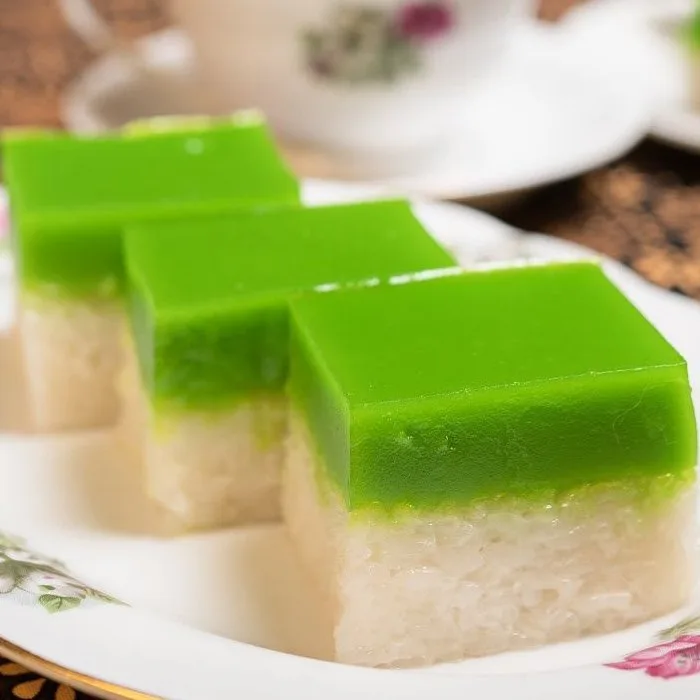
Seri muka kuih
From the zcook collection
A traditional Malaysian two-layer kuih with a sticky glutinous rice base steamed in coconut milk topped with a silky pandan-scented coconut custard.
- Vegetarian
- Dairy-free
- Malaysian
- Dessert
- Prep
- 10 min
- Serves
- 1 nine-inch round or square layered cake
- Level
- Medium
Method13 steps
Step 1: Use dry glutinous rice (400 g), also called Thai sweet or sticky rice. Soak all four hundred grams in plenty of the separate rice-soaking water for at least one and a half hours. Drain thoroughly and discard all the soaking water; keep the measured hundred millilitres rice-layer water untouched.
Step 2: Lightly grease a nine-inch round or square cake pan with some cooking spray. For the pandan juice, wash and cut the ten separate juice leaves, blend them with their measured two hundred millilitres water and strain through cheesecloth, discarding the leaf pulp. Measure out only one hundred and fifty millilitres of this strained juice for the custard; keep any surplus out of this cake.
Step 3: Wash the separate three rice-layer pandan leaves and tie them into knots. Mix all the soaked drained rice with only the rice-layer coconut milk (150 ml), measured rice-layer water and teaspoon rice-layer salt (1 tsp). Pour into the greased cake pan and lay all three pandan knots on top. Keep the separate custard coconut milk for later.
Step 4: Set the rice pan in a steamer above boiling steamer water, keeping the pan above the water level. Wrap the steamer lid securely with a cloth so condensation does not drip on the food, keeping loose cloth away from the heat. Steam for thirty minutes and replenish the steamer water as needed.
Step 5: Remove and discard the three pandan knots. Fluff the steamed rice, then lightly grease a spatula with some separate cooking spray and press the rice flat in its pan.
Step 6: Press the rice evenly right into the pan corners and around its edges, closing any holes or gaps so the later custard cannot run underneath it.
Step 7: Return the pressed rice layer to the steamer and steam for another ten minutes until cooked and firmly bound. Keep this rice layer hot in the steamer while preparing the custard; the hot layers must join while the rice is still hot.
Step 8: Mix only the measured hundred and fifty millilitres strained pandan juice with all the separate custard coconut milk (200 ml), cornstarch (5 tbsp), all-purpose wheat flour (3 tbsp), sugar (140 g) and pinch of custard salt until smooth.
Step 9: Whisk all three large eggs into the pandan mixture thoroughly. Strain the complete uncooked custard into a heatproof metal bowl or pot to remove any lumps.
Step 10: Bring the separate bain-marie water to a gentle simmer. Set the custard bowl above it as a double boiler, keeping the bowl bottom out of direct contact with the simmering water.
Step 11: Stir the custard continuously over the gently simmering water for about fifteen minutes, stopping once it starts to thicken slightly but is still pourable. Watch the texture rather than cooking it into a thick paste or scrambling the eggs; it will finish setting during steaming.
Step 12: While the cooked rice layer is still hot, pour all the slightly thickened custard evenly over it. Tap the pan gently to release air bubbles, then return it to the covered steamer and steam for thirty minutes until the custard is set and the egg layer is cooked through. Check the centre reaches at least 71 °C /160 °F; continue gently as needed without overcooking it.
Step 13: Remove the pan from the steamer and let heat escape briefly. Refrigerate promptly, within 2 hours of finishing steaming, without waiting for the cake to reach room temperature. Allow the cake to cool completely in the fridge before cutting into rectangles or diamonds. Keep portions not being served refrigerated in a covered container; chilling can make the rice layer firmer.
Photos (1)
Comments
0 threadsSign in to join the discussion.



No comments yet. Start the discussion.