
Chinese · Appetizer
Chinese Braised Beef Shank & Master Stock (酱牛肉)
From the zcook collection
Chinese beef shank braised with fermented soybean paste and whole spices, chilled firm and sliced as an appetizer. The strained braising liquid is saved as refrigerated or frozen master stock. The batch makes about four platefuls.
- Dairy-free
- Spicy
- Chinese
- Main
- Beef & Lamb
- Festive Dishes
- beef
- Prep
- 10 min
- Cook
- 1 hr 30 min
- Serves
- About 4 platefuls
- Level
- Easy
Method15 steps
Step 1: Cut each piece of the 1,500 g boneless beef shank lengthways in half. Keep the raw beef cold while preparing the marinade.
Step 2: Optional soak: cover the cut beef completely with cold soaking water and refrigerate at 4°C (40°F) or below for 1 hour. Drain well and discard that water. If skipping the soak, use the cut beef directly for marinating.
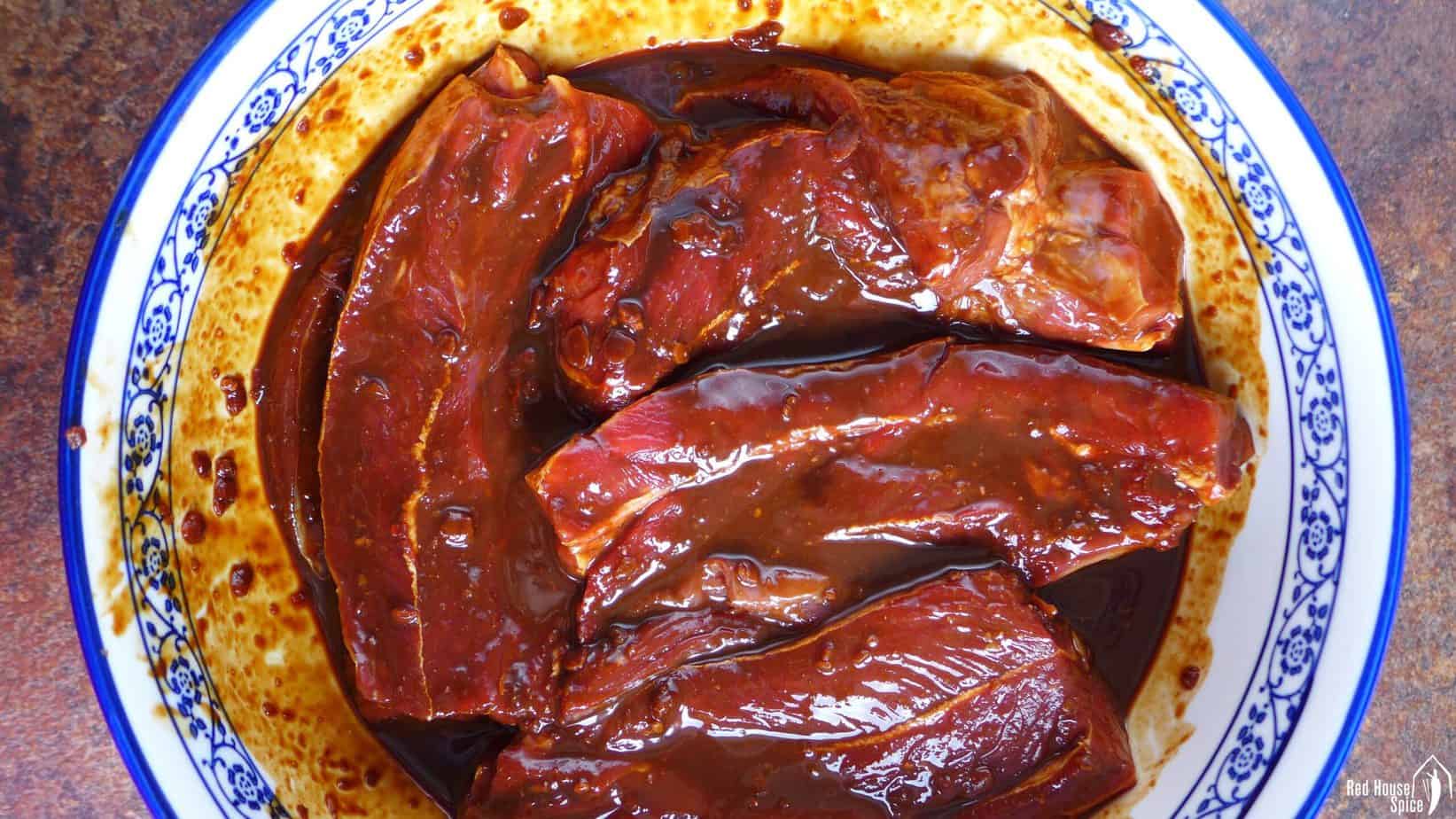
Step 3: Mash one large piece of red fermented bean curd in a bowl, then mix it with 4 tbsp Chinese soybean paste, 4 tbsp light soy sauce and 1 tbsp dark soy sauce until evenly combined.
Step 4: Coat the beef thoroughly with all of the prepared marinade. Cover and refrigerate at 4°C (40°F) or below for at least 4 hours, or overnight.
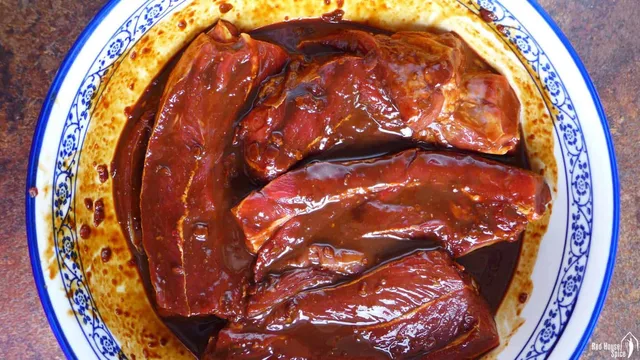
Step 5: Put the marinated beef and all its marinade into a heavy pot. Add about 750 ml fresh braising water, adjusting with extra water only as needed to cover the meat completely.
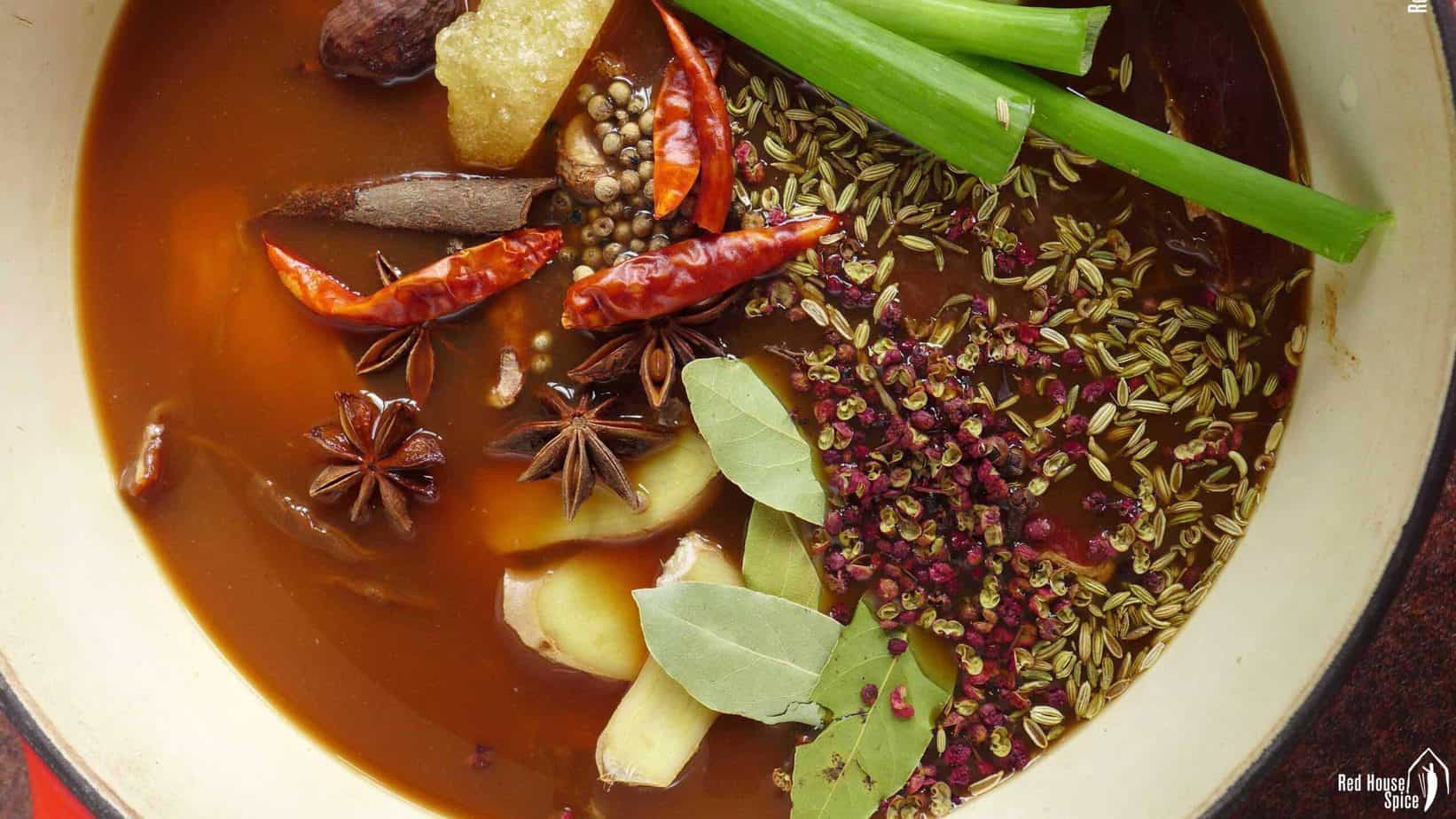
Step 6: Add 2 tbsp Shaoxing wine, five ginger slices, the two braising scallion stalks, 12 g rock sugar, four star anise, one piece cassia cinnamon, four bay leaves, 1 tsp fennel seeds, 1 tbsp Sichuan pepper, 1 tbsp whole white peppercorns, eight whole cloves and four dried chillies. Add the optional Tsao-ko and dried sand ginger (2 pieces) if using.
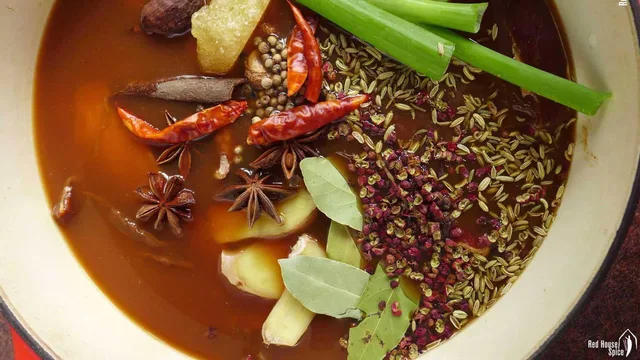
Step 7: Bring the pot to a full boil, then reduce to the lowest heat and cover tightly. Simmer gently for about 90 minutes, checking the beef from around 70 minutes; the time varies with the pieces and pot. Keep enough liquid in the pot, adding a little extra water only if needed. While it simmers, check the seasoning as described in the next step.
Step 8: About halfway through the simmer, taste a little broth with a clean spoon. It should be fairly salty so it seasons the meat. Add salt only if needed, then continue the same simmer.
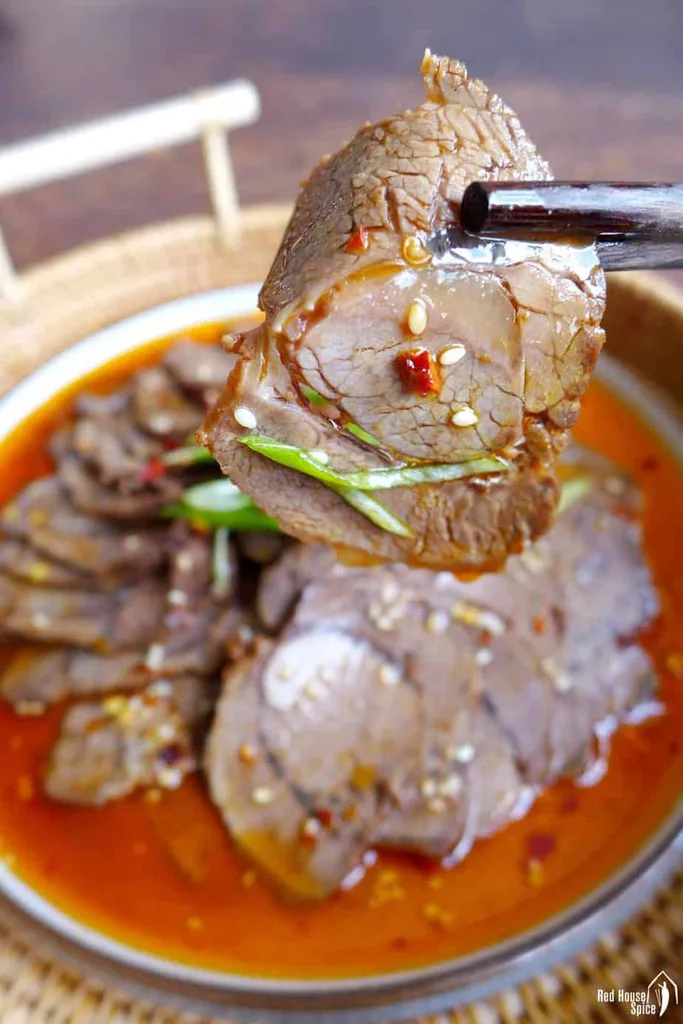
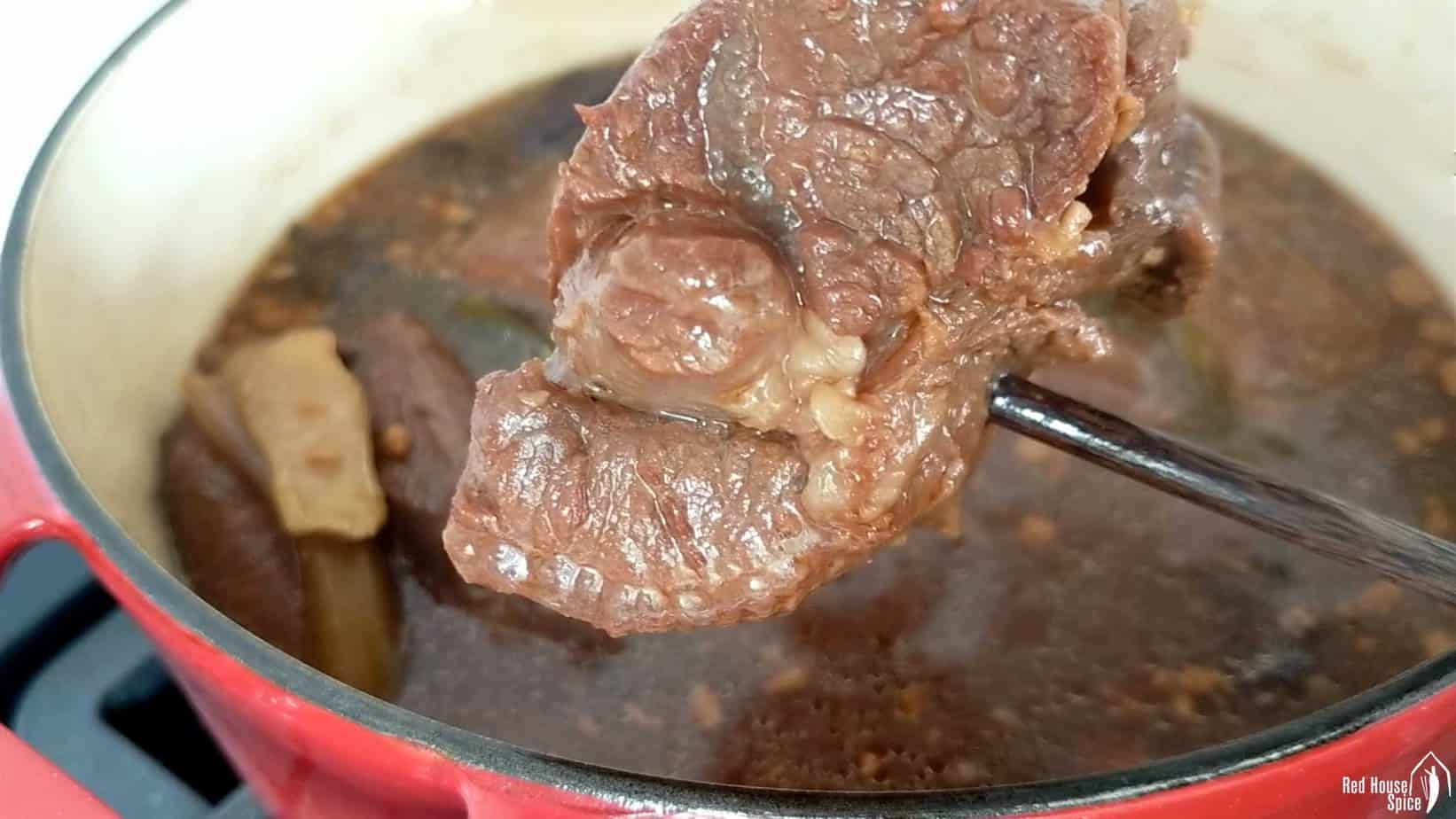
Step 9: Test the centre of the largest beef piece with a chopstick. Stop cooking when it is cooked through and the chopstick passes through with a little resistance; the beef should stay intact for slicing. If it is still too firm, continue simmering and check again.
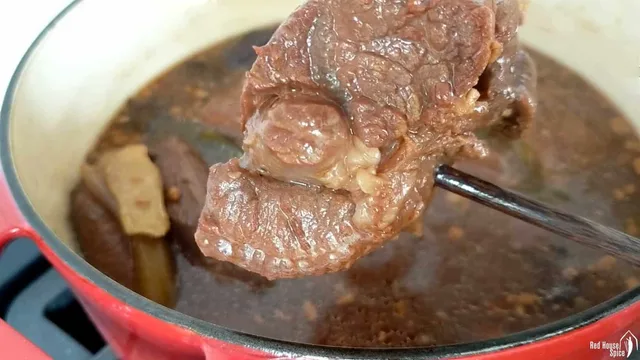
Step 10: Lift the cooked beef into shallow containers, keeping the stock in the pot for straining. Refrigerate the beef promptly at 4°C (40°F) or below, within two hours of cooking or within one hour in heat above 32°C (90°F). Chill until completely firm before slicing.
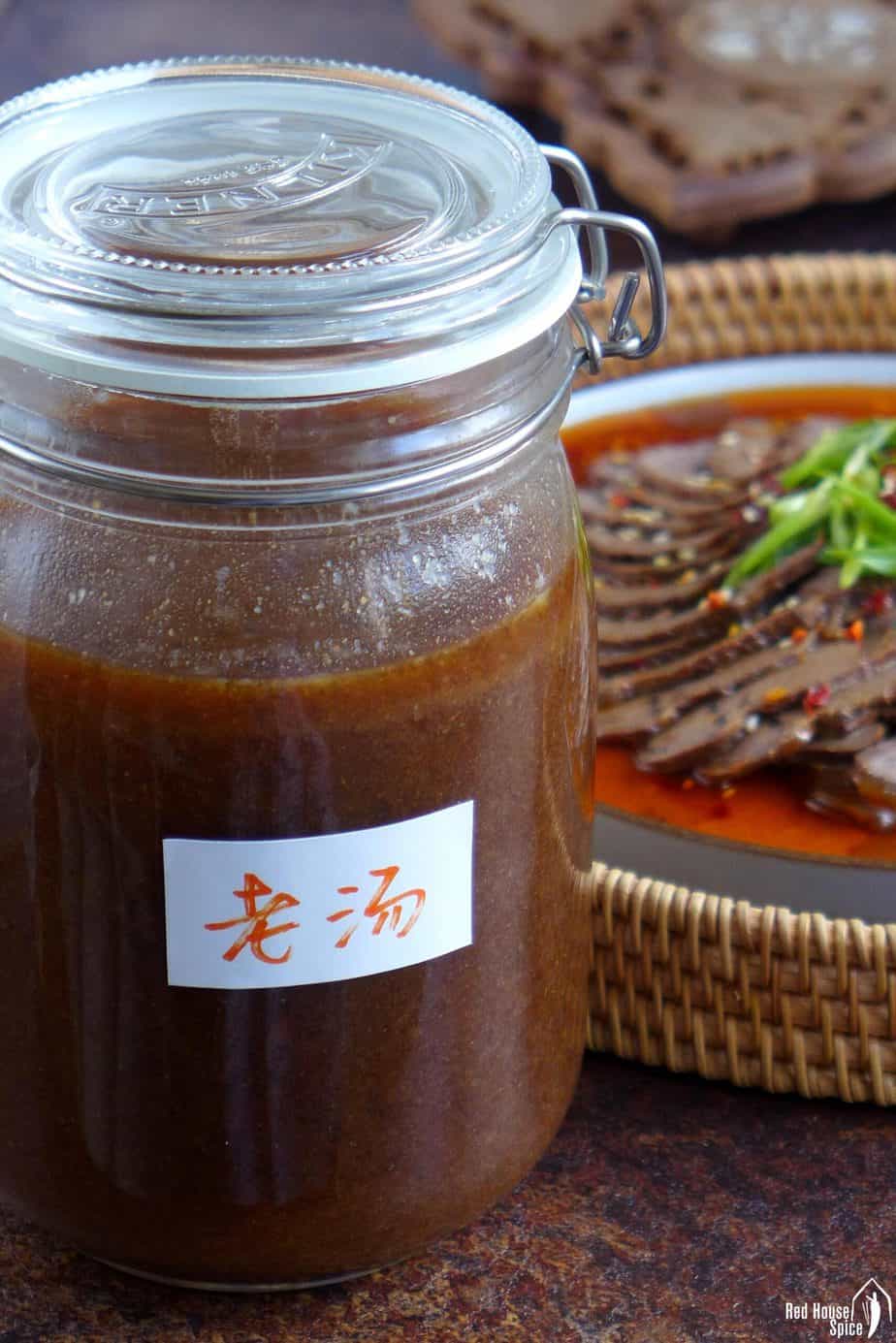
Step 11: Strain the reserved braising liquid through a sieve and discard all spices and solid fragments. Divide the stock into clean shallow containers and refrigerate promptly within the same cooling limits. Keep refrigerated at 4°C (40°F) or below for up to four days, or freeze airtight portions for up to three months. Thaw frozen stock in the refrigerator.
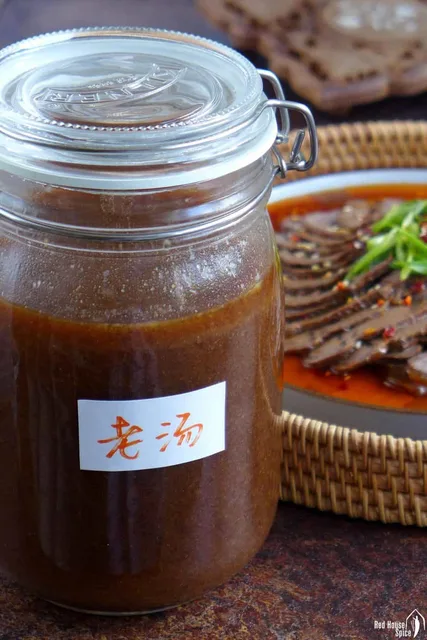
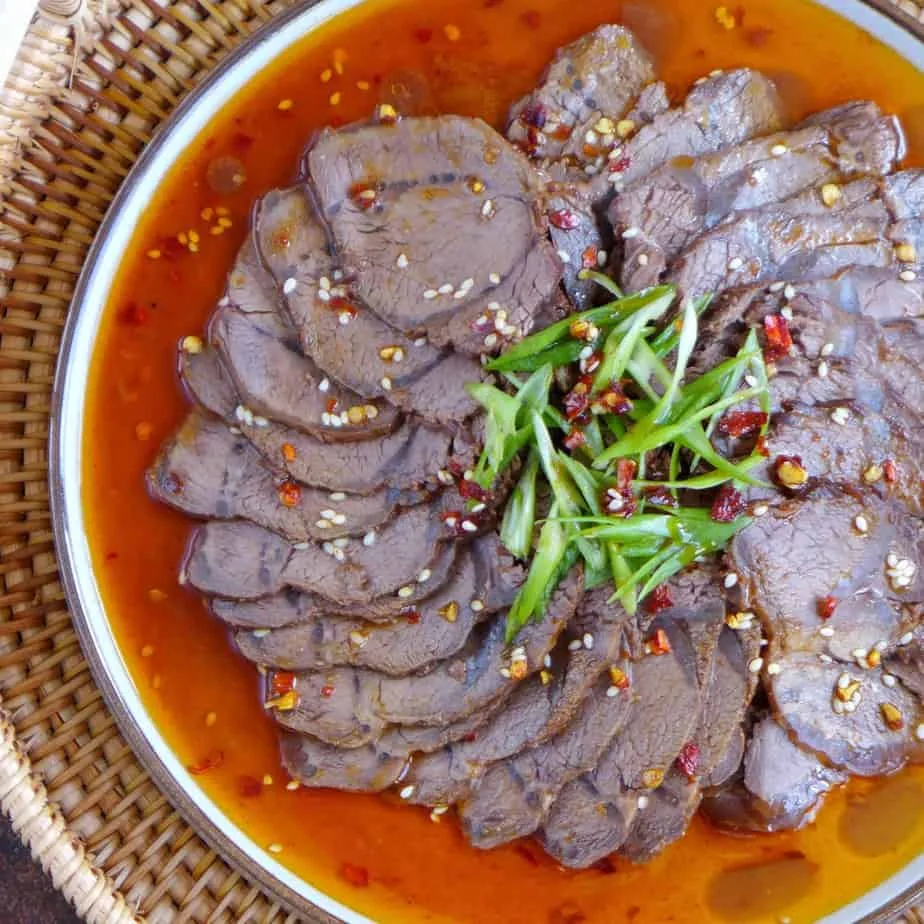
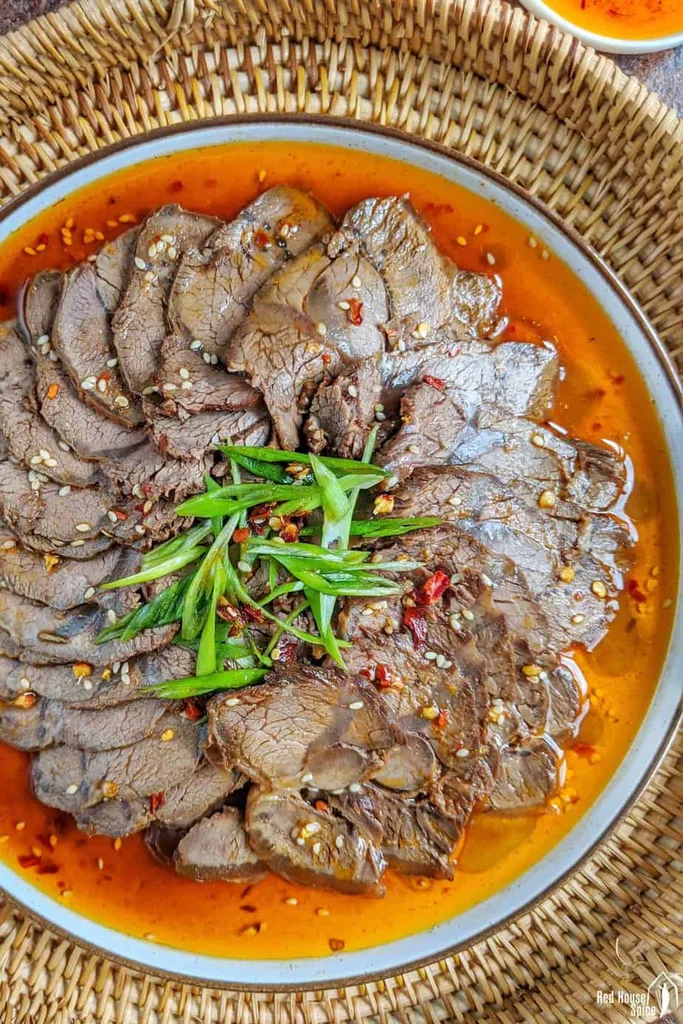
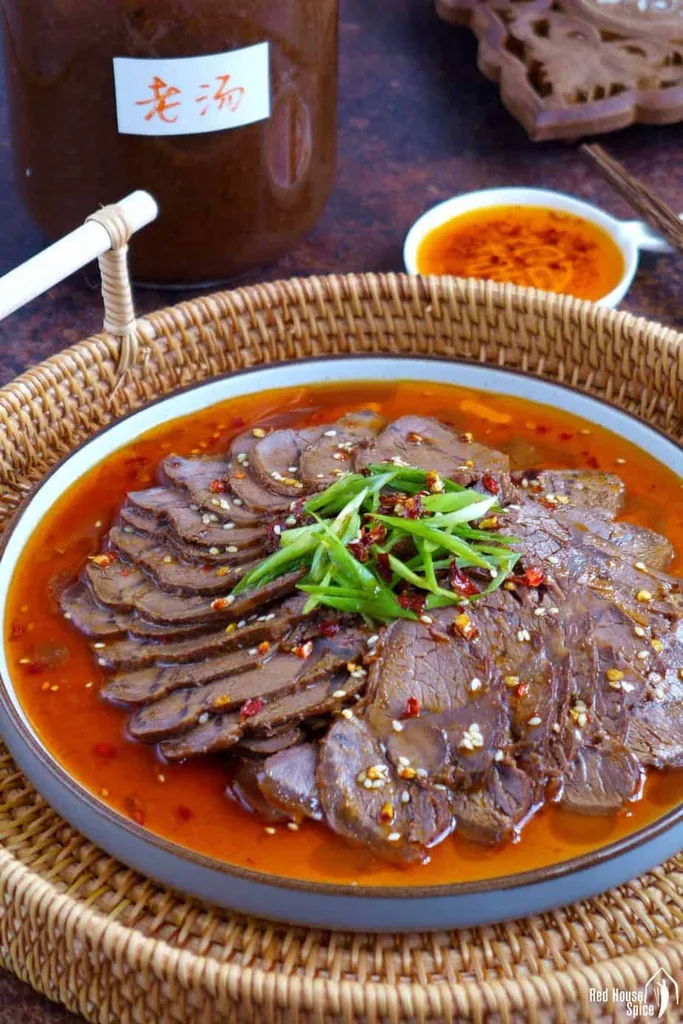
Step 12: Slice the firm chilled beef thinly and arrange the portion you want to serve on a plate. For an optional sauce, take about 3 tbsp of the strained stock, bring it to a boil in a small saucepan, then pour it over the slices. Add optional ready chilli oil and additional chopped scallions to taste. Serve chilled, or use the warming option in the next step.
Step 13: Optional warm-serving route: set the plated sliced beef above boiling steamer water, cover and steam for about 3 minutes. Check that it is hot throughout, reaching 74°C (165°F), and continue steaming if needed. Serve immediately.
Step 14: Keep any reserved unsliced cooked beef refrigerated in covered containers for up to four days, or freeze airtight for up to three months. Thaw frozen beef in the refrigerator before slicing and serving.
Step 15: To use the saved master stock for another meal, thaw it in the refrigerator and bring it to a full boil. Use it in a complete braising recipe for the chosen ingredients, adding water and seasonings as needed and cooking those ingredients through. After cooking, strain out all solids again and promptly cool the stock in shallow containers. Refrigerate for up to four days or freeze for up to three months as above.
Photos (4)
Comments
0 threadsSign in to join the discussion.

No comments yet. Start the discussion.