

Japanese · Dinner
Pork Chashu Donburi (Rice Bowl)
From the zcook collection
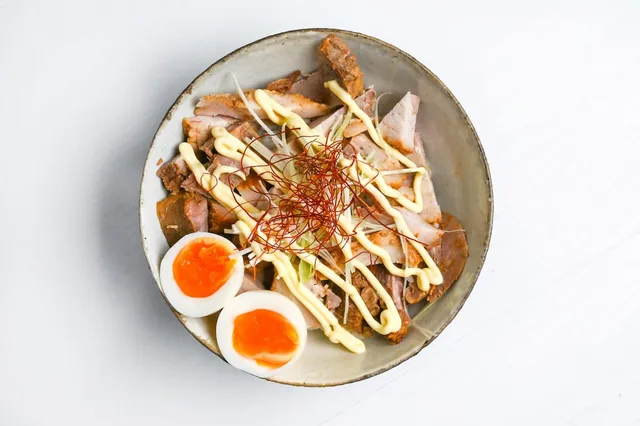
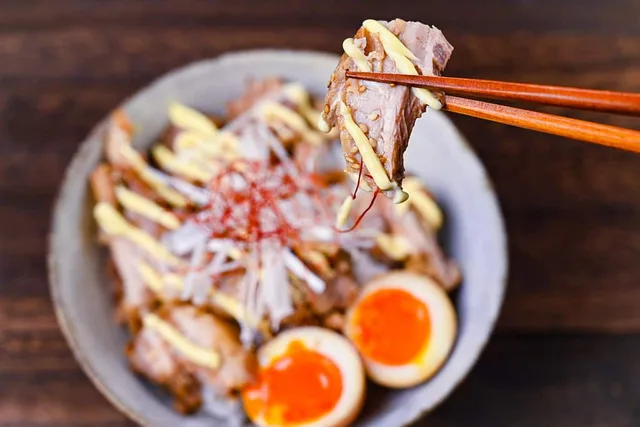
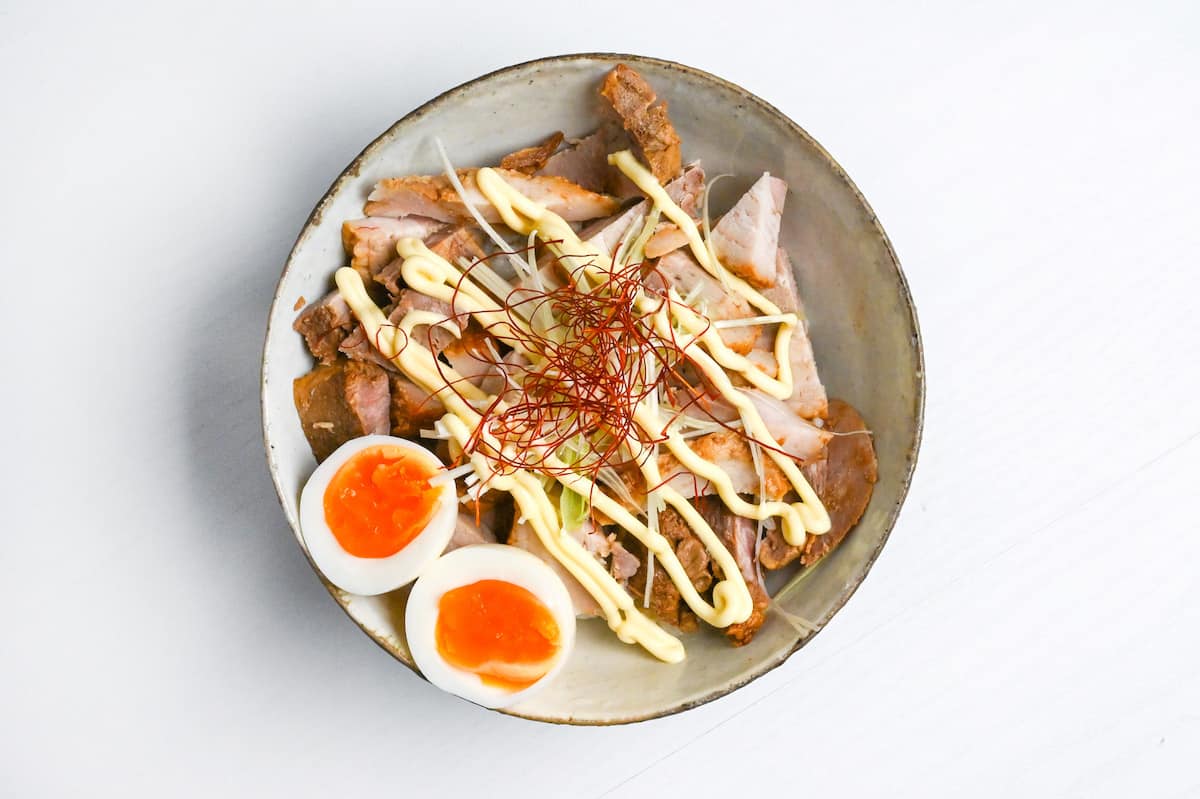
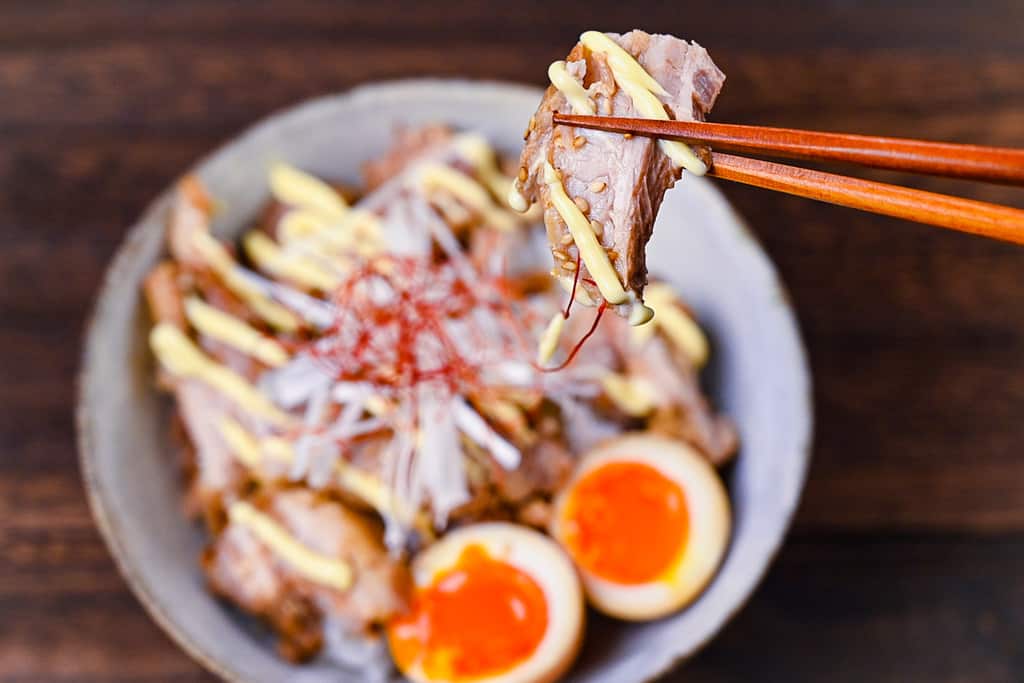
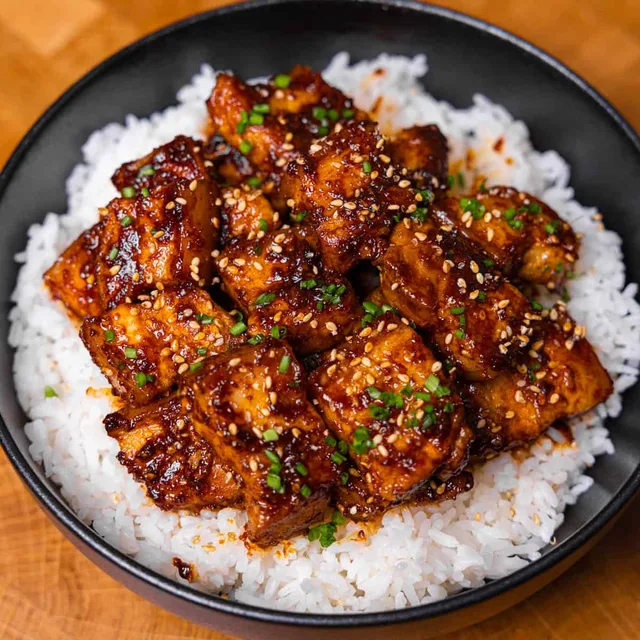
Six Japanese rice bowls topped with tender rolled pork belly, chilled soy-marinated eggs if desired, shredded white leek and mayonnaise. This route makes the chashu from raw pork and includes an overnight refrigerator marinade.
- Dairy-free
- Japanese
- Donburi
- Pork
- Rice
- Prep
- 15 min
- Cook
- 2 hr 15 min
- Serves
- 6 rice bowls
- Level
- Medium
- Energy
- 972 kcal
Method13 steps
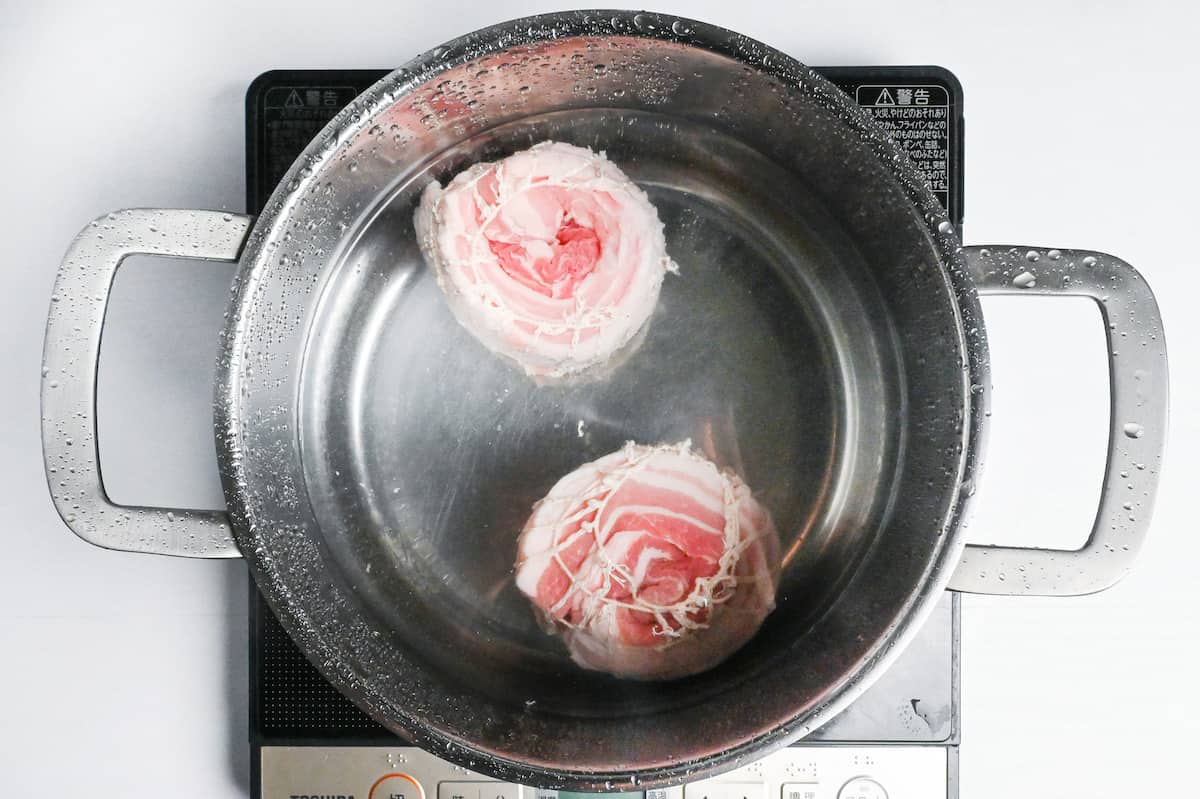
Step 1: Pierce the 700 g skinless pork belly on both sides with a fork. Roll it tightly from its thinner edge and tie securely with butcher’s string. Put it in a suitable pot and add cold water until submerged.
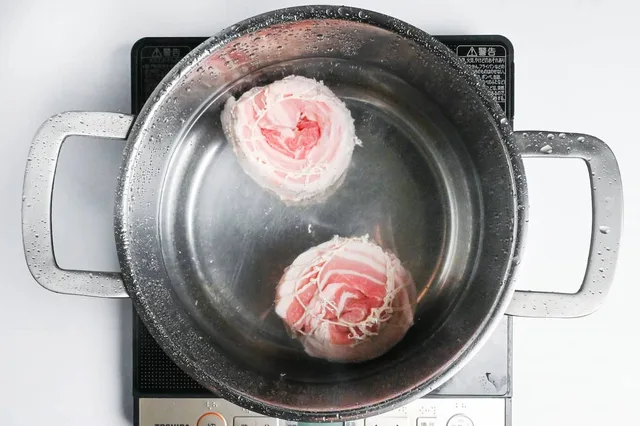
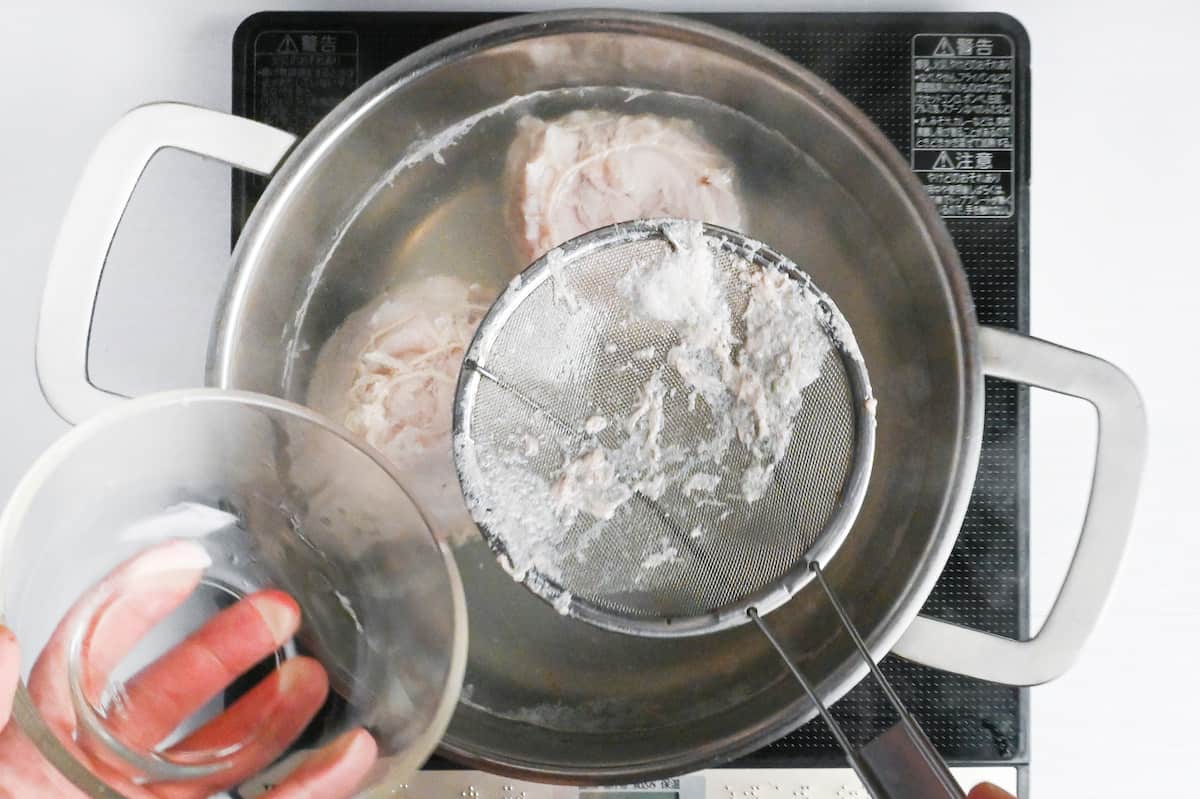
Step 2: Bring the rolled pork and its cooking water to a boil over medium-high heat. Skim off the scum that rises to the surface.
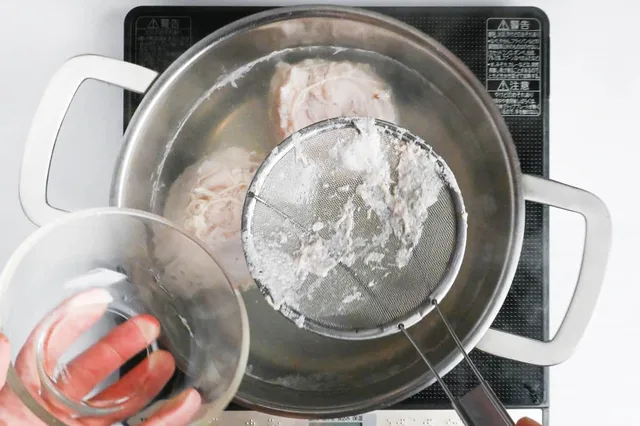
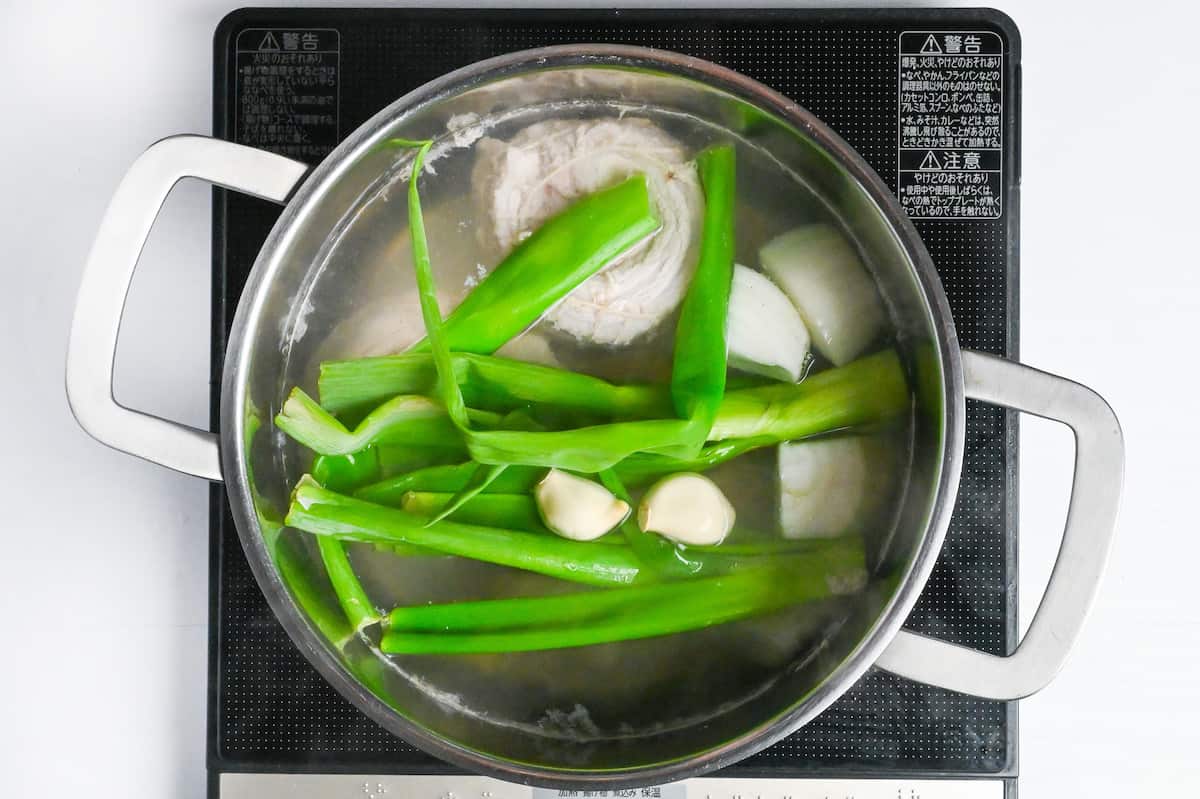
Step 3: Lower the heat to a gentle simmer. Add the 50 g green leek, 50 g thickly sliced ginger, three peeled garlic cloves, 100 g roughly cut onion and 1 tsp rice vinegar. Put a drop lid over the pork and simmer over low heat for 1 hour. The full simmer takes about 2 hours, with a turn halfway through.

Step 4: After the first hour, turn the pork over. Replace the drop lid and continue the gentle simmer for the remaining 1 hour, until the pork is tender and cooked through.
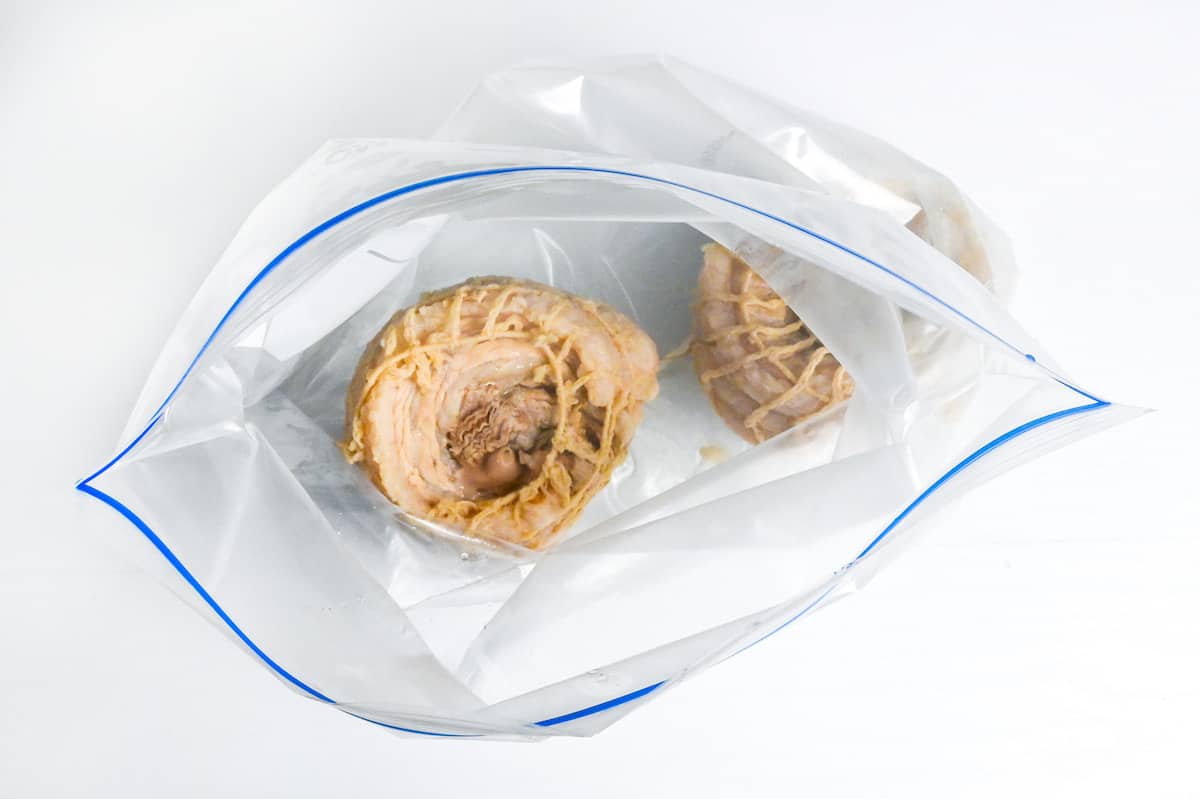
Step 5: Lift the cooked pork from the pot. Set it in a shallow container and refrigerate promptly while making the marinade, cutting it into smaller sections if needed for rapid cooling. Keep the hot cooking broth available for the next measured draw. Transfer the cooled pork to a clean resealable food bag for marinating; do not leave the cooked pork sitting out to cool for hours.

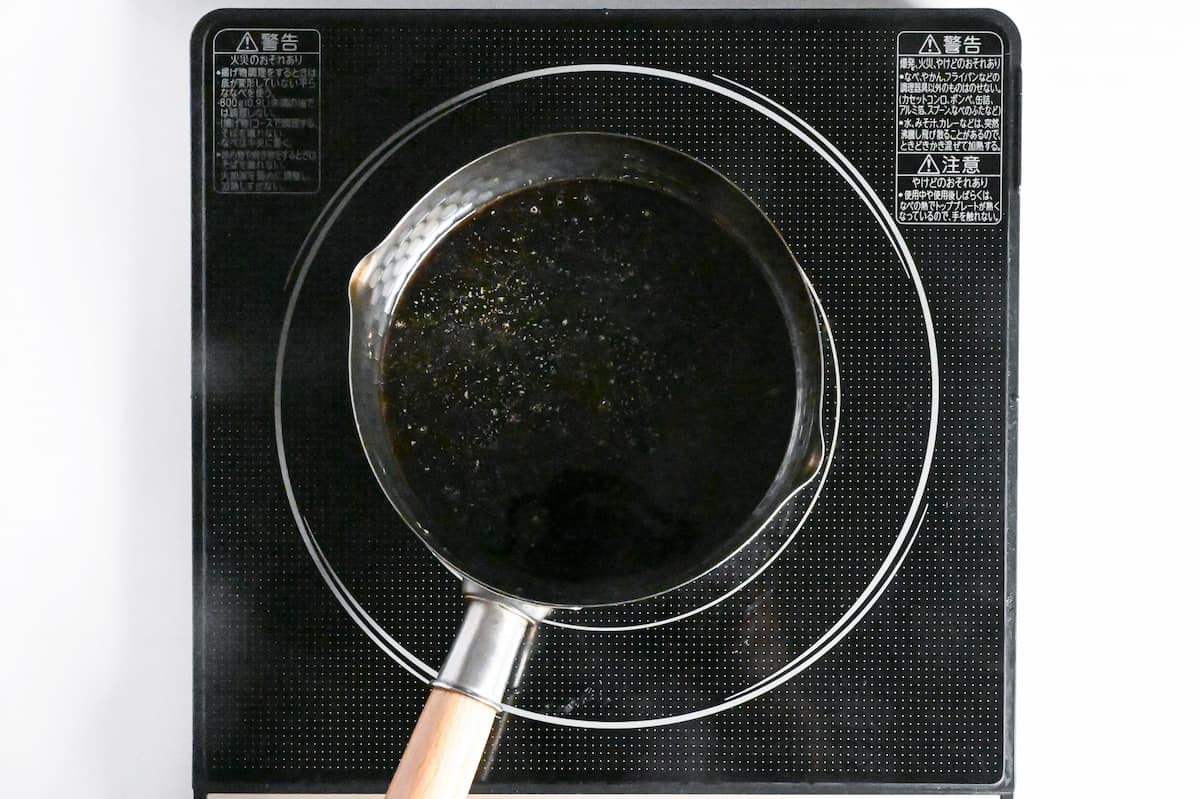
Step 6: Measure 250 ml of the pork cooking broth into a separate saucepan. Add the 50 ml sake, 1 tbsp mirin, 150 ml Japanese soy sauce and 30 g sugar. Bring to a boil, boil for 1 minute, then cool promptly in a shallow container and refrigerate until cool before combining with the pork and optional eggs.
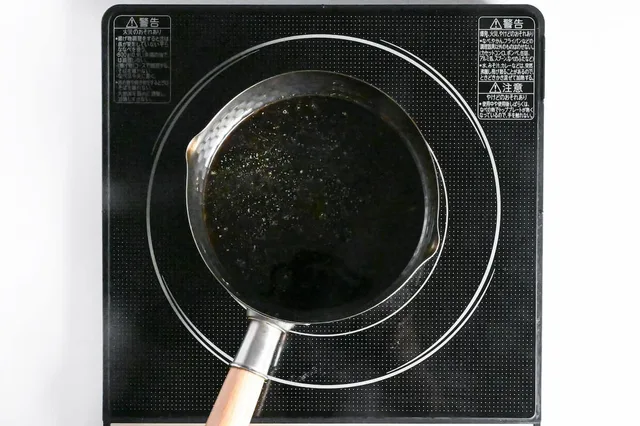
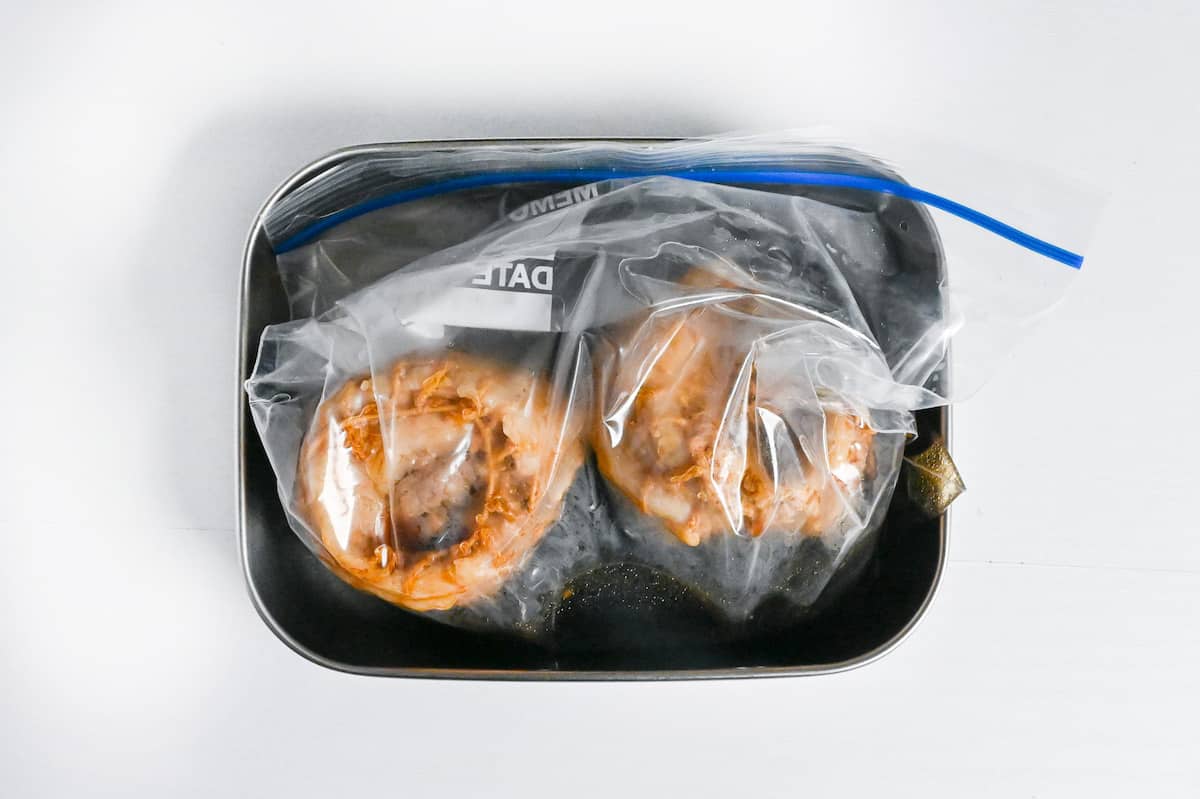
Step 7: Pour the cooled marinade into the bag with the cooled cooked pork. Add the six ready peeled soft-boiled eggs if using them, seal the bag and put it on a tray in the fridge at 4°C / 40°F or below. Marinate for 12 hours, ideally overnight.
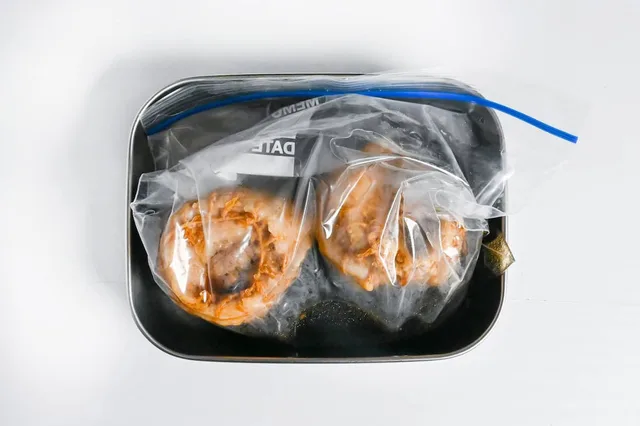
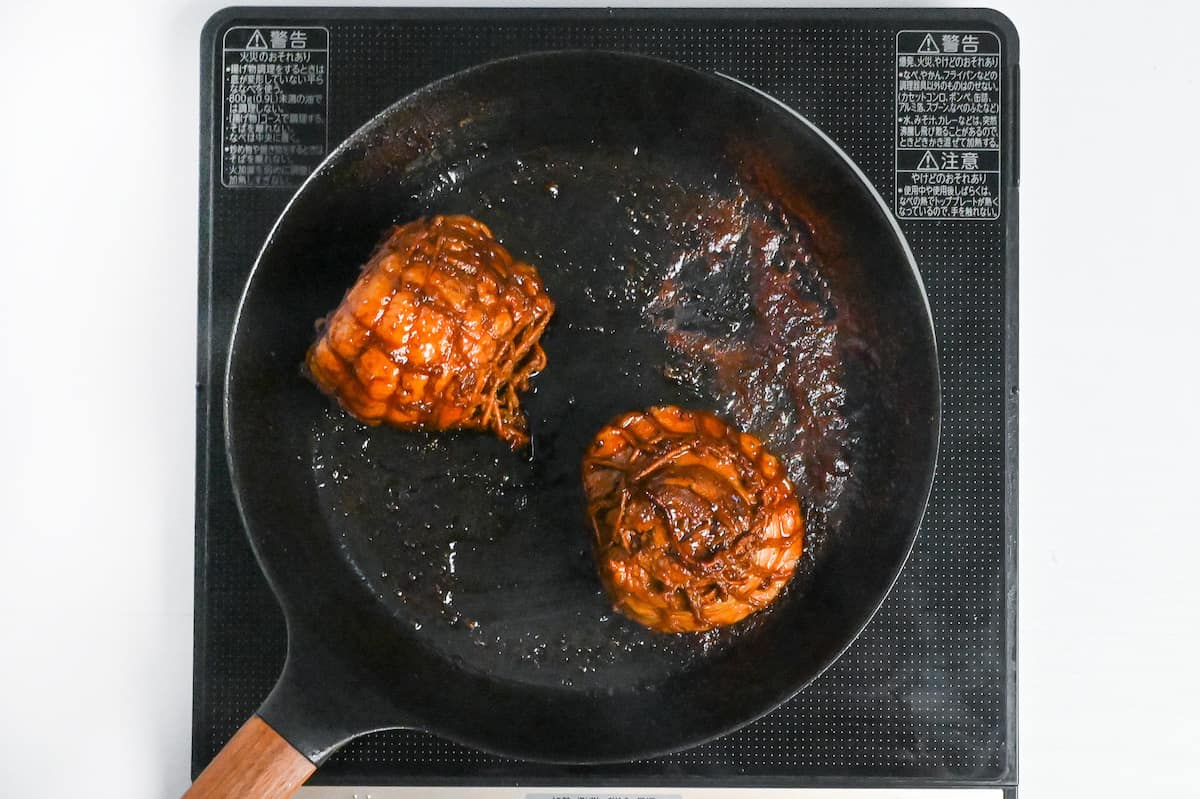
Step 8: Lift the marinated pork from the bag, keeping the optional eggs refrigerated for serving. Heat a frying pan over medium-high heat, add the pork and measure in 100 ml of the used marinade. Bring the liquid to a boil and turn the pork as it heats. Lower the heat as needed to avoid scorching. Heat the pork through to 74°C / 165°F. If the glaze thickens before the pork reaches that temperature, add a little hot water, cover and warm over lower heat until its centre reaches 74°C / 165°F. Uncover and reduce again, turning until the pork is glazed all over. Discard unused marinade.
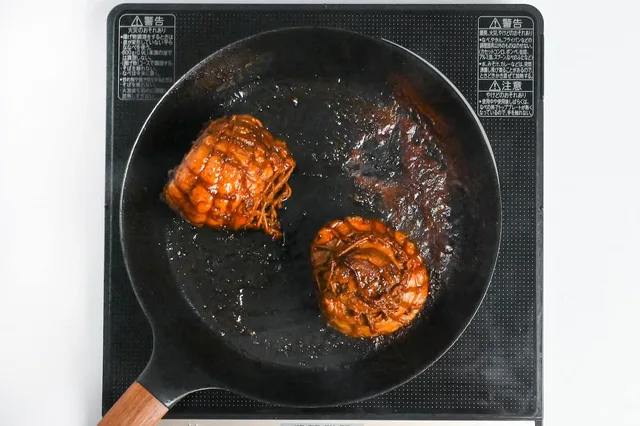
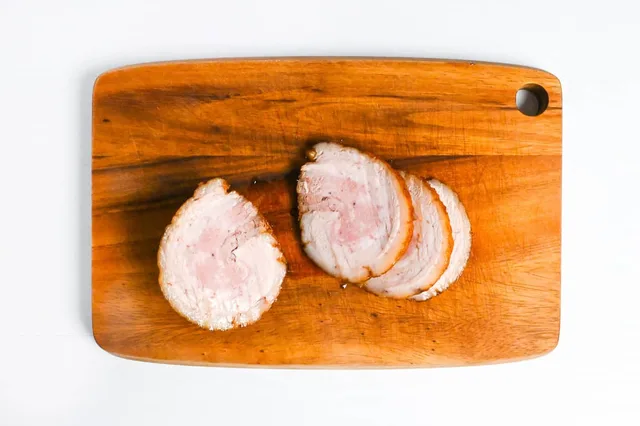
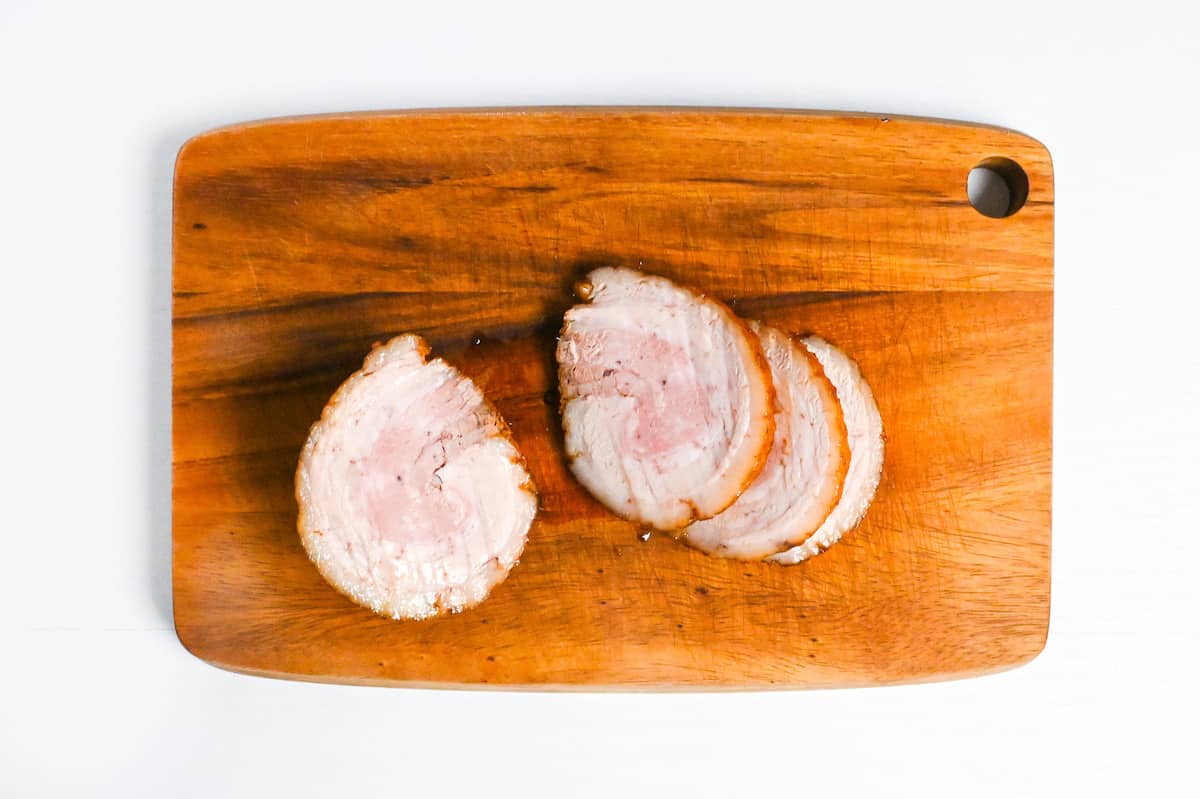
Step 9: Rest the hot glazed pork for 5–10 minutes before removing the string and slicing. Use the cooked batch across the six bowls; the author also notes that chashu end cuts are traditionally useful for donburi.
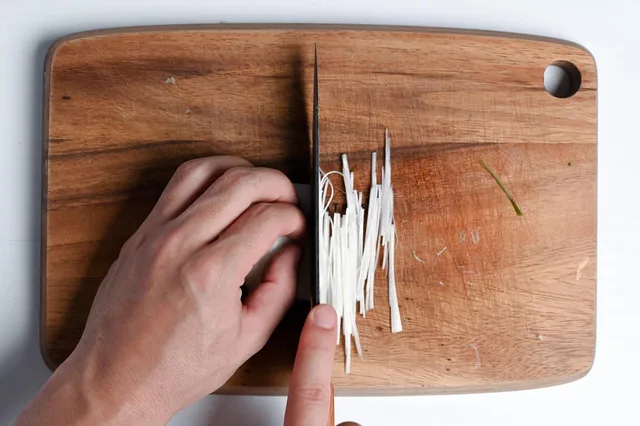
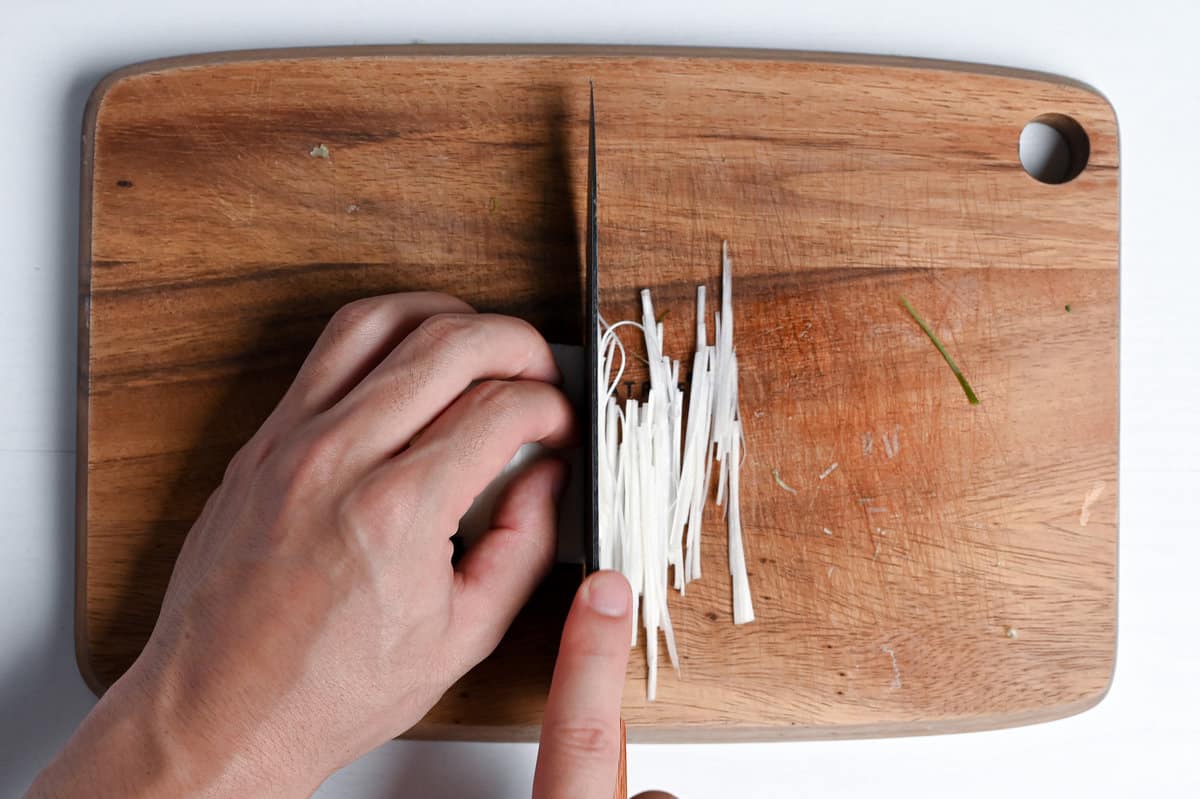
Step 10: Take the separate white part of the Japanese leek. Cut lengthwise halfway towards its centre and separate the layers. Flatten the layers on a board and cut them into fine lengthwise strips for shiraganegi.
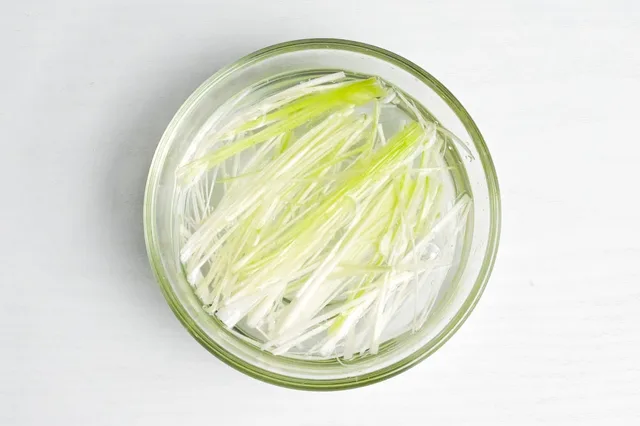
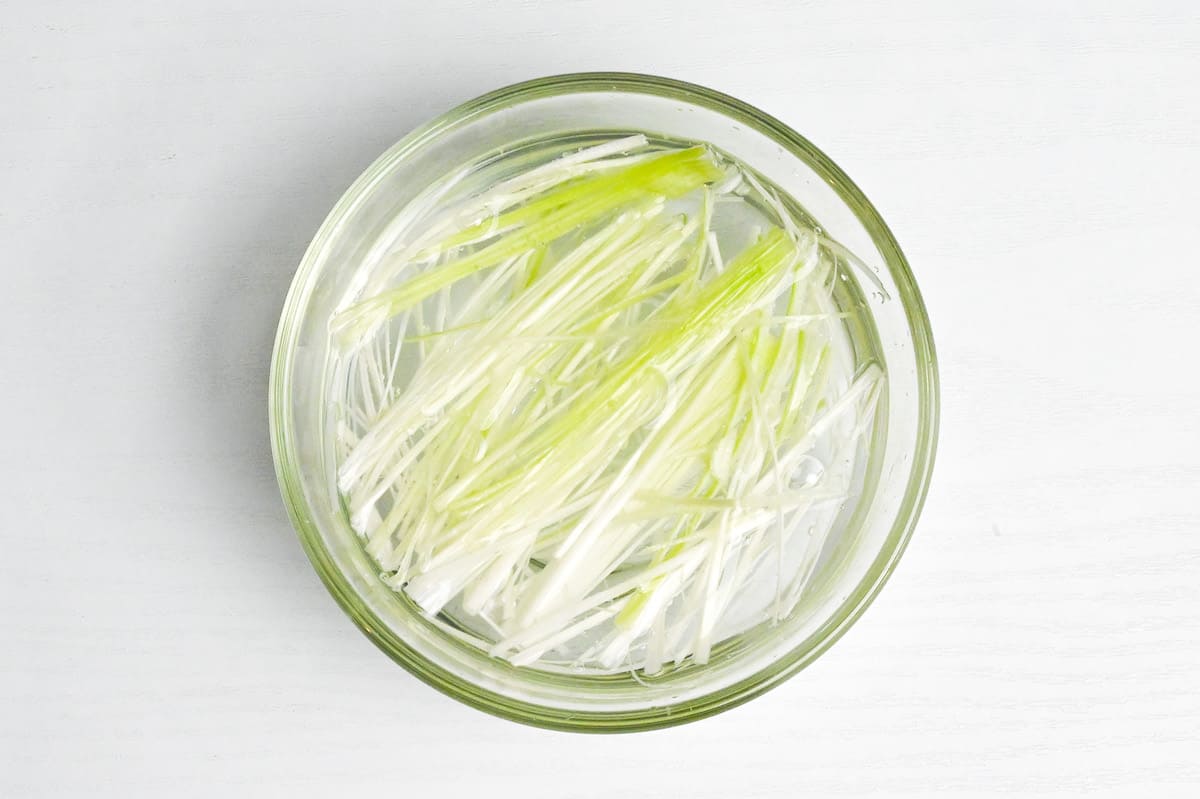
Step 11: Soak the prepared white-leek strips in a separate bowl of cold water for 5–10 minutes. Drain and shake dry before using.
Step 12: Put one ready cooked rice portion in each of six bowls. Divide the sliced glazed pork evenly between them. If using the marinated eggs, lift them from the chilled bag, halve them and put two halves on each bowl. Top with the drained white-leek garnish and Japanese mayonnaise as desired, adding optional chili threads to finish.
Step 13: Serve the six bowls promptly. Keep any leftover chashu separately from assembled rice bowls: cool it promptly in shallow containers and refrigerate for up to 3 days from cooking. To freeze, slice the cooled pork, wrap and seal airtight in a freezer bag for up to 1 month. Thaw in the fridge and reheat the pork thoroughly to 74°C / 165°F before serving.
Photos (1)
Comments
0 threadsSign in to join the discussion.

No comments yet. Start the discussion.