
Chinese · Snack
Steamed Pork Buns (Baozi)
From the zcook collection
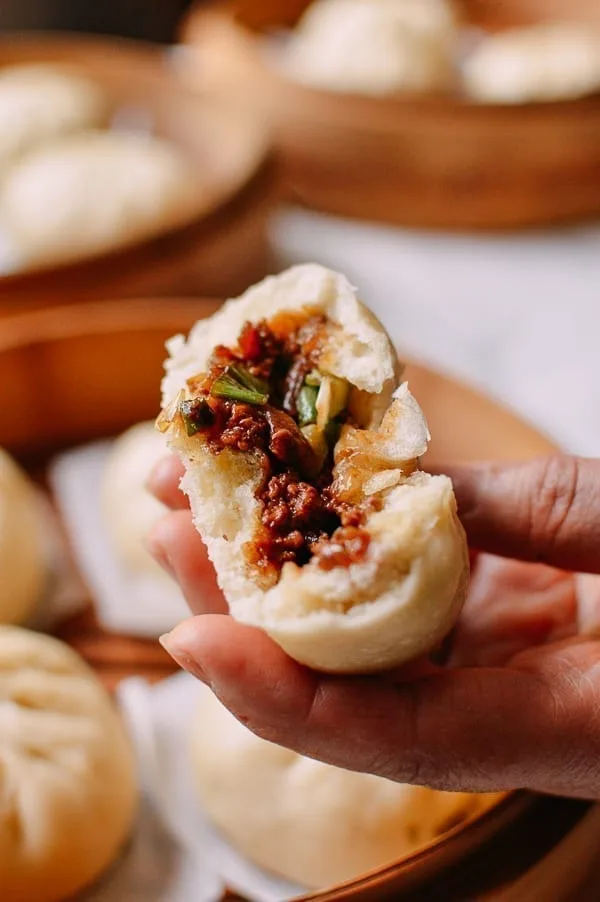
Soft steamed baozi with a cooked pork, onion and bean-sauce filling. This batch makes twenty buns, with pleated or smooth closures and separate ways to reheat cooked leftovers.
- Dairy-free
- Chinese
- Baozi
- Steamed pork buns
- Total
- 3 hr 20 min
- Prep
- 3 hr
- Cook
- 20 min
- Serves
- 20 baozi
- Level
- Hard
- Energy
- 232 kcal
Method24 steps · about 3 hr 20 min
Step 1: In a mixing bowl or mixer bowl, dissolve the 5 g active dry yeast and 8 g dough sugar in the 355 ml lukewarm dough water. Leave for 10–15 minutes, checking at 10 minutes, until active and foamy.
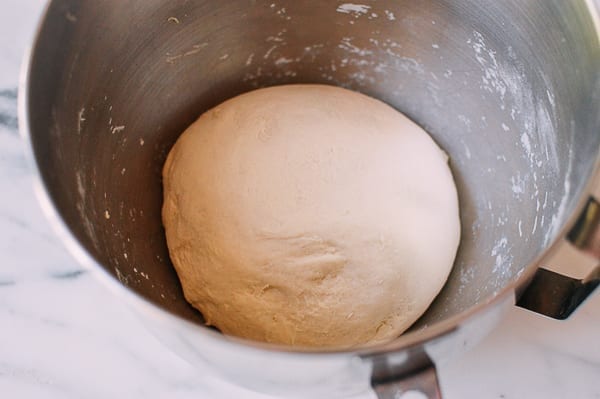
Step 2: Add the flour from the 580 g allowance about ½ cup at a time and knead for about 15 minutes, by hand or with a dough hook. Add the last ½ cup only as needed: the dough should be soft, smooth and even, neither sticky nor very firm. Form it into a ball and set any unused flour aside.
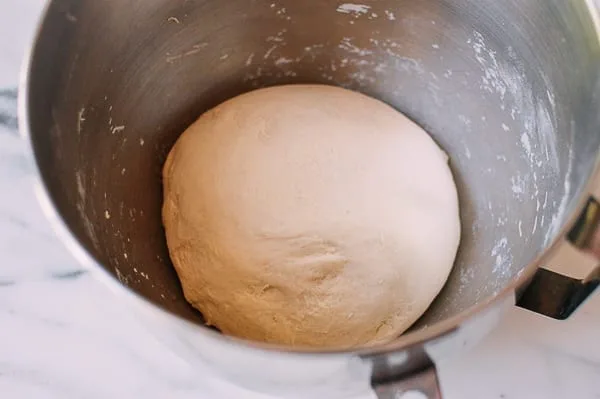
Step 3: Cover the dough with a clean damp kitchen towel. Proof in a warm place for about 1 hour, until risen. Make the filling while the dough proofs.
Step 4: While the dough proofs, put the 700 g raw ground pork in a bowl. Stir in the 3 tbsp pork-mixing water until well incorporated. Have the ginger and onion minced and all filling seasonings ready before heating the pan.
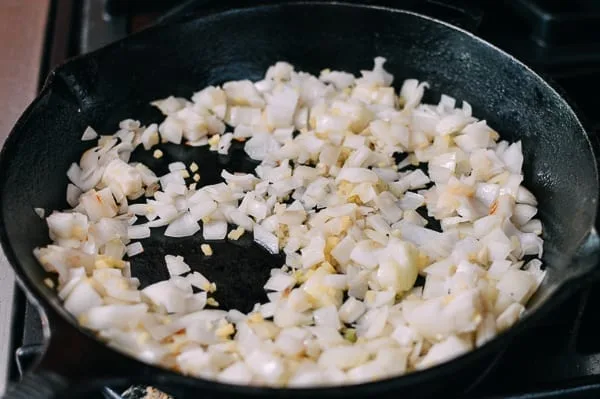
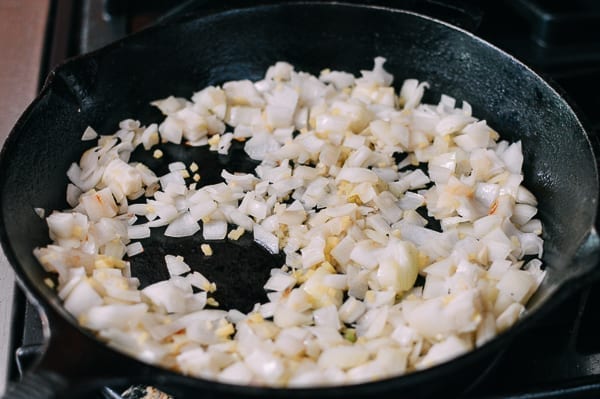
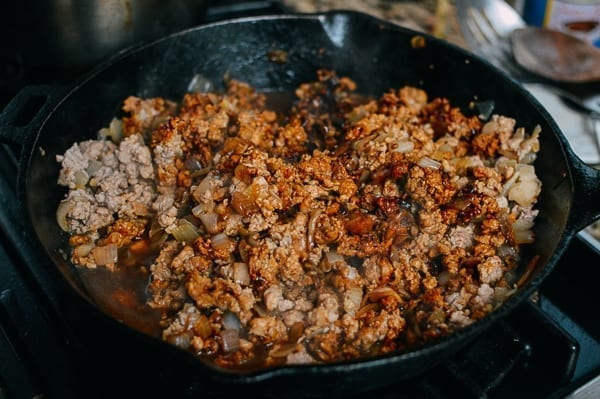
Step 5: Preheat a wok or cast-iron pan until it begins to smoke lightly. Add the 3 tbsp vegetable oil, 2 tbsp minced ginger and minced large onion (1 large). Cook over medium heat until the onion softens.
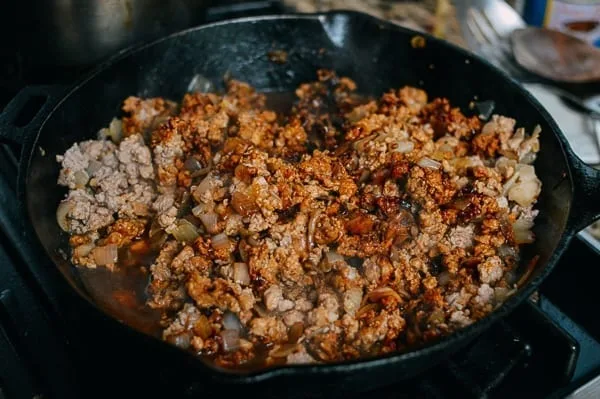
Step 6: Add the water-mixed pork and turn up the heat, stirring to break up large chunks. Cook until the pork is pale and opaque throughout and reaches 71°C (160°F); it does not need to brown or become crisp.
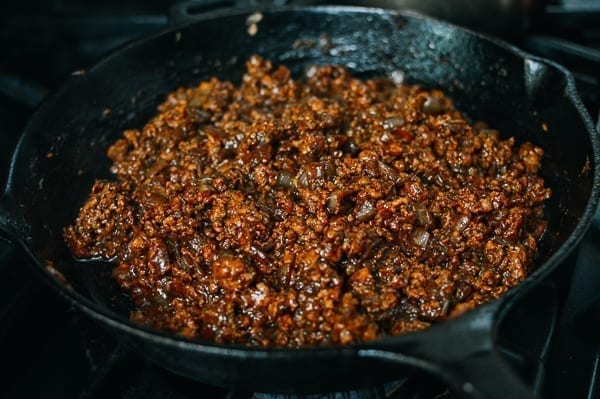
Step 7: Add the 2 tbsp Shaoxing wine, 1 tbsp dark soy sauce, 1 tbsp sweet bean sauce, 2 tbsp ground bean sauce, 1 tbsp oyster sauce, 1 tsp filling sugar, ½ tsp white pepper and 2 tsp sesame oil. Stir over high heat until well combined. Taste the cooked filling with a clean utensil.
Step 8: Continue cooking for about 2 minutes, stirring, to cook off the remaining free liquid before adding the slurry.
Step 9: Stir the 1½ tsp cornstarch with the separate 1 tbsp slurry water until evenly mixed.
Step 10: Stir the slurry again and pour it into the reduced filling, scraping it all in. Let the mixture bubble for 30–60 seconds, checking at 30 seconds, until the slurry has thickened and the filling is cohesive. Turn off the heat.
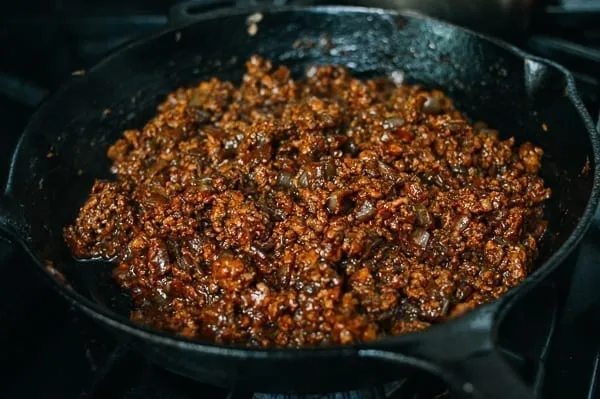
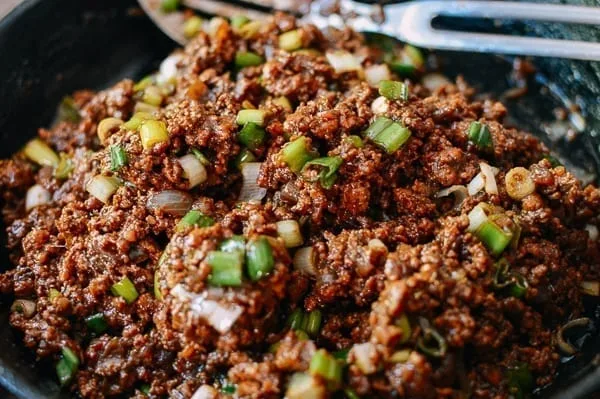
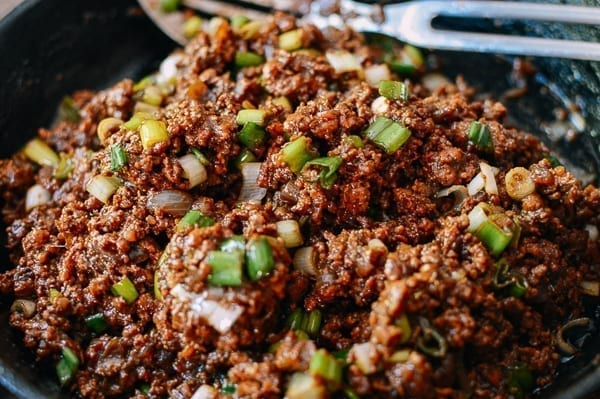
Step 11: Spread the cooked filling in a shallow bowl and cool it uncovered. Once cool, mix in the 3 finely chopped scallions. If the filling must wait, refrigerate it promptly until assembly.
Step 12: After the dough has proofed, turn it out onto a lightly floured surface. Knead for about 2 minutes to remove air pockets. Weigh the complete dough and divide it into 20 equal pieces; about 48–50 g each is a size guide, so use equal shares of the dough you have.
Step 13: Line the steamer racks with small parchment pieces, keeping gaps for steam to pass through. If using bamboo, brush the sides lightly with the separate brushing oil. Use enough tiers for the buns to expand without crowding, or cook in batches; water must stay below the buns and the lid must fit tightly.
Step 14: Roll each dough piece from its edge toward the center, keeping the center thicker and the edge about half as thick. Add some cooled filling in the center; start with less until you can close the wrapper securely. Keep your hands and the closing edge dry.
Step 15: For pleated buns, hold each filled dough disk in one hand and pleat the edges around the filling with the other, making about 10–15 folds. Pinch the top tightly closed and place each bun on its parchment piece. Use this closure or the smooth closure below, not both for the same bun.
Step 16: For smooth buns instead, gather the dough edges around the filling and pinch tightly shut. Turn each bun seam-side down onto its parchment piece. Skip this closure for buns already pleated.
Step 17: Cover the closed buns and proof for another 15 minutes before steaming. Set any excess cooked filling aside and refrigerate it promptly.
Step 18: Put the proofed buns in the prepared steamer with cold water below them. Turn the heat to medium and start the 15-minute guide now, from the cold-water start. Keep the lid tight and the external water below the buns; cook in separate batches if your steamer cannot hold all twenty comfortably.
Step 19: After the 15-minute cooking guide, turn off the heat and leave the lid closed for 5 minutes before opening, so the buns do not collapse. On opening, check that the dough is cooked through with no raw or doughy center and the filling is hot throughout. If more cooking is needed, cover and steam until done, then repeat the 5-minute covered rest before opening.
Step 20: Serve freshly cooked buns after the covered rest. If cooking more than one steamer batch, keep the remaining buns covered and repeat the cold-water cooking and covered-rest sequence for each batch.
Step 21: For leftovers, cool the cooked buns promptly, then pack them in airtight containers and refrigerate or freeze. Refrigerate within 2 hours of cooking, or within 1 hour if the air is above 32°C (90°F); use shallow containers to help cooling.
Step 22: To reheat refrigerated buns, microwave them for about 1–2 minutes, or use the chilled steaming option below instead. Check that the center reaches 74°C (165°F) and is steaming hot throughout; bun number, size and microwave power may require more time.
Step 23: Alternatively, re-steam refrigerated buns for about 5 minutes from steady steam, until their centers reach 74°C (165°F) and are steaming hot throughout. Use this route instead of microwaving; top up external water if needed.
Step 24: For frozen cooked buns instead, steam directly from frozen without thawing for about 8 minutes from steady steam, until their centers reach 74°C (165°F) and are steaming hot throughout. Maintain external water below the buns, topping up if needed.
Photos (1)
Comments
0 threadsSign in to join the discussion.

No comments yet. Start the discussion.