


Japanese · Dinner
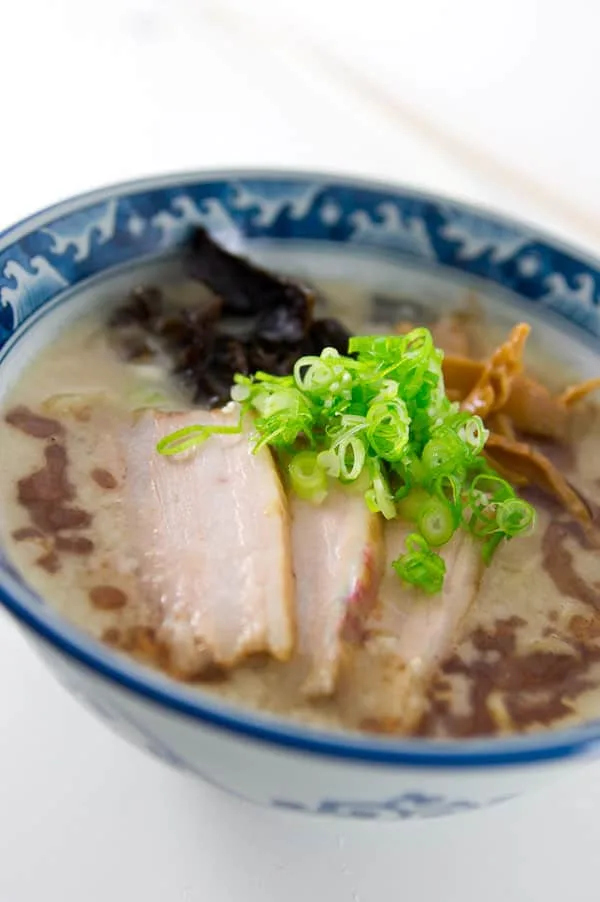
Tonkotsu Ramen
From the zcook collection
A pressure-cooked batch of pork-and-chicken tonkotsu base and black garlic oil, followed by two ramen bowls made with 3 cups of the base and 2 teaspoons of the oil. Extra base and oil are reserved for other meals; fresh noodles and chashu are prepared separately.
- Japanese
- tonkotsu
- ramen
- pressure cooker
- Prep
- 15 min
- Serves
- 2 ramen bowls plus extra base and mayu
- Level
- Hard
Method10 steps
Step 1: Bring separate blanching water to a boil in a large open pot, leaving room for the bones without overflowing. First boil all two halved pig trotters until no red liquid emerges, initially about 10–15 minutes. Transfer them with tongs into separate cold water. Repeat the blanching and transfer with the 1½ lb pork leg bones and then the 1½ lb chicken bones, reusing the blanching water if suitable. This water will be discarded.
Step 2: Discard all dirty blanching water and wash the pot. In a contained bowl, scrub and rinse dark residue from the already blanched bones using separate clean water. Put all cleaned bones in a pressure cooker large enough to hold them with fresh stock water about 1 inch above the bones while staying within its permitted fill limit. Bring to an uncovered boil and skim until no more foam or scum rises, about 30 minutes; replenish only the stock water as needed to maintain coverage.
Step 3: While skimming the stock, heat separate vegetable oil ½ inch deep in another pot over medium heat. Fry the whole trimmed garlic head (1 small) and all the thinly sliced 2-inch ginger (1) knob until browned and shriveled. Lift them out with a slotted utensil into a bowl. Fry all the sliced onion (1 large) in the same aromatic oil until deeply caramelized without burning, then drain and add it to that bowl.
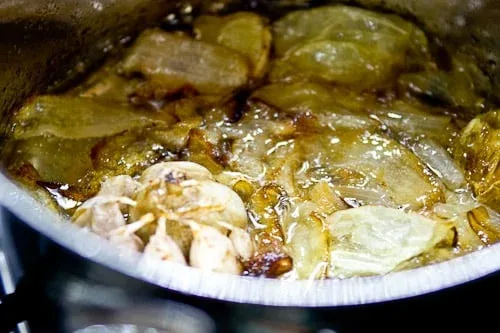
Step 4: Choose the PRESSURE-COOKER route for this recipe. Add all the drained fried stock aromatics and 1 teaspoon white peppercorns to the scum-free bone stock. Check the cooker’s minimum-liquid and maximum-fill requirements, affix the lid and cook at HIGH pressure for 1 hour 45 minutes, starting the timer only once full pressure is reached. Follow the cooker instructions for releasing pressure; wait until fully depressurized before opening.
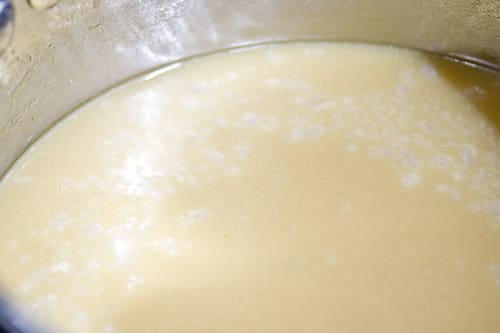
Step 5: Once fully depressurized, use tongs to remove and discard all bones. Set any pork meat aside for another use. Strain the actual stock and skim excess fat. Reserve 3 cups of this prepared base for the two ramen bowls; the remaining base is extra stock. Use the measured draw hot now, or promptly divide stock and reserved meat into shallow containers and refrigerate at 4°C or below within 2 hours; do not leave a large pot to cool at room temperature.

Step 6: For the separate mayu batch, combine all ¼ cup toasted sesame oil with the distinct 5 grated garlic cloves in a small saucepan. Cook over medium-low heat, stirring occasionally, until the garlic is very dark brown. Lower the heat and continue only until it turns black, then immediately turn off the heat.
Step 7: Transfer all the hot cooked mayu oil and garlic to a heatproof bowl. Let it cool enough for the blender’s safe operating instructions, then blend until no garlic particles remain and the oil is uniformly black.
Step 8: Put the blended mayu in a clean container. Reserve 2 teaspoons for the two ramen bowls. Refrigerate the remaining homemade garlic oil promptly at 4°C or below and use within 4 days, or freeze for longer storage. The finished oil tastes burnt and slightly bitter on its own; use only the measured small draw in this ramen.
Step 9: Measure the reserved 3 cups actual tonkotsu base into a saucepan and heat it; if stored chilled, reheat to 74°C. Whisk together all 1 tablespoon tahini, 1 tablespoon ready chashu braising liquid, the separate 2 finely grated garlic cloves, kosher salt from the 1–2 teaspoon allowance to taste, 1 teaspoon mirin and ⅛ teaspoon ground white pepper. Whisk this mixture into the hot base. Bring to a simmer, add all 1 tablespoon coarsely ground toasted sesame seeds and 2 tablespoons finely minced salted fatback, then cook and whisk until the fatback is cooked through and incorporated into the creamy soup. Meanwhile, boil the separately prepared ½ batch fresh ramen noodles in their own water following the chosen noodle recipe or package directions until tender; drain well. If using chilled cooked chashu, reheat the topping to 74°C before serving.
Step 10: Divide all the actual cooked noodles between TWO bowls and pour the entire prepared ramen soup over them. Top with the prepared cooked chashu and all two chopped scallions. Drizzle 1 teaspoon of the actual reserved mayu over EACH bowl, using 2 teaspoons total. The remaining stock base, reserved meat and remaining mayu are leftovers for another use.
Photos (3)
Comments
0 threadsSign in to join the discussion.


No comments yet. Start the discussion.