
Chinese · Rice
Zongzi with Pork Belly and Meigan Cai - 梅干菜肉粽
From the zcook collection
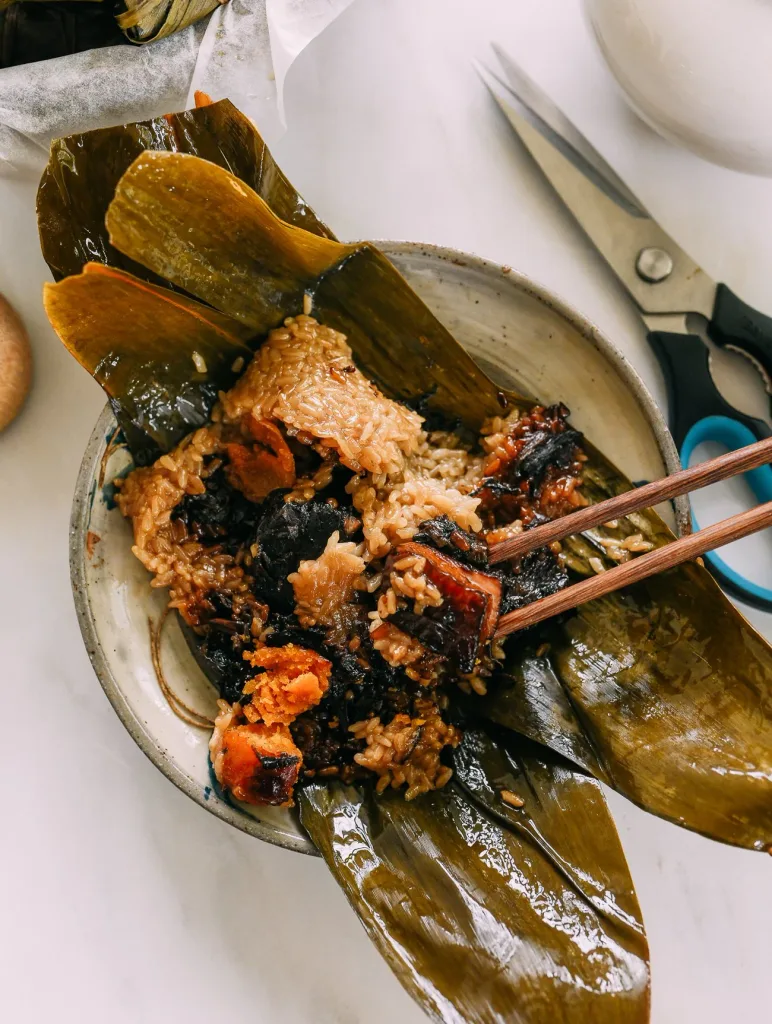
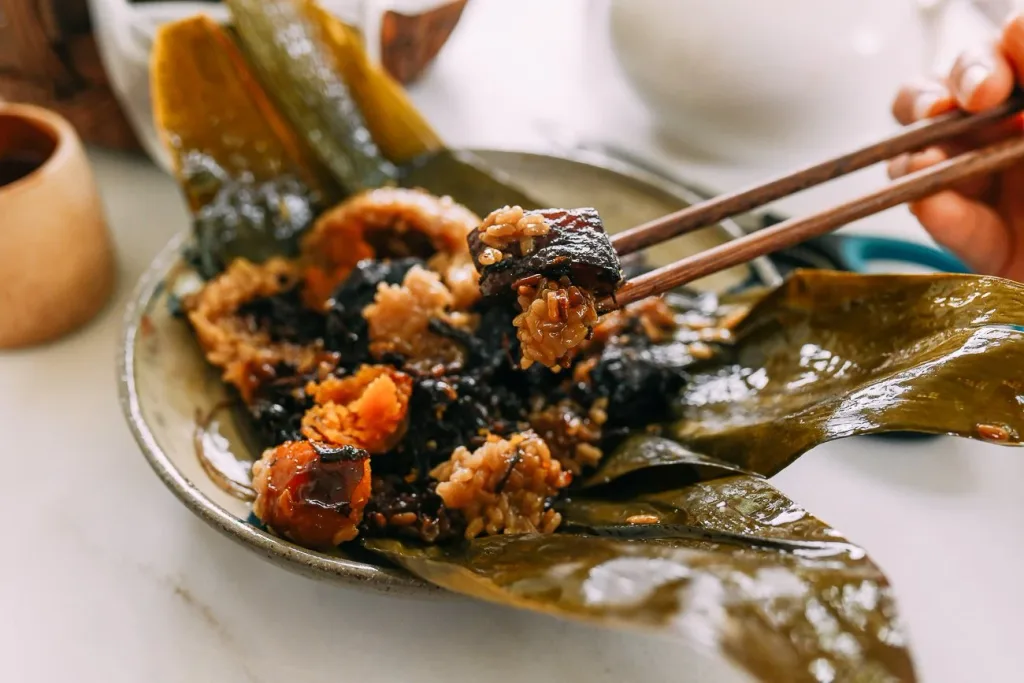
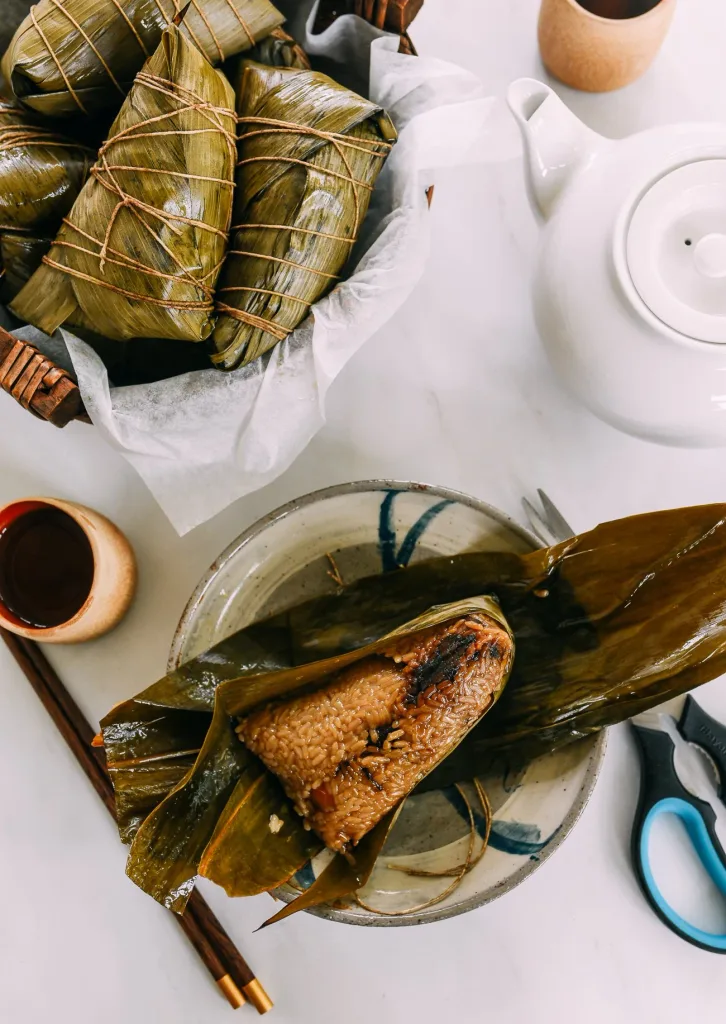
Our zongzi with pork belly and meigan cai (preserved vegetables) is perfect for celebrating the Chinese Dragon Boat Festival.
- Dairy-free
- Chinese
- Rice
- zongzi with pork belly
- Serves
- 10 zongzi parcels
- Level
- Hard
- Energy
- 813 kcal
Method21 steps
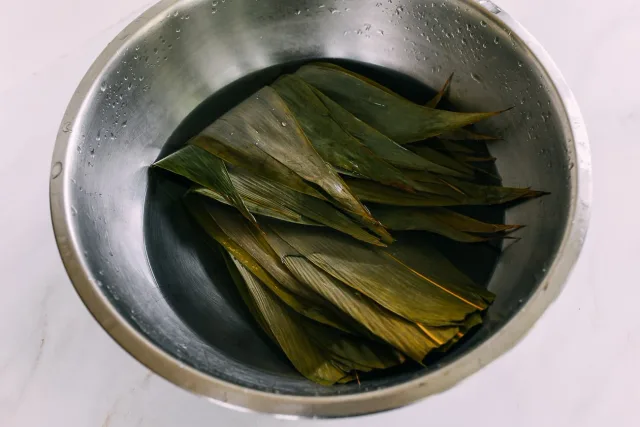
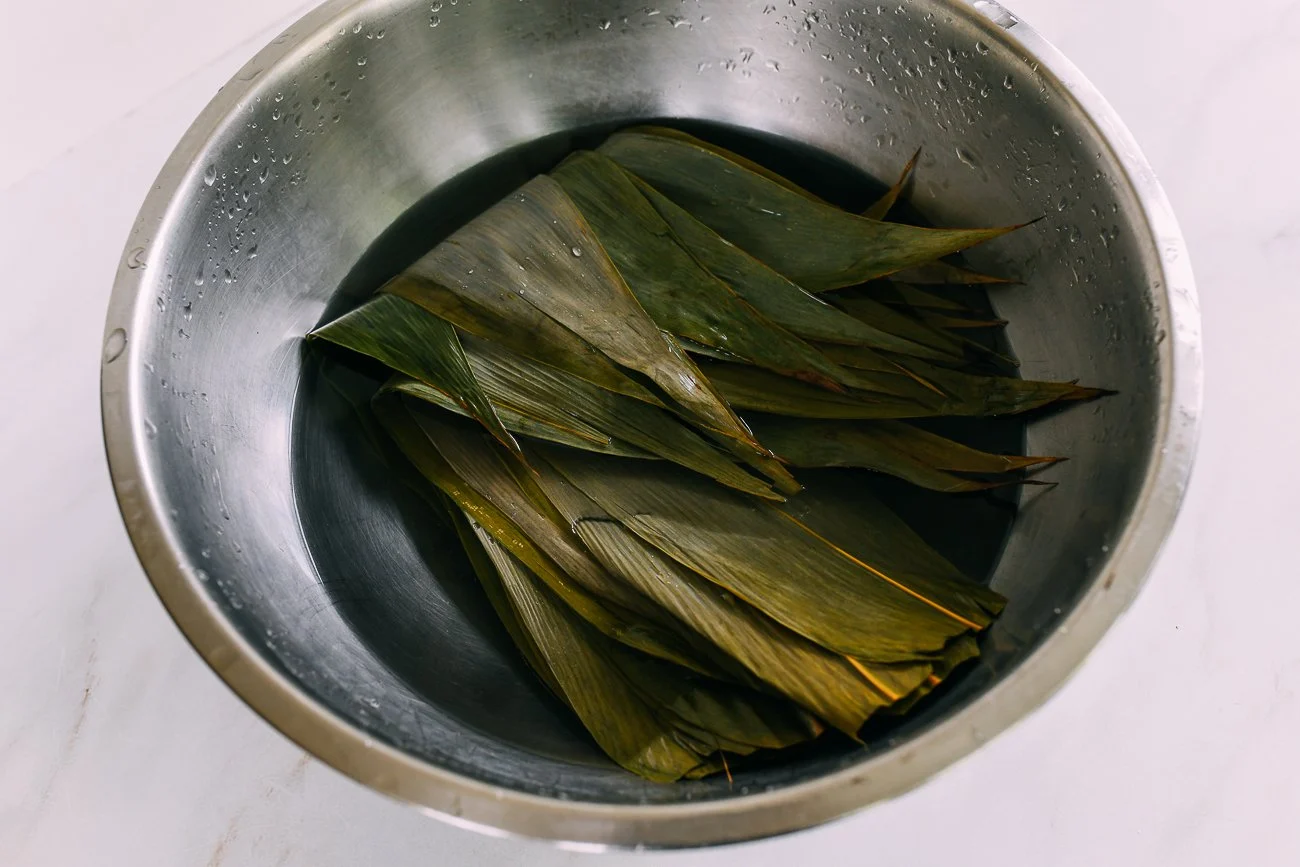
Step 1: Soak the zongzi leaves overnight by weighing them down in a bowl of water with a heavy object. They should be completely submerged.
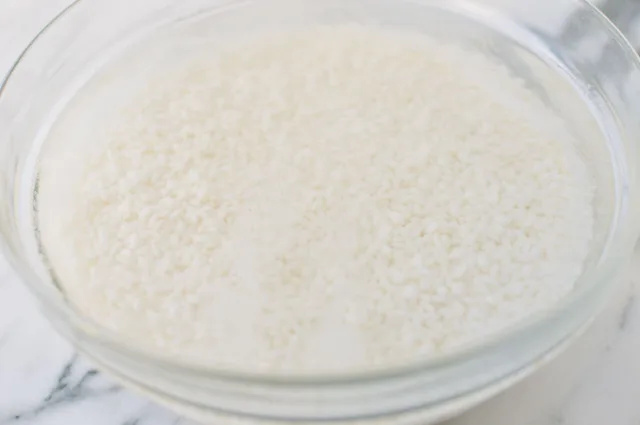
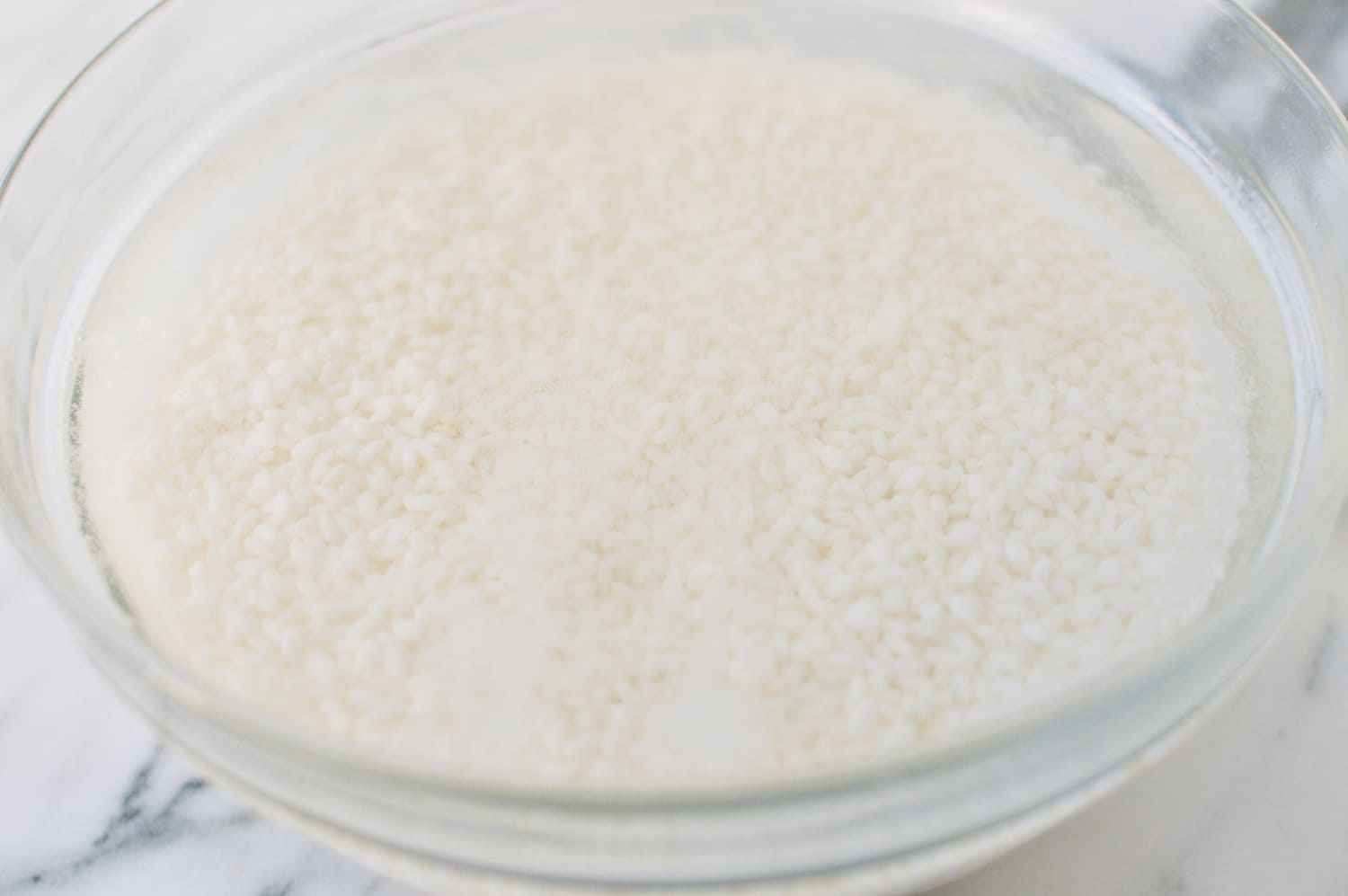
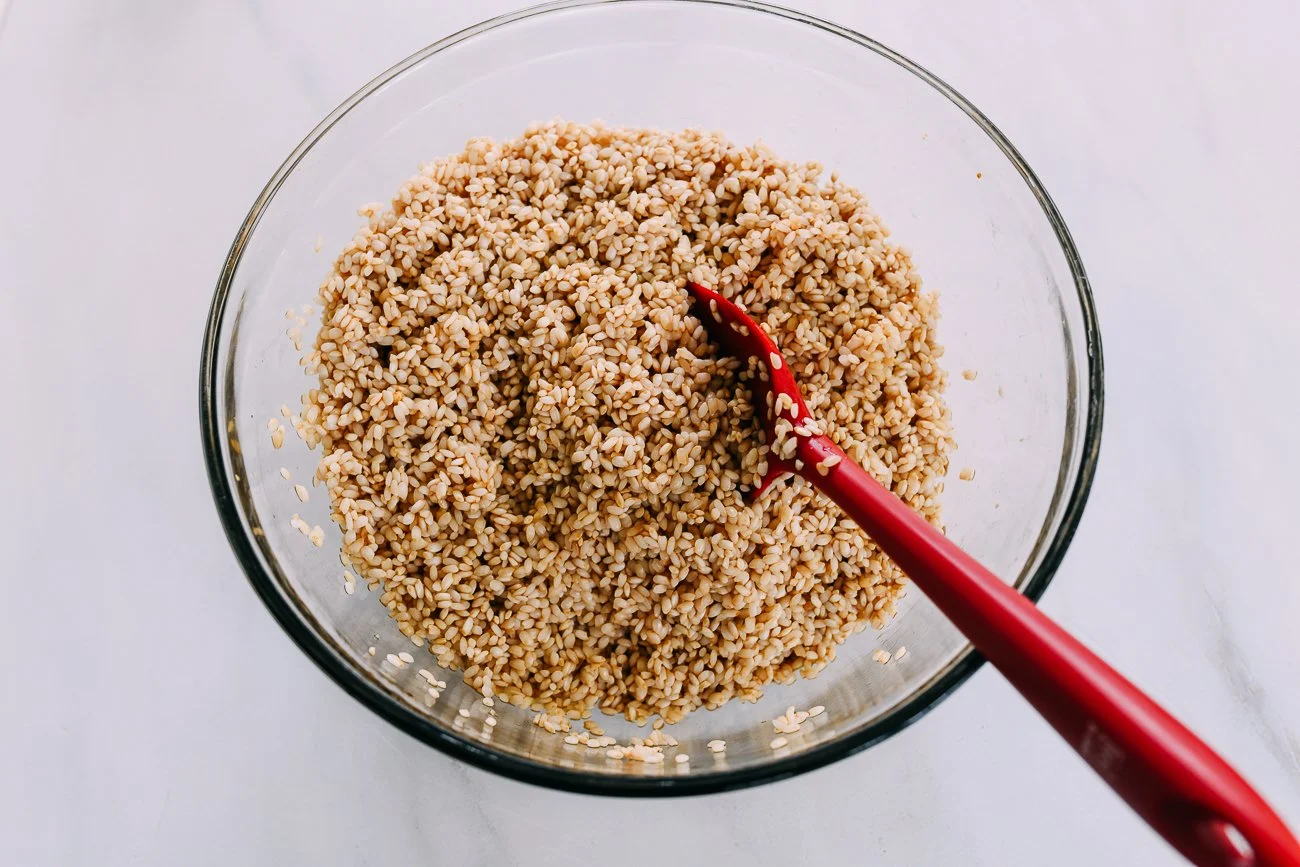
Step 2: Cover the glutinous rice (2 lb) with at least5 cm (2 inches) water and soak overnight in the refrigerator; allow room for expansion.
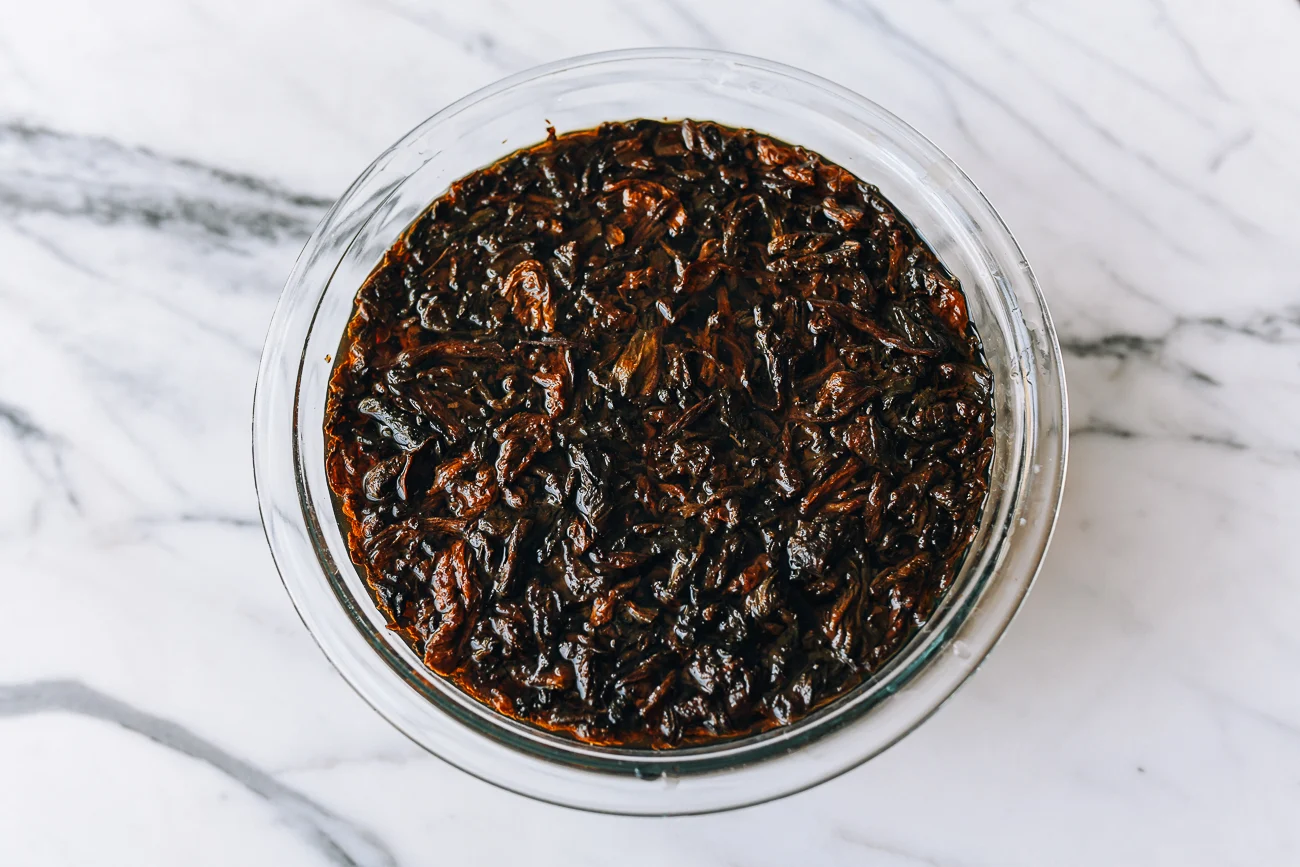
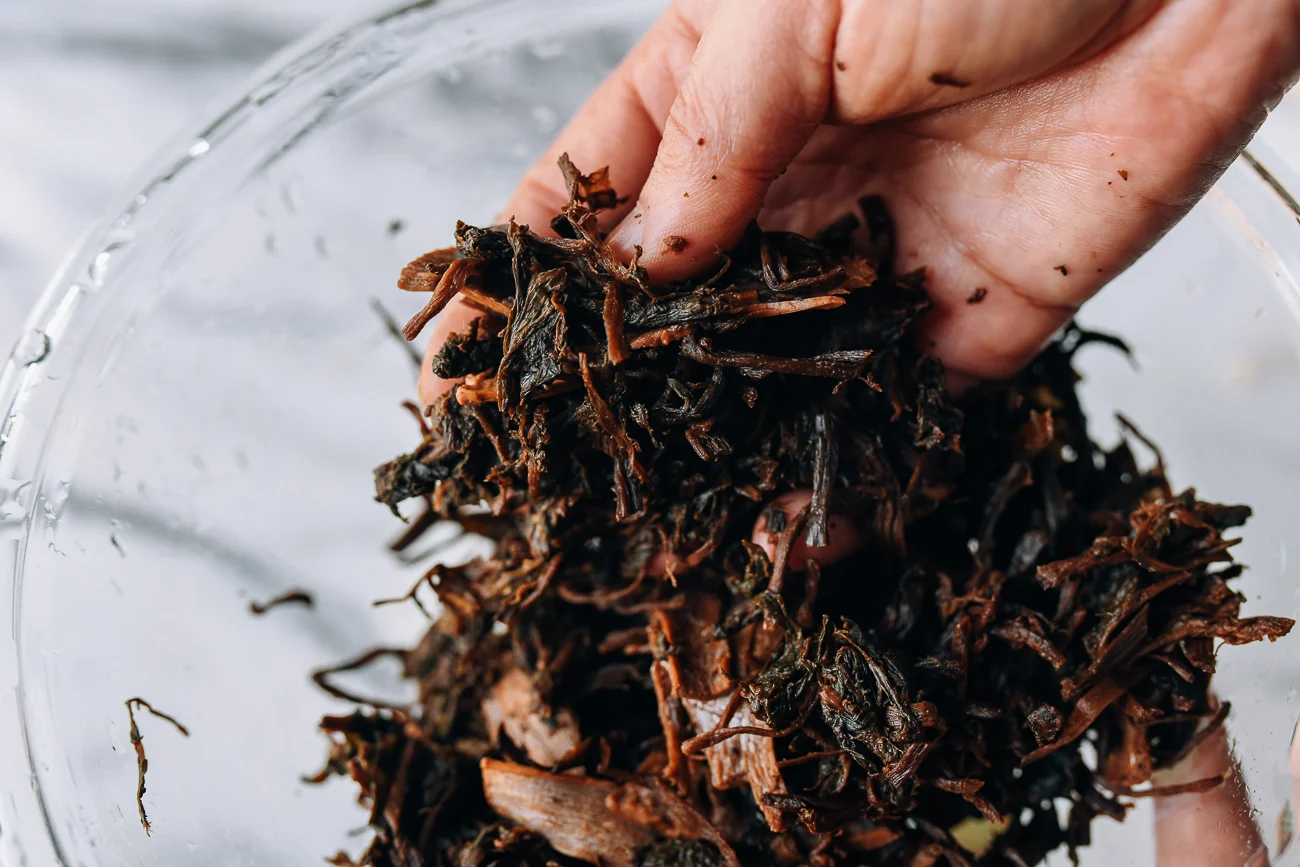
Step 3: Soak the mei gan cai in cold water for 30 minutes. Lift the soaked meigan cai (3 cups) out of the bowl and into a colander, and pour off any sandy water. Rinse the bowl clean, put the meigan cai back in, and cover with fresh water. Rinse it well, agitating it with your hands, and let it stand for 5 to 10 minutes (to give time for the dirt to settle at the bottom of the bowl). Lift the meigan cai out of the bowl once again, and repeat this process until there is no more sand remaining. Once clean, squeeze out as much water as possible from the reconstituted vegetables, and set aside.
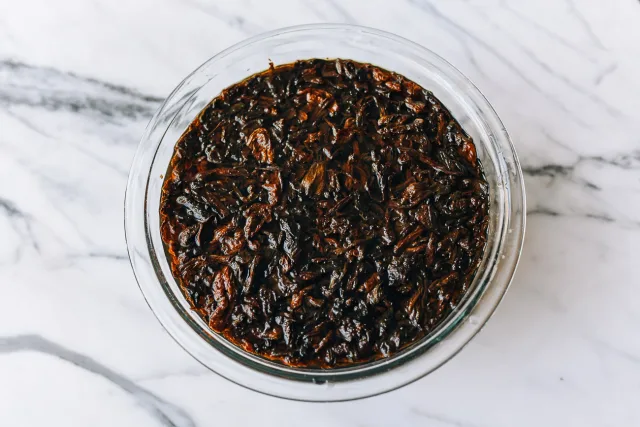
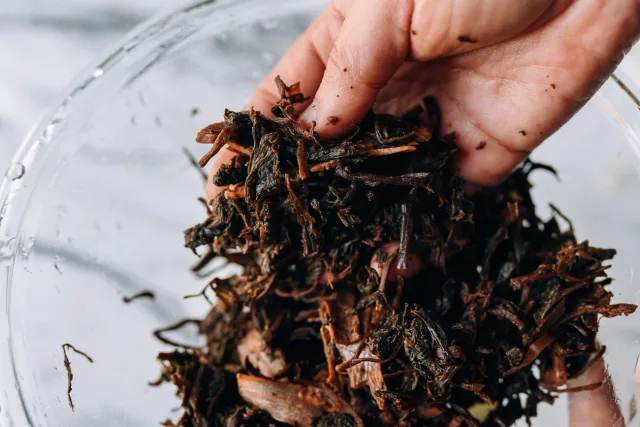
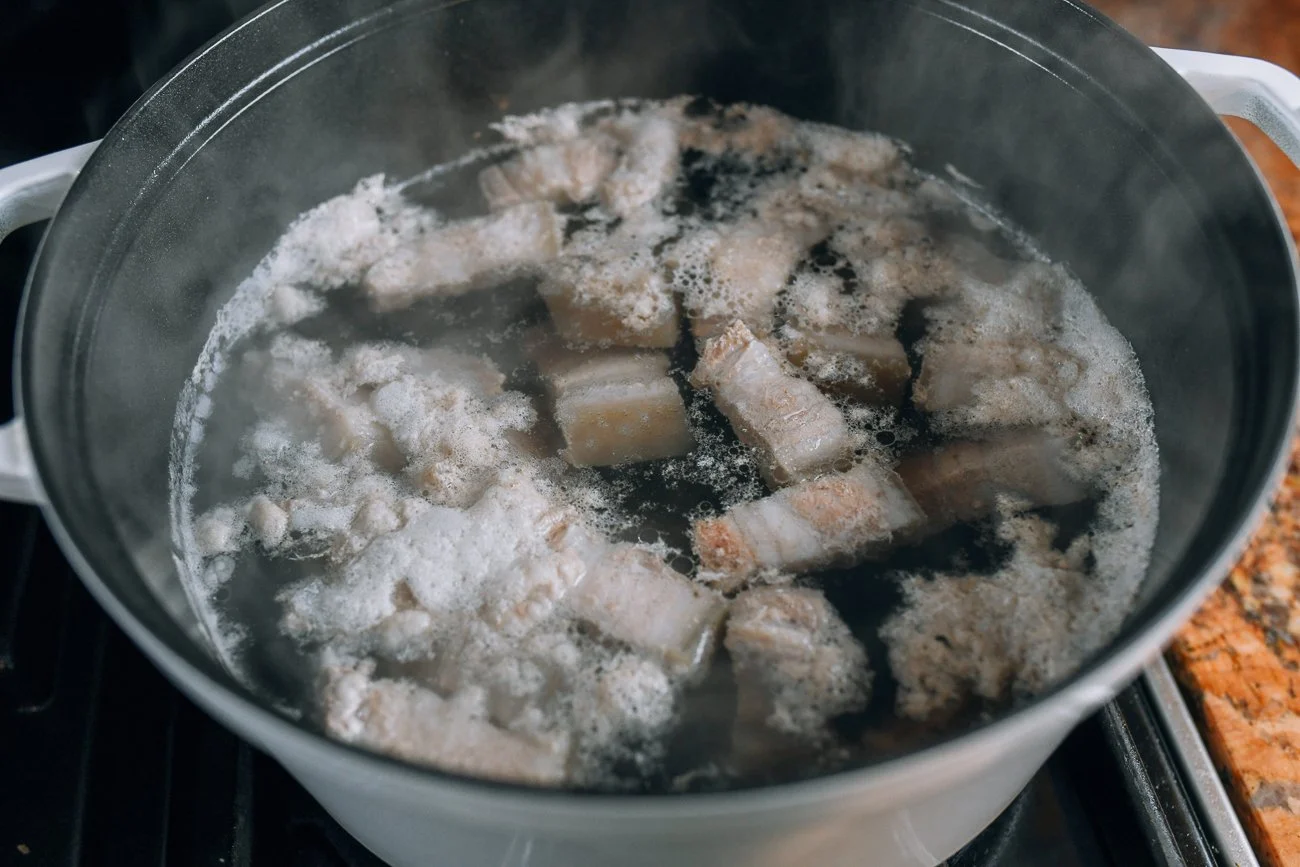
Step 4: Cut the pork belly into 20 pieces—10 leaner pieces, and 10 fattier pieces (this will allow you to evenly distribute both lean and fatty pieces across your 10 zongzi). Add them to a pot with enough water to cover the pork belly. Bring to a boil, and boil for 1 minute to remove impurities. Remove from the heat, drain in a colander, rinse, and set the pork aside.
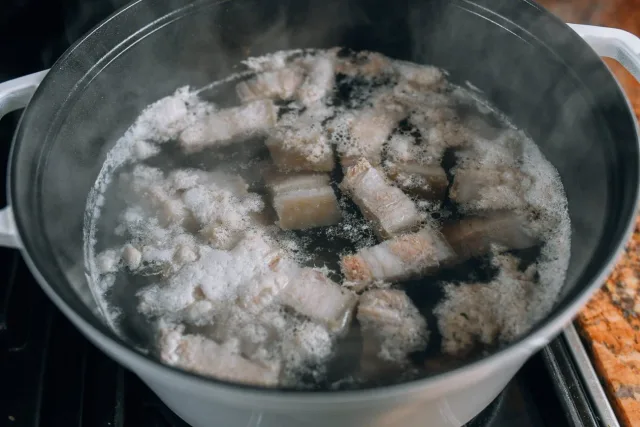
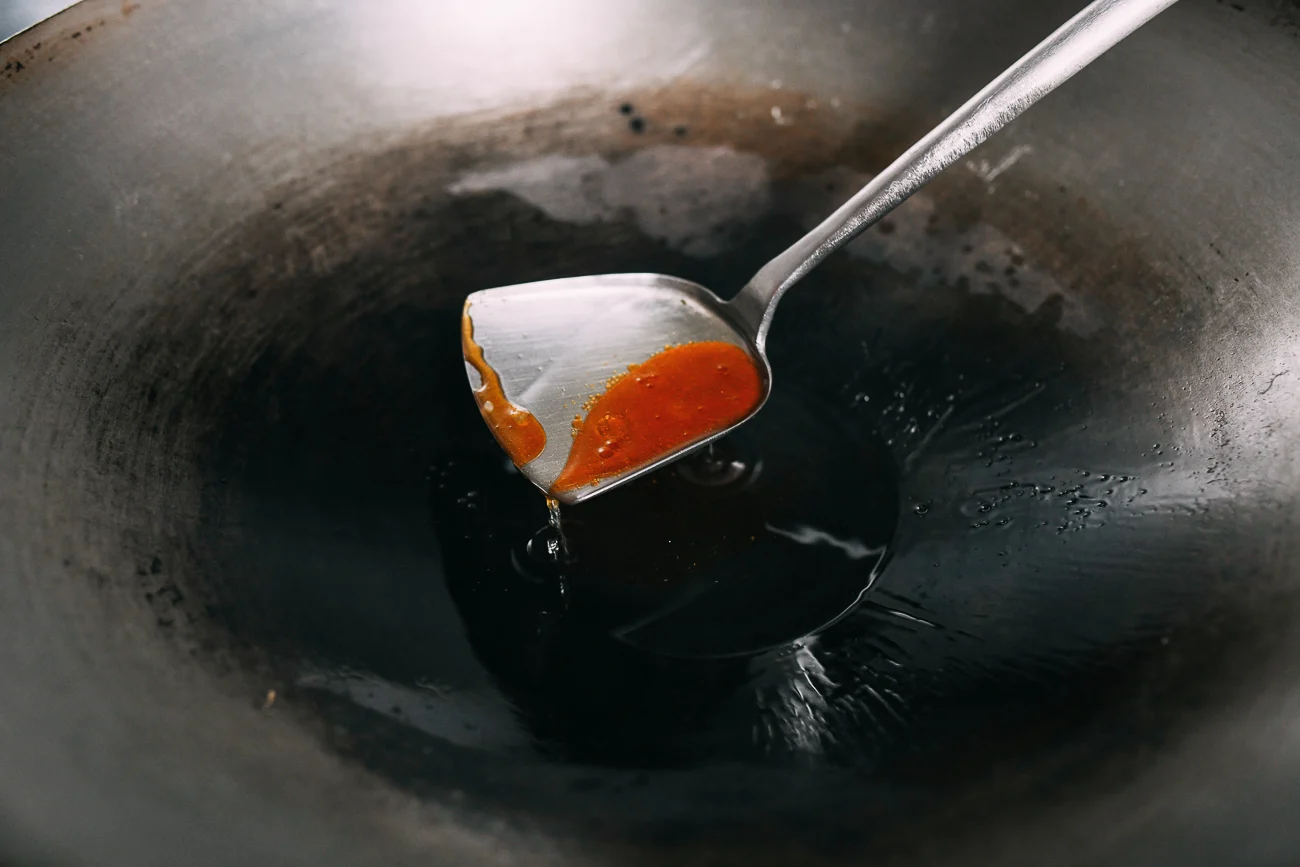
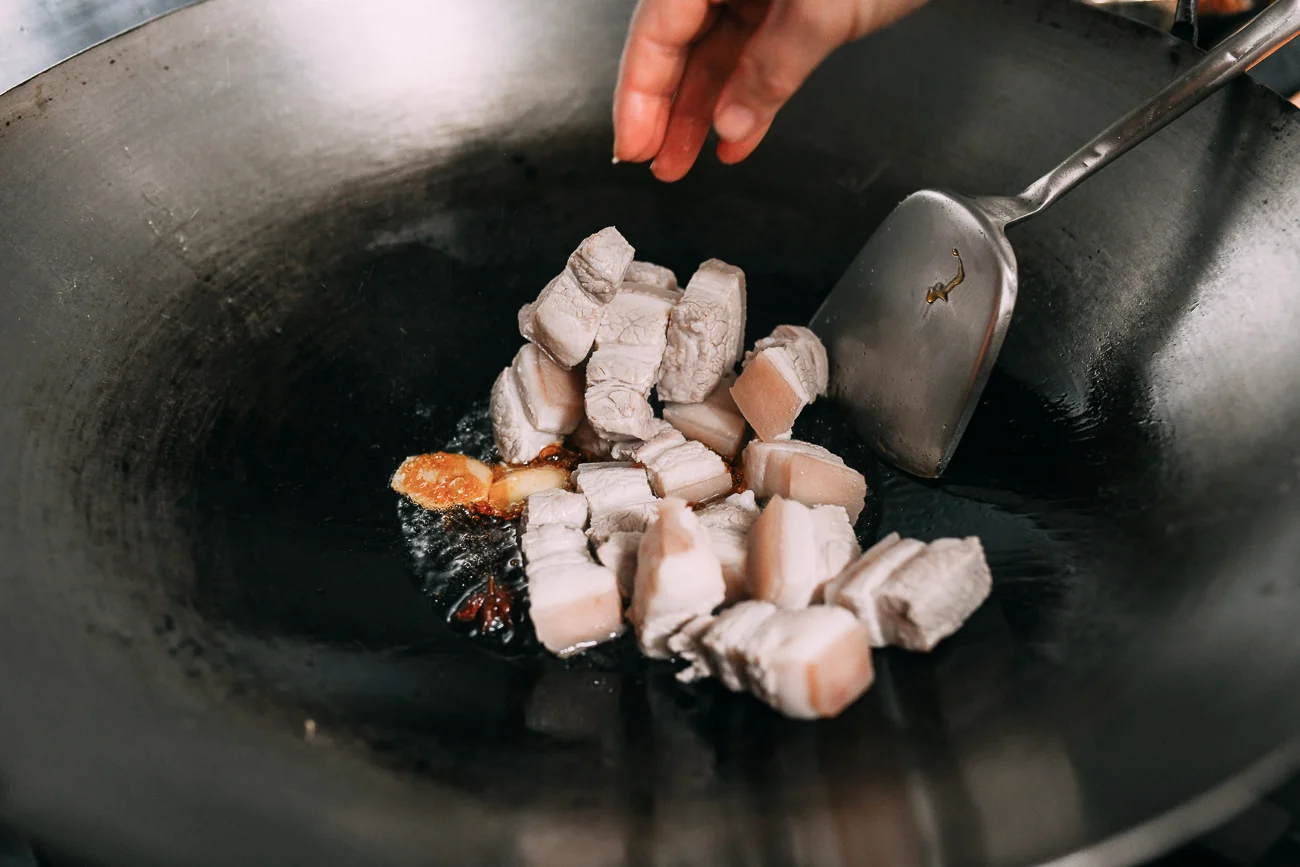
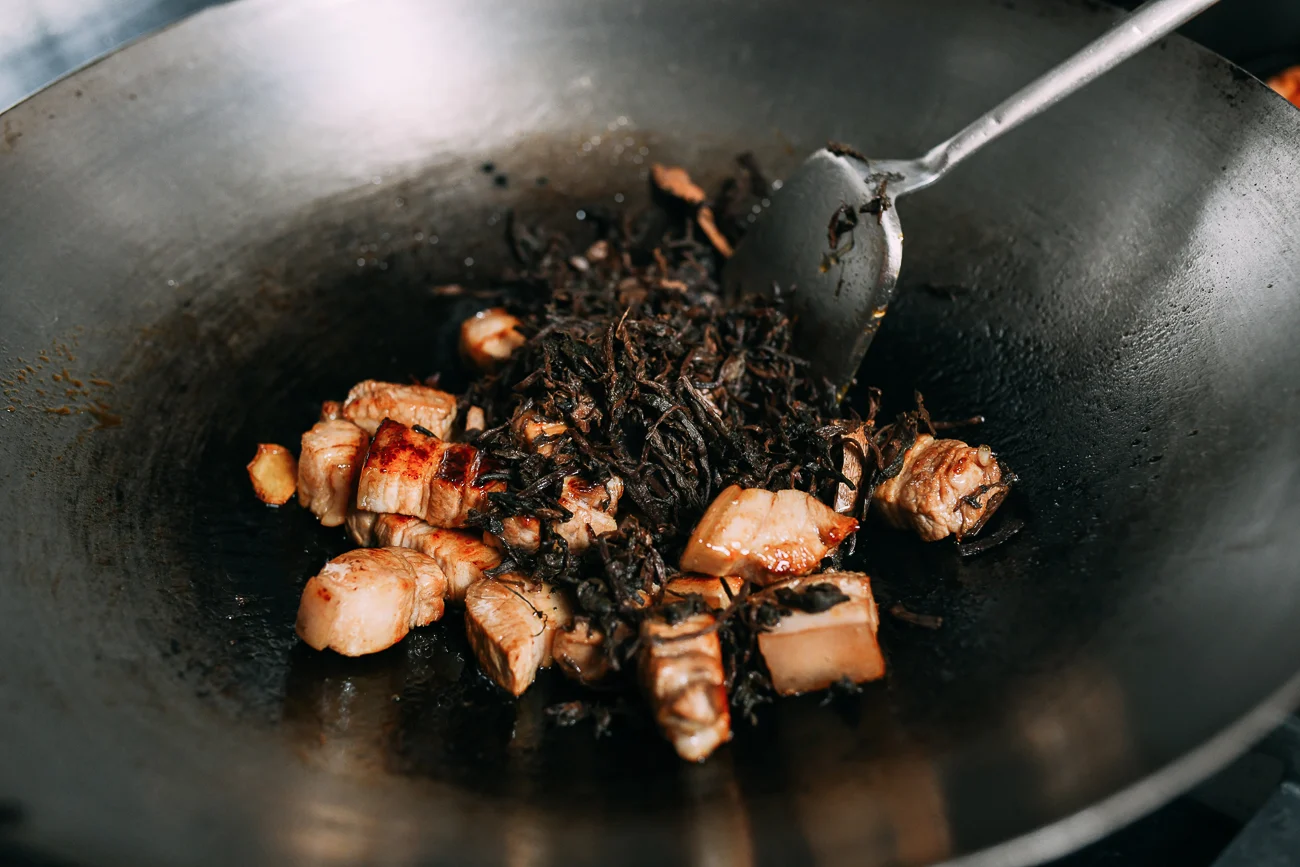
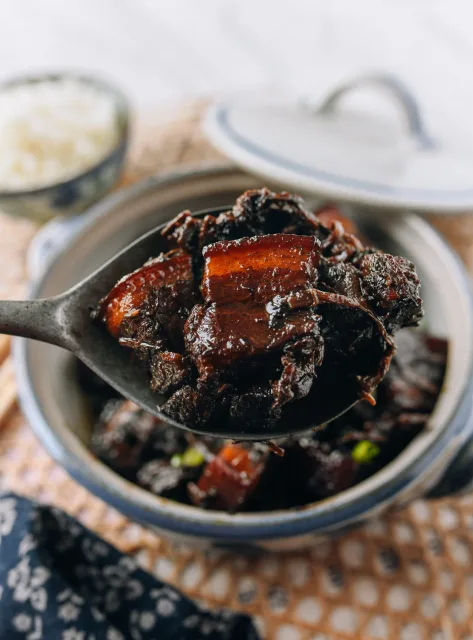
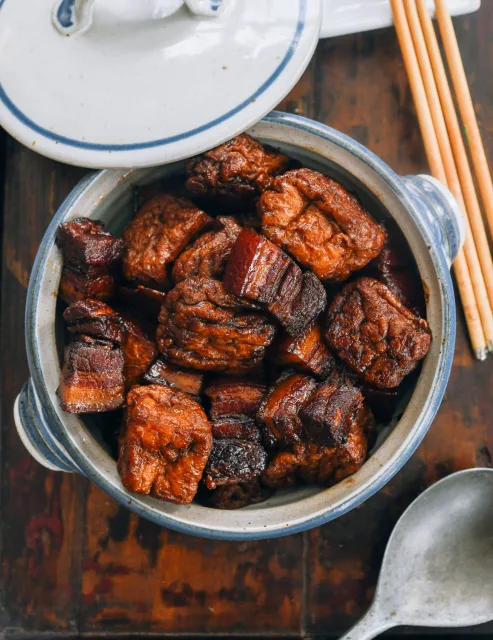
Step 5: Heat the oil (2 tablespoons) and the 50 g rock sugar or1/4 cup granulated-sugar alternative over low heat until an amber liquid forms. Add the star anise (2), ginger (3 slices) and blanched pork pieces. Increase to medium-high and lightly brown, then add the cleaned meigan cai and stir-fry together for 1 minute. Keep the 2 tbsp rice-seasoning sugar separate.
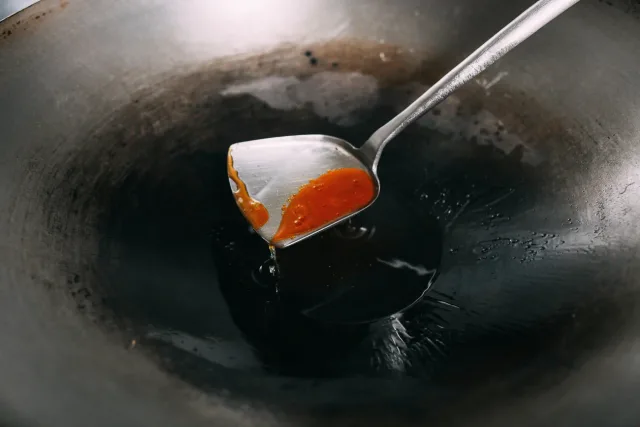
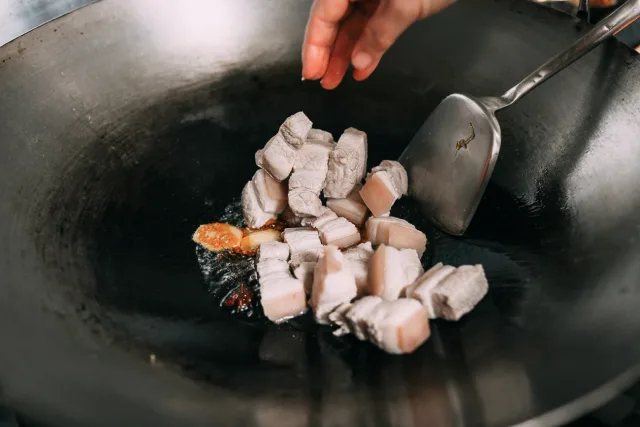
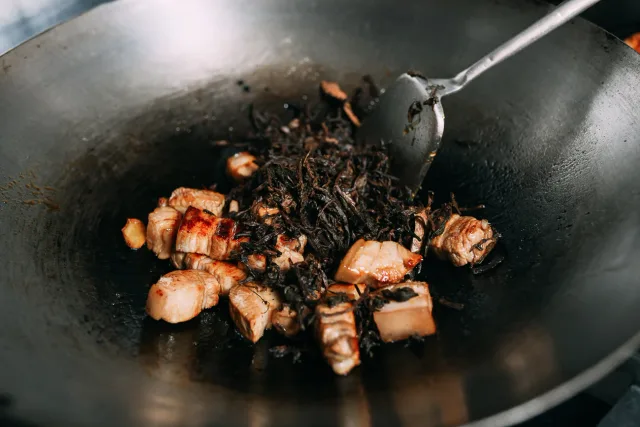
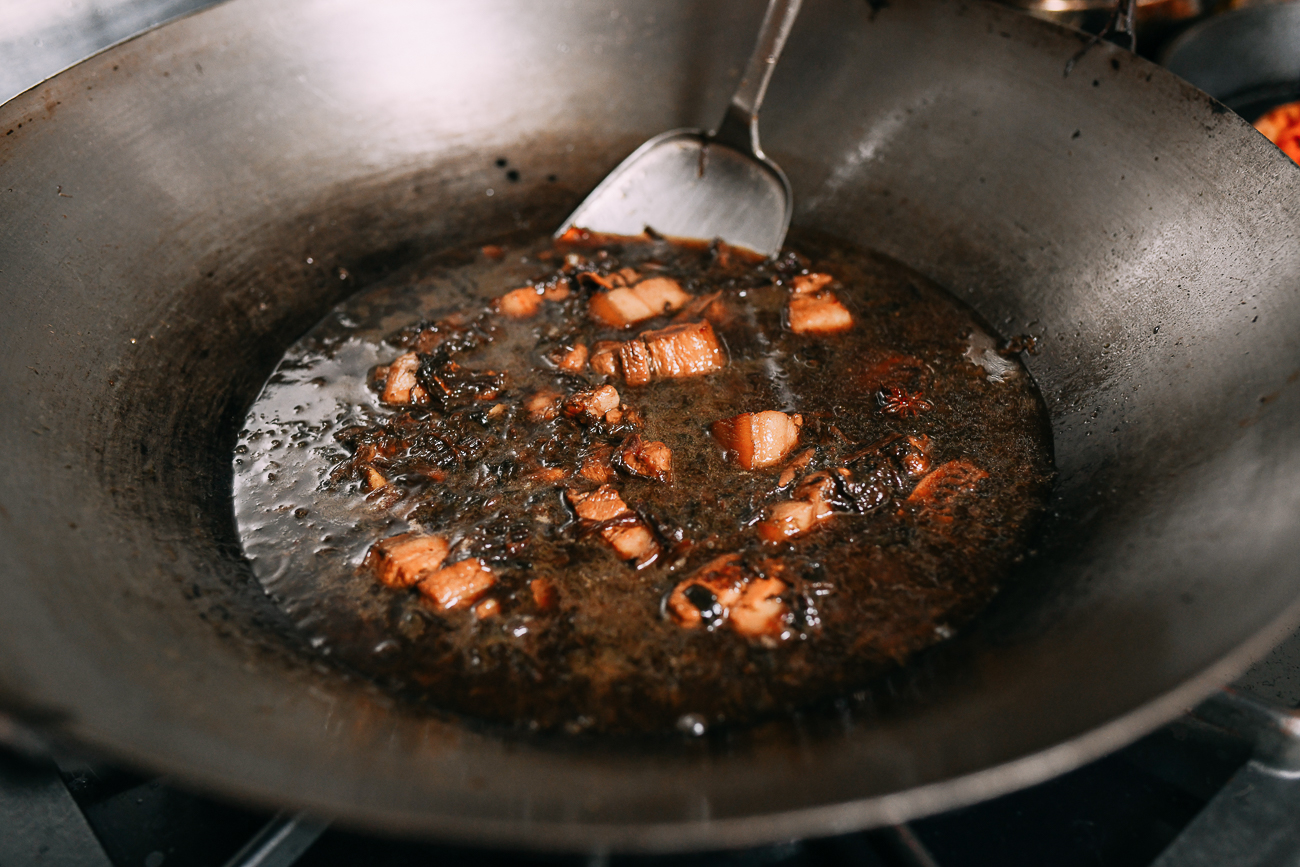
Step 6: Reduce to low and add the Shaoxing wine (1/4 cup), braise light/dark soy sauces (1 1/2 teaspoons),1 tsp braise salt and2 cups braise water. Stir to dissolve clinging sugar, bring to a boil, cover and simmer20 minutes, stirring every5 minutes to prevent burning.
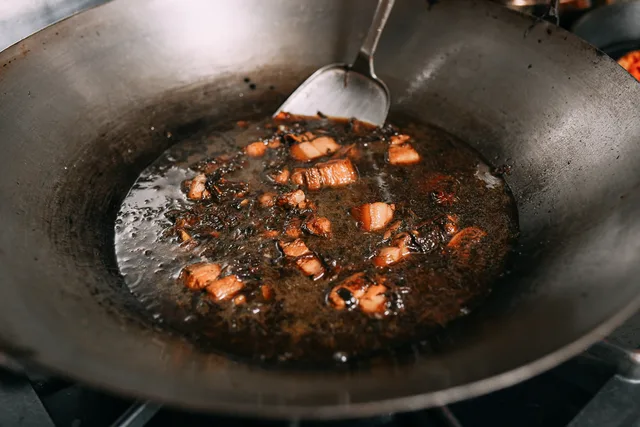
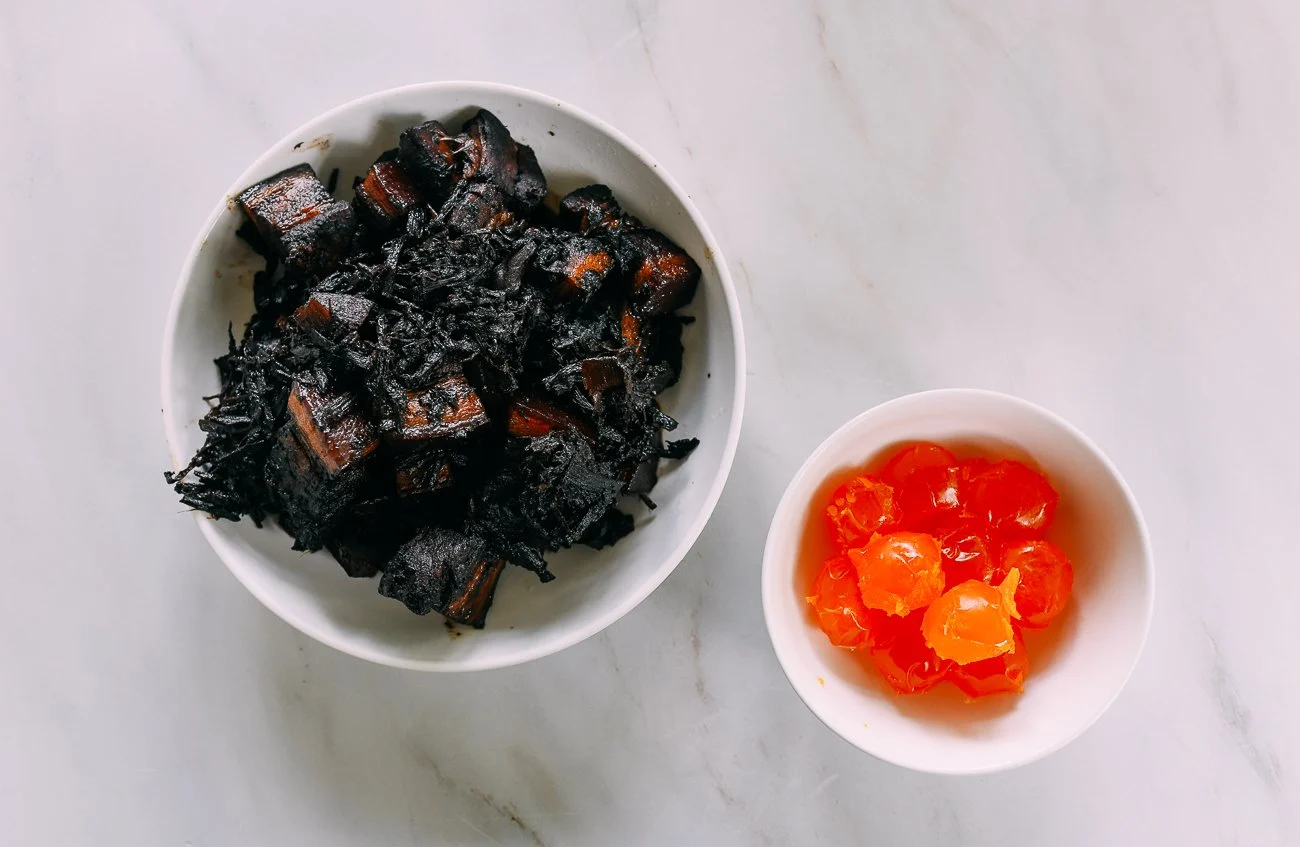
Step 7: Uncover and stir over high heat until standing sauce is absorbed or evaporated. Remove the ginger and star anise, transfer filling to a bowl and let cool enough to handle. If making it a day ahead, cool promptly and refrigerate until assembly.
Step 8: Gently wipe each soaked zongzi leaf front and back with a soft cloth, and rinse clean. Trim away about 1.3 cm of each leaf’s tough base (this prevents tearing during assembly). Transfer them to a bowl of fresh water until you’re ready to use them, so they don’t dry out.
Step 9: Drain the soaked rice and add to a large bowl, along with the sugar (2 tablespoons), salt (1 1/2 tablespoons), dark soy sauce (1 tablespoon), and light soy sauce (1 tablespoon). Mix well and set aside.
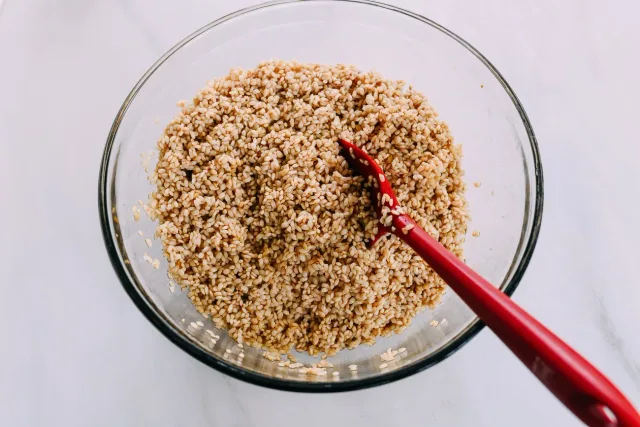
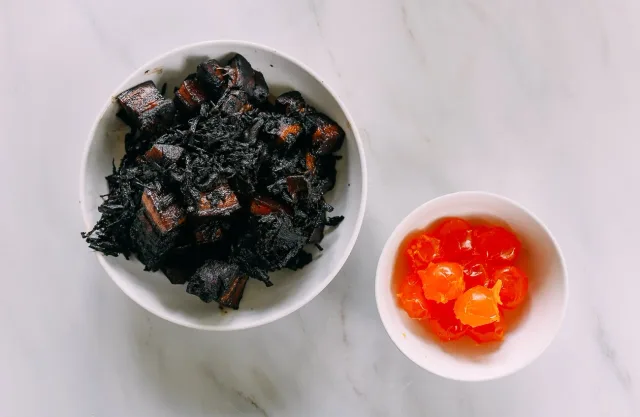
Step 10: Lay out the clean soaked leaves, seasoned rice, prepared pork/meigan-cai filling, optional cooked salted egg yolks, kitchen string and scissors. Divide the seasoned soaked rice into ten portions for ten parcels; its total weight has increased during soaking.
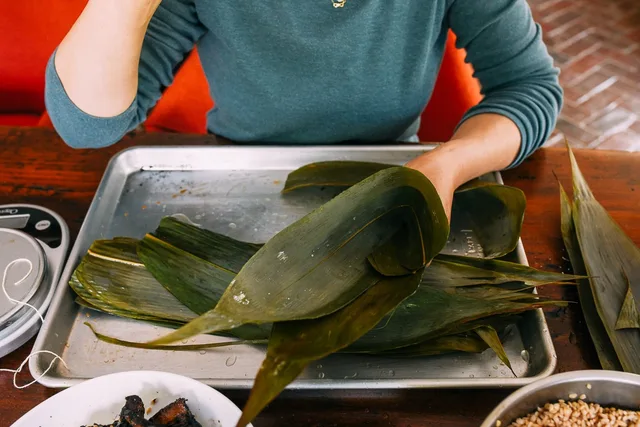
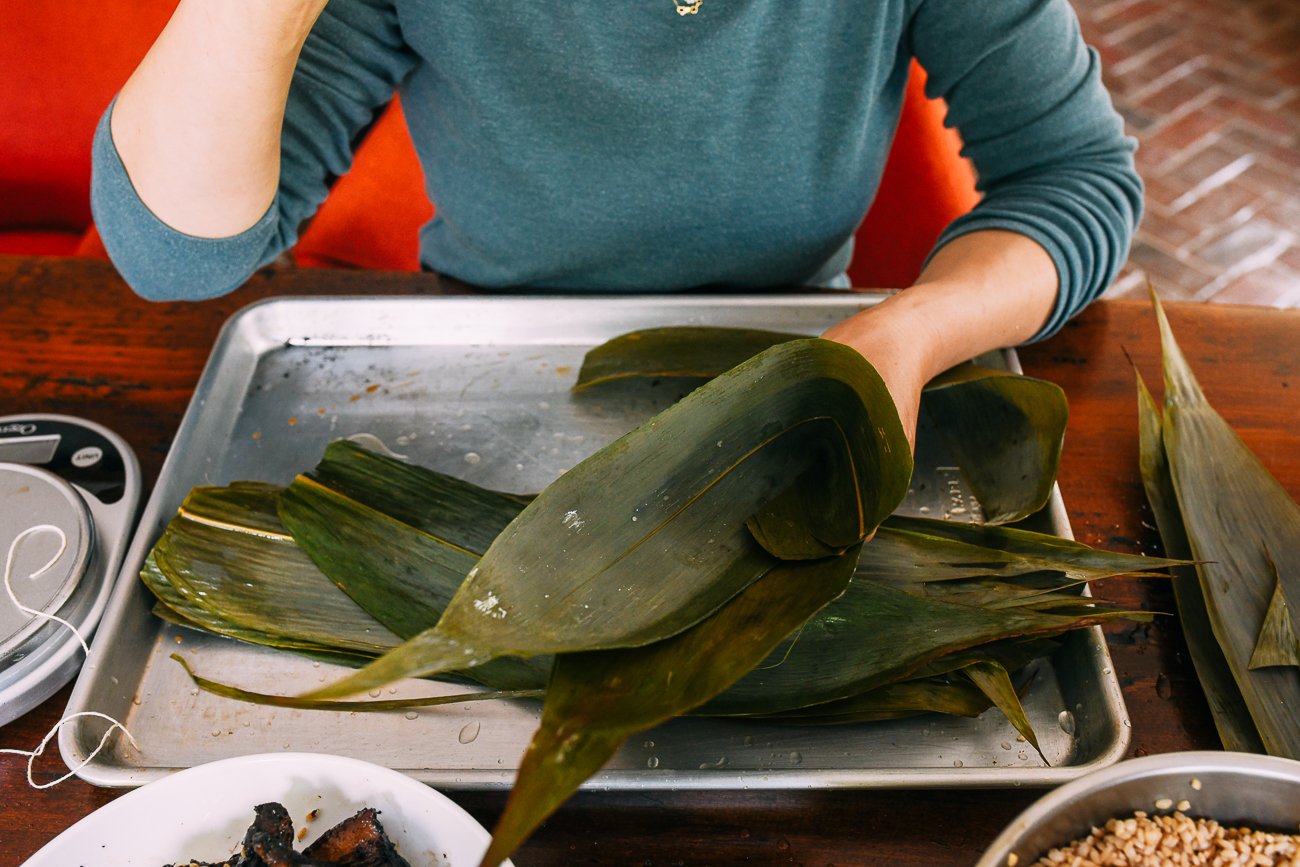
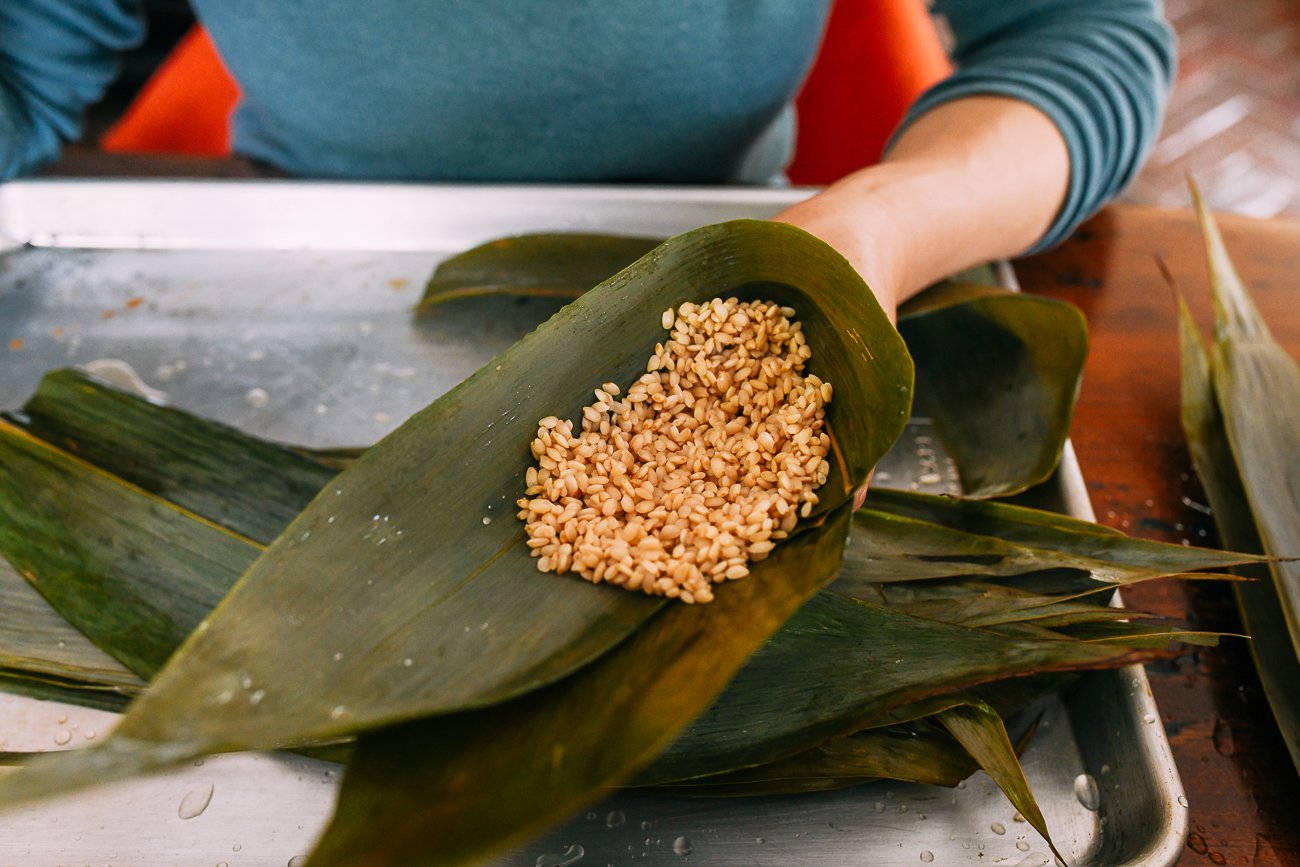
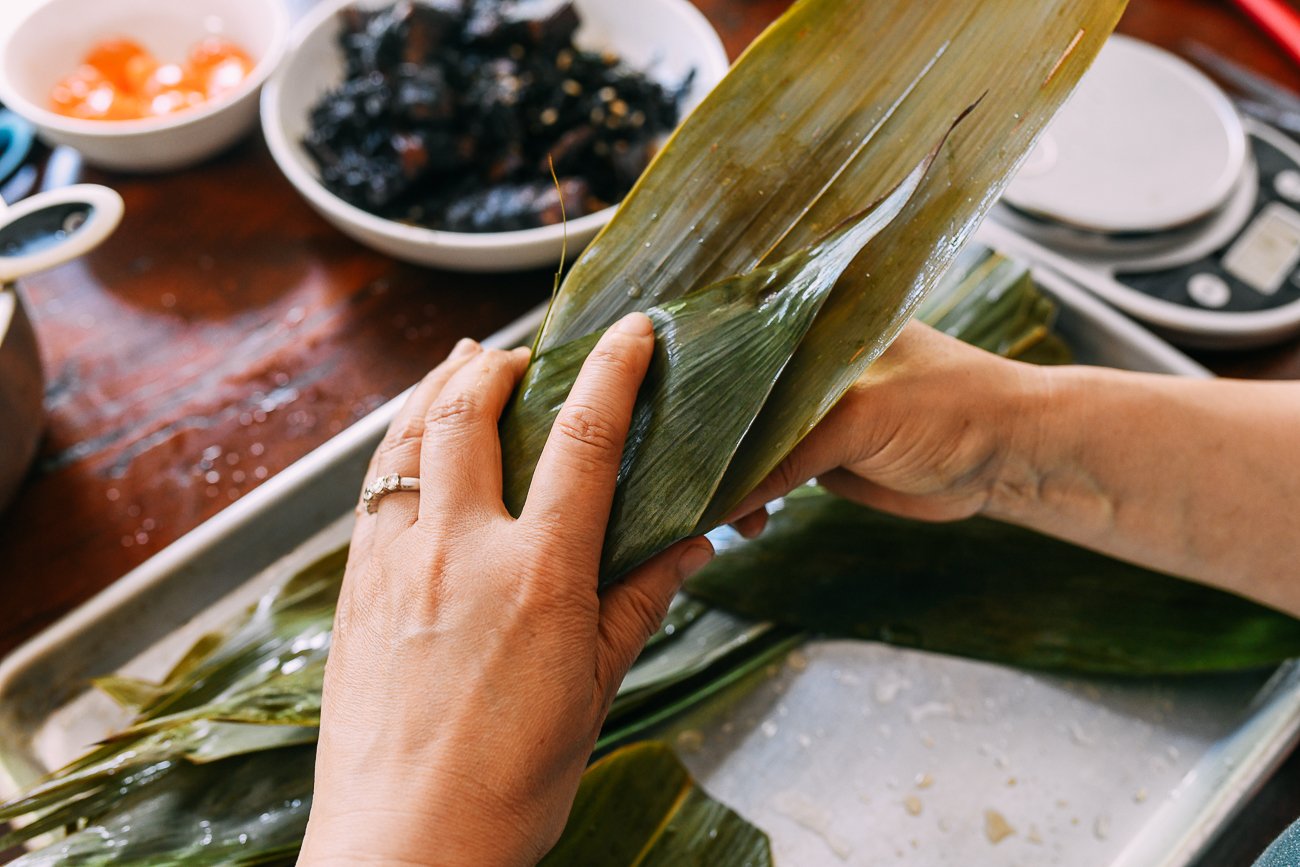
Step 11: Take two zongzi leaves and position them parallel to each other so that they're overlapping by about half, then roll the base into a cone.
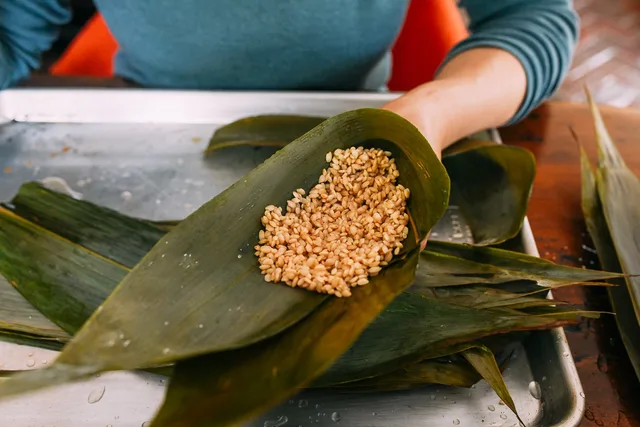
Step 12: Spoon half of one parcel’s rice portion into the leaf cone. Use one tenth of the complete seasoned soaked-rice batch per parcel, split between the bottom and top.
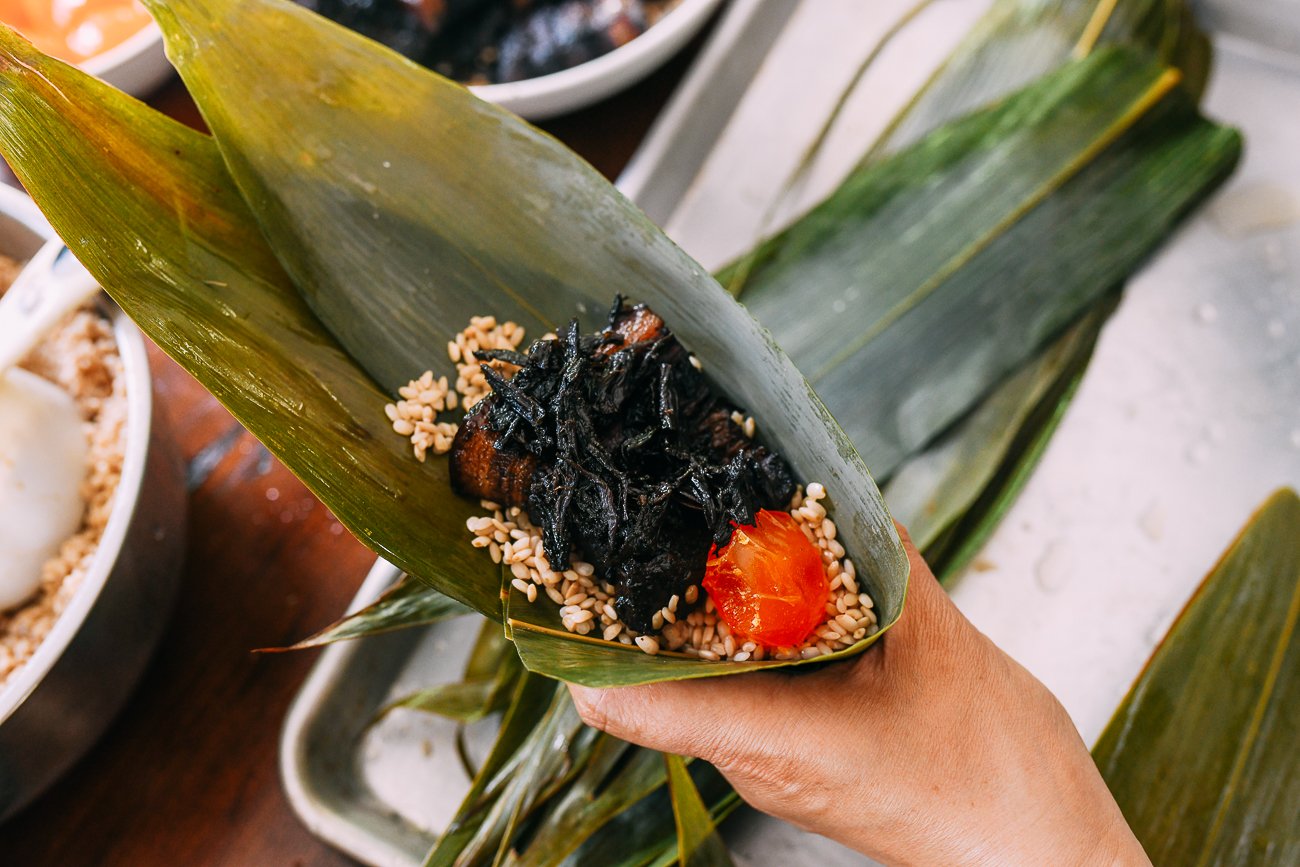
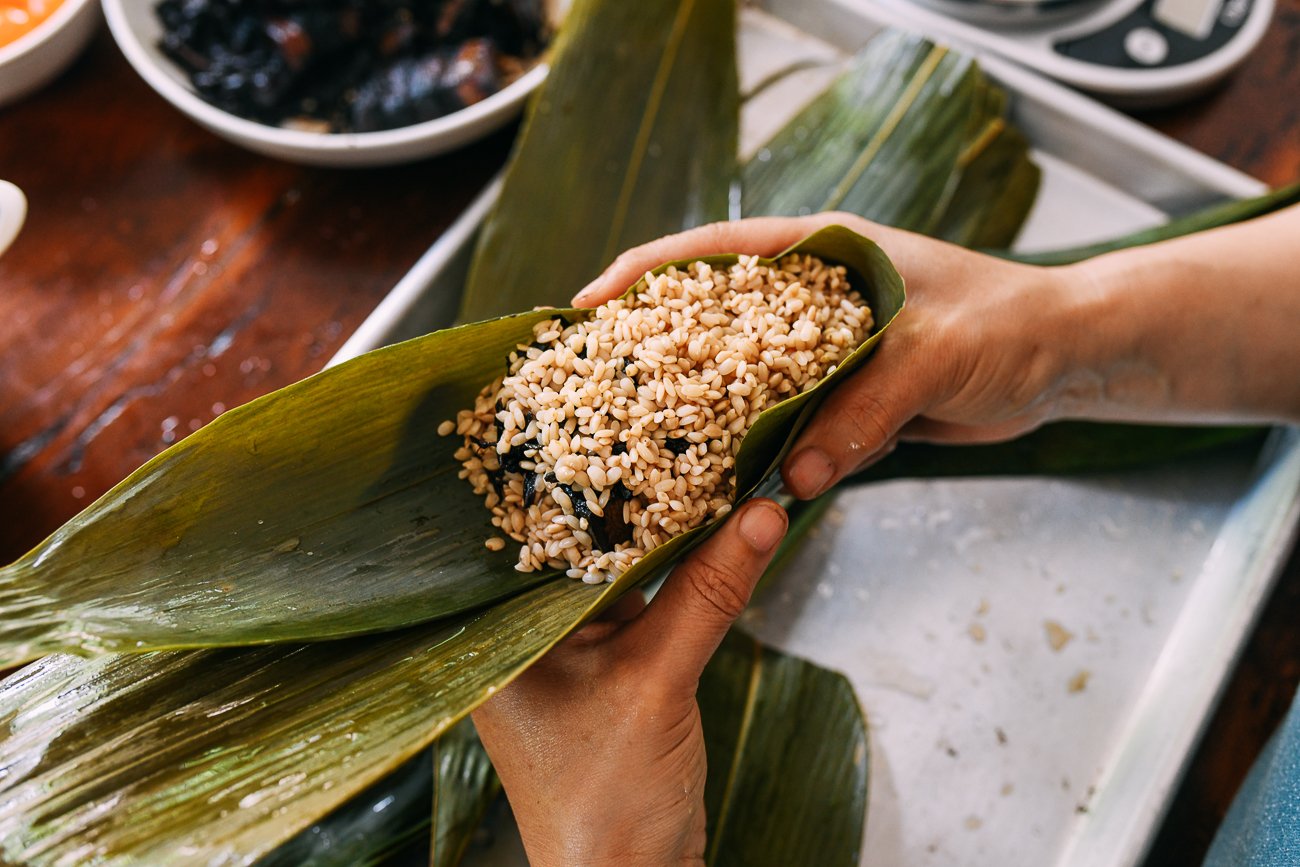
Step 13: Add one leaner and one fattier cooked pork piece, some meigan cai and one cooked salted egg yolk if using. Cover with the remaining half of this parcel’s rice portion.
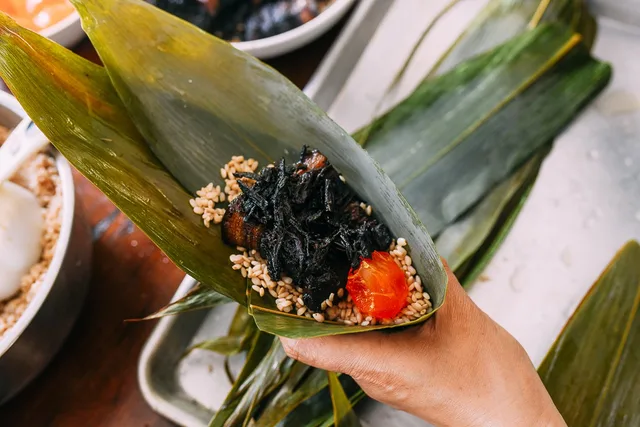
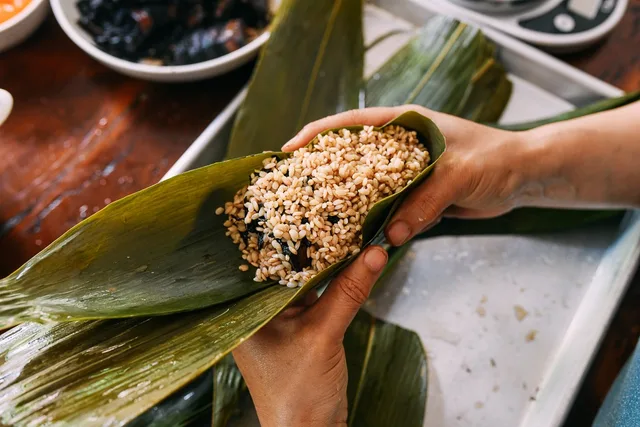
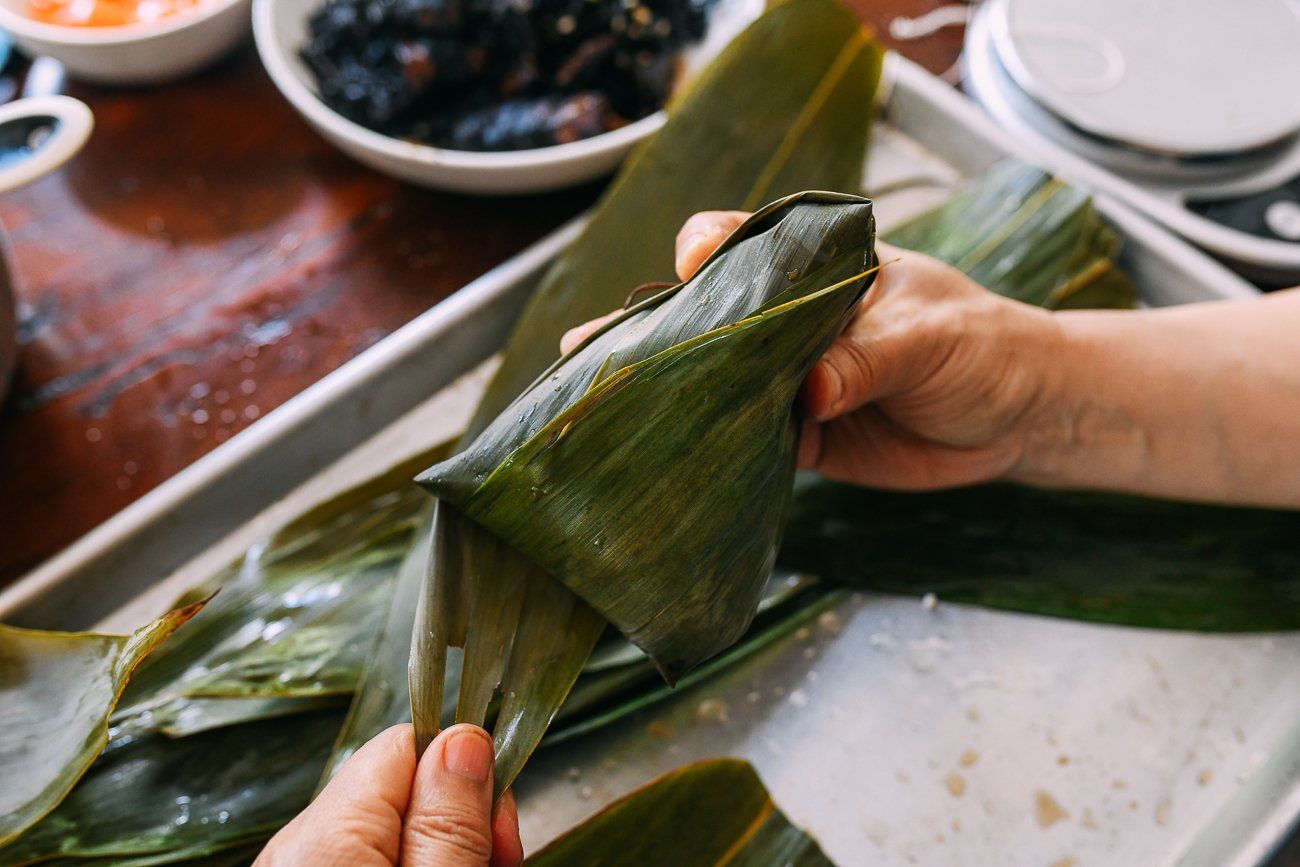
Step 14: Use one hand to gently squeeze the filling ingredients while using your other hand to fold the long ends of the leaves over the filling, folding the leaves down over the filling to cover it completely. Don't squeeze too hard, or the leaves can rip! Fold the any excess leaf down so you have a neat, compact parcel.
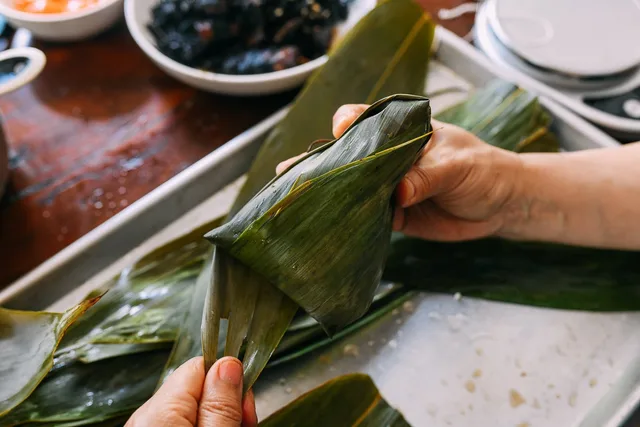
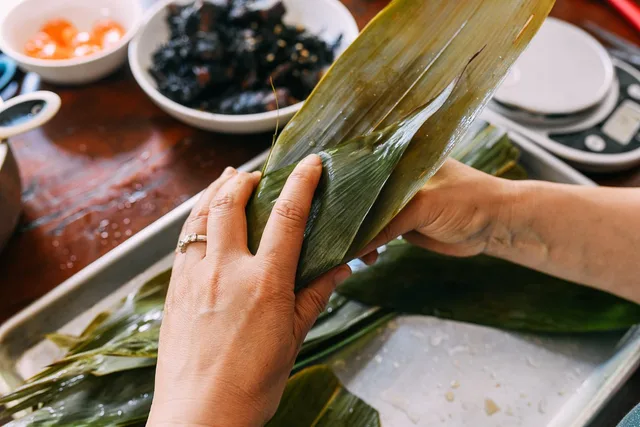
Step 15: Take your kitchen string and tie it securely around the zongzi—though again, not too tightly. The rice needs room to expand as it cooks. Repeat with the remaining zongzi!
Step 16: Choose either pressure cooking (steps16–18) or the stovetop route (steps19–21). For pressure cooking, nest only as many parcels as fit with water covering them by about 5 cm (2 inches), while keeping all food and liquid at or below the cooker’s1/2 fill line for expanding rice. Use separate batches or the stove if that coverage will not fit within the limit.
Step 17: Put the metal steamer rack that came with your Instant Pot on top of the zongzi, to keep them in place during cooking.
Step 18: Lock the lid and cook at manual high pressure for 70 minutes. Allow full natural pressure release and verify all pressure has released before opening. Check rice is tender, remove the wrapping leaves before eating, and skip the stovetop steps.
Step 19: Stovetop alternative: skip this route if the zongzi were pressure-cooked. Nest the wrapped parcels tightly in a large stockpot. If needed, place a heatproof plate over them to keep them submerged.
Step 20: Fill the pot with cold water until the zongzi are completely submerged. Place the pot on the stove over high heat and bring to a boil.
Step 21: Once boiling, reduce to medium-low and simmer gently for 4–5 hours, until the rice and filling are fully tender. Check regularly that the parcels stay submerged and top up only with boiling water. Remove the wrapping leaves before eating.
Photos (3)
Comments
0 threadsSign in to join the discussion.


No comments yet. Start the discussion.