
Korean · Side
Kkakdugi (Cubed Radish Kimchi)
From the zcook collection
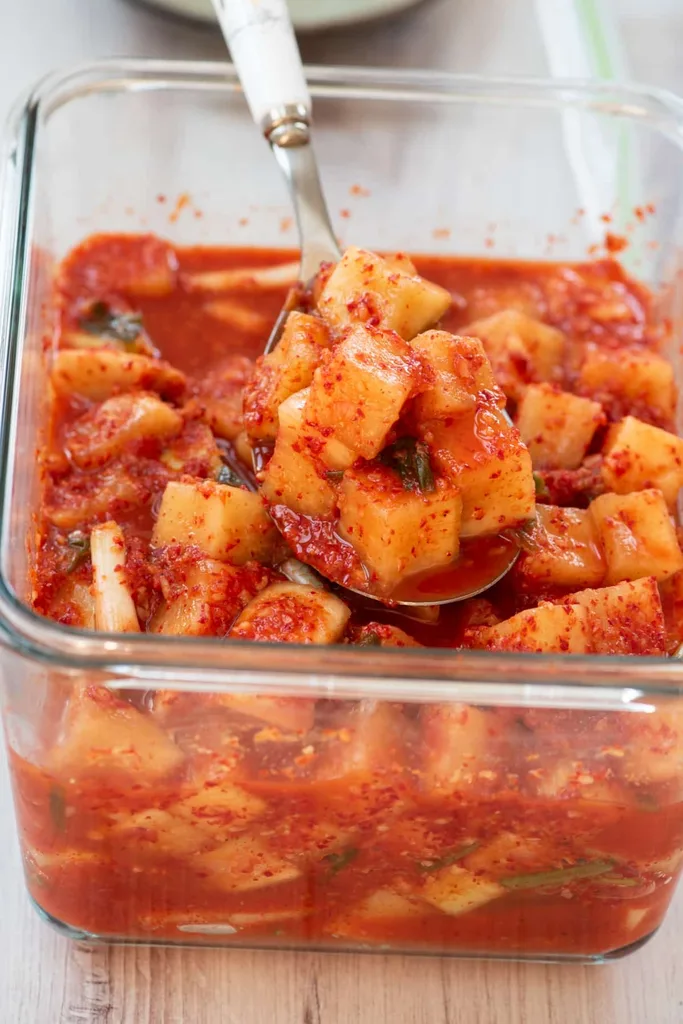
Crunchy, spicy, and deeply savory, kkakdugi is a highly popular Korean radish kimchi. And easy to make!
- Dairy-free
- Korean
- Side
- cubed radish kimchi
- easy kimchi
- korean radish
- radish kimchi
- Serves
- 48
- Level
- Medium
- Energy
- 45 kcal
Method6 steps
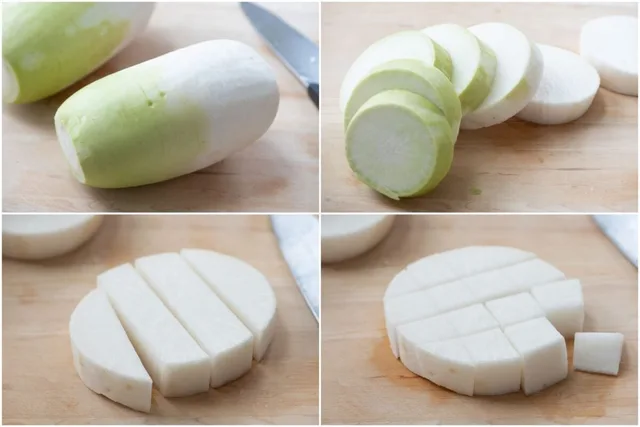
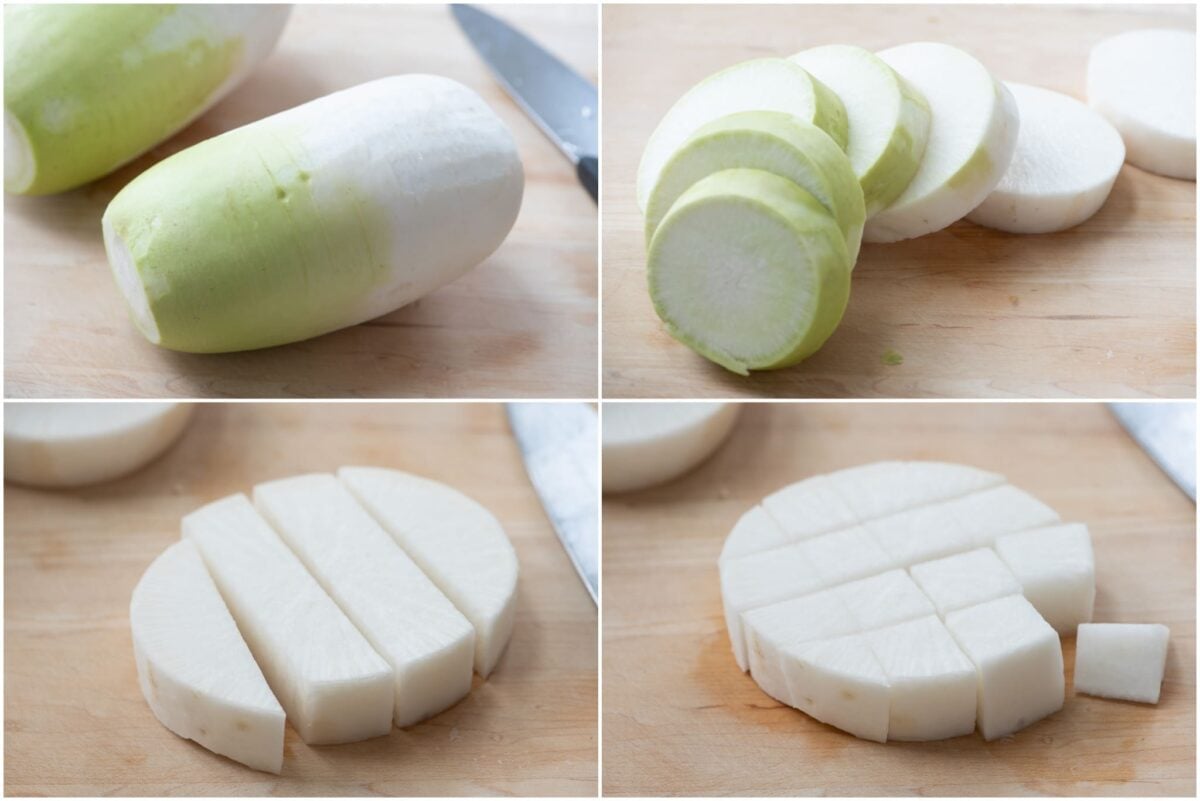
Step 1: Clean the radishes by scrubbing with a brush and/or scratching off the stubborn impurities with a small knife. Peel the skin only if necessary. Cut into 3/4 to 1-inch thick discs, and then cut each disc into 3/4 to 1-inch cubes, placing in a large bowl. (The cubes will look big but will shrink during the salting and fermentation processes.)
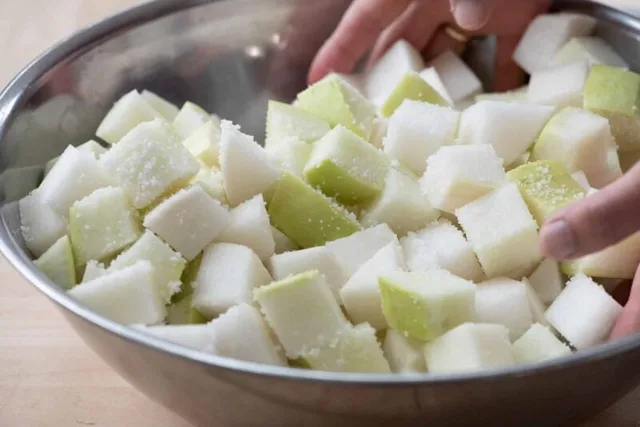
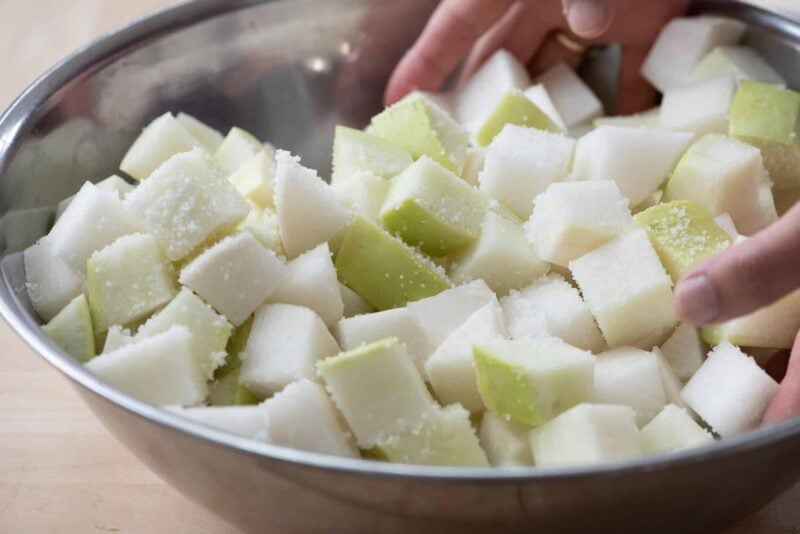
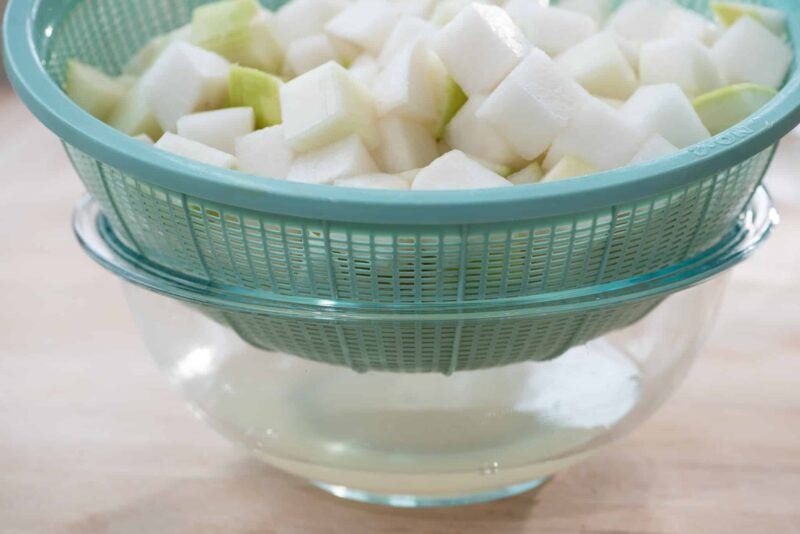
Step 2: Sprinkle the salt over the radishes and toss well to coat evenly. Let sit for about an hour, until the radishes have slightly softened and released some liquid. Flip them over once or twice during salting.
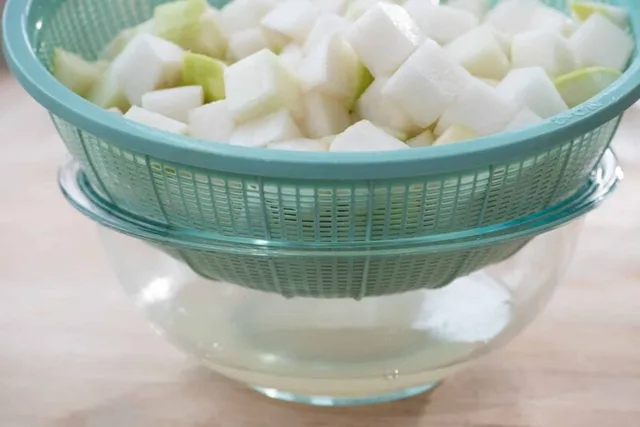
Step 3: Drain the radishes in a colander and discard the liquid. Do NOT rinse. (The radishes still contain sufficient water content that will be released during the fermentation process.)
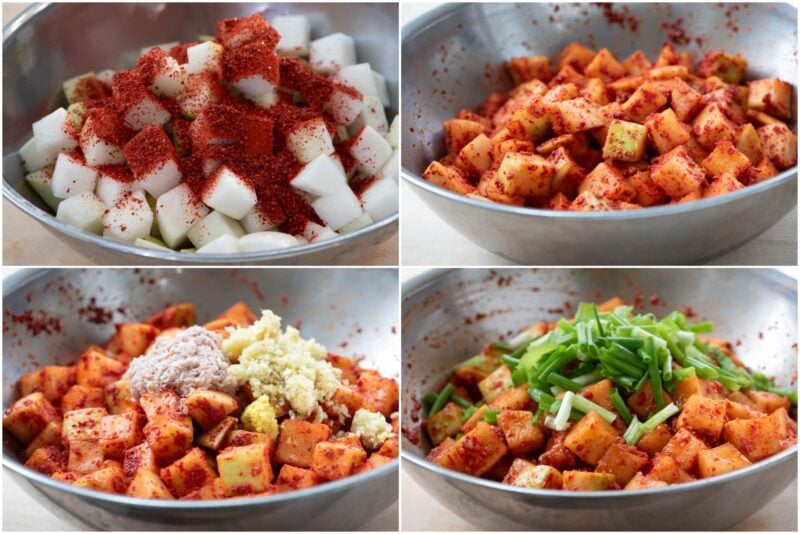
Step 4: If using the optional fruit and/or cooked rice (2 tbsp), blend them with the garlic (3 tbsp) and ginger (1 tsp), adding about 1/2 cup water for easier blending. Otherwise keep garlic and ginger minced/grated. Return drained radish to the large bowl and rub in gochugaru (1/2 cup) with kitchen gloves. Mix in fish sauce, salted fermented shrimp, garlic, ginger, optional sugar (1 tablespoon) and the optional blended fruit/rice mixture. Taste a little seasoning; the source expects it to be slightly too salty to eat alone, so add extra salt only if needed. Gently toss in the prepared scallions (3–4). The radish will release more water during fermentation.
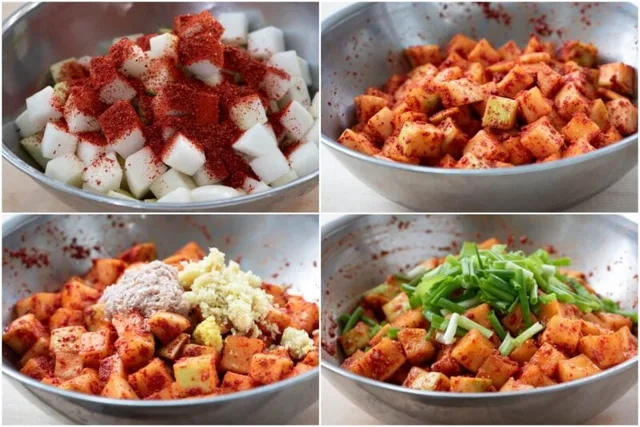
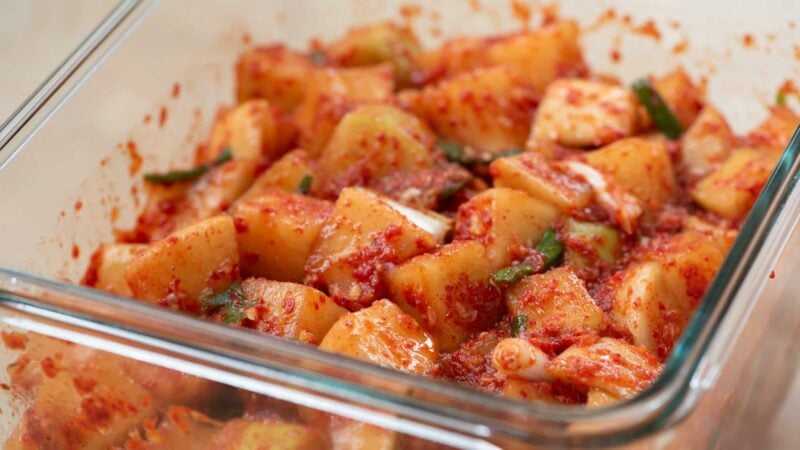
Step 5: Store in an airtight container or jar. Before closing the lid, press the kkakdugi down hard with your hand to remove air pockets between the radish cubes.
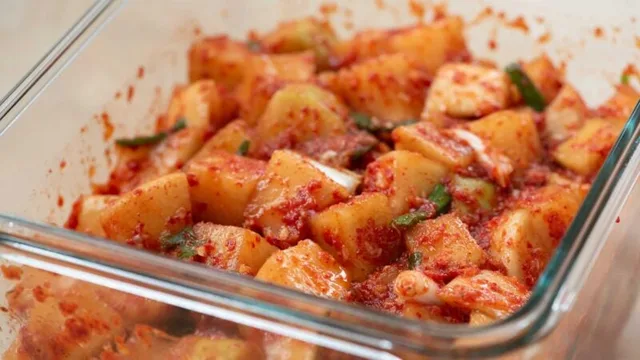
Step 6: Leave the packed kkakdugi at room temperature for 2–3 days, depending on room temperature and desired ripeness, then refrigerate. The source notes its flavor develops further after 1–2 weeks in the fridge.
Photos (1)
Comments
0 threadsSign in to join the discussion.



No comments yet. Start the discussion.