
Japanese · Dinner, Lunch, Main Course, Rice dish
Chirashi Sushi ちらし寿司
From the zcook collection
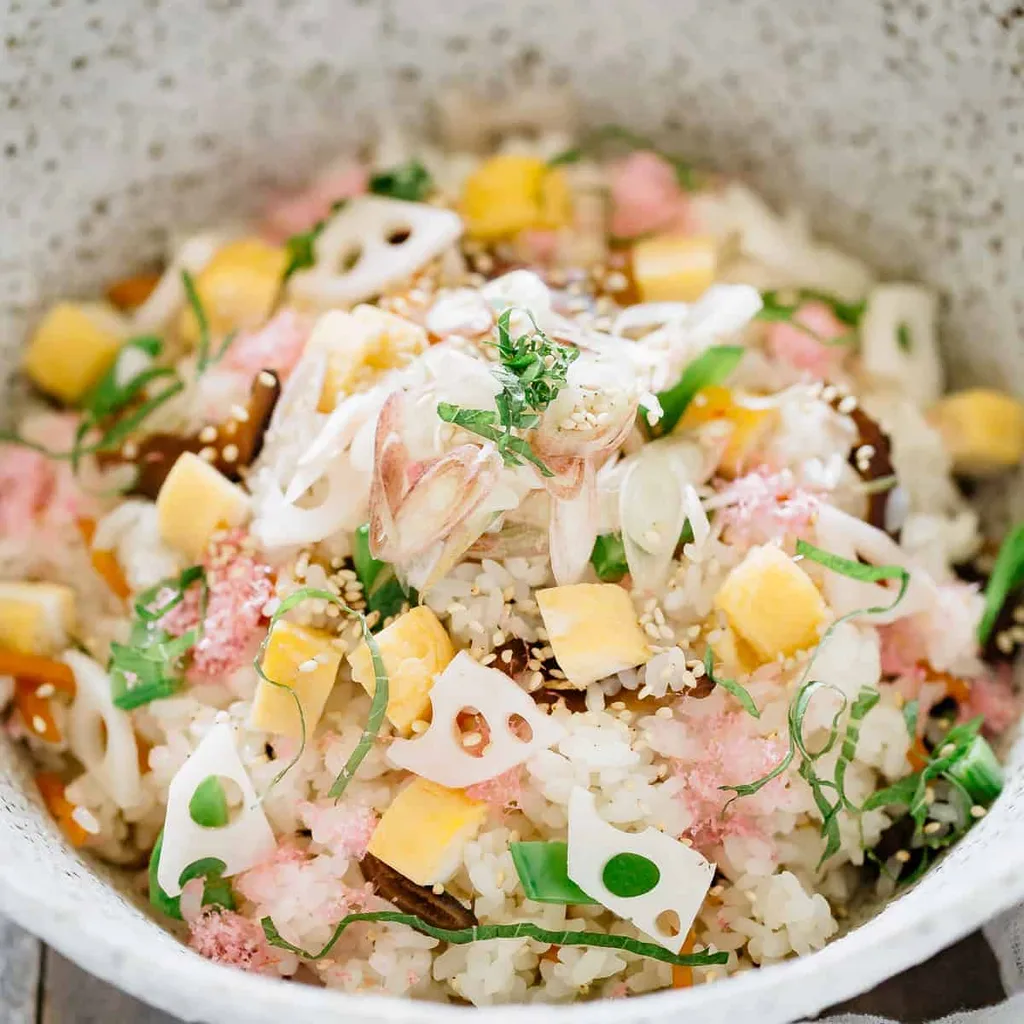
Delicious and beautiful Chirashi sushi recipe that can be enjoyed for many special occasions.
- Dairy-free
- Japanese
- Prep
- 1 hr
- Cook
- 30 min
- Serves
- 4 serve
- Level
- Hard
- Energy
- 430 kcal
Method26 steps
Step 1: The night before, soak the four dried shiitake in fresh cold water in the refrigerator. Squeeze excess liquid from the soaked mushrooms and reserve two-thirds cup of the soaking liquid as shiitake dashi.
Step 2: Remove the stem off the soaked mushrooms and slice mushrooms thinly.
Step 3: Wash the rice a few times till the water becomes clear.
Step 4: Put the drained washed rice into the cooker with the listed one-point-eight cups cooking water (1.8 cups), using the same source cup measure as the two cups rice. Add the optional five-centimetre kombu strip.
Step 5: Set the rice to cook as per your rice cooker.
Step 6: While the rice cooks, heat only the sushi-seasoning quantities: four tablespoons rice vinegar, two tablespoons sugar and two teaspoons sea salt until the sugar dissolves. Keep simmered-vegetable and egg sugar/salt separate.
Step 7: Moisten the wooden tub with water and wipe excess water off with a cloth.
Step 8: Once the rice is cooked, remove the kelp strip (if you used a kelp strip) from the rice and place the rice into the wooden tub. Pour the sushi vinegar over it and mix with a wooden spatula to flavour the rice while fanning it to cool it down.
Step 9: Combine two-thirds cup reserved shiitake soaking liquid, sliced soaked mushrooms, seventy grams carrot (½) matchsticks and the ready kanpyo with the separate two tablespoons mixing-vegetable sugar, two tablespoons mirin, two teaspoons soy sauce and quarter teaspoon salt.
Step 10: Bring to a boil and simmer until the vegetables are tender and most liquid has evaporated.
Step 11: Turn the heat off, Drain any excess liquid left with a sieve.
Step 12: Whisk the three eggs with the egg-mixture quantities only: two teaspoons sugar, half teaspoon salt and two tablespoons water.
Step 13: Strain the egg mixture with a sieve twice.
Step 14: Heat a rectangular pan over medium heat, lightly oiling it with part of the listed teaspoon oil. Reserve the rest for wiping between layers.
Step 15: Pour 1/3 of the egg mixture into the pan. Break any bubbles formed with a pair of chopsticks and scramble gently.
Step 16: When the surface is solidified a little, fold and push the egg to one end of the pan with chopsticks
Step 17: Wipe the empty side of the pan with oil-soaked kitchen paper and pour another 1/3 of the egg mixture into the empty space of the pan.
Step 18: Lift the folded egg up to let the egg mixture run under it.
Step 19: Fold and roll the egg from one side of the pan and wipe the empty space of the pan with the oil-soaked kitchen paper.
Step 20: Pour in the final third egg mixture, fold and roll as before, and finish cooking until the egg roll is set throughout and reaches 71°C (160°F) in the centre.
Step 21: Turn the heat off and remove the tamagoyaki egg roll from the pan. When it is cooled down, cut it into small cubes and set aside.
Step 22: Thaw the thin frozen lotus-root slices, string the four snow peas, and parboil both in fresh water until tender. Drain, cut as needed and set aside.
Step 23: Mix the cooked and drained excess liquid mixing-in ingredients into the sushi rice. Do not mush it, rather by cutting motion. *10
Step 24: Scatter tamagoyaki cubes, snow peas, renkon lotus roots and sakura denbu (2 tbsp) over the sushi rice.
Step 25: Garnish with chopped shiso leaves and thinly sliced myoga Japanese ginger.
Step 26: Sprinkle white sesame seeds (1 tbsp).
Photos (4)
Comments
0 threadsSign in to join the discussion.



No comments yet. Start the discussion.