
Chinese · Dinner
Shandong Pork and Fish Dumplings (Jiaozi)
From the zcook collection
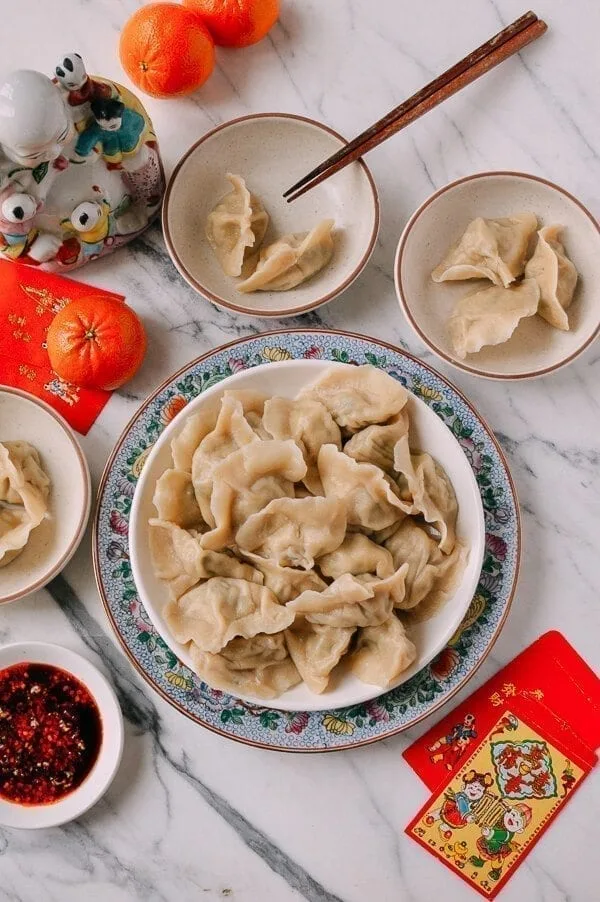
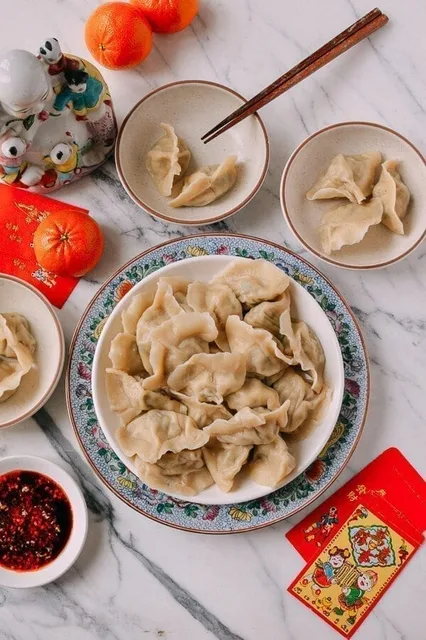
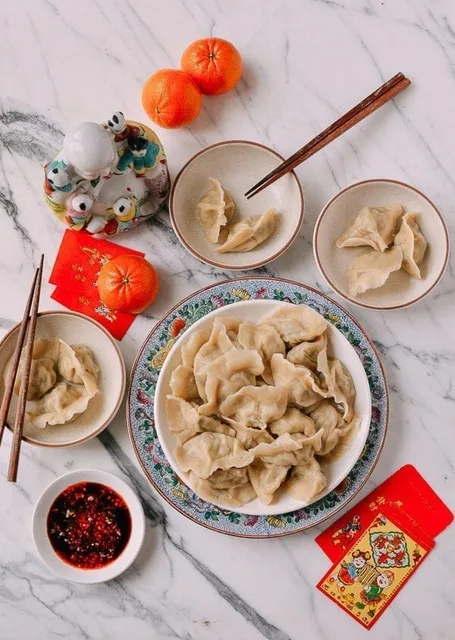
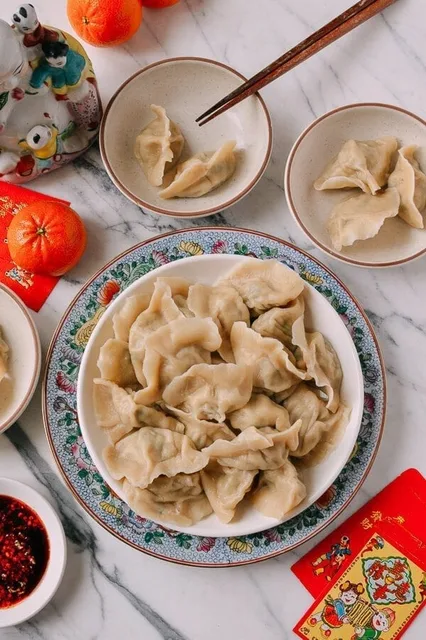
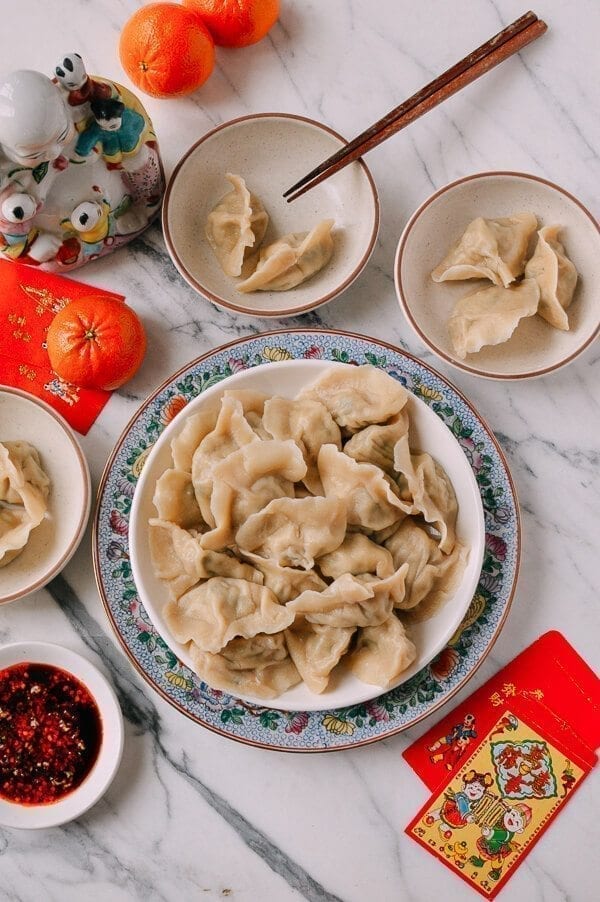
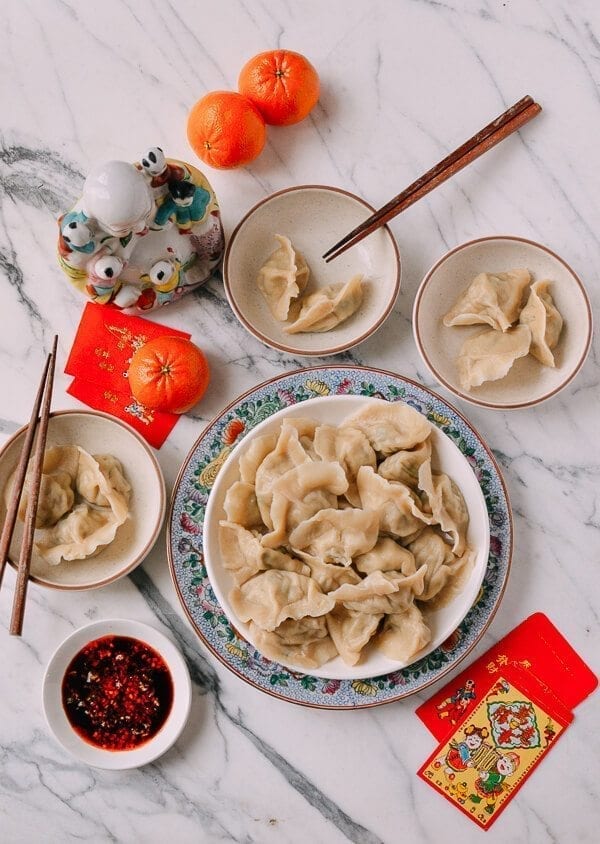
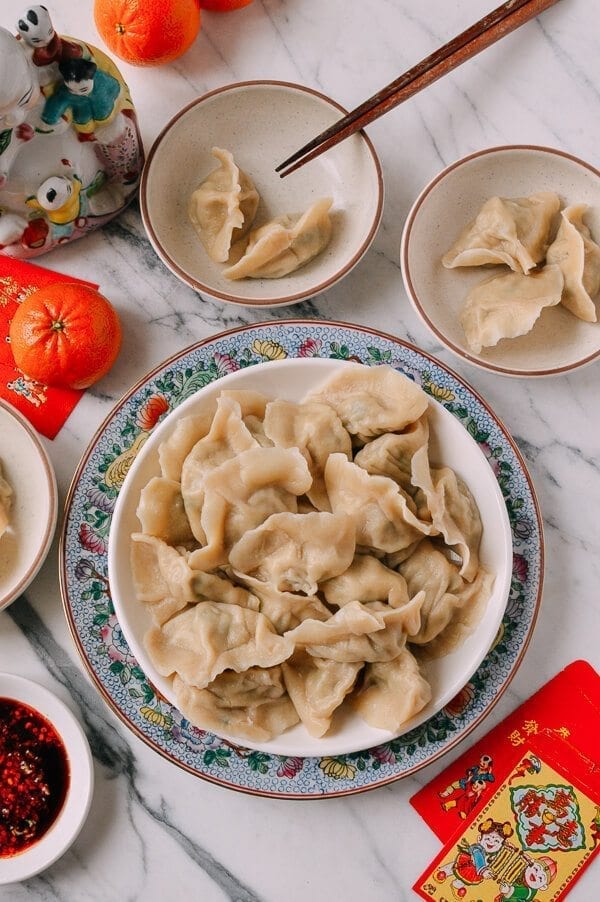
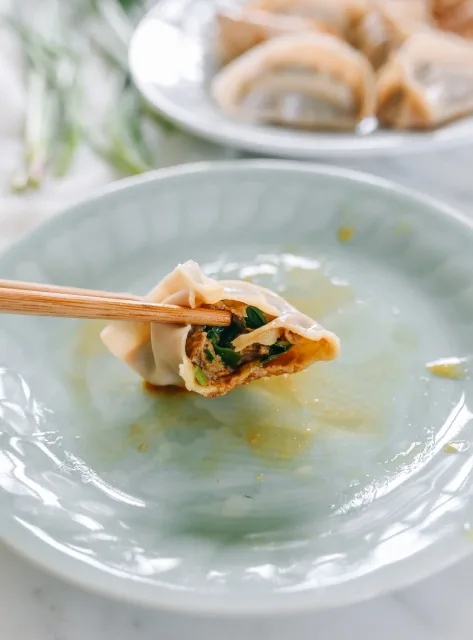
Homemade Shandong dumplings with a soft mackerel, pork and garlic-chive filling, boiled in batches and served with a garlic-soy dip.
- Dairy-free
- Spicy
- Chinese
- Dinner
- Dumplings
- Pork and fish
- Total
- 4 hr 20 min
- Prep
- 4 hr
- Cook
- 20 min
- Serves
- About 130 dumplings; 16 servings
- Level
- Medium
- Energy
- 390 kcal
Method15 steps · about 4 hr 20 min
Step 1: Put 6 cups flour in a mixer bowl. With the mixer on low, add water gradually from the 2-cup starting allowance until a smooth, soft and pliable dough forms. Hold back water if the dough is becoming sticky, or add a little extra only if it remains dry. The dough should not be wet or sticky.
Step 2: Cover the dough with an overturned bowl or plate and rest on the counter for 1 hour. Make the filling during this rest.
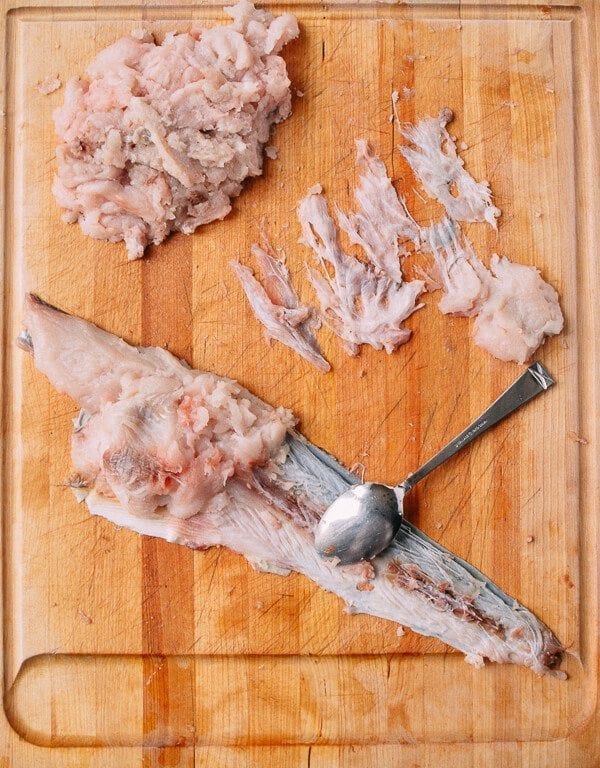
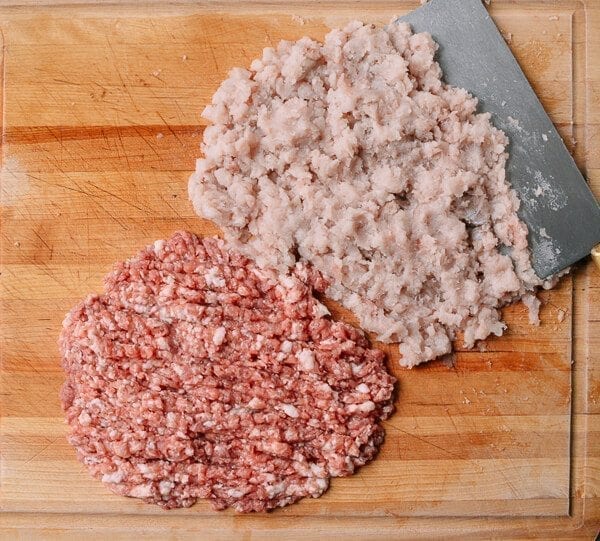
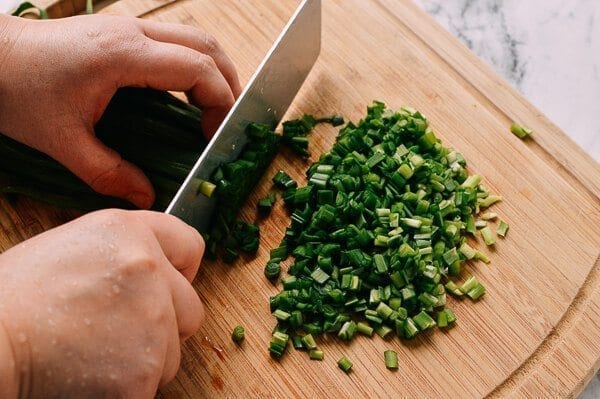
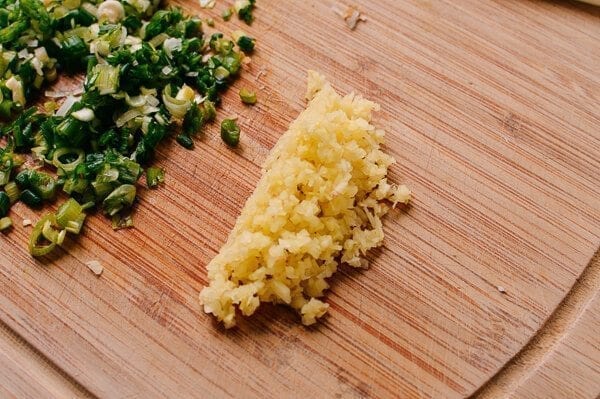
Step 3: Have the whole mackerel (2½ lb) filleted, skinned and boned by a fishmonger. Scrape the flesh from the fillets with a spoon, discarding the tough membrane and checking carefully for remaining bones. Coarsely chop the recovered fish meat. Wash and dry the chives and scallions (¼ cup), then finely chop the chives and mince the scallions and ginger (3 tablespoons). Keep these preparations separate and cold until mixing. Clean hands, utensils and surfaces after handling raw fish.

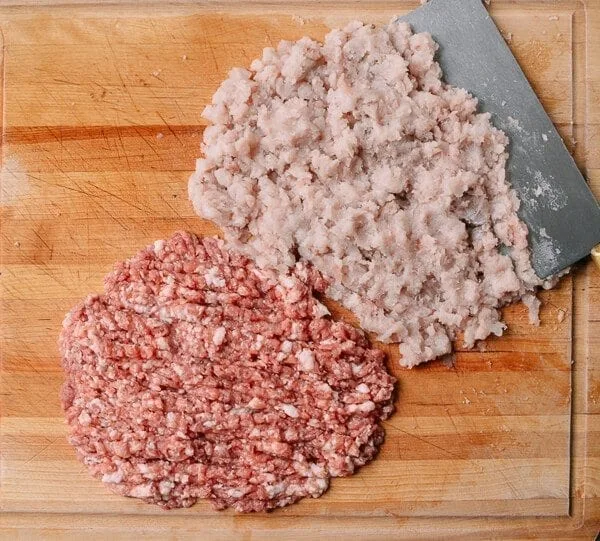
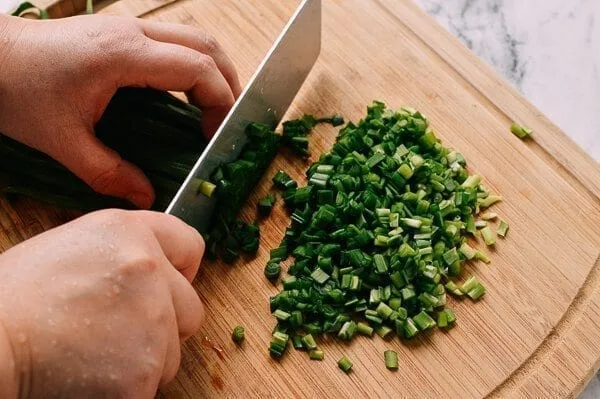
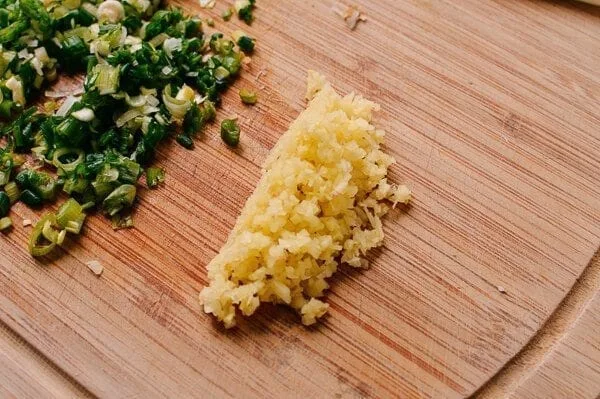
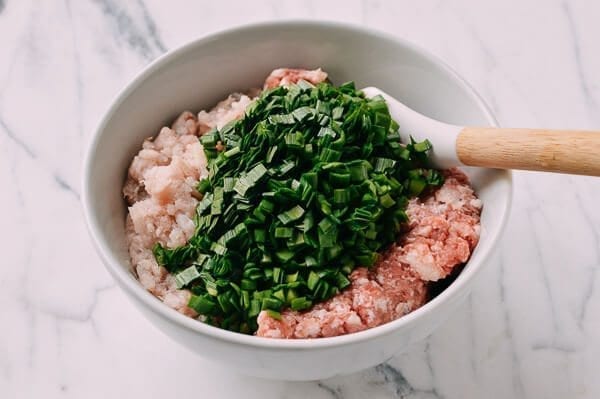
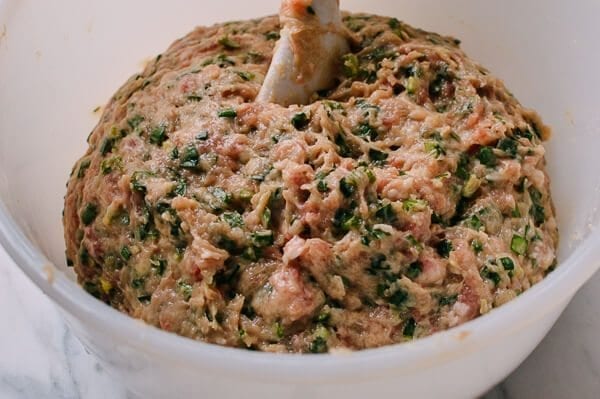
Step 4: Mix all recovered chopped mackerel with the 12 oz ground pork, prepared chives, ginger and scallions, 1½ tsp salt, 3 tbsp vegetable oil, 2 tbsp sesame oil, ½ tsp white pepper, ¼ tsp ground Sichuan pepper, ½ tsp sugar, ¼ cup Shaoxing wine, 3 tbsp light soy sauce and 1¼ cups cold filling water. Stir vigorously in one direction for about 5 minutes, until gooey and sticky. Do not taste this raw mixture.
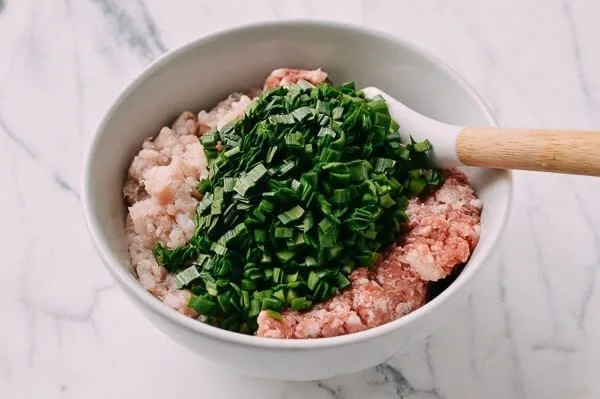
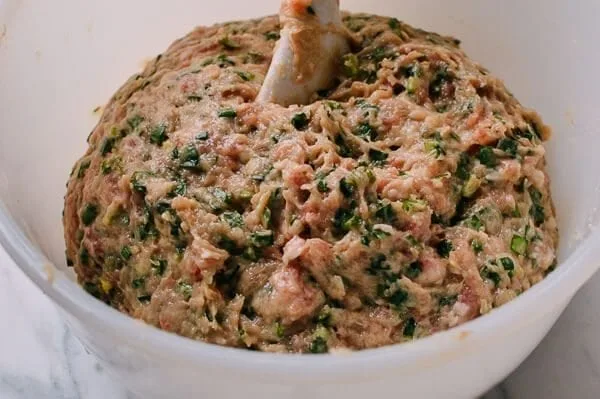
Step 5: Cover the mixed filling and refrigerate for 15 minutes. Keep it refrigerated between wrapping batches.
Step 6: When the hour of resting is complete, divide the dough into eight pieces and keep unused pieces covered. Roll one piece into a thick cylinder on a lightly floured surface, then cut into roughly 10 g portions. Roll each portion into a 3-inch (7.6 cm) round, with thinner edges and a slightly thicker centre. Keep the remaining dough covered while working.
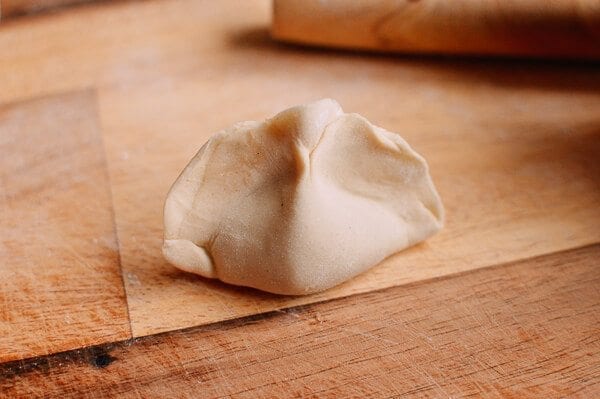
Step 7: Put about 1 tbsp chilled filling in the centre of each wrapper. Fold in half and press the edges tightly together into a sealed half-moon, gently easing the filling downward as you close it. Set the dumplings on a parchment-lined tray. Make two or three first for a cooked taste test.
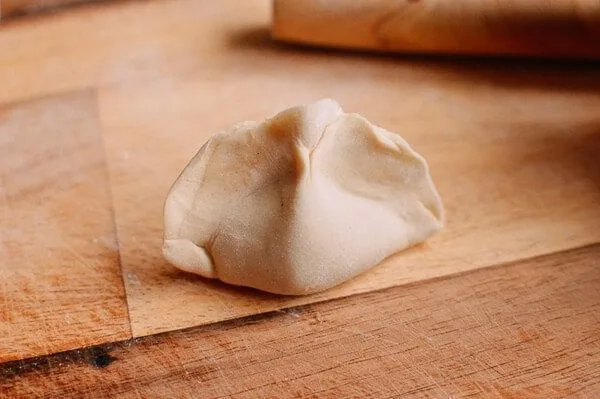
Step 8: Before wrapping the rest, cook two or three sample dumplings using the complete boiling sequence in steps 11–14. Cook the filling fully before tasting: the pork-and-fish centre must reach 71°C/160°F and contain no raw pork or translucent fish. Taste the cooked sample, then continue with the measured filling formula. Keep the remaining raw filling refrigerated meanwhile.
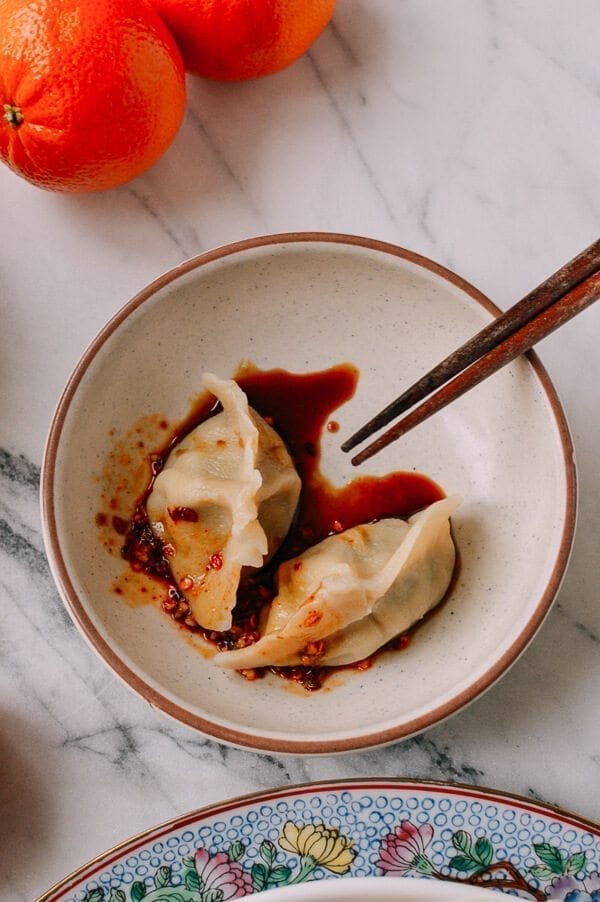
Step 9: Combine the two minced garlic cloves, 1 tbsp dipping soy sauce, 1 tsp dipping water and ½ tsp ready chili oil in a small bowl. Set the dipping sauce aside.
Step 10: Continue rolling and filling the remaining dough with about 1 tbsp filling per wrapper. Work in small batches and cook soon after wrapping, because the wet filling can soften wrappers left standing. For advance storage, freeze uncooked dumplings in a single layer until solid, overnight if needed, then bag them. Cook them directly from frozen with the same boiling sequence; do not thaw first.
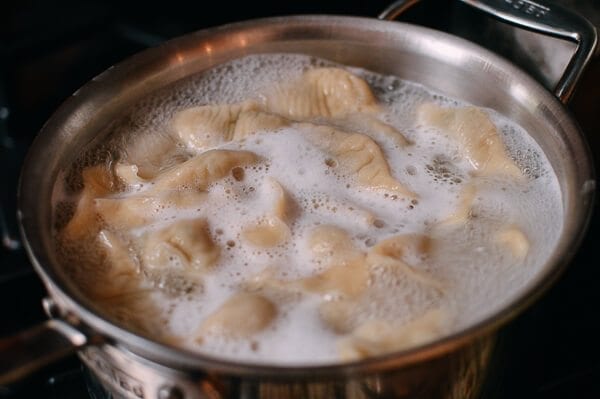
Step 11: Half-fill a large soup pot with water, leaving room for the dumplings and three separate cups of cooling water. Bring to a full boil. Add a small batch of dumplings, gently stirring as they enter so they do not stick. Keep the pot uncovered. Use this same sequence for the two or three sample dumplings before completing the batch.
Step 12: Let the pot return to a boil, then add the first 1 cup cold water to interrupt boiling. Continue heating uncovered until it boils again.
Step 13: After that reboil, add the second 1 cup cold water. Keep heating uncovered until the pot boils again.
Step 14: After the next reboil, add the third 1 cup cold water. Bring to a full boil again and check that the dumplings float, their wrappers are cooked through, and the filling reaches 71°C/160°F with no raw pork or translucent fish. Continue boiling as needed, especially for frozen dumplings; floating alone is not the doneness test.
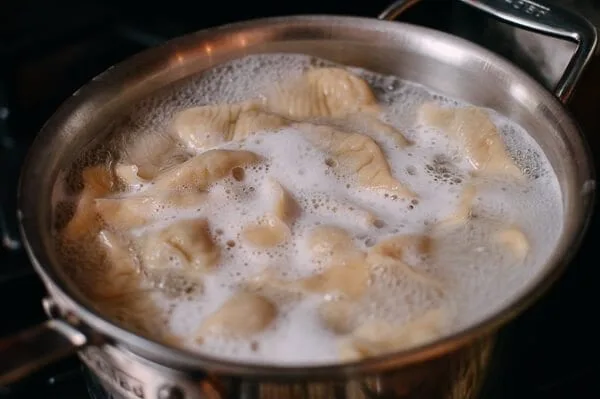
Step 15: Lift the fully cooked dumplings out with a strainer or slotted spoon and serve immediately with the prepared dip. Repeat the full uncovered boiling sequence for further batches, using three fresh 1-cup cooling-water additions for each batch.

Photos (1)
Comments
0 threadsSign in to join the discussion.
No comments yet. Start the discussion.