
Italian · Dinner
Homemade Ravioli with Baked Fish and Seafood Sauce
From the zcook collection
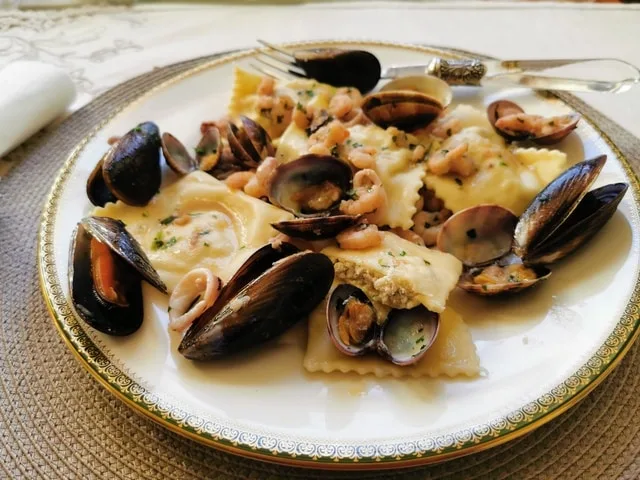
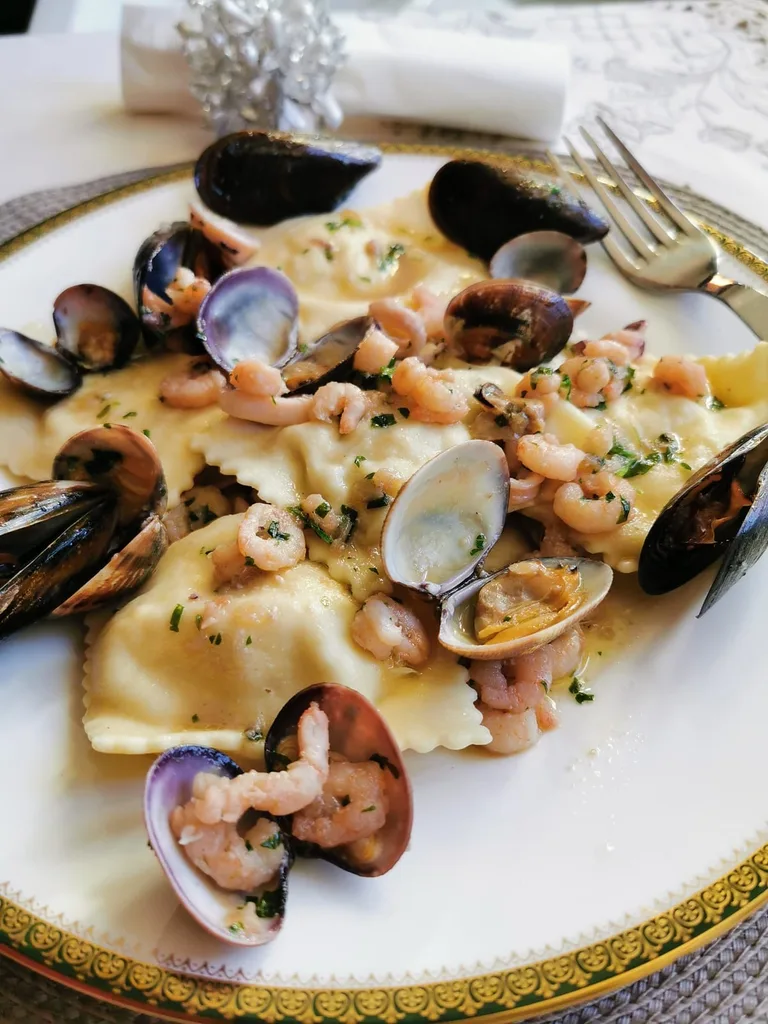
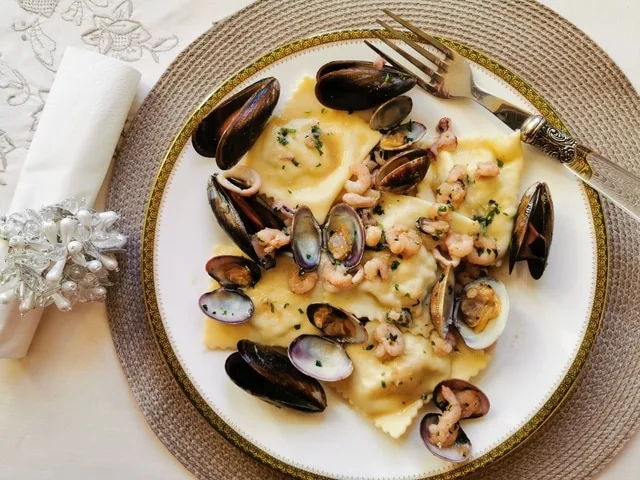
Ligurian homemade egg ravioli filled with roasted boneless fish, herbs and Parmigiano, served with squid, prawns, clams and mussels. The fish is baked at 200°C; the formed ravioli are boiled. Includes separate 20–30-minute dough rest and about 1-hour formed-ravioli wait.
- Italian
- Liguria
- Mediterranean
- Northern Italy
- Homemade Pasta
- Main Course
- Prep
- 1 hr
- Cook
- 1 hr
- Serves
- 4
- Level
- Hard
Method9 steps
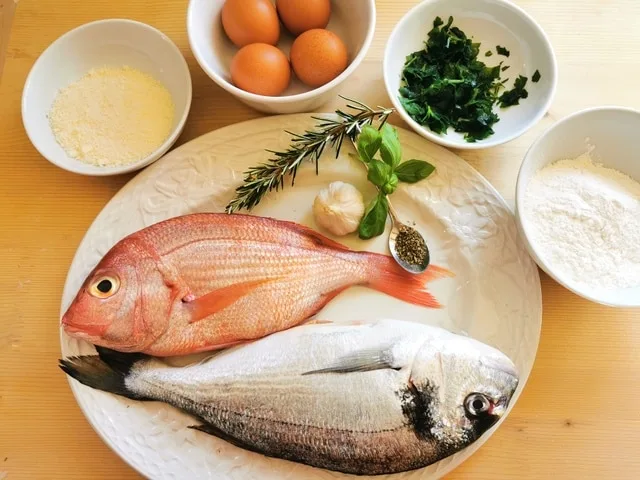
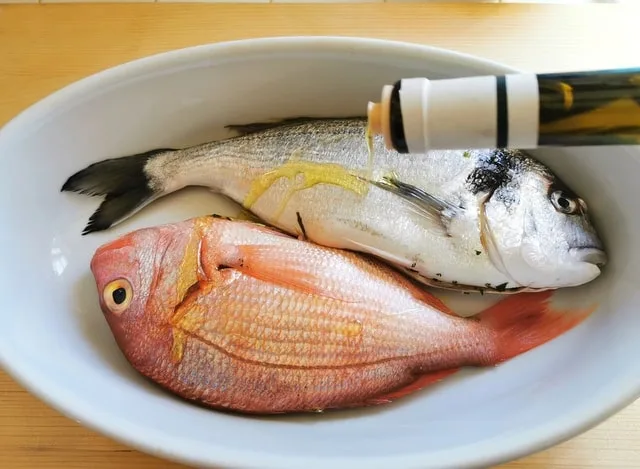
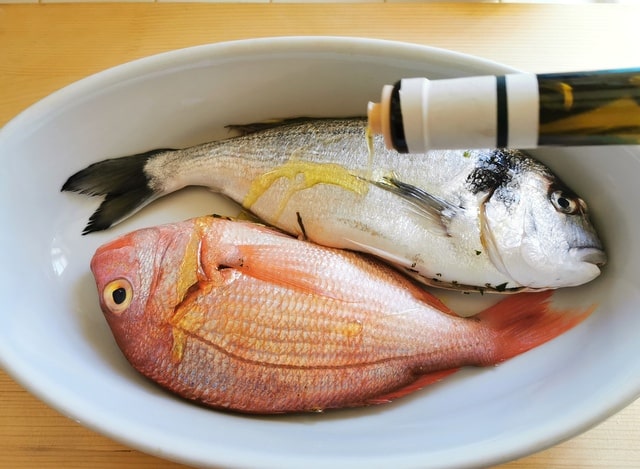
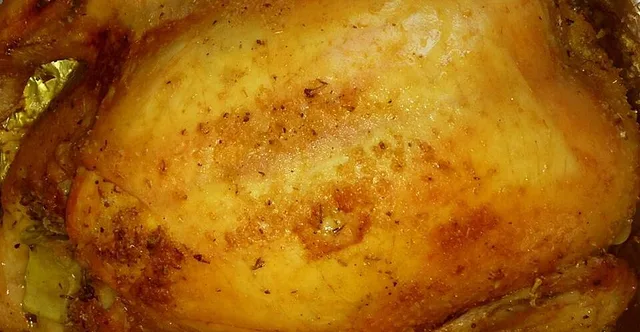
Step 1: Preheat the oven to 200°C (400°F). Have the whole fish (1 kg) gutted, or remove the intestines, then clean and rinse it. Peel and chop the filling garlic (1–2), holding half for step 2, and wash/chop the rosemary (1 teaspoon). Put the fish in a roasting pan with the quarter-cup oil (¼ cup) and place half the prepared garlic and all the rosemary inside the fish. Roast about 15–20 minutes depending on fish size, until cooked through; larger fish may need longer.
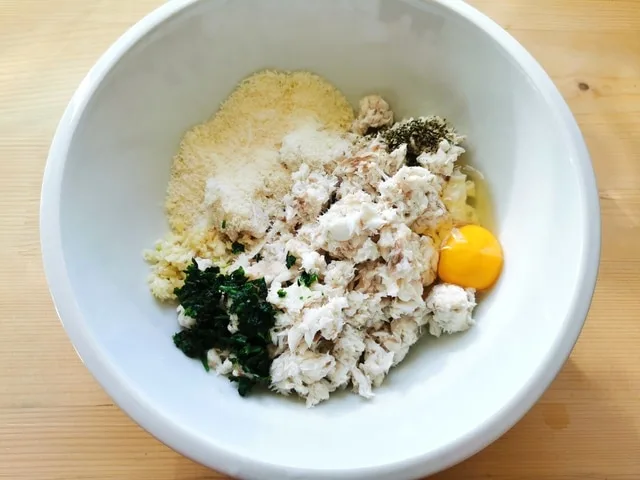
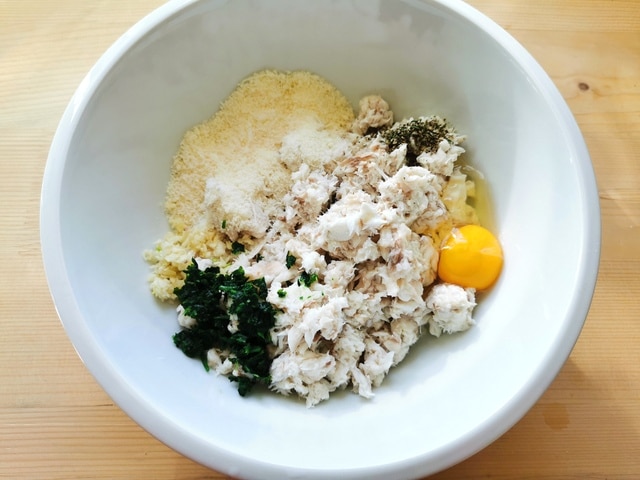
Step 2: Cool the cooked fish enough to handle and remove the flesh, carefully discarding every bone and the skin. Wash/chop the filling parsley (1 tablespoon) and fresh marjoram (1 teaspoon) if using it, and grate the Parmigiano (2–3 tablespoons). Mix the boneless fish with the held filling garlic, parsley, marjoram and grated cheese. Mix in one filling egg; add the second only if needed for a firm but not dry filling. Keep the filling chilled while preparing pasta.
Step 3: For this selected larger source batch, make a mound of all 300 g flour and create a well. Add the three DOUGH eggs and pinch of dough salt. Beat the eggs with a fork, then gradually bring in flour until no liquid egg remains. A stand mixer may instead begin this same batch.
Step 4: Knead until the dough is homogeneous and only slightly sticky. If it is dry, work in a little water and knead again. Form a ball, cover with a tea towel or wrap and rest for 20–30 minutes.
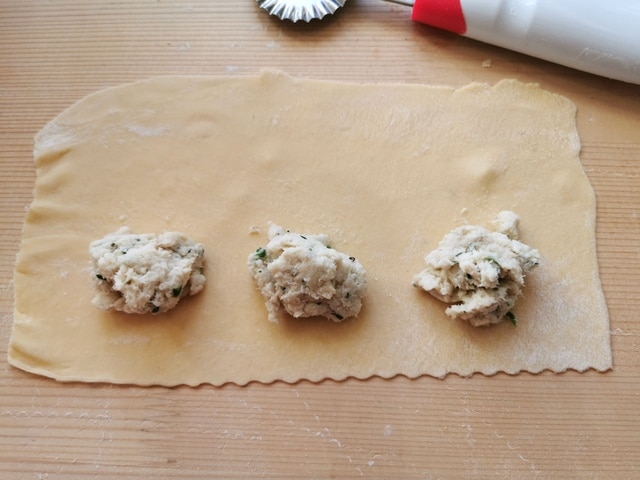
Step 5: Roll the rested dough into thin sheets a couple of millimetres thick with a rolling pin or pasta machine. For the author folded-sheet route, place scant tablespoons of the fish filling at even intervals on one half of each sheet, leaving sealing space, then fold the other half over the filling.
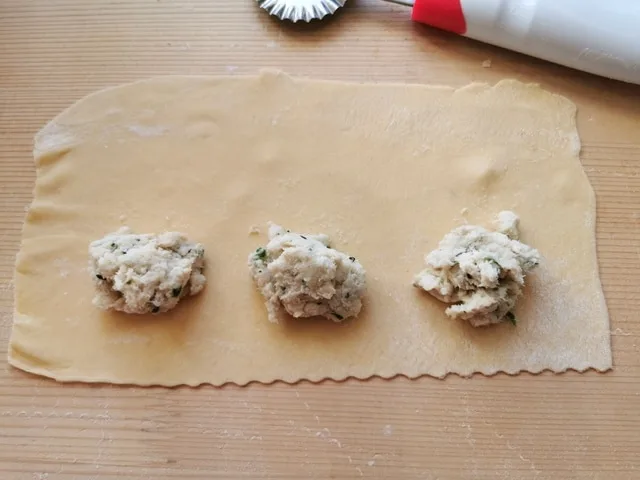
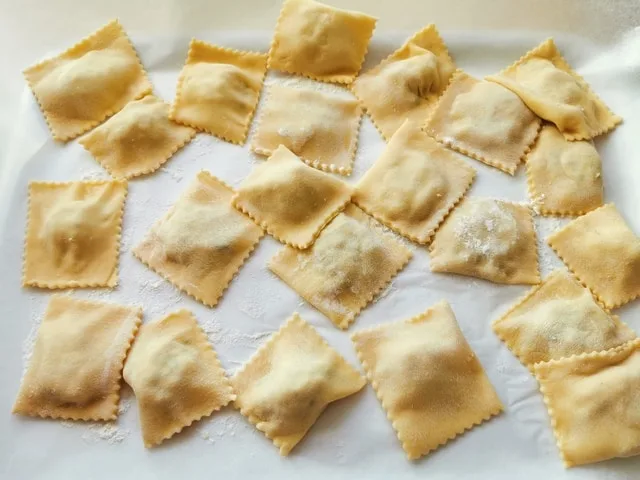
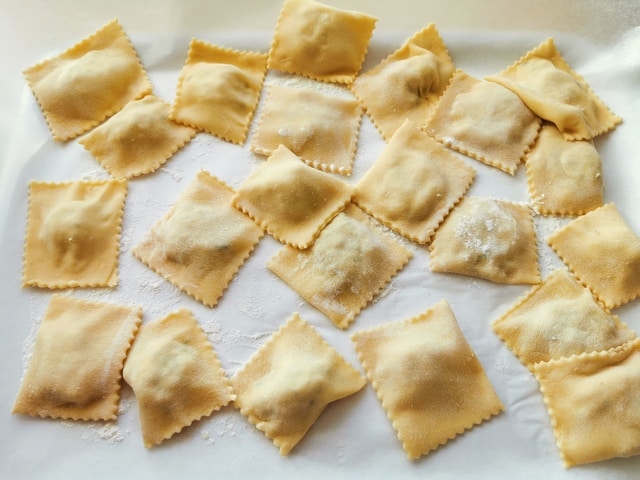
Step 6: Press around each mound to expel air and seal the pasta, then cut individual ravioli squares with a pasta wheel. Repeat over the complete dough batch. Arrange the formed ravioli in one layer and let them sit for the source about 1 hour, keeping the fish-and-egg-filled pasta chilled. Make the seafood sauce during this waiting period.
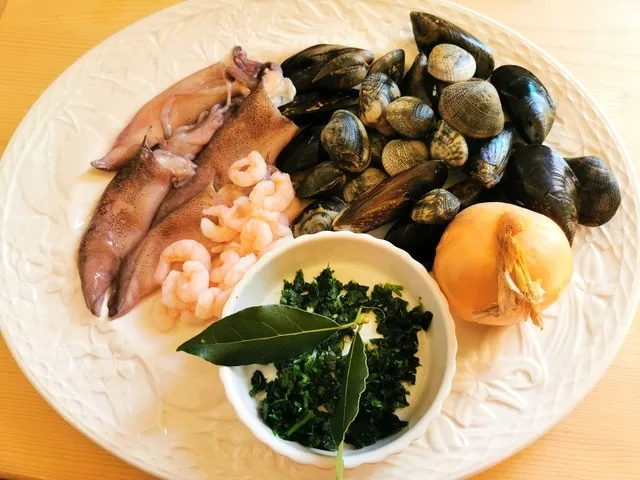
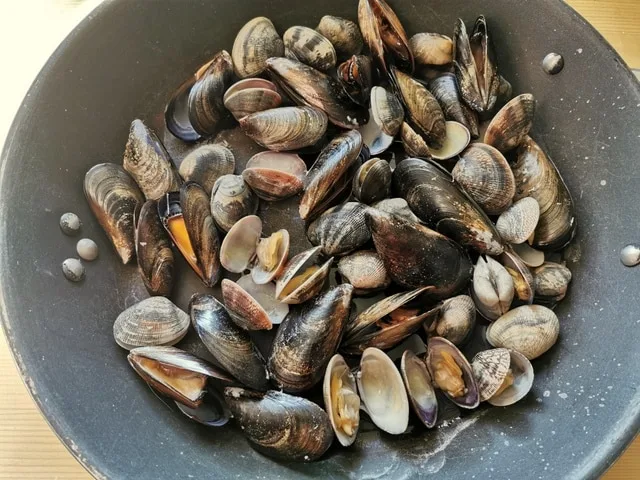
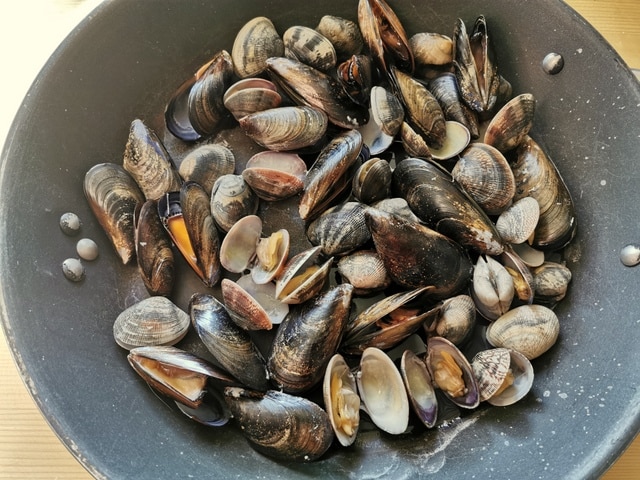
Step 7: Wash the clams (500 g) and mussels (500 g) well, scrub the mussels and remove their beards. Discard damaged shells or shells that remain open when tapped before cooking. Put the shellfish in a large pan over low heat until they open. Lift out the cooked shellfish and discard any that remain closed. Retain and filter their released liquid through fine mesh or cloth to remove grit; hold the cooked shellfish separately from the strained liquid.
Step 8: Peel and finely chop the onion and the two sauce garlic cloves; wash and chop the sauce parsley. Shell/devein the prawns if needed and clean the squid, cutting the body into rings or strips; the author does not use the tentacles here. If frozen seafood is used, thaw it before these actions. Sauté the squid, onion and sauce garlic in the 2–3 tablespoons sauce oil for 5 minutes. Add the prepared prawns and sauté a couple more minutes until cooked and opaque. Add the wine and let it evaporate, then add the cooked clams/mussels, chopped sauce parsley and a little strained shellfish liquid. Cook a little longer until the liquid reduces and the sauce is hot.
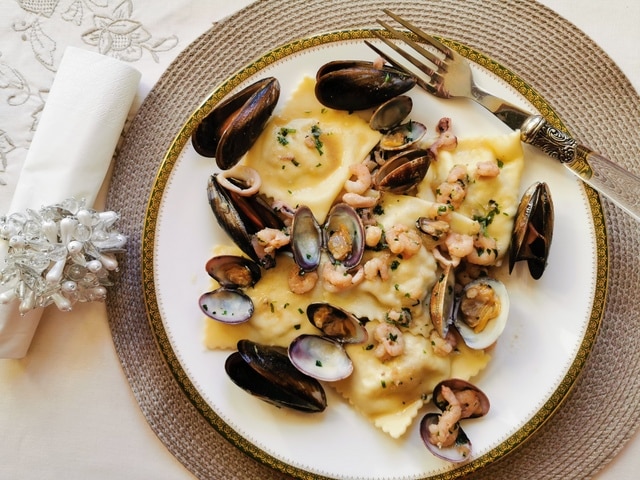
Step 9: Bring a pot of water to the boil and add ravioli-water salt. Cook the formed fresh fish ravioli until the pasta and filling are cooked through, about 5 minutes depending on size. This five-minute guide is for the fresh ravioli; a source frozen-ravioli variation cooks directly from frozen and may take longer. Lift the cooked ravioli with a slotted spoon, plate them in four portions and dress with all the hot seafood sauce. Serve immediately.
Photos (4)
Comments
0 threadsSign in to join the discussion.


No comments yet. Start the discussion.