

Neapolitan · Dinner
Lasagna di Carnevale (Neapolitan Lasagna)
From the zcook collection
Neapolitan lasagna with homemade egg pasta, ricotta, tiny meatballs, hard-boiled eggs and mozzarella. Prepare the meat ragù ahead, saving its tomato sauce and a cooked brisket portion for the lasagna.
- Italian
- Main
- pasta
- Lasagna with ricotta
- Neapolitan lasagna
- southern Italian lasagna
- Prep
- 2 hr 25 min
- Serves
- 8 servings
- Level
- Hard
Method24 steps
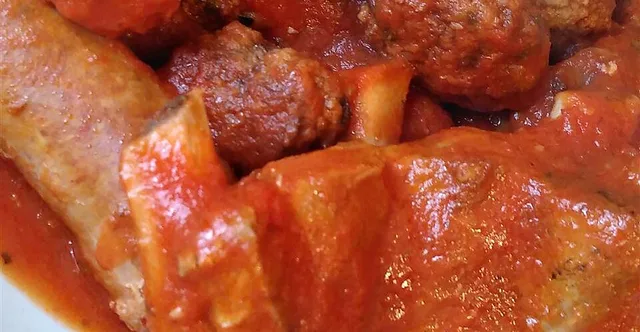
Step 1: Preferably the day before, prepare the ragù: cut the 560 g brisket into large chunks, halve the sausages and finely chop the onion (1). Brown the brisket, ribs and sausages in 1–2 tbsp olive oil in a large deep pot. Add the onion at the bottom and cook for about 5 minutes until soft. Stir in the 1680 g passata, basil (1 small handful) and pinch of ragù salt. Cover and simmer gently for 3½ hours, stirring occasionally. Remove the meat, reserving all the tomato sauce and at least 250 g cooked brisket for this lasagna. Save the ribs, sausages and any remaining brisket for another meal. Cool and refrigerate if preparing ahead.
Step 2: For the homemade pasta, make a well in the 300 g 00 flour. Add only the three pasta eggs and one pasta yolk; keep the meatball egg and hard-boiled eggs separate.
Step 3: Use a fork to whisk the pasta eggs, gradually bringing in the surrounding flour. Bring the resulting rough dough together with your hands.
Step 4: Knead the rough dough for 10 minutes until smooth and pliable. Wrap it and rest at room temperature for at least 30 minutes.
Step 5: If preparing the dough the day before, refrigerate it wrapped and let it return to room temperature before rolling. Otherwise keep today’s rested dough covered while making the fillings.
Step 6: Tear the 50 g crustless bread into pieces and soak it in the separate 80 ml milk until soft.
Step 7: Take 250 g cooked brisket from the prepared ragù, keeping the ragù sauce separate. Blitz this cooked meat in a food processor and put it in a mixing bowl. Any extra cooked brisket remains for another meal.
Step 8: Squeeze excess milk from the softened bread and crumble it into the chopped cooked beef. Add the finely chopped parsley (1 small handful), 30 g meatball Pecorino, one raw meatball egg and pinch of meatball salt. Mix thoroughly.
Step 9: Roll the mixture into about 60–70 tiny meatballs. Aim for around 15 meatballs per filling layer, or divide your actual count evenly across the four layers.
Step 10: Heat the sunflower oil to about a 1-inch depth in a large pan. Fry the tiny meatballs in batches until browned, then drain them on kitchen paper.
Step 11: Mix the 500 g ricotta with about 60 ml of the reserved cooked ragù tomato sauce. Keep the remaining sauce for the lasagna layers.
Step 12: Divide the rested pasta dough into four equal pieces. Work with one quarter first and keep the other three wrapped.
Step 13: Set up the pasta machine and dust the work surface and machine lightly with extra flour as needed.
Step 14: Flatten the first quarter and pass it through the widest setting. Fold one end to the middle and the other over it like a leaflet, flatten and pass through again. Repeat this folded pass once more.
Step 15: Pass this folded quarter once through each progressively narrower setting, without folding, until thin, about setting 7. Keep the rolled sheet covered until blanching.
Step 16: Bring a large pot of pasta-blanching water to a boil and salt it. Preheat a fan/convection oven to 180°C (350°F) and prepare a 9 × 13 inch dish.
Step 17: Peel and chop the three ready hard-boiled eggs. Pat the drained mozzarella (250 g) dry with kitchen paper and tear it into pieces. Keep both ready to distribute across four filling layers. You can blanch and assemble pasta in batches if short of space.
Step 18: Cut the first quarter’s rolled pasta sheet to fit the dish. Blanch all these first-quarter sheets in small batches for about 10–20 seconds each, then lift gently onto a clean kitchen towel to drain.
Step 19: Roll the remaining three quarters using the same folded passes and thinning settings, then cut and blanch each new batch for 10–20 seconds. Drain and combine these sheets with the blanched first-quarter sheets, or prepare and layer one quarter at a time.
Step 20: Spread a small spoonful of the reserved ragù tomato sauce across the dish base. Add one layer of the combined blanched pasta sheets, cutting away large overlaps; keep the other sheets for the following layers.
Step 21: Spread some more of the remaining ragù sauce over the first pasta layer, then add a few dollops of the prepared ricotta-sauce mixture and spread them across it.
Step 22: Add about 15 of the fried meatballs to this first filling layer, or roughly one quarter of your actual meatball count. Distribute some of the prepared chopped hard-boiled egg and torn mozzarella over it, then grate over some of the extra layer Pecorino.
Step 23: Continue with the remaining pasta, ragù sauce, ricotta mixture, fried meatballs, prepared hard-boiled eggs, mozzarella and extra grated cheese. Make five pasta layers with four filling layers, spreading the meatballs and the three cooked eggs evenly across the fillings. Finish the top pasta layer with sauce and grated Pecorino only, keeping all mozzarella in the filling layers.
Step 24: Bake the assembled lasagna uncovered at 180°C (350°F) for 40–45 minutes, until golden and hot throughout. Rest for 5–10 minutes before serving eight portions.
Photos (1)
Comments
0 threadsSign in to join the discussion.

No comments yet. Start the discussion.