
Cantonese · Dinner
Lobster Noodles (Lobster Yee Mein/E-Fu Noodles)
From the zcook collection
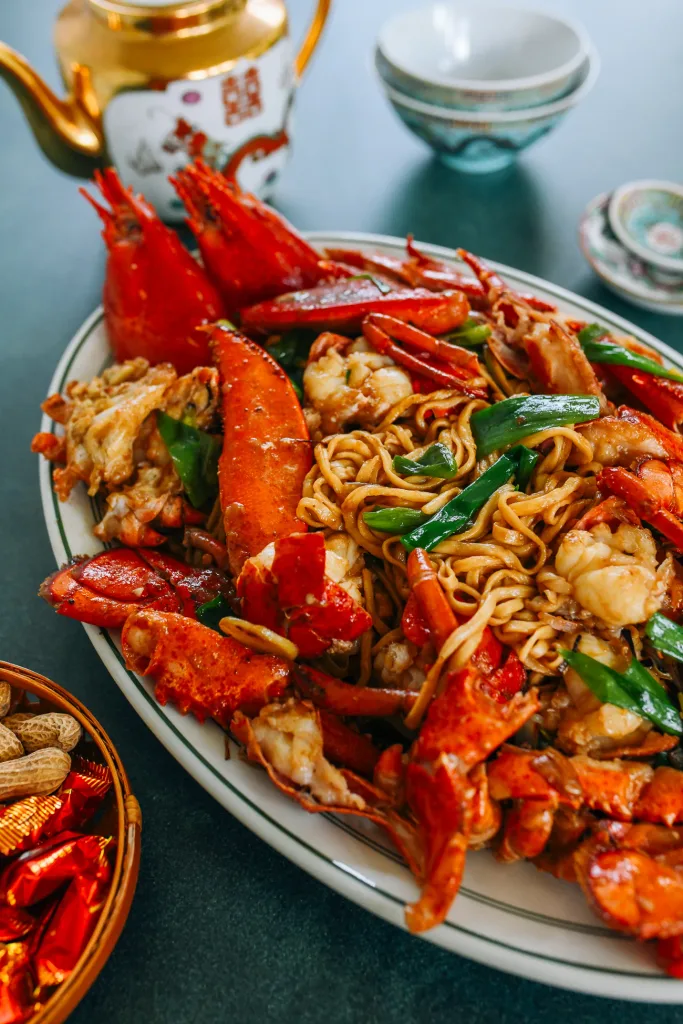
Cantonese shell-on lobster with ginger and scallions, served over long, chewy Yi Mein egg noodles. The lobster and noodle sauces are prepared separately. This batch serves six.
- Dairy-free
- Chinese
- Noodles
- e-fu noodles
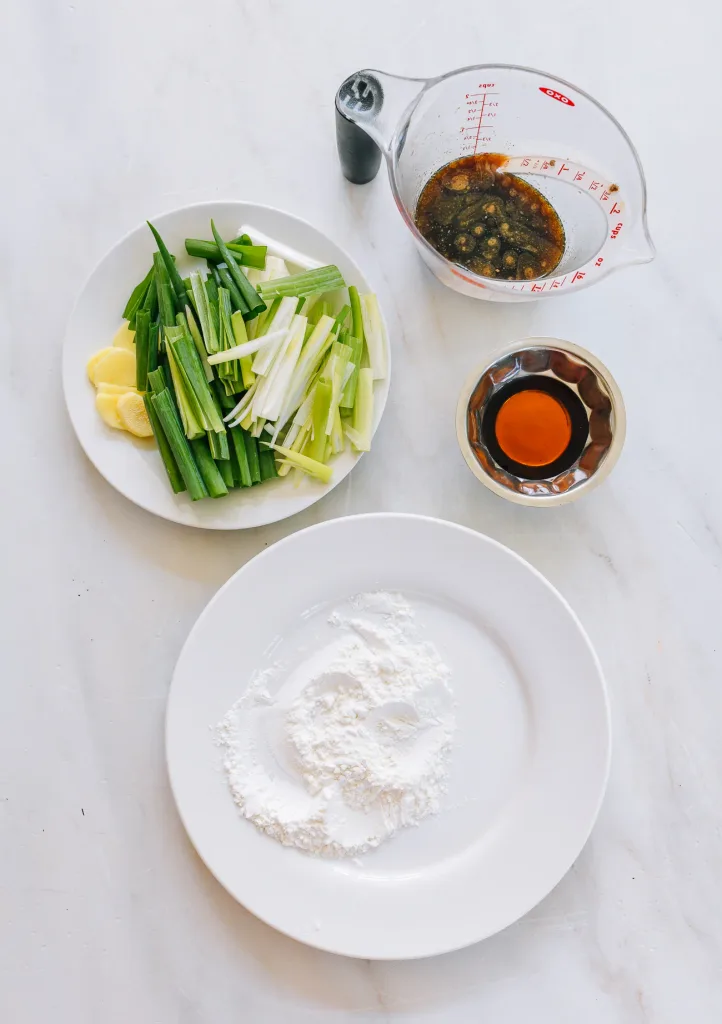
- lobster noodles
- lobster yee mein
- Total
- 1 hr 45 min
- Prep
- 1 hr
- Cook
- 45 min
- Serves
- 6 servings
- Level
- Hard
- Energy
- 399 kcal
Method24 steps · about 1 hr 45 min
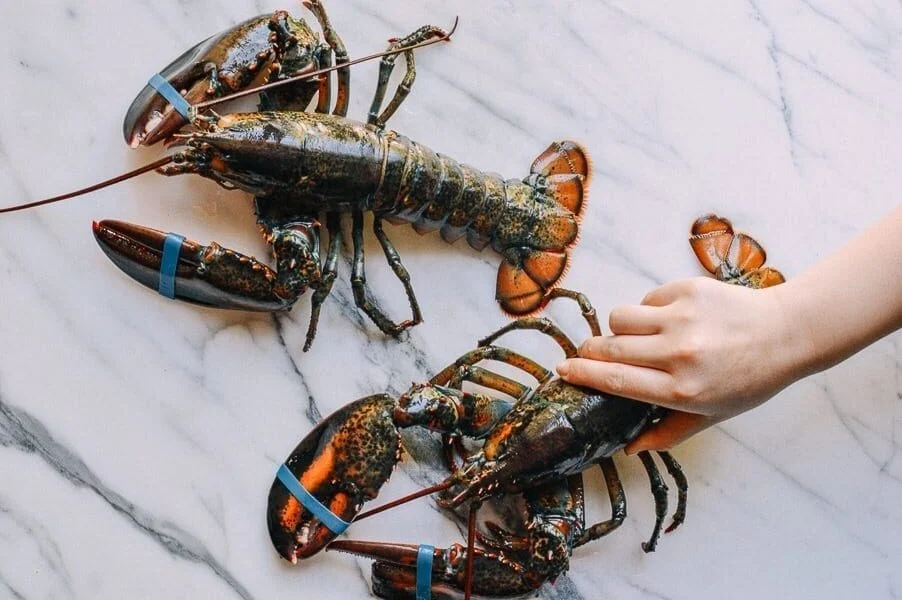
Step 1: Start with two freshly dispatched whole lobsters; ask a fishmonger to dispatch them for you. Keep them chilled until preparation. Set a grooved cutting board on a large towel to catch liquid, and have a sturdy cleaver or chef’s knife and kitchen shears ready.
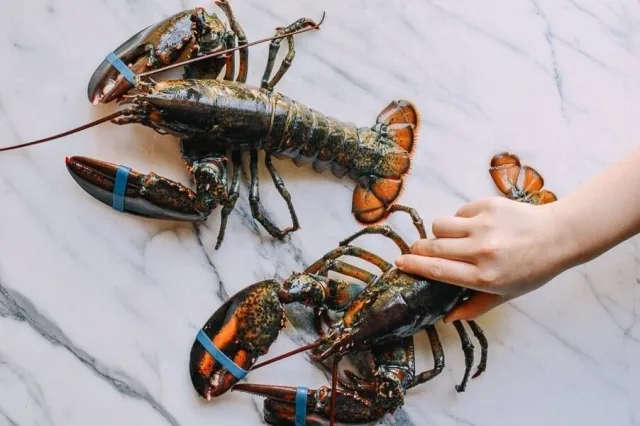
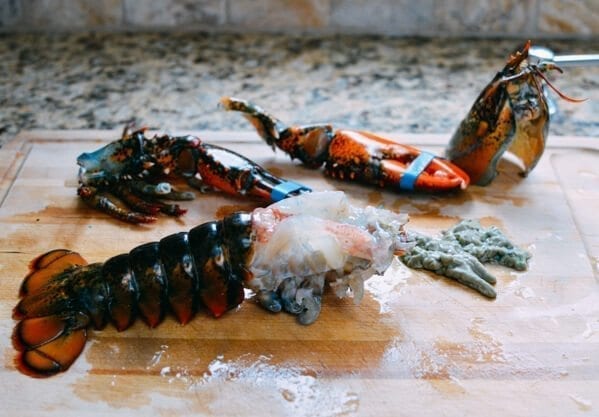
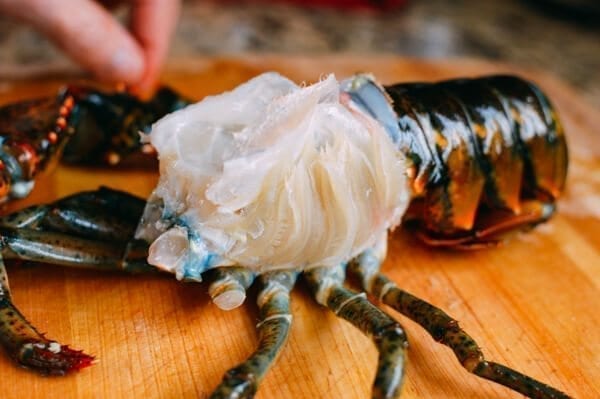
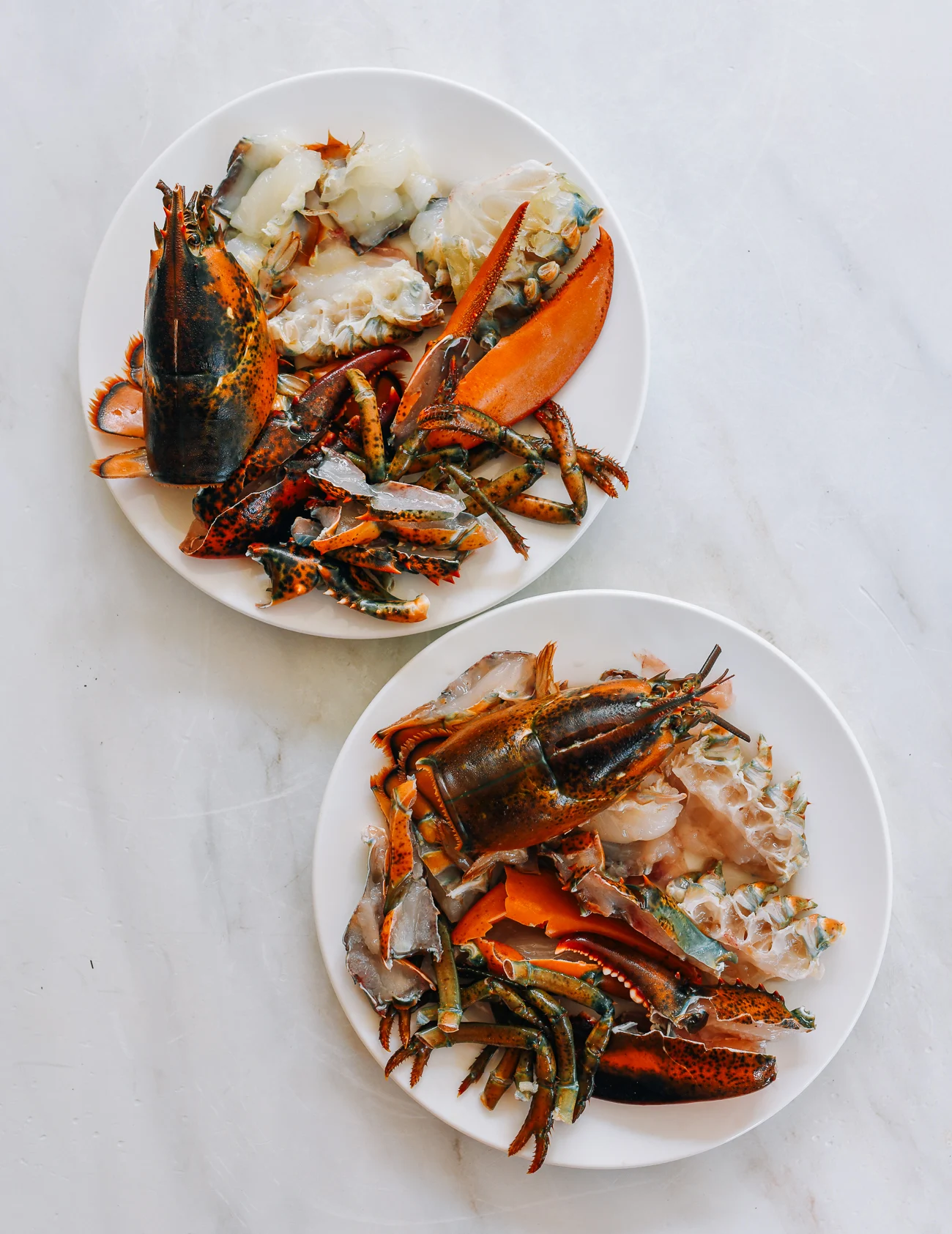
Step 2: Remove each head shell by lifting it where it meets the body and set it aside. Cut off the mouth portion, detach the claws and separate the smaller legs, or leave the legs attached to the head pieces.
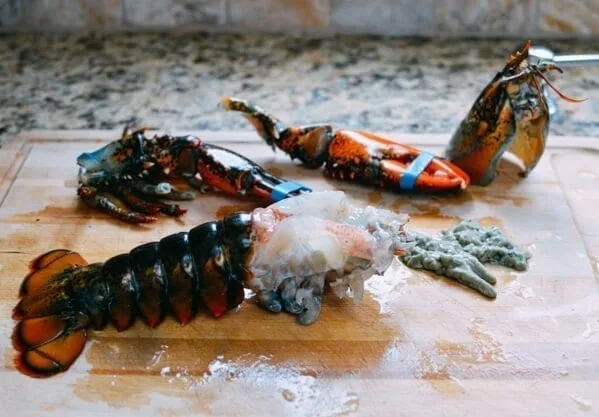
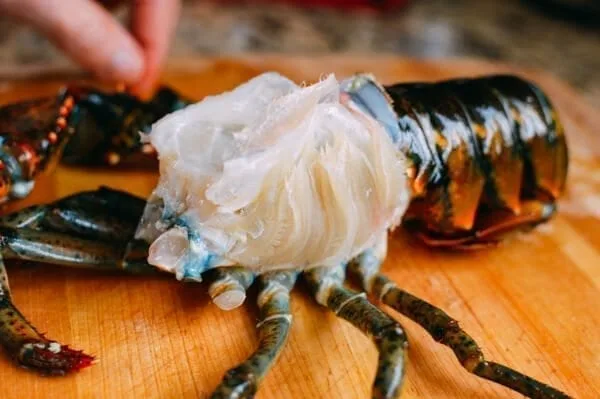
Step 3: If keeping the two head shells for presentation, trim their antennae and lower edges so they will sit neatly on the serving plate. Otherwise discard those shells.
Step 4: Remove and discard the gills, green mustard and innards from the lobster bodies. Rinse the cleaned pieces under cold running water.
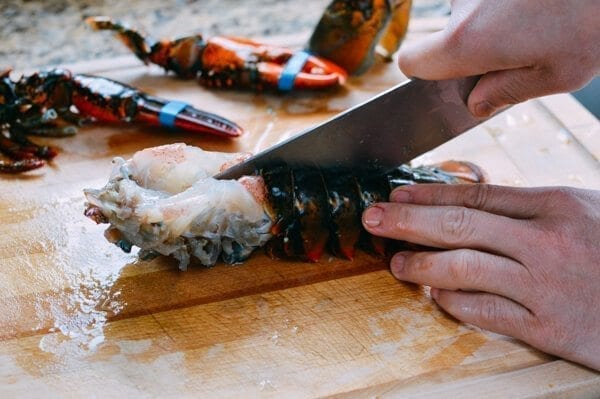
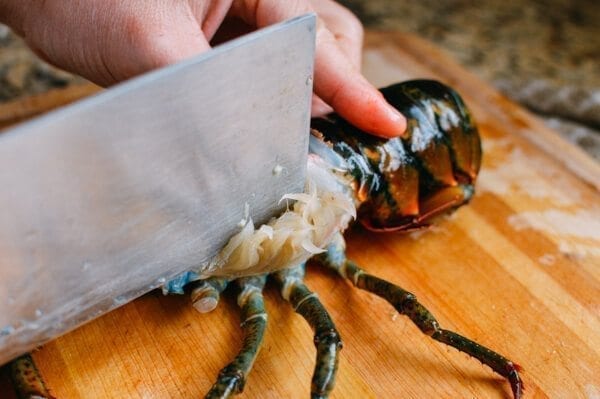
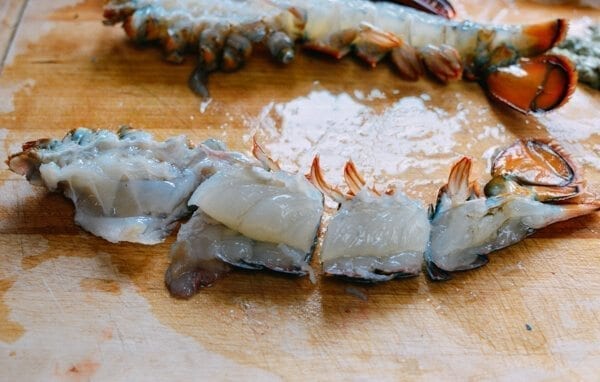
Step 5: Split each cleaned lobster body lengthwise and remove the dark intestinal vein along the tail. Separate the upper body from each tail half, then cut each tail half into three pieces, or four if the lobster is large.
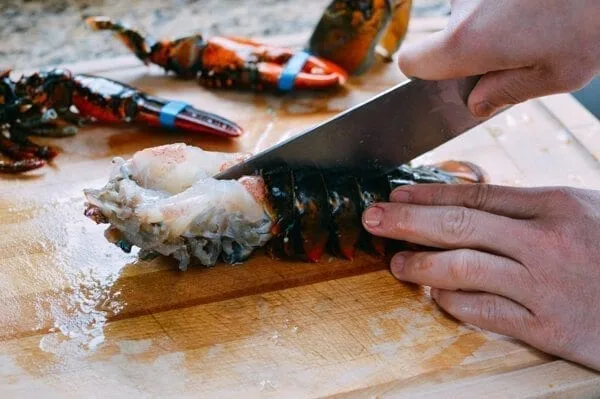
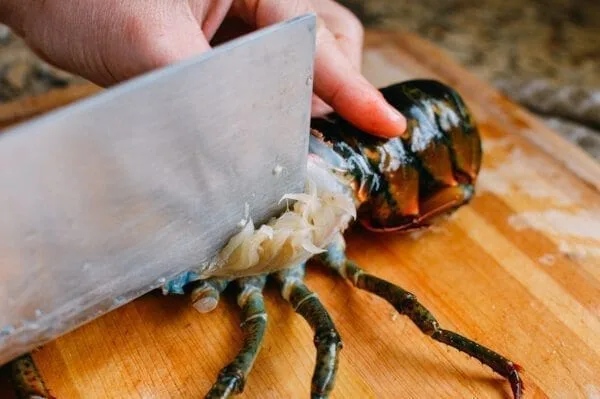
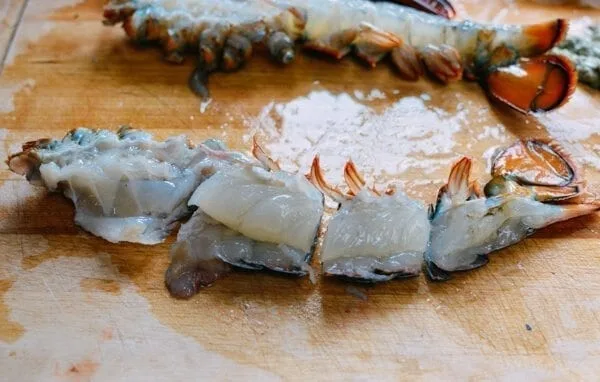
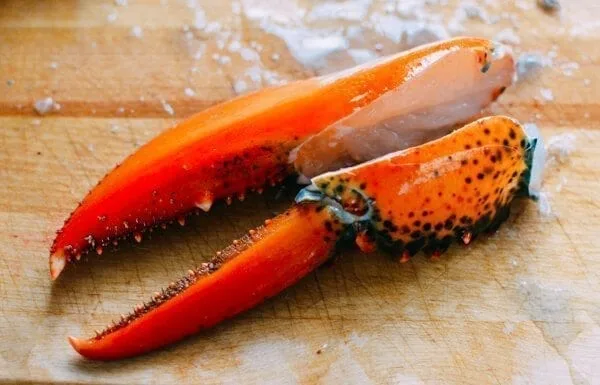
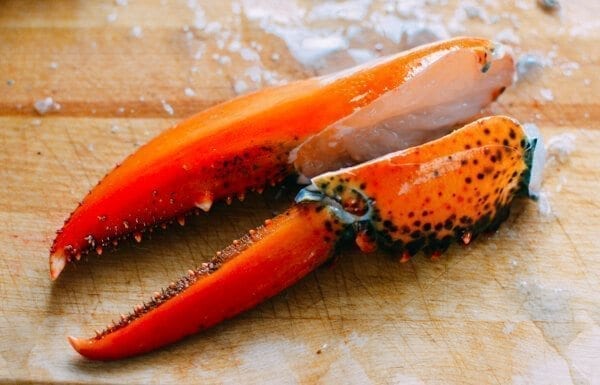
Step 6: Separate the elbow joints from the claws. Split the large claws with the cleaver, using a mallet if needed, and cut open the smaller elbow shells with kitchen shears. Combine them with the cut body, tail and any retained small legs, gently rinse the pieces and place them in a colander.
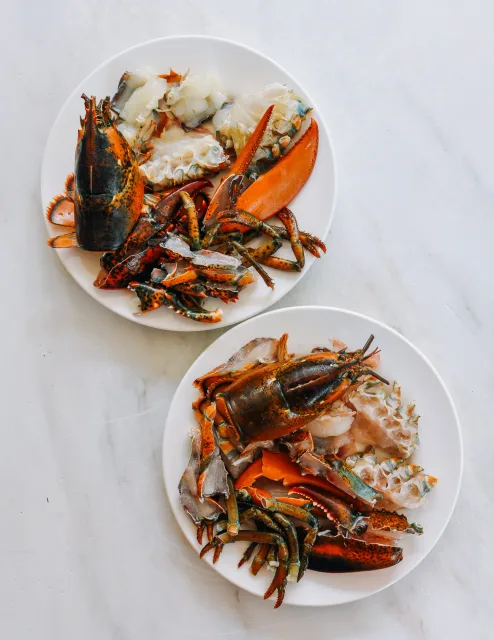
Step 7: Drain the cleaned lobster pieces well and pat them dry with paper towel. Keep the cleaned presentation head shells separate if using them.
Step 8: Mix the lobster sauce in a bowl: ¼ cup chicken stock, 2 tsp oyster sauce, 1½ tsp light soy sauce, ¼ tsp sugar, ¼ tsp sesame oil and ⅛ tsp white pepper. Keep it ready for the final lobster stir-fry.
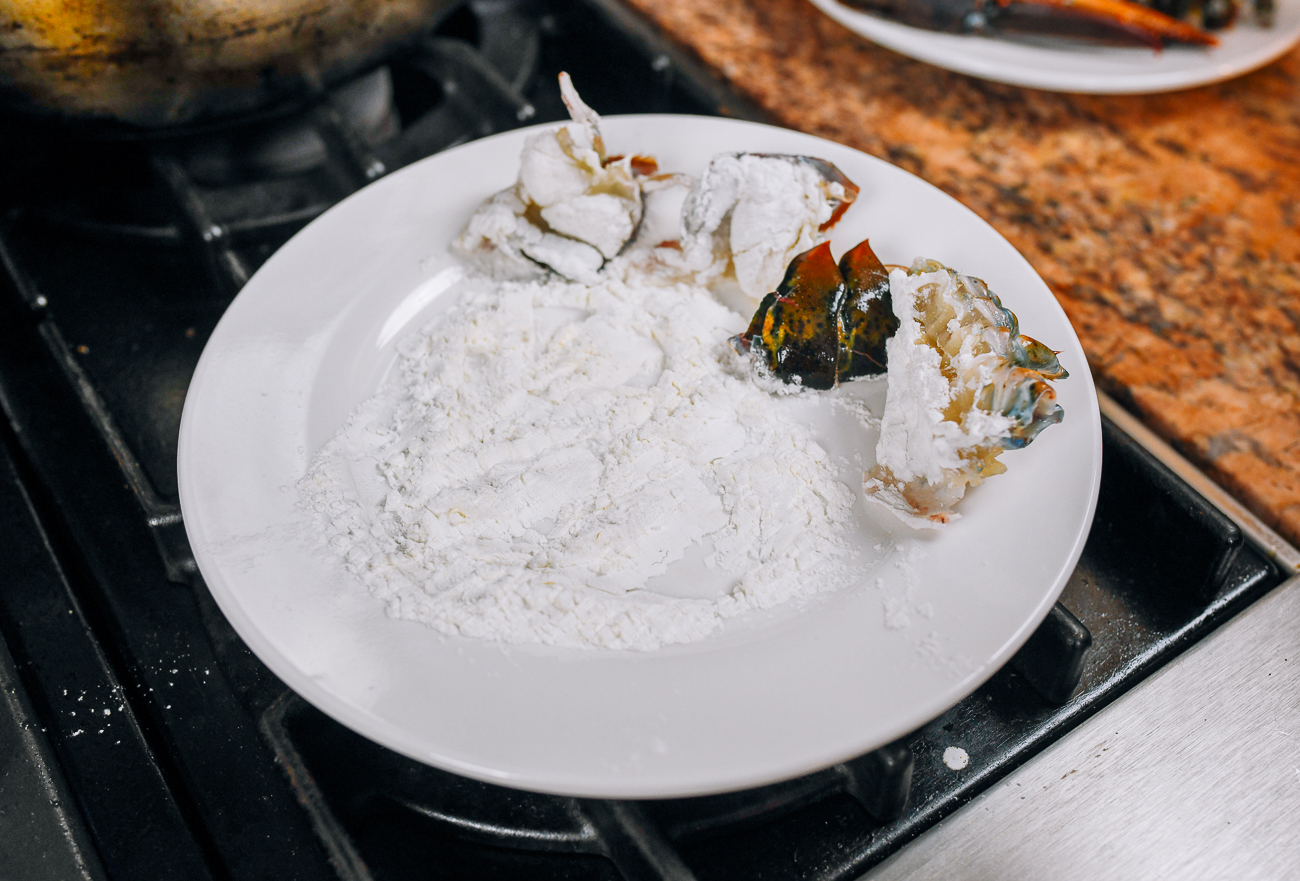
Step 9: Mix the 4 tbsp cornstarch and 1 tbsp flour in a shallow bowl. Lightly dredge the dried lobster pieces, concentrating on the exposed meat. Set the coated pieces on a tray and discard any unused dredging mixture after coating.
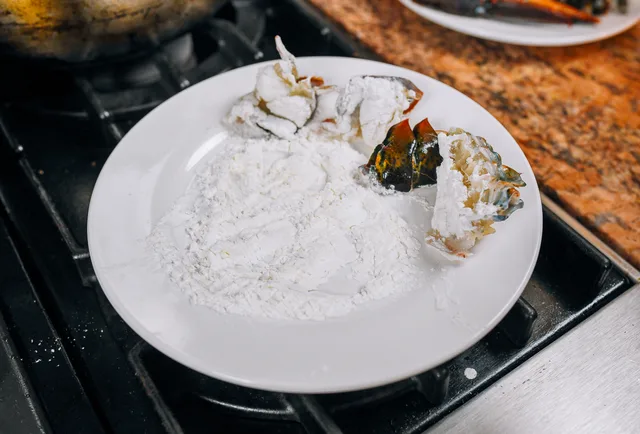
Step 10: Set a sheet pan beside the stove for the fried lobster and a fine-mesh strainer over a heatproof bowl for the recovered frying oil. Work in small batches and complete the frying, noodles and final lobster stir-fry in one cooking session.
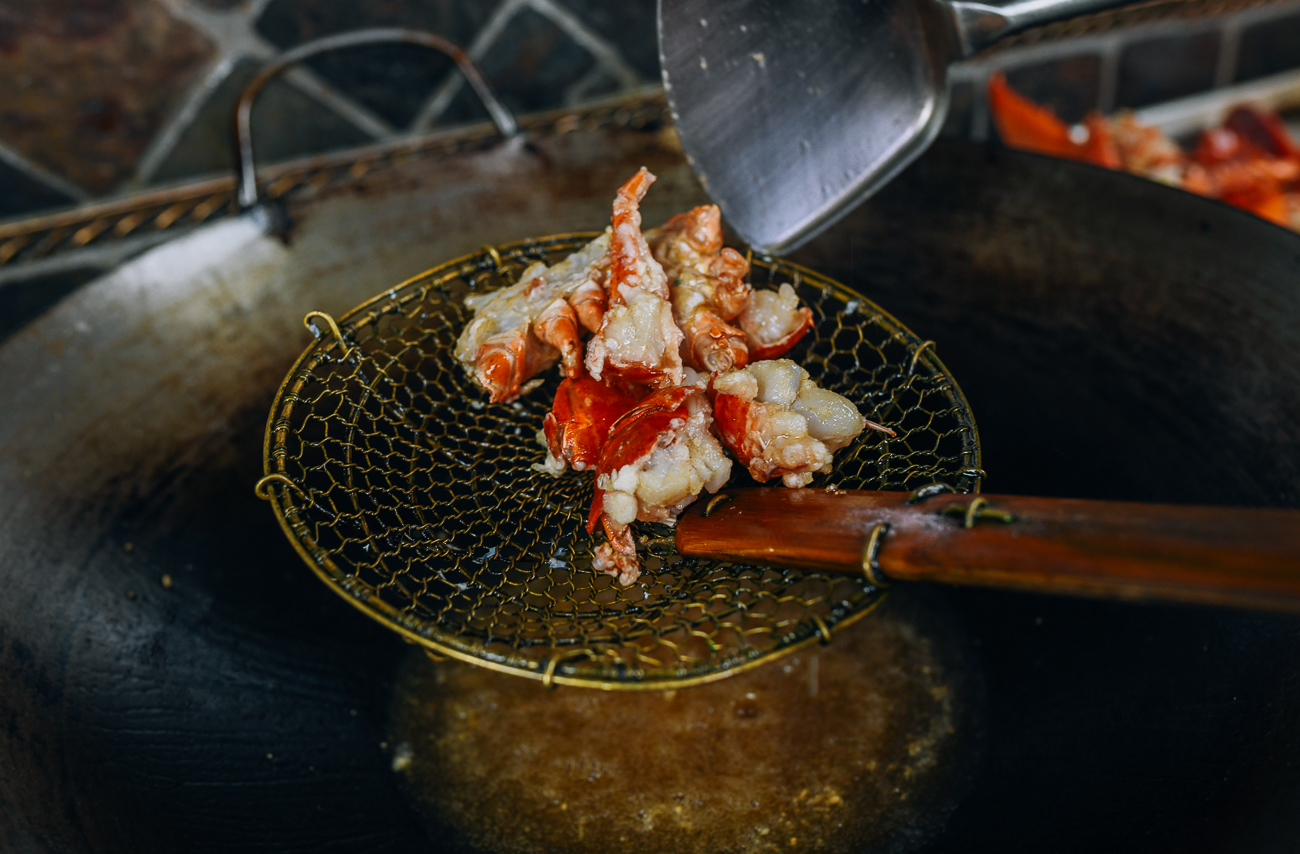
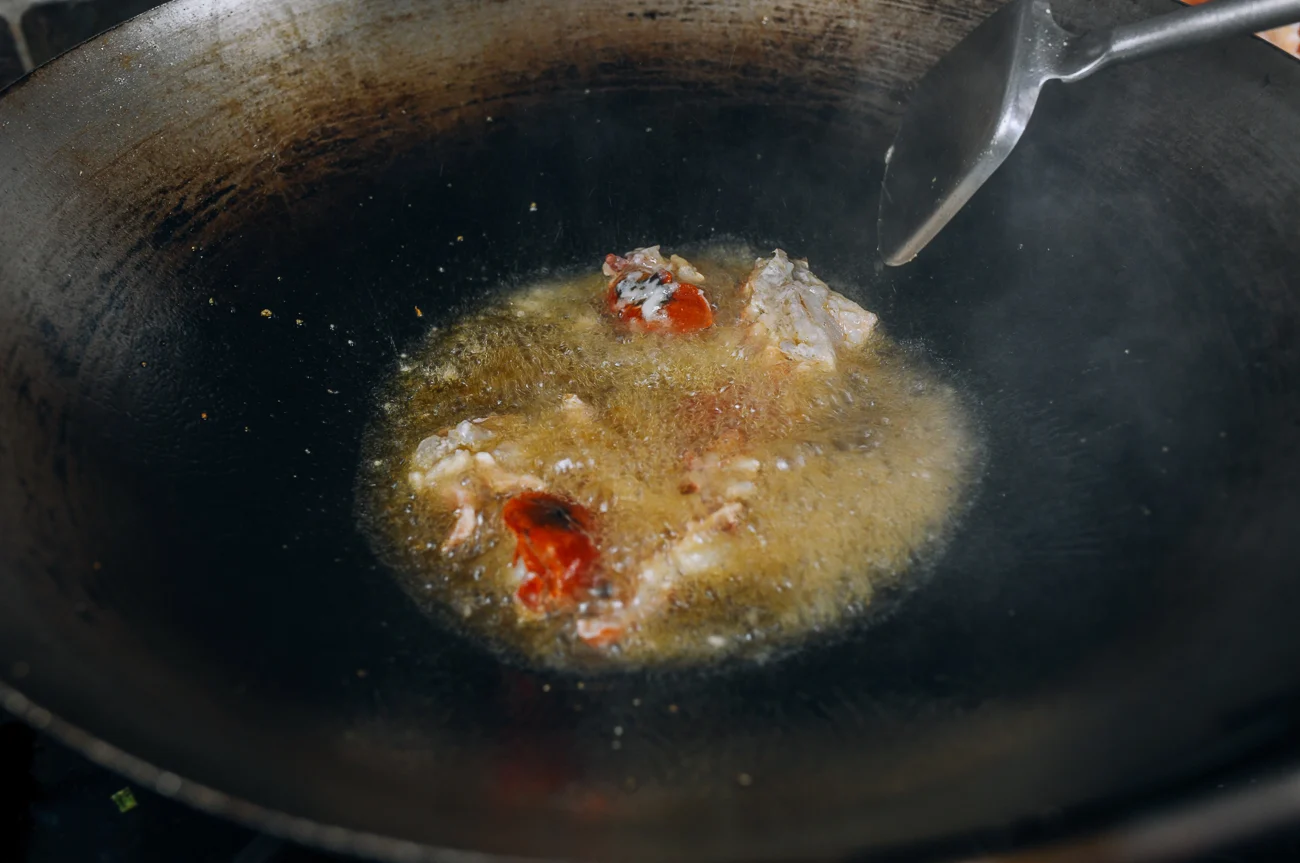
Step 11: Heat the 2 cups frying oil in a wok or medium pot to about 350°F (about 177°C). Fry a few coated lobster pieces at a time for about 10 seconds, moving them and spooning hot oil over the shells as needed, until the shells start turning red. Lift each batch to the sheet pan to drain; the meat will finish cooking in the final stir-fry. Repeat for all pieces. If keeping the two head shells for presentation, fry them thoroughly and keep them separately on the draining tray.
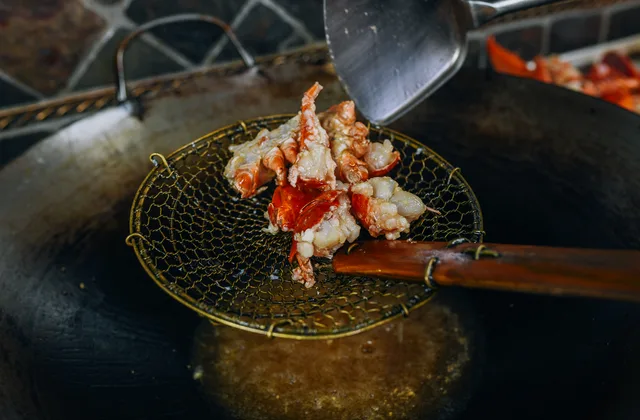
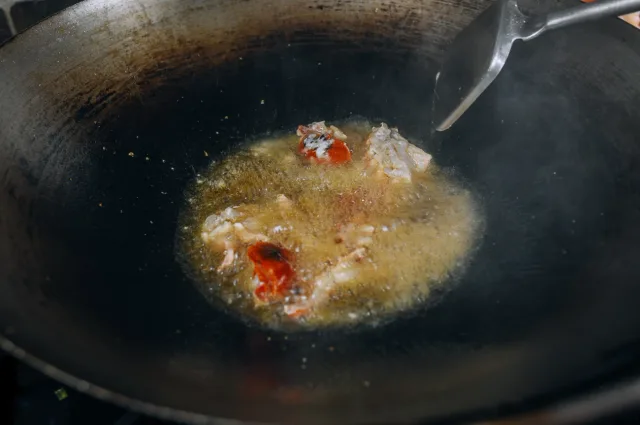
Step 12: Carefully pour the used lobster-frying oil through the fine-mesh strainer into the heatproof bowl. Keep the strained oil ready for the measured noodle and lobster stir-fry draws; leave the unused remainder aside.
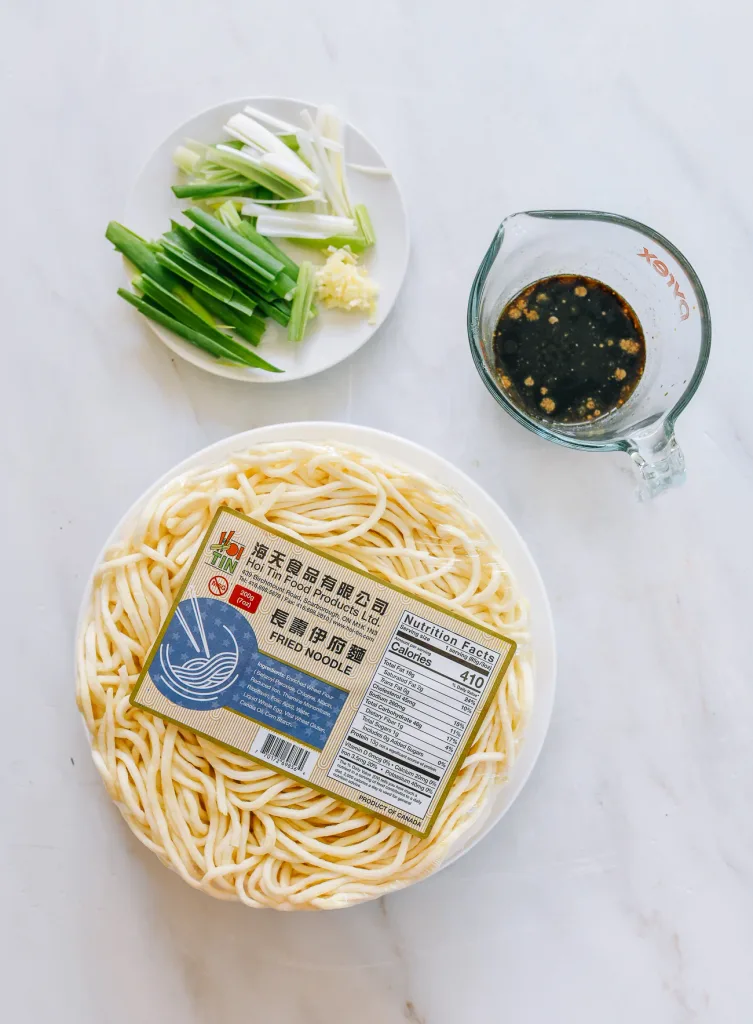
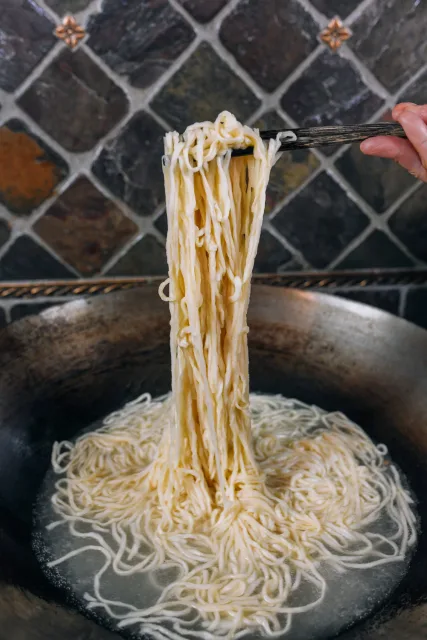
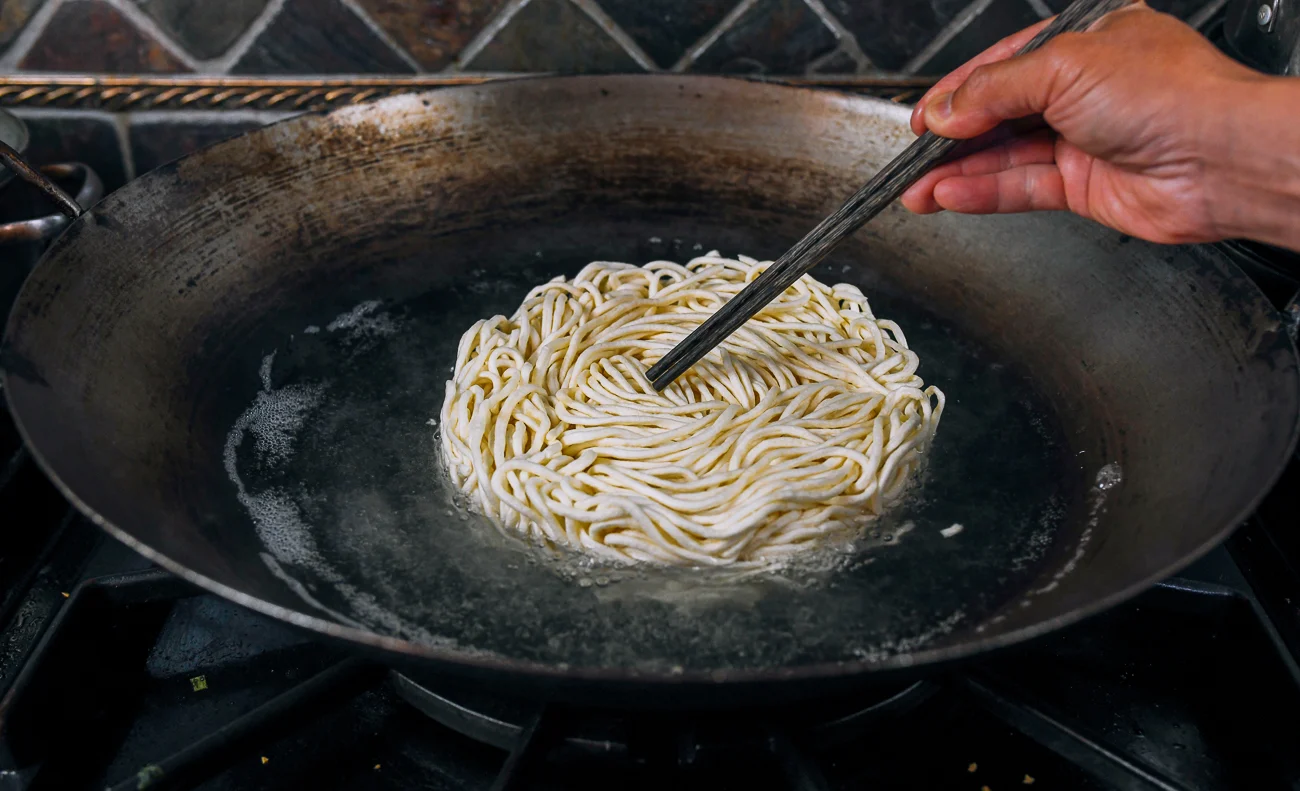
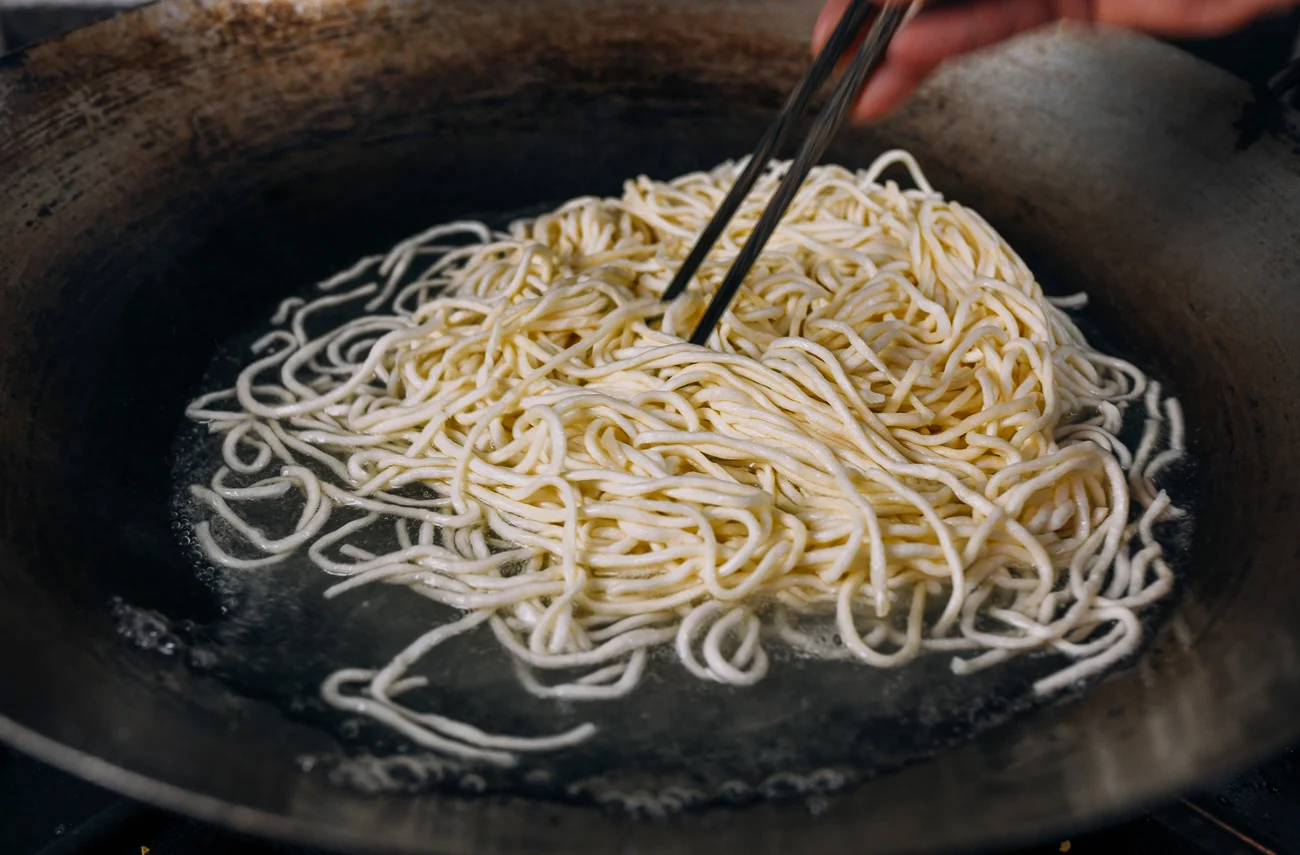
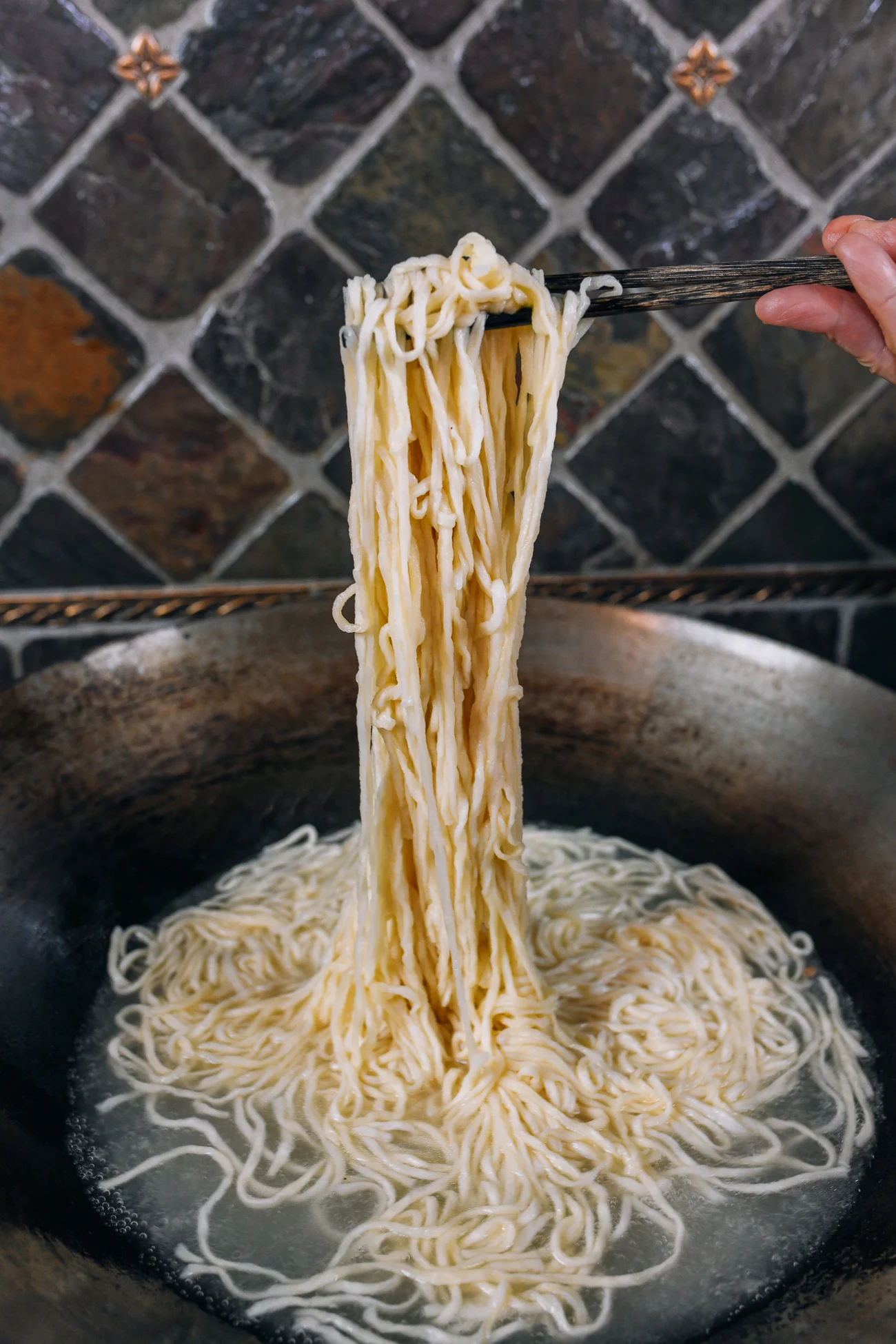
Step 13: Bring about 3 quarts water to a boil in a large wok or pot. Add the 12 oz dried Yi Mein noodles and pre-cook for 3–4 minutes, checking from 3 minutes so they remain firm and chewy rather than soft.
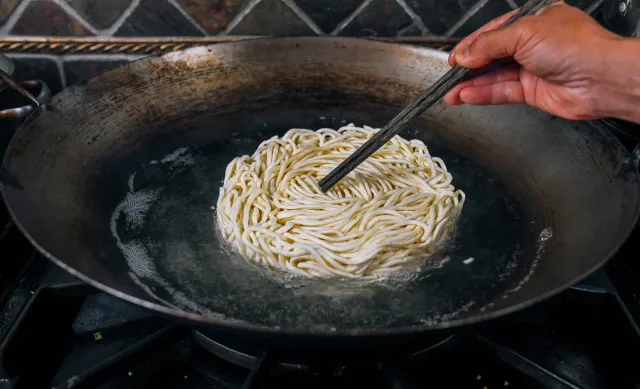
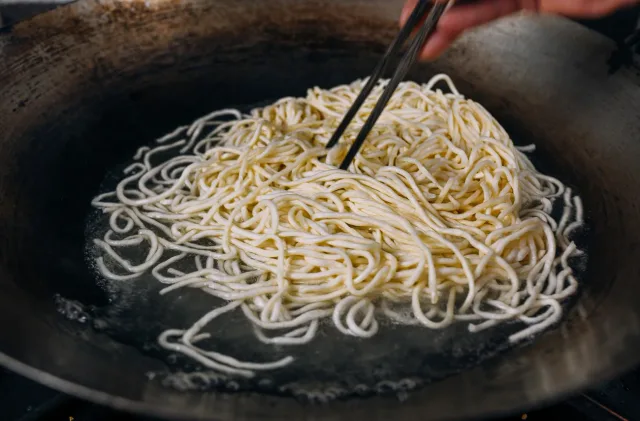
Step 14: Sample a noodle: it should be on the firmer side of al dente, not mushy. Drain the noodles in a colander and discard the cooking water.
Step 15: Mix the separate noodle sauce: ¼ cup chicken stock, 2 tbsp oyster sauce, 2 tsp light soy sauce, 2 tsp dark soy sauce, ½ tsp sesame oil, ¼ tsp salt and ⅛ tsp sugar.
Step 16: If the drained noodles have stuck together, rinse them briefly with hot water to loosen them. Toss in the colander to drain excess water; if already loose, simply keep them ready.
Step 17: Heat the wok until it just begins to smoke, then spread 2 tbsp of the recovered lobster oil around it. Add the white parts of the two noodle scallions and the chopped garlic (1 clove), stir briefly, and add the loosened drained noodles before the garlic burns.
Step 18: Spread the noodles around the wok and let them cook for about 1 minute. Lift and mix them gently with the wok spatula.
Step 19: Pour the complete noodle sauce evenly over the noodles and stir-fry for about 1 minute, until the sauce is evenly distributed and the noodles are hot through. If needed to prevent sticking, add another 1 tbsp recovered lobster oil. If still needed, drizzle a little more recovered oil over stuck strands or add a splash of hot water if they are too dry.
Step 20: Gently mix in the green parts of the two noodle scallions without breaking the strands. Transfer the noodles to a large serving plate and proceed immediately to finish the lobster.
Step 21: In a clean wok over high heat, add 2 tbsp recovered lobster oil and the six ginger slices. Fry for about 30 seconds until fragrant.
Step 22: Add the white parts of the three lobster scallions and all the drained, briefly fried lobster meat pieces. Stir-fry over high heat for 20 seconds.
Step 23: Pour the 2 tbsp Shaoxing wine around the edge of the hot wok and immediately cover. Let the lobster cook in the trapped steam for about 2 minutes.
Step 24: Uncover and add the mixed lobster sauce and the green parts of the three lobster scallions. Stir-fry for about 1 minute, continuing as needed until every lobster meat piece is pearly and opaque throughout. Scoop the glazed lobster pieces over the plated noodles, leaving excess wok oil or sauce behind as desired. If retained, place the thoroughly fried presentation head shells at one end of the plate. Serve promptly in six portions.
Photos (3)
Comments
0 threadsSign in to join the discussion.


No comments yet. Start the discussion.