
Chinese · Dinner
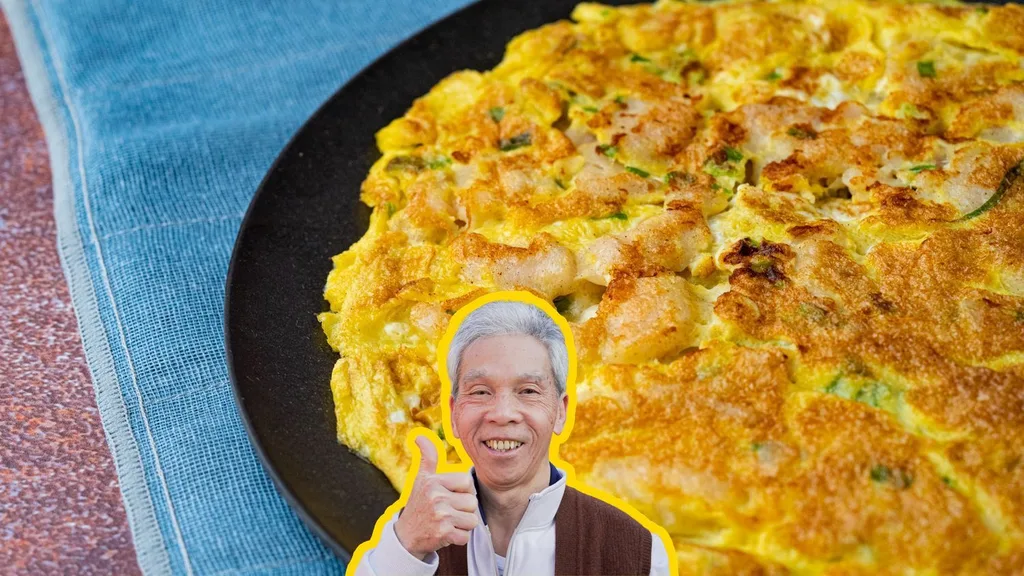
The Fish Omelettes My Dad's Made 100,000 Times
From the zcook collection
Learn how to make Fish Omelettes from a 2x James Beard Award Winning Chinese Chef with 60+ years of experience
- Gluten-free
- Dairy-free
- Chinese
- main course
- fish omelette
- egg dish
- side dish
- Total
- 30 min
- Prep
- 15 min
- Cook
- 15 min
- Serves
- 4
- Level
- Medium
Method8 steps · about 30 min
Step 1: We'll cut our fish fillets (7 oz) into 6-7 sections. Then, cut each section into 1-1.5 inch strips. Cutting with the grain will help the fish stay together when cooking, while cutting against the grain will result in more fragile pieces that may fall apart. Choose the direction according to whether you prefer intact strips or smaller tender pieces.
Step 2: Mix the prepared fish strips with the fish-seasoning 1/4 tsp white pepper, 1 tsp cornstarch and 1/4 tsp salt, distributing them evenly.
Step 3: Chop the 2 pieces green onion finely and reserve them. Beat the 5 eggs with the egg-seasoning 1/2 tsp salt and 1/4 tsp white pepper.
Step 4: We'll set our stove to high heat and pour boiling water into the pan. Add the fish to the pan. We'll let the fish cook for about 1.5 to 2 minutes, gently moving the fish around as we go. Using boiling water allows the cornstarch to trap the fish's juices inside, resulting in a more tender bite. Once the fish has turned into more of a white color, we'll drain the pan into a colander. Dry off the pan with a paper towel.
Step 5: Next, we'll be heating up our pan for about 2-3 minutes on high heat. Once hot enough, we'll add 1 tbsp cooking oil to the pan. Tilt and turn the pan to spread the oil around. A good sign that both our pan and oil are hot enough is if the oil starts shimmering, or forming ripples across the surface.
Step 6: Turn the stove down to medium heat. We'll start pouring SOME of the egg mixture into the pan. (Not all). The eggs should immediately sizzle after being poured into the pan. Let it rest and cook for about 15-30 seconds before adding the fish. Once the egg has partially cooked, we'll add our fish on top of the egg and distribute the fish around the pan. Combine the green onions with the rest of the egg mixture, beat the eggs a few times, and then pour the rest of the mixture into the pan. Like with most omelettes, notice that my dad is barely stirring or touching the eggs. Occasionally, we'll dig our spatula between the pan and egg to prevent the egg from sticking to the pan. Halfway through, we'll also want to add 1/2 tbsp cooking oil to the perimeter of the omelette to seep down between the pan and eggs, and so that the eggs continue to form a nice golden brown exterior. In total, after pouring the rest of the eggs into pan, let it cook on this side for about 3-4 minutes before flipping. A good visual cue is for the eggs to show nice golden brown.
Step 7: To flip the omelette, we'll carefully transfer the omelette onto a large plate. Add the remaining 1/2 tbsp cooking oil to the pan. Then, in a quick motion, we'll flip the omelette upside down back onto the pan. This is easier to do if you have fewer eggs and fillings. While it cooks, you can add a little optional extra oil around the perimeter to help the egg separate from the pan and brown. In total, after flipping, we'll be cooking the omelette on this side for about 3-5 minutes until the bottom is golden brown and the eggs are fully set throughout, with the omelette's centre reaching 71°C/160°F. Continue cooking gently if needed to reach this endpoint. We'll occasionally press the omelette into the pan with the bottom of our spatula to help any bumps and crevices make contact with the pan.
Step 8: To transfer the omelette onto a plate, we'll be using gravity. Cover the pan with a plate, and then flip the pan upside down onto the plate. The egg should fall nicely onto the plate, which we can then cut up and serve to our loved ones.
Photos (1)
Comments
0 threadsSign in to join the discussion.

No comments yet. Start the discussion.