

Neapolitan · Bread
Casatiello Napoletano (Traditional Neapolitan Easter Bread)
From the zcook collection
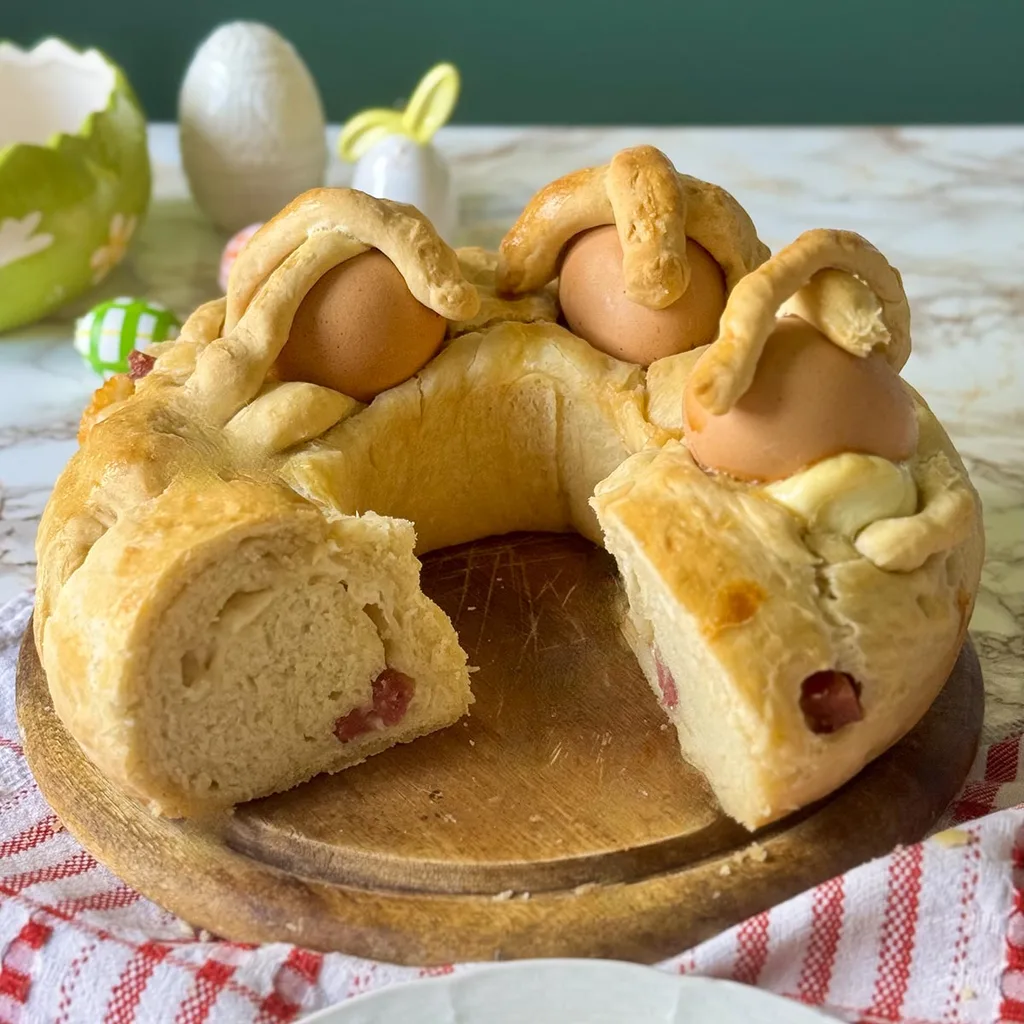
Neapolitan ring bread made with active dry yeast, filled with salami, provolone and Pecorino Romano, and topped with four eggs held by crossed dough strips.
- Italian
- Bread
- Prep
- 25 min
- Cook
- 45 min
- Serves
- 1 ring bread in a 28 cm mould; 8 servings
- Level
- Hard
Method25 steps
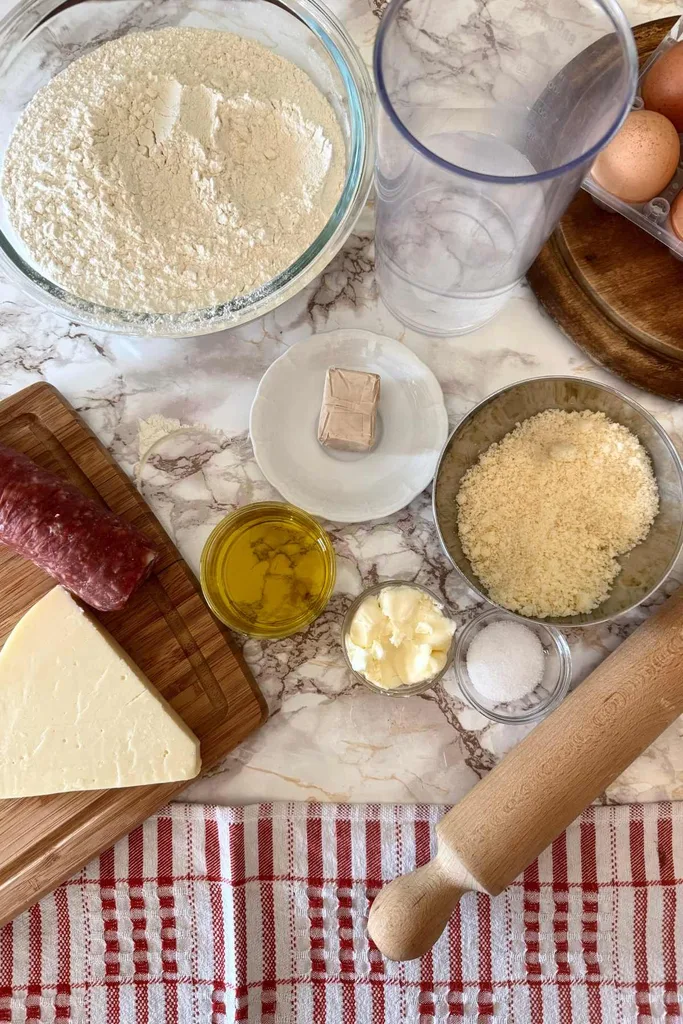
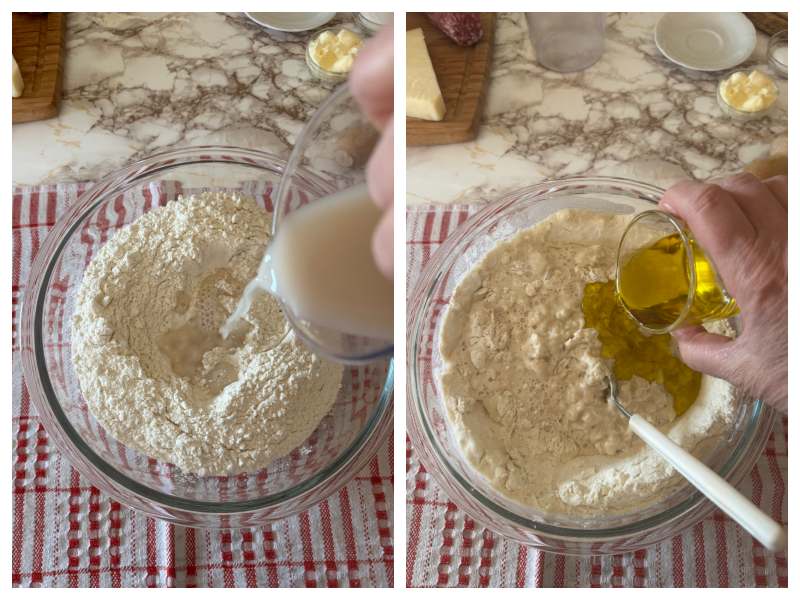
Step 1: Dissolve all 7 g active dry yeast in all 300 ml lukewarm water, following the yeast product’s suitable water temperature. Stir until dissolved and slightly foamy.
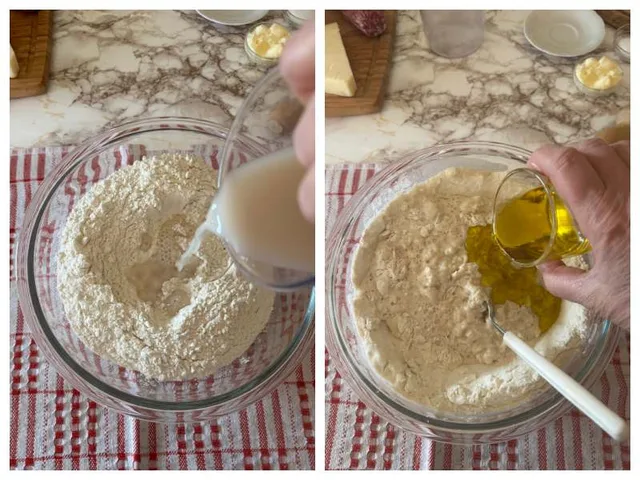
Step 2: Put all 550 g dough flour in a large bowl and pour in the yeast-water mixture gradually, stirring with a wooden spoon.
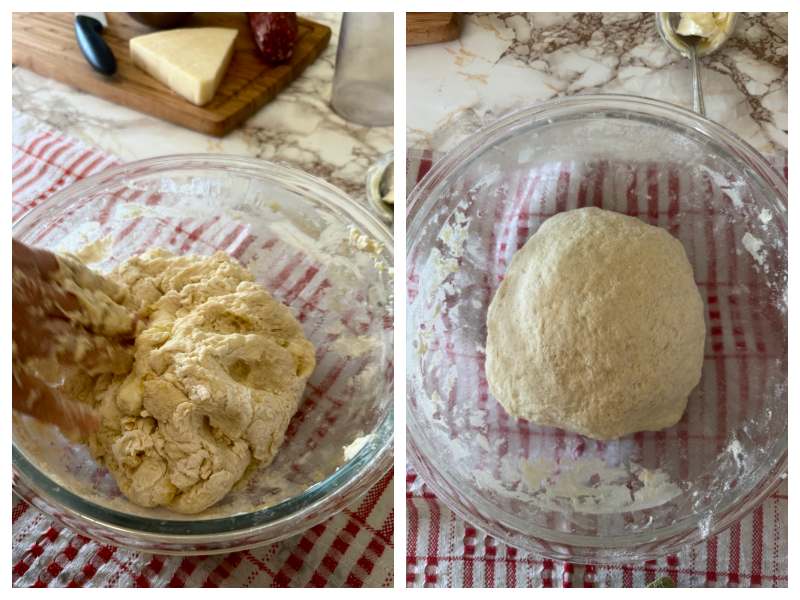
Step 3: Work all 50 ml extra virgin olive oil, 35 g dough lard and the teaspoon salt (1 teaspoon) into the flour-yeast mixture.
Step 4: Knead the same dough by hand for about ten minutes until it becomes smooth, soft and elastic.
Step 5: Gather the smooth kneaded dough into one ball, folding loose edges underneath.
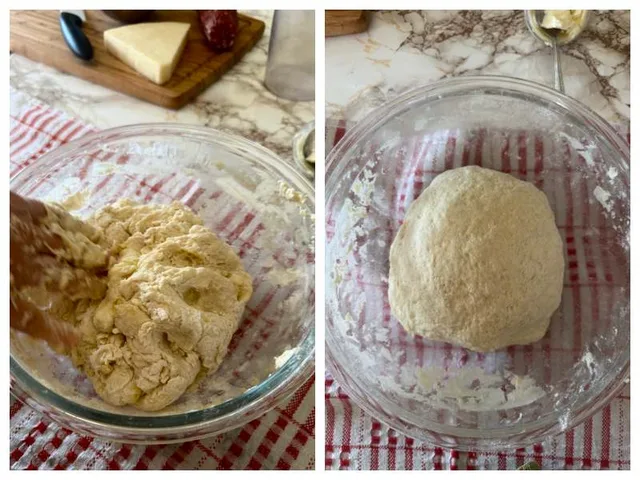
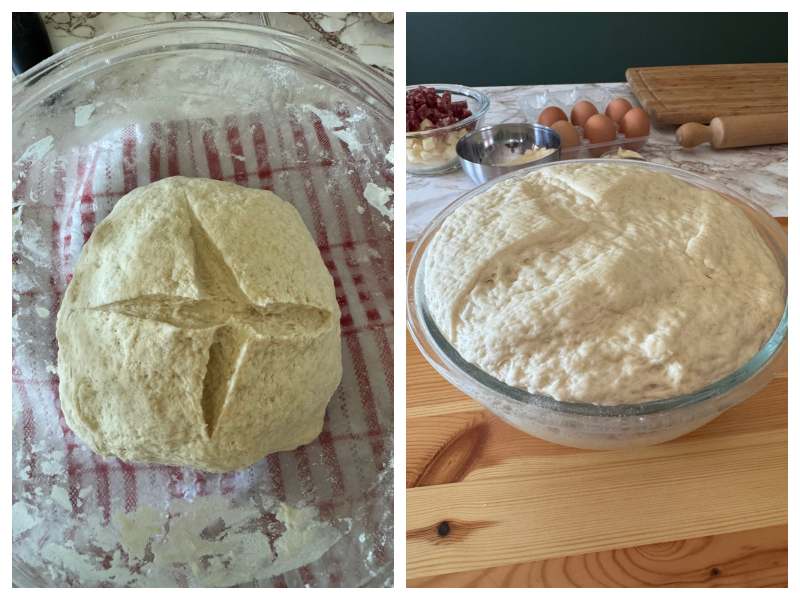
Step 6: Score a shallow cross on top of the dough ball without cutting through it.
Step 7: Put the dough back in its bowl, cover and let rise at room temperature for about ninety minutes, or until doubled in size.
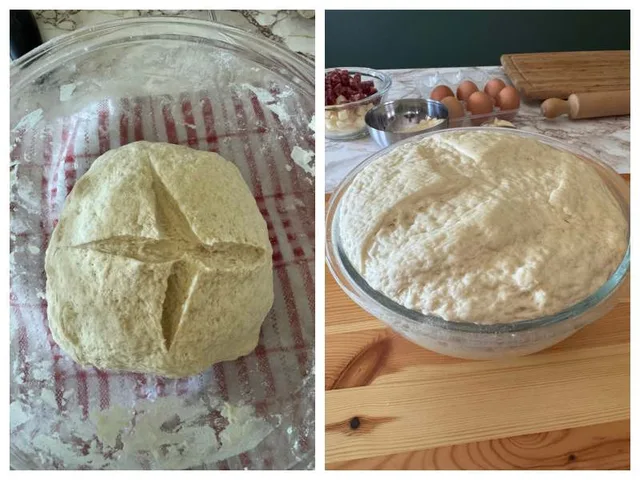
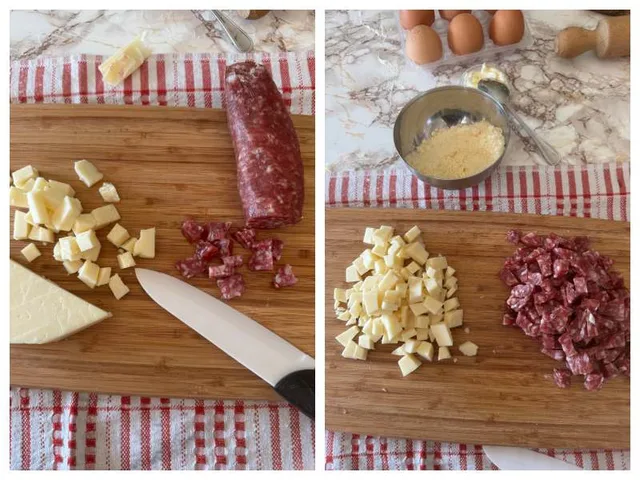
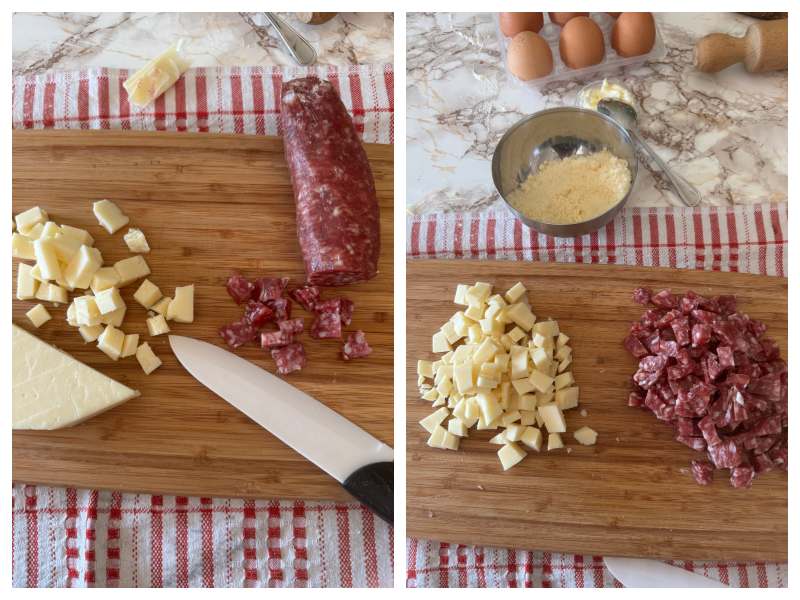
Step 8: While the dough rises, dice all 200 g salami and 150 g provolone. Grate all 80 g Pecorino Romano and hold it separately from the diced salami-provolone filling.
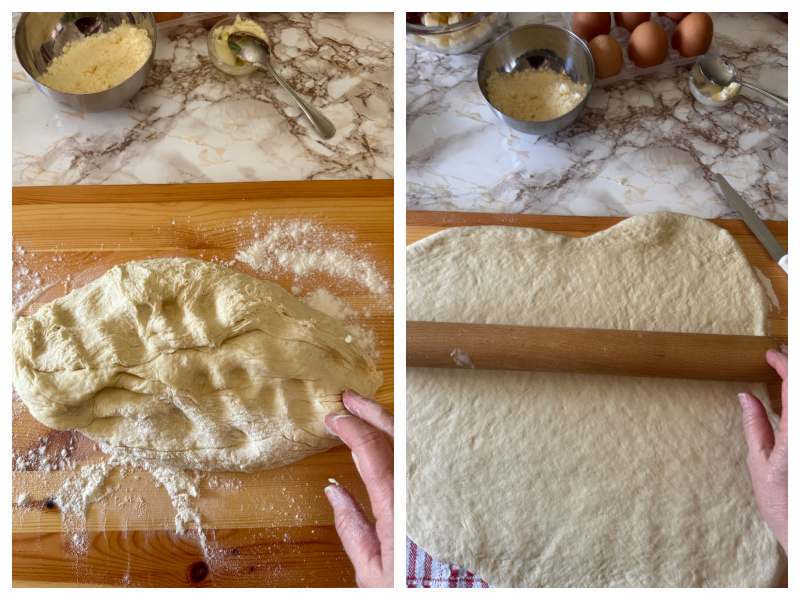
Step 9: Lightly flour a clean rolling surface with the separate rolling flour. Put the risen dough on it and gently press to deflate it slightly.
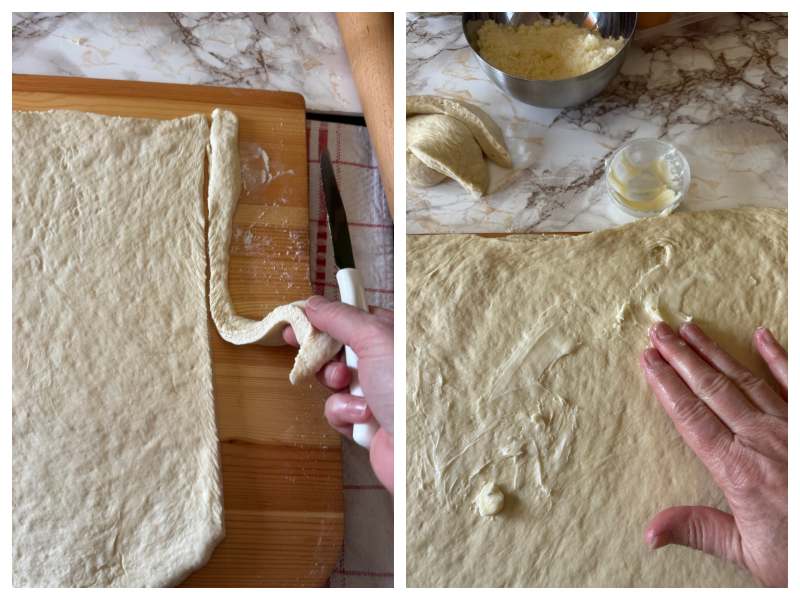
Step 10: Roll the same dough into one large rectangle about 1 cm thick, long enough to fit the 28 cm ring mould once filled and rolled.
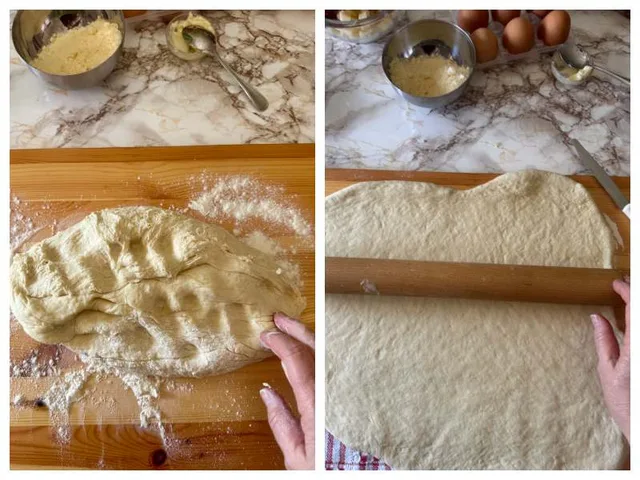
Step 11: Trim the edges neatly. Hold all trimmings separately for the eight thin decorative strips, keeping the main rectangle ready for the filling.
Step 12: Spread a thin layer of the separate surface lard over the main dough rectangle.

Step 13: Scatter all the prepared diced salami and provolone evenly over the greased main rectangle, spreading to the edges.
Step 14: Sprinkle all the separately held grated Pecorino Romano over the filling and add freshly ground black pepper to taste.
Step 15: Roll the filled rectangle slowly from its long side into a tight log, keeping the filling enclosed and avoiding tears.
Step 16: Pinch the seam and ends firmly to seal the stuffed dough log.
Step 17: Grease a 28 cm / 11 inch ring mould with the separate mould lard. Place the stuffed log inside and seal its two ends together to form one ring.
Step 18: Check four eggs are clean and uncracked. Place those four raw eggs in their shells on top of the dough ring, spaced evenly; keep the fifth egg for the later glaze.
Step 19: Divide the reserved dough-edge trimmings into eight pieces and roll them into thin strips long enough to cross over the four topping eggs.
Step 20: Lay two prepared strips in a cross over each of the four eggs, securing the strip ends gently to the surrounding ring dough.
Step 21: Let the assembled ring rise for about thirty minutes before baking. Keep it covered lightly without pressing against the decoration.
Step 22: Beat the remaining fifth egg and brush enough of it over the dough surface for an even glaze. Heat a fan oven to 180°C / 350°F.
Step 23: Bake at 180°C / 350°F with the fan on for about forty-five minutes, until the bread is golden and cooked through and the topping eggs have firm whites and yolks. If the top colours too quickly, cover loosely with foil and continue cooking.
Step 24: Leave the baked ring in its mould for at least thirty minutes before turning it out.
Step 25: Turn the bread out carefully. Peel the cooked topping eggs before eating, and slice the bread into eight portions. Serve warm or at room temperature, refrigerating leftovers within two hours rather than leaving the meat-and-egg bread out for days.
Photos (3)
Comments
0 threadsSign in to join the discussion.



No comments yet. Start the discussion.