
Cantonese · Dinner
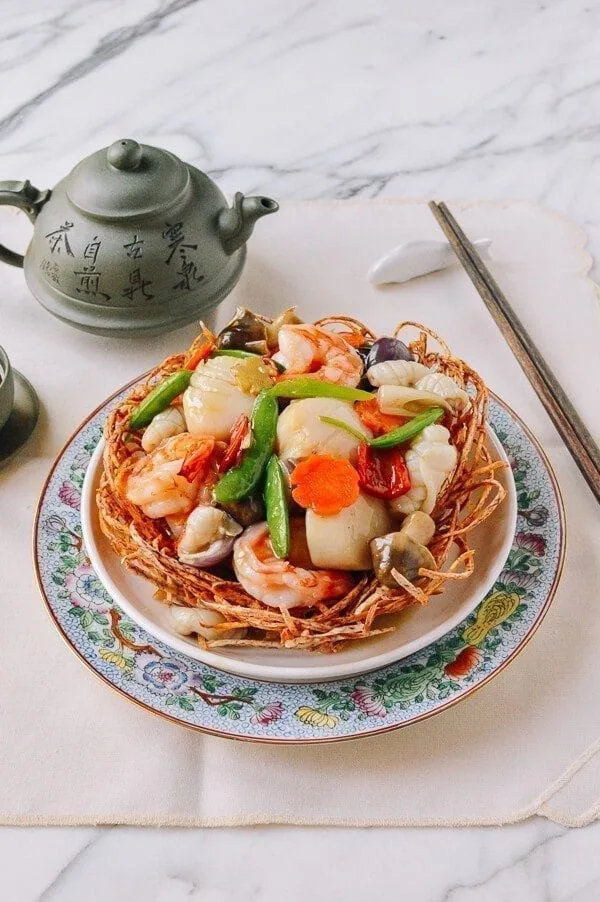
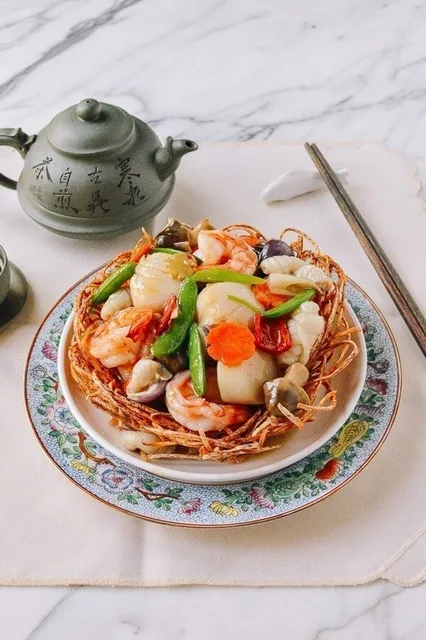
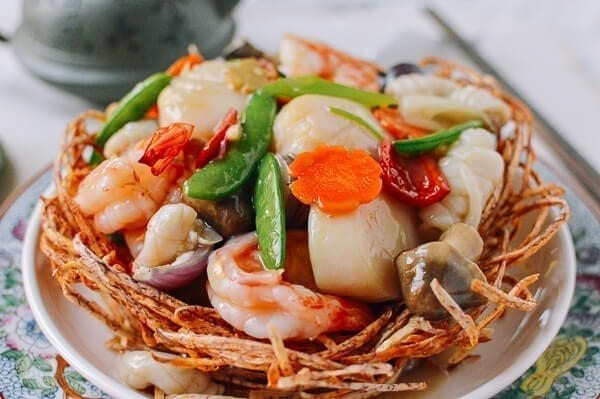
Chinese Seafood Bird Nest Banquet Dish
From the zcook collection
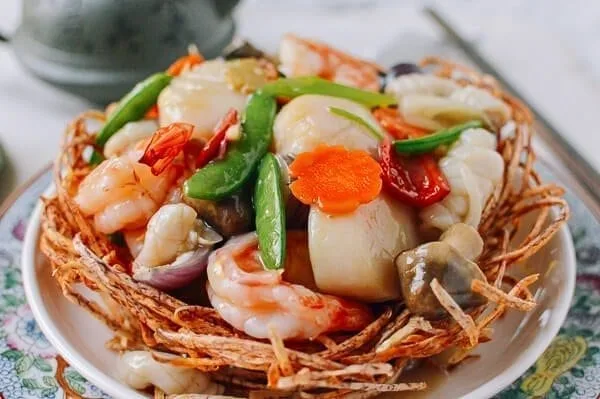
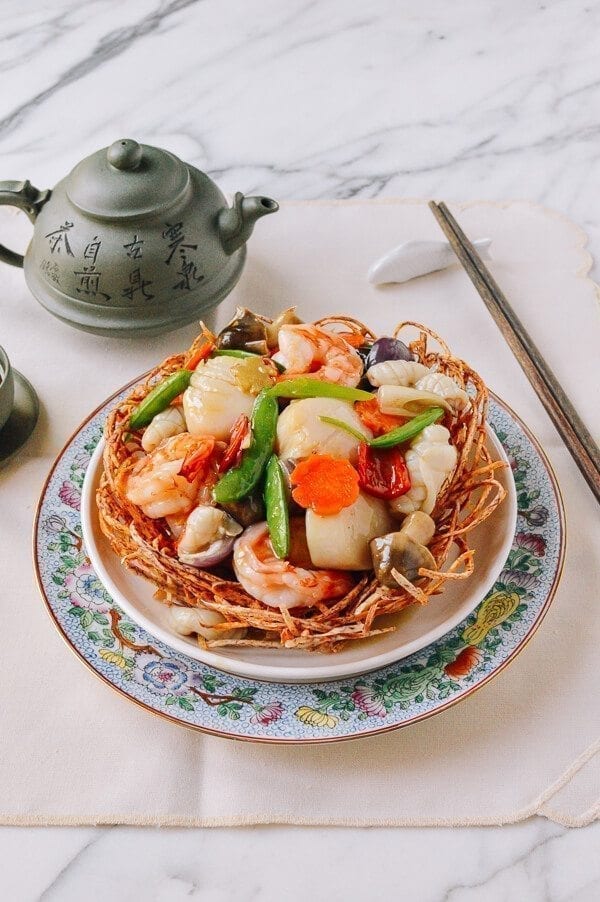
Shrimp, scallops and scored squid with colourful vegetables in a light sauce, served in a crisp fried taro basket.
- Dairy-free
- Cantonese
- Dinner
- Seafood
- Taro basket
- Total
- 1 hr
- Prep
- 45 min
- Cook
- 15 min
- Serves
- 6 portions
- Level
- Hard
- Energy
- 439 kcal
Method16 steps · about 1 hr
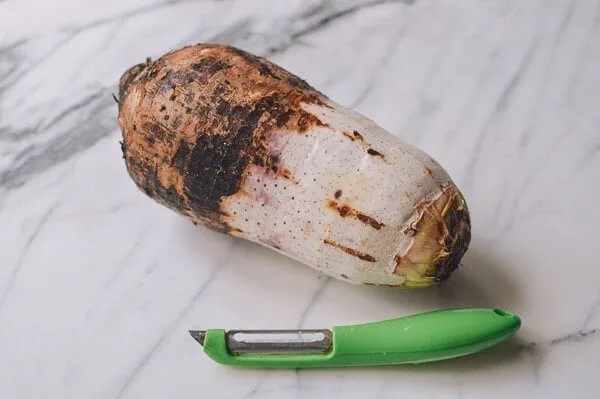
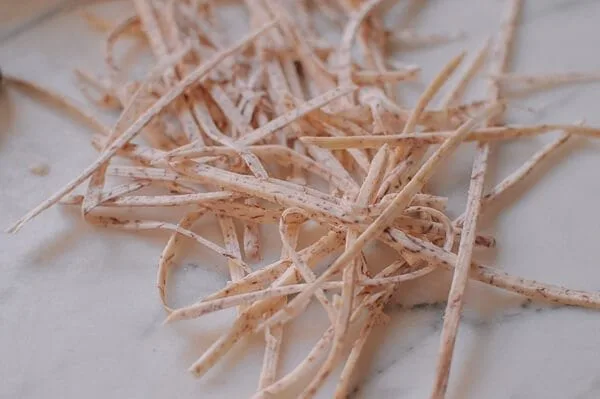
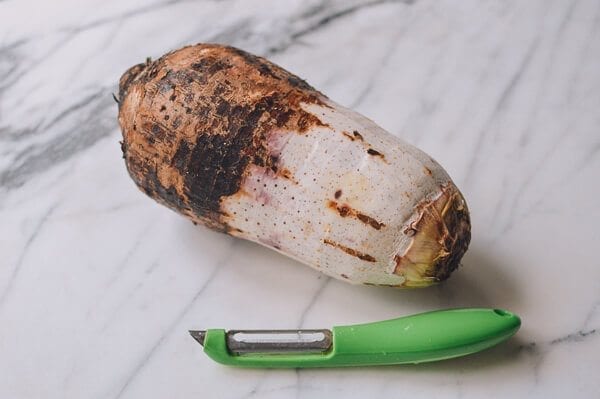
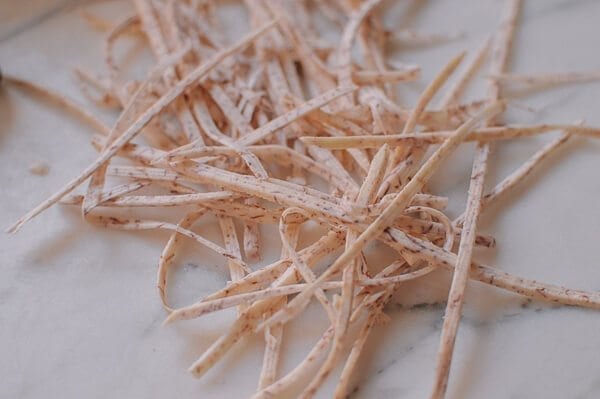
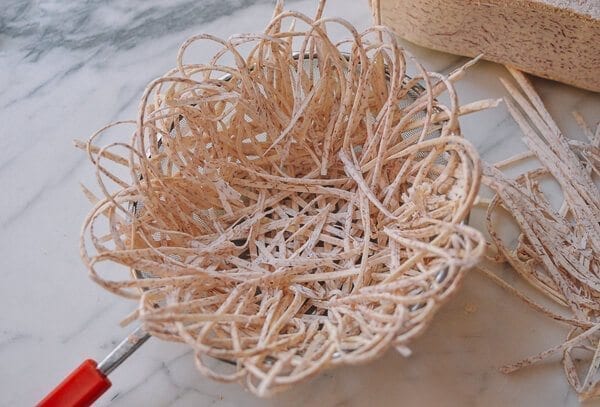
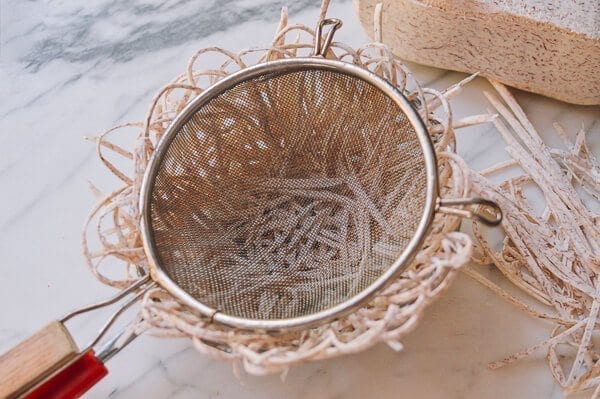
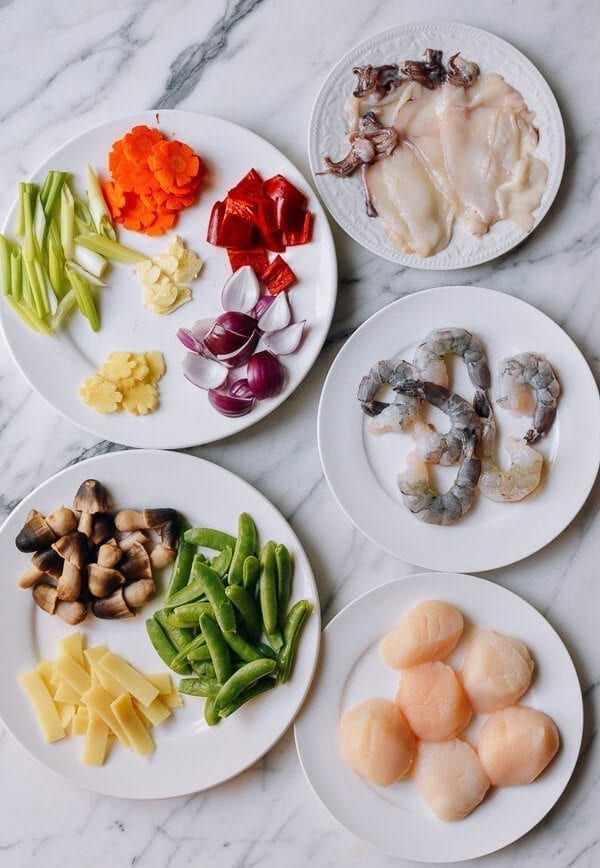
Step 1: Wash and prepare the vegetables and aromatics as listed before starting the hot wok sequence: peel and julienne the taro, slice ginger and garlic, cut the scallion whites, carrot, pepper and onion, rinse and drain ready cooked bamboo shoots, clean the mushrooms and trim the snap peas. If using the optional thickener, mix 1½ tbsp cornstarch with the separate 1½ tbsp warm water and hold beside the wok. Spread all 4 cups julienned taro in a criss-cross layer inside a large steel mesh strainer, with strands extending over its rim. Set a second matching strainer inside it to hold the nest shape between them. Keep the taro’s natural starch on its strands for adhesion.
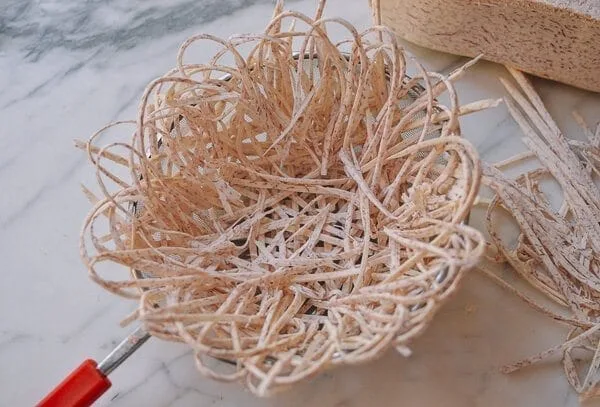

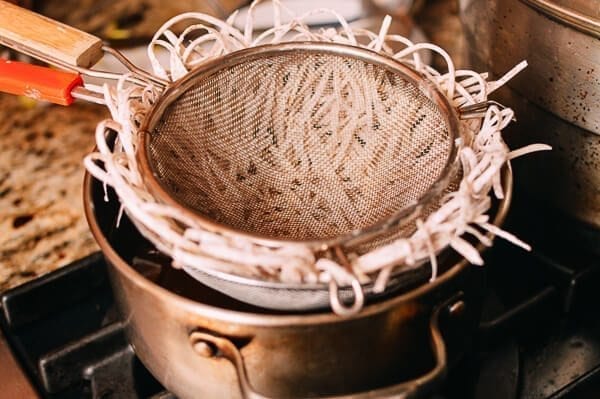
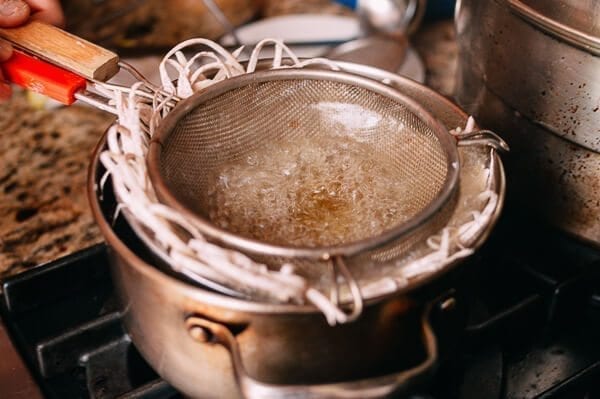
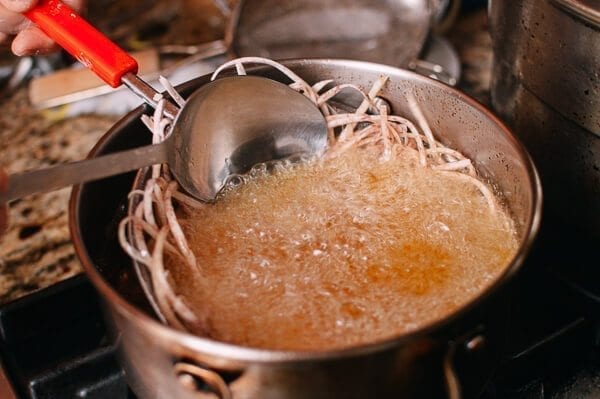
Step 2: In a deep wok or pot large enough for the strainers, heat the separate 6 cups canola oil to 325°F (about 163°C). Leave ample space above the oil for bubbling and displacement. Carefully lower the taro-filled strainers into the oil and fry, tilting with secure heat-resistant utensils, until the strands are golden, crisp and cooked through all around. Lift and drain the nest, carefully release it from both strainers and set it on the serving plate. Keep the frying reservoir separate from the later wok oil.
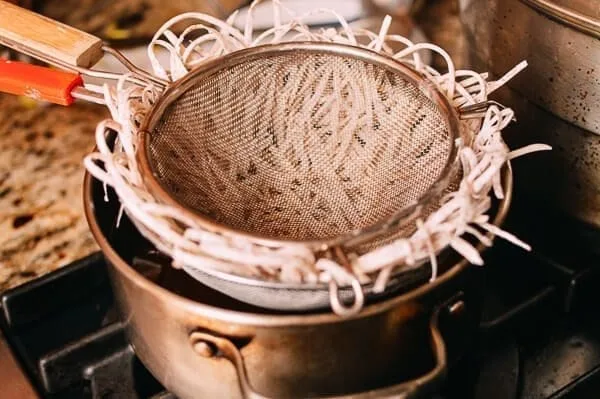
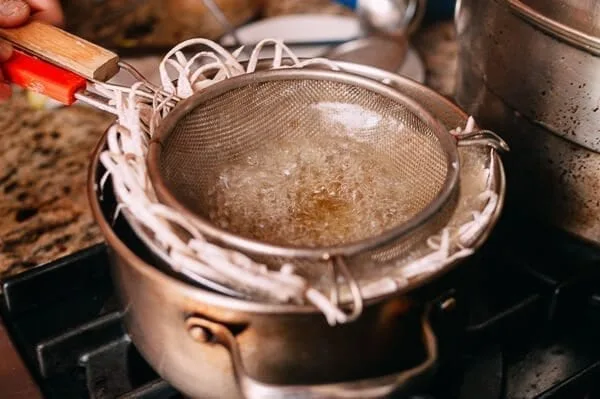

Step 3: Peel and devein all six shrimp, remove any tough side muscles from the six scallops, and keep the seafood chilled until blanching. Have the measured 1 cup chicken stock hot and ready for the final wok sequence; heat it in a small saucepan if necessary.
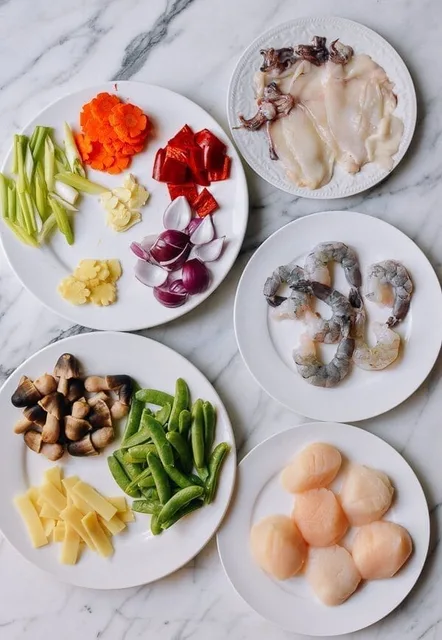
Step 4: Clean the squid (170 g): separate its tentacles and mantle and remove the internal organs and hard pen. Retain the tentacles. Open the mantle into flat pieces, cut into 2-by-3-inch (about 5-by-7.6-cm) rectangles and score diagonally in both directions without cutting through. Keep the cleaned pieces and tentacles chilled until blanching.
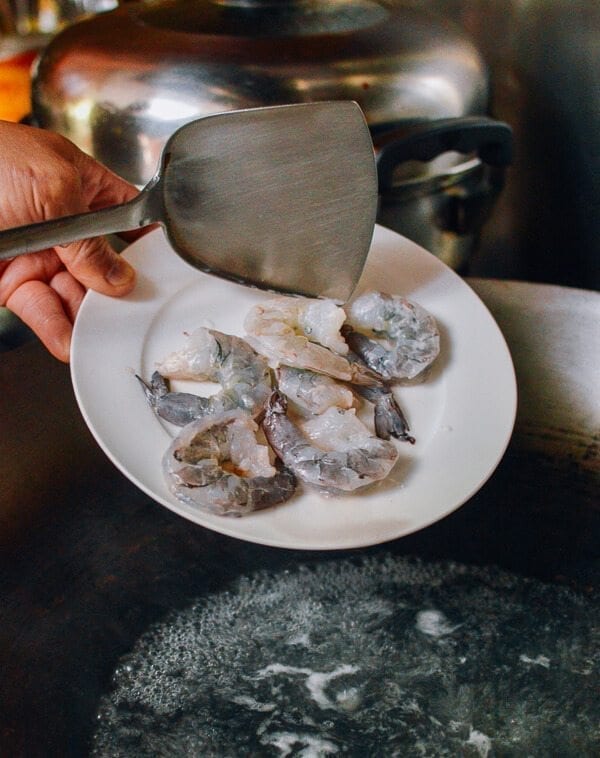
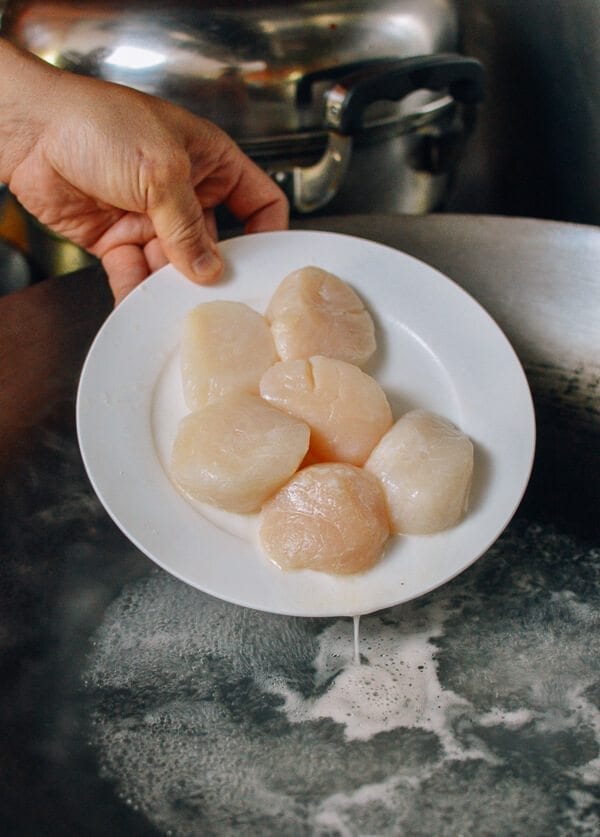
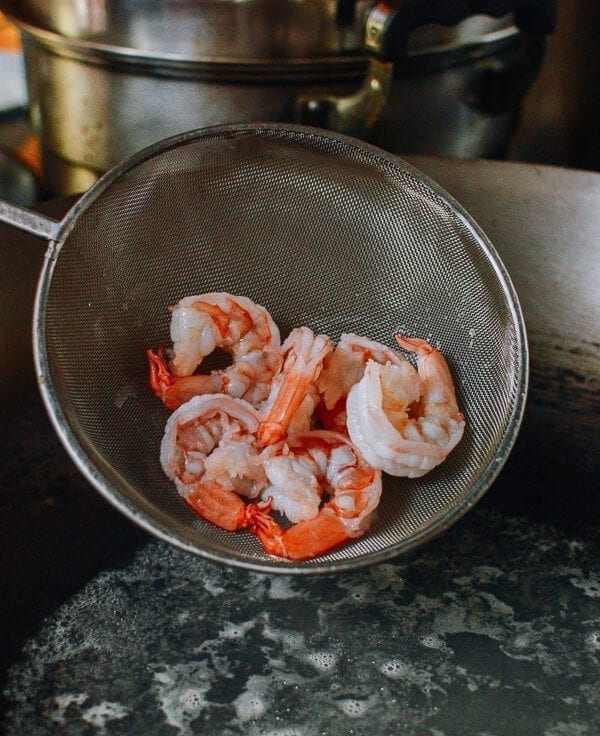
Step 5: Bring the 6 cups blanching water to a full boil in the wok. Add the shrimp and scallops, stirring gently for about 20 seconds until they begin to turn opaque. Lift onto a clean holding plate with a strainer, leaving the same water in the wok for the squid. This is only a preliminary blanch; finish cooking the seafood immediately in the later wok stages.
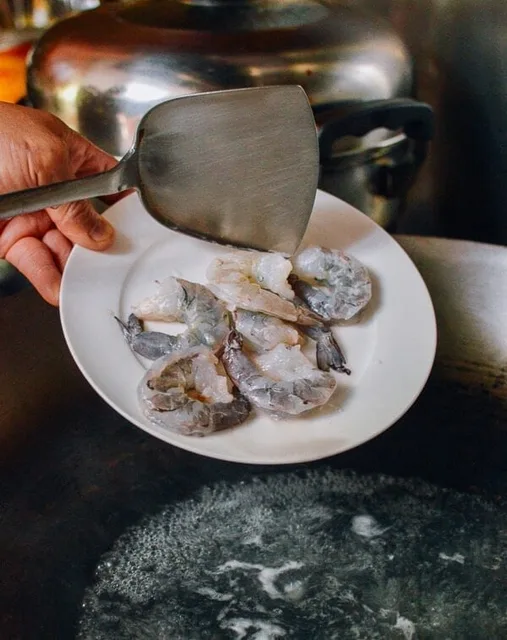
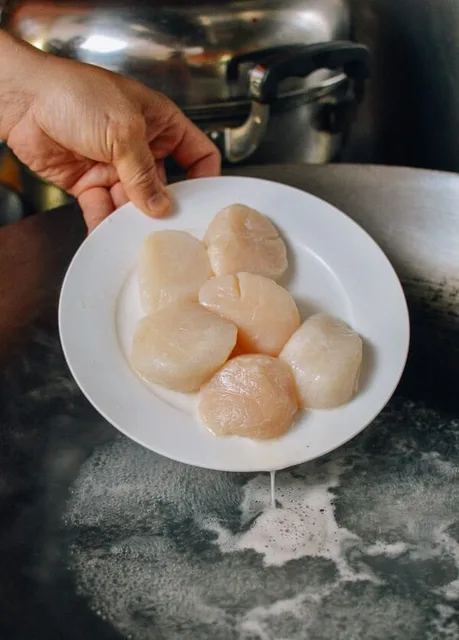
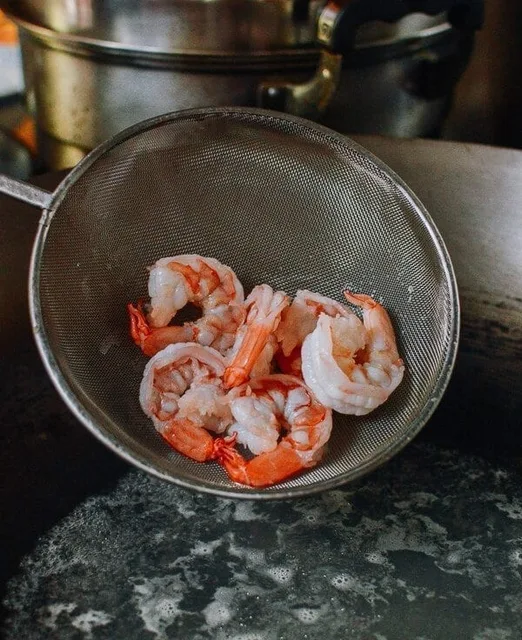
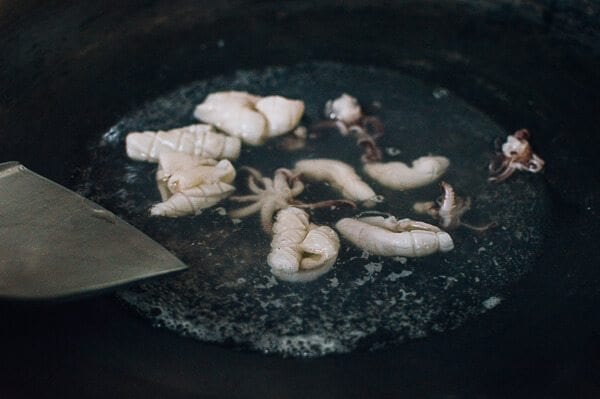
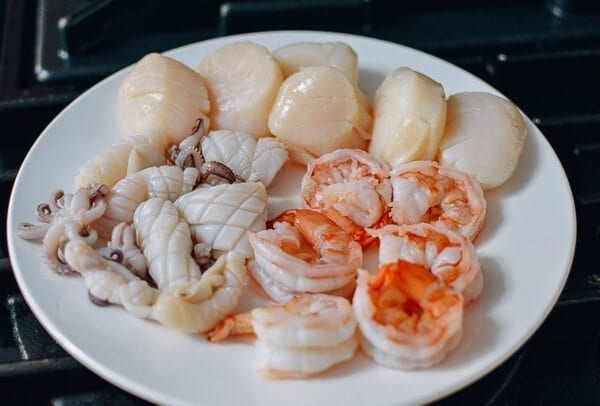
Step 6: Add the prepared squid to the same hot blanching water. Blanch for about 10 seconds until the scored pieces curl, then lift onto a clean holding plate. Keep the briefly blanched seafood ready for the immediate wok finish. Discard the blanching water; it is separate from the measured chicken stock.
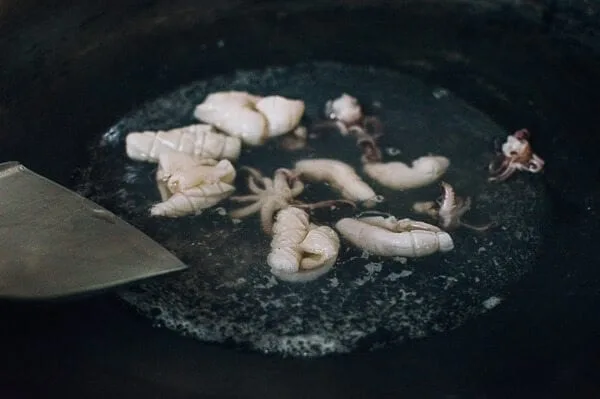
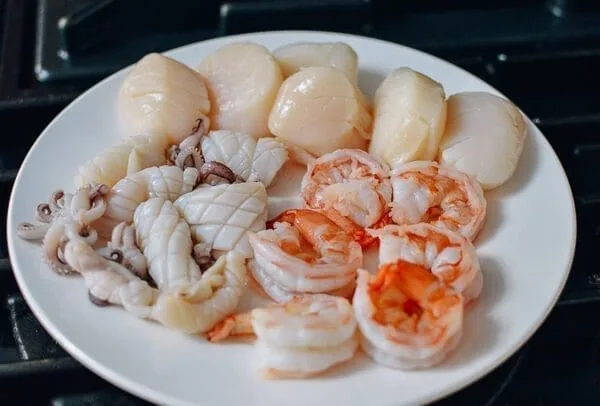
Step 7: After discarding the blanching water, dry the wok. Heat it over medium-high heat and spread 2 tbsp from the separate stir-fry oil supply around it until the oil shimmers. Leave the unused 1 tbsp allowance separate.
Step 8: Add all eight ginger slices to the hot wok oil and stir-fry for about 10 seconds.
Step 9: Add the sliced white parts of both scallions (2) and the two sliced garlic cloves. Stir-fry for another 10 seconds.
Step 10: Add the sliced half carrot, ½ cup ready cooked bamboo shoots and quarter bell pepper. Turn the heat to high and stir-fry for 30 seconds.
Step 11: Add all ½ cup straw mushrooms, 1 cup trimmed snap peas and the chopped small red onion (1). Stir to combine with the first vegetables.
Step 12: Add all the held shrimp, scallops and squid, then the 2 tsp Shaoxing wine. Stir-fry everything for another 1 minute before adding the hot stock.
Step 13: Pour in the measured 1 cup hot chicken stock and bring the mixture up toward a boil, stirring over high heat.
Step 14: As the mixture comes up to a boil, add the 1 tsp salt, ¼ tsp sugar, ⅛ tsp white pepper and ½ tsp sesame oil. Stir thoroughly. Continue cooking until the vegetables are tender-crisp and every shrimp, scallop and squid piece is fully opaque and cooked through; seafood should reach 63°C/145°F. Taste with a clean spoon only after the seafood is fully cooked.
Step 15: If using the optional thickener, stir the prepared cornstarch slurry again and add it gradually while stirring the bubbling sauce. Stop when the sauce lightly coats the seafood and vegetables; any unused slurry stays separate. The slurry may be omitted.
Step 16: Carefully spoon the hot seafood, vegetables and coating sauce into the cooked taro basket. Serve immediately, sharing between six portions so the taro stays crisp.
Photos (1)
Comments
0 threadsSign in to join the discussion.


No comments yet. Start the discussion.