
Chinese · Dinner
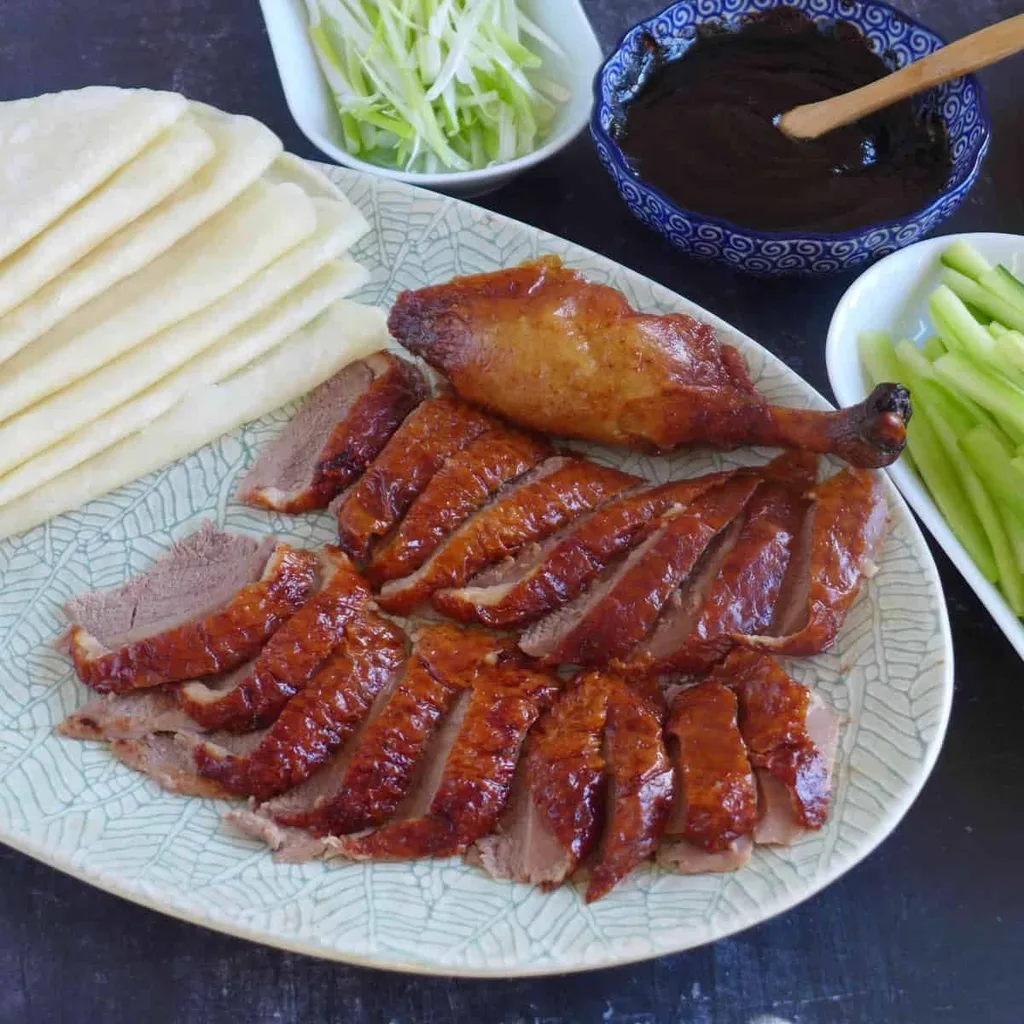
Peking Duck, An Easy Home Version (北京烤鸭)
From the zcook collection
Home-style Peking duck with crisp glazed skin, sweet-bean sauce, warm ready pancakes, scallions and cucumber. Prepare the salted and glazed bird ahead for refrigerated air-drying, then roast and carve it. This batch serves six.
- Chinese
- Dinner
- Duck
- New Year
- Peking duck
- Cook
- 1 hr 15 min
- Serves
- 6 servings
- Level
- Hard
Method15 steps
Step 1: Pat the raw duck (1) dry with kitchen paper. Rub the 2 tbsp fine salt over its skin and inside the cavity. Set it on a wire rack over a tray to catch drips, and rest in the refrigerator at 4°C or colder for 1 hour.
Step 2: Bring the separate approximately 1½ litres of scalding water to a boil. Set the salted duck over a deep tray and gently pour the boiling water over all its skin, turning it to reach both sides. Let the water drain away and discard it; remove any exposed feather ends with tweezers. Clean surfaces and utensils that contact raw-duck drips.
Step 3: In a bowl, dissolve the 2 tbsp maltose in the separate 120 ml hot glaze water and 1 tsp vinegar. Stir until smooth.
Step 4: Brush a thin layer of the prepared maltose glaze over the scalded duck skin. Refrigerate the duck on its rack and tray at 4°C or colder for 1 hour. Keep the remaining glaze refrigerated for the second coat.
Step 5: Brush another thin layer over the duck skin using the remaining refrigerated glaze. Discard any unused glaze and keep the duck over its rack and tray.
Step 6: Keep the glazed duck uncovered on its rack and tray in the refrigerator at 4°C or colder for 24–48 hours, separated from ready-to-eat foods. Check after 24 hours; the skin should be dry before roasting.
Step 7: About 1 hour before roasting, take the cold-dried duck out of the refrigerator in a cool kitchen. Put the 2 cavity scallion stalks, 1 head garlic, 2 quartered apples, 4 star anise, 4 bay leaves and 2 cassia pieces into its cavity. Close the openings with toothpicks or skewers. Keep this tempering period within 1 hour; shorten it in heat above 32°C and proceed promptly to roasting.
Step 8: During the tempering period, preheat a fan-assisted oven to 200°C (390°F), or a conventional oven to 220°C (425°F). Place the duck breast-side up on the middle oven rack, with a large roasting tray below to catch rendered fat. Roast for 15 minutes, starting the timer once the duck is in the fully heated oven.
Step 9: Reduce the oven to 180°C fan (350°F), or 200°C conventional (390°F). Cover the wing tips and leg ends with foil. Roast for about another 60 minutes, checking the bird and adjusting for its size and your oven. Keep the rendered fat in the tray for the serving sauce.
Step 10: Measure the duck in the thickest inner thigh near the breast, without touching bone. The duck and the centre of the cavity stuffing must reach at least 74°C (165°F). Continue roasting if needed. If the skin already has enough colour, turn off the fan if available and loosely tent the duck with foil while it finishes. Ventilate the kitchen when opening the oven.
Step 11: Transfer the cooked duck to a clean board or plate and rest for 15 minutes. Keep the collected rendered fat aside. Prepare the sauce and warm the pancakes while the duck rests.
Step 12: During the rest, measure ½ tbsp of the rendered duck fat into a small pan. Add the 3 tbsp sweet bean sauce and 1 tsp sugar. Mix and simmer gently until tiny bubbles appear, then transfer to a serving dish and whisk until the fat is incorporated.
Step 13: If the ready Peking duck pancakes are frozen, thaw them in the refrigerator beforehand. If cold, place the pancakes in a steamer over the separate steamer water, bring it to steady steam, then steam for 3 minutes to warm through. Skip this warming step if the pancakes are already warm.
Step 14: After the duck has rested for 15 minutes, remove the toothpicks or skewers and lift out the cavity aromatics. Carve the meat and crisp skin into small pieces with a sharp knife, leaving the bones and carcass aside.
Step 15: To make each roll, spread a little prepared sauce over a warm pancake. Add a few pieces of carved duck with skin, some julienned serving scallions and cucumber sticks. Fold the bottom up and the sides inward, then eat promptly. Refrigerate leftover duck, sauce and any saved carcass promptly at 4°C or colder, using shallow containers and keeping within 2 hours of serving, or 1 hour in temperatures above 32°C.
Photos (1)
Comments
0 threadsSign in to join the discussion.


No comments yet. Start the discussion.