

Cantonese · Dinner
Chinese Roast Duck
From the zcook collection
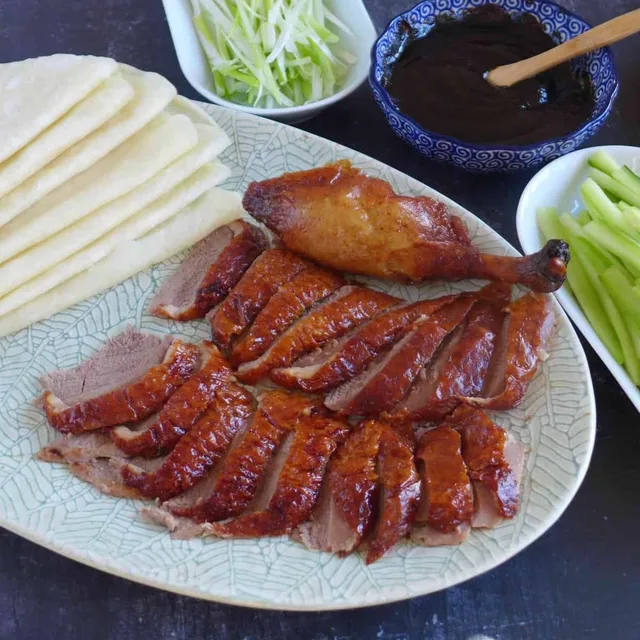
Cantonese roast duck with seasoned cavity aromatics, dried skin and a rich sauce made from the strained roasting juices.
- Dairy-free
- Cantonese
- Dinner
- Roast duck
- Serves
- 6 portions
- Level
- Hard
- Energy
- 455 kcal
Method31 steps
Step 1: Work with a fully thawed, chilled duck. Trim excess fat from the cavity while leaving the skin intact. Remove the wing tips with kitchen shears or a cleaver and remove any feet at their joints. Keep the duck refrigerated during pauses in preparation. Prepare the sliced ginger and garlic, smashed scallion and broken whole spices before heating the marinade pan.
Step 2: Remove the head if preferred, but leave the neck intact to help with inflation and tying later.
Step 3: Remove pinfeathers with tweezers and any remaining internal organs. Pat the outside and cavity dry with paper towels; do not rinse the raw duck. Wash your hands and clean and sanitise the utensils and work surfaces after raw poultry handling.
Step 4: Combine the 1½ tbsp cavity-seasoning salt, 2½ tsp five-spice powder, 2 tsp sugar and 1 tsp sand ginger powder. Rub the cavity with the 2 tbsp Shaoxing wine, then coat it thoroughly with the dry spices. Refrigerate the duck uncovered for 1 hour.
Step 5: While the duck chills, mix the 2 tbsp chee hou sauce, 2 tbsp warm water, 1 tbsp each ground bean sauce, hoisin sauce (1 tablespoon), oyster sauce (1 tablespoon) and red fermented bean curd (1 tablespoon). Heat the separate 2 tsp neutral oil in a saucepan over medium-low heat.
Step 6: Add the two ginger slices to the heated oil and stir-fry for 20–30 seconds, until fragrant.
Step 7: Add the two sliced garlic cloves, smashed scallion (1) pieces, two bay leaves, two broken star anise, broken cassia stick and broken dried mandarin peel to the ginger and oil. Cook, stirring, for another 20–30 seconds until fragrant.
Step 8: Stir in the prepared sauce mixture, bring to a simmer over medium heat, stirring often, then remove from the heat. Let the marinade cool completely before putting it into the chilled duck.
Step 9: After the duck has chilled for 1 hour and the cooked marinade has cooled completely, pour the marinade and aromatics into the cavity. Coat the whole cavity while keeping the outside skin clean.
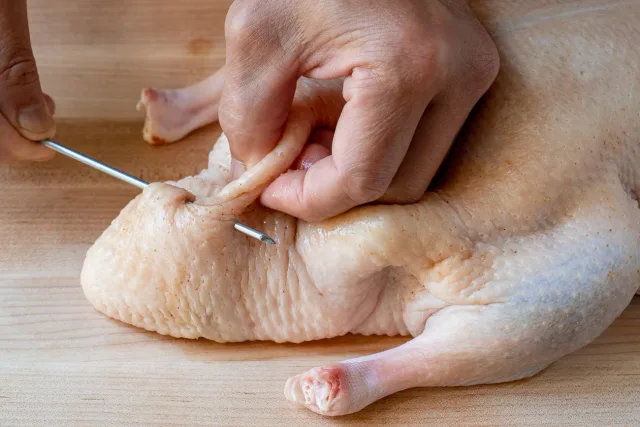
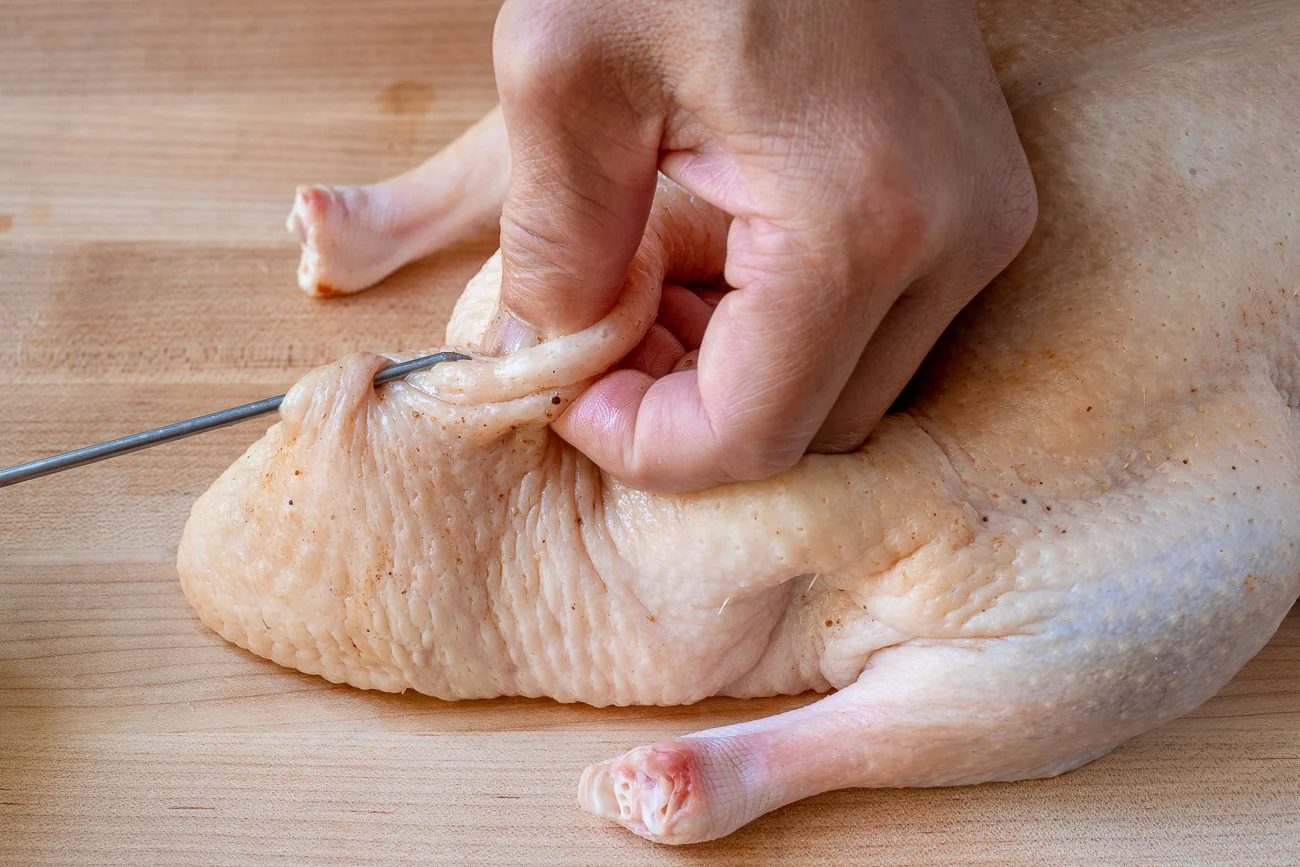
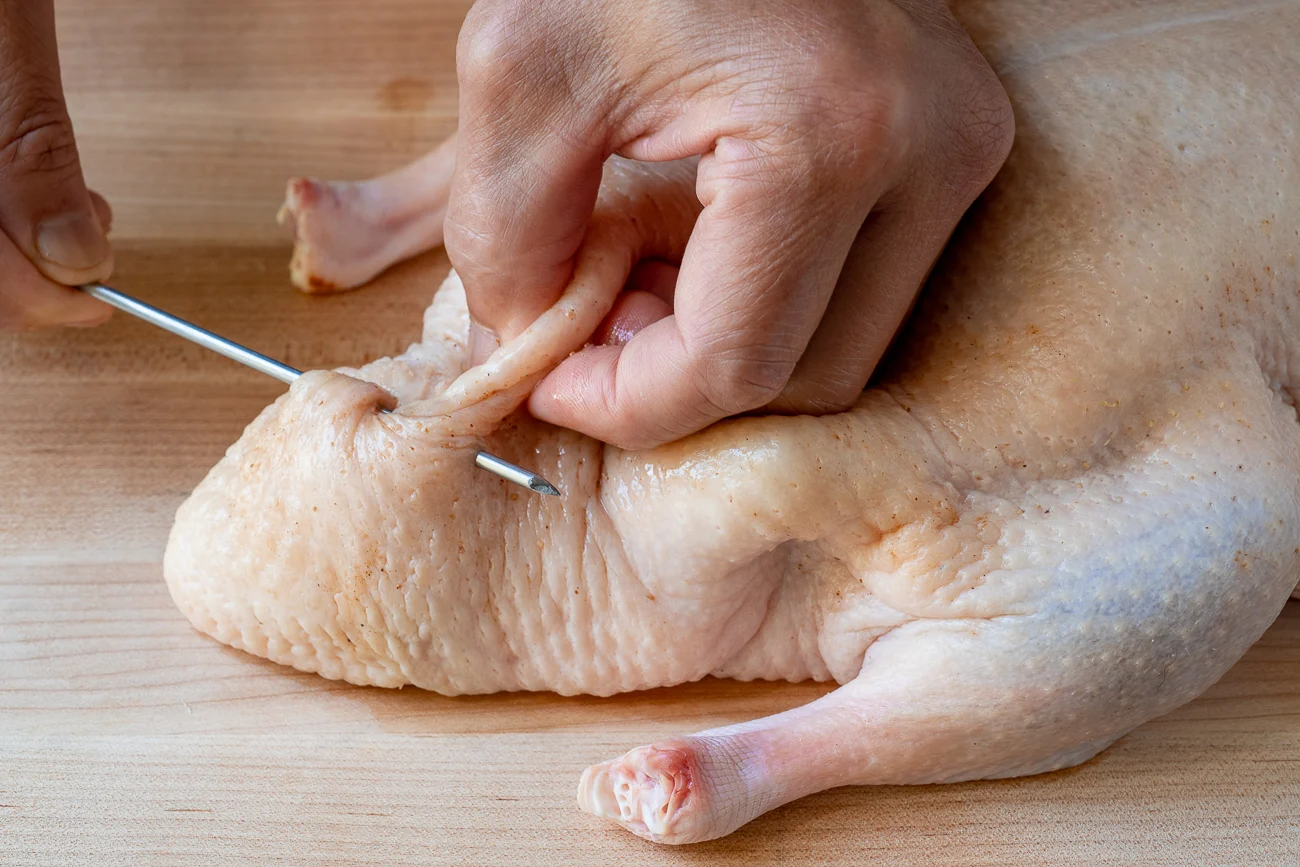
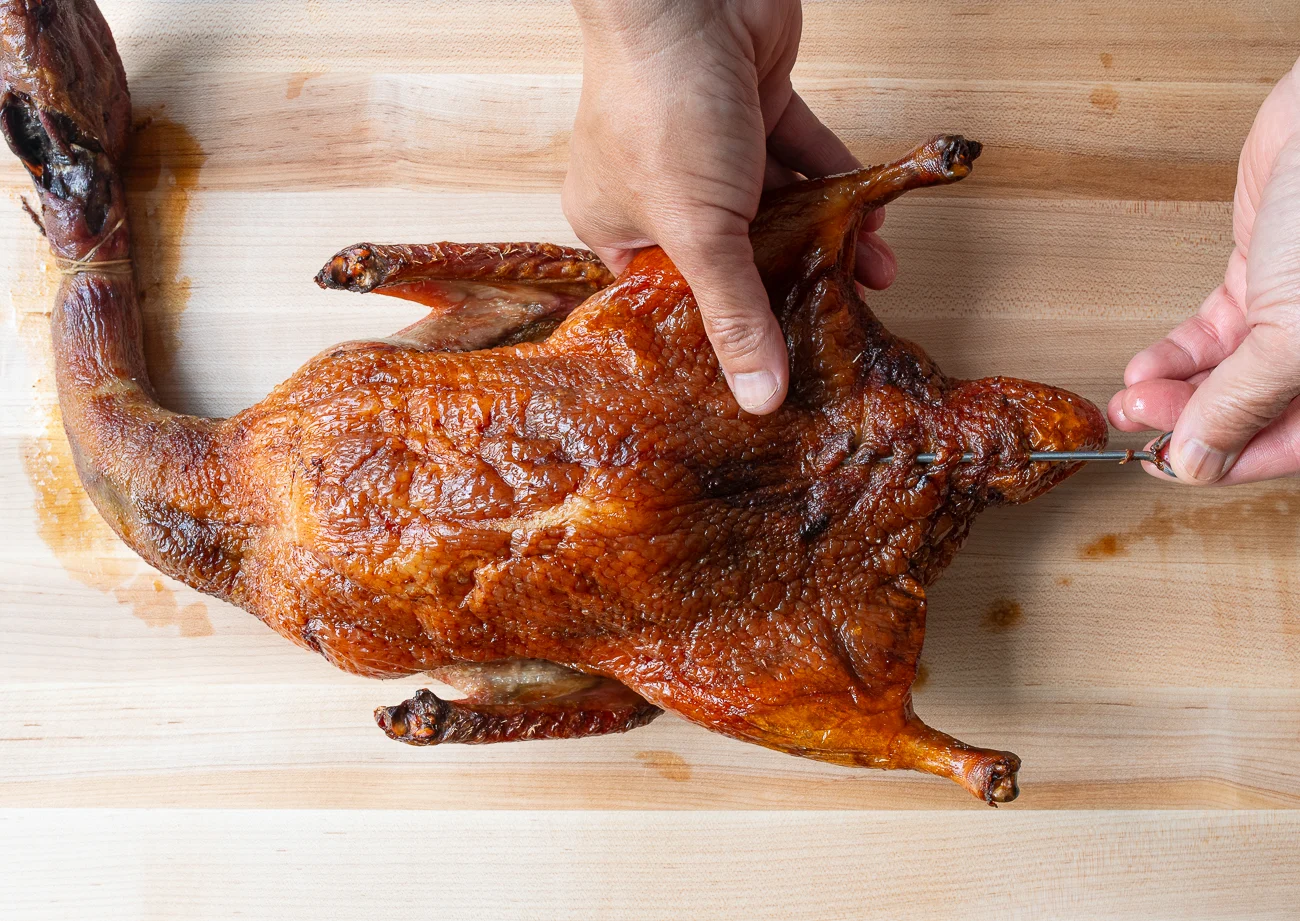
Step 10: If choosing the metal-skewer seal, start here; if choosing butcher’s twine, skip steps 10–11 and go to step 12 with the marinated, unsealed duck from step 9. For the skewer method, insert the metal skewer crosswise through the skin flaps on both sides of the tail opening, leaving about 1 inch (2.5 cm) of the tip protruding.
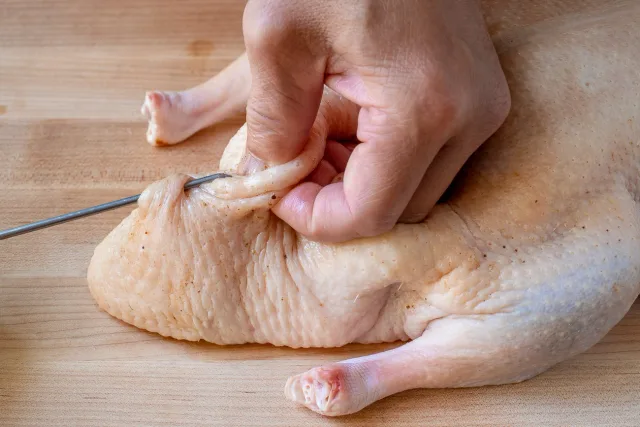
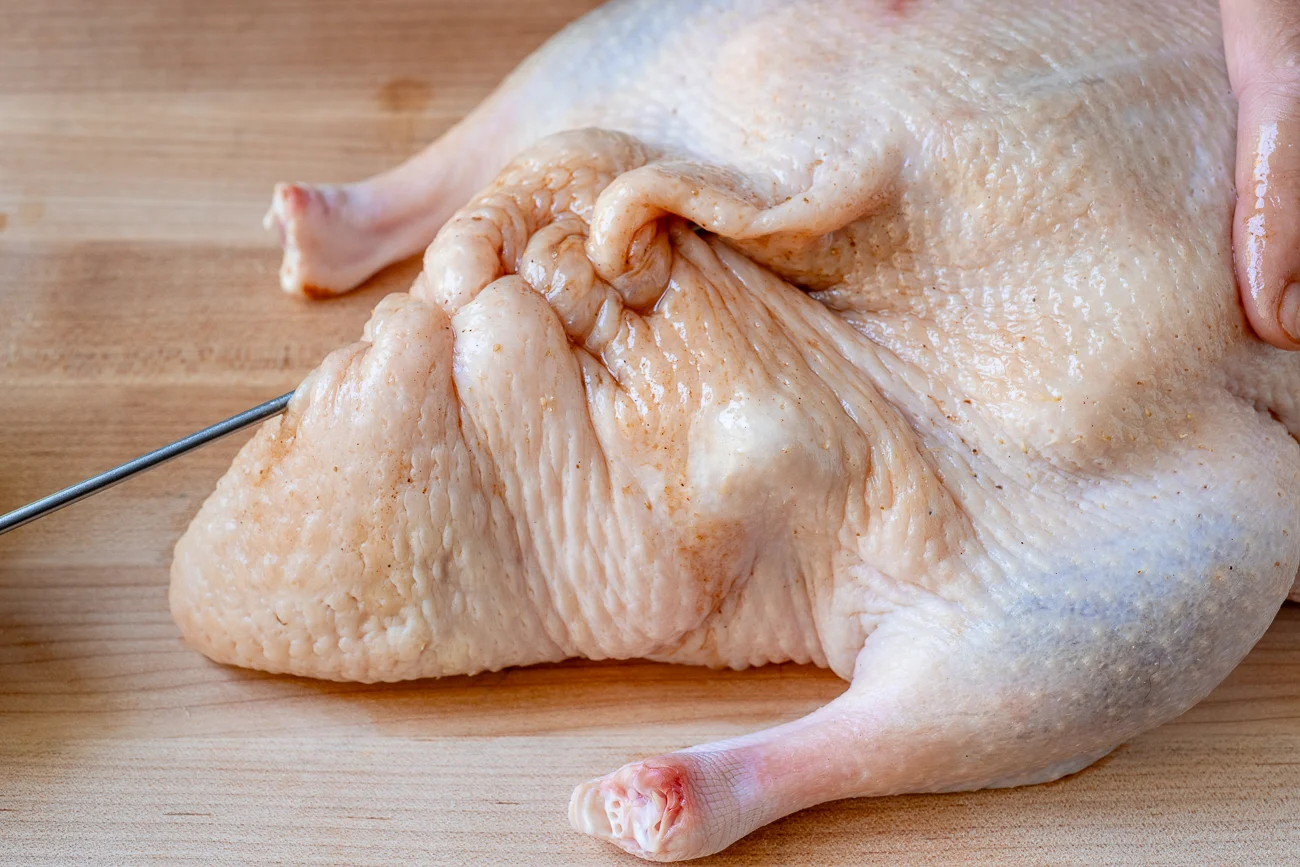
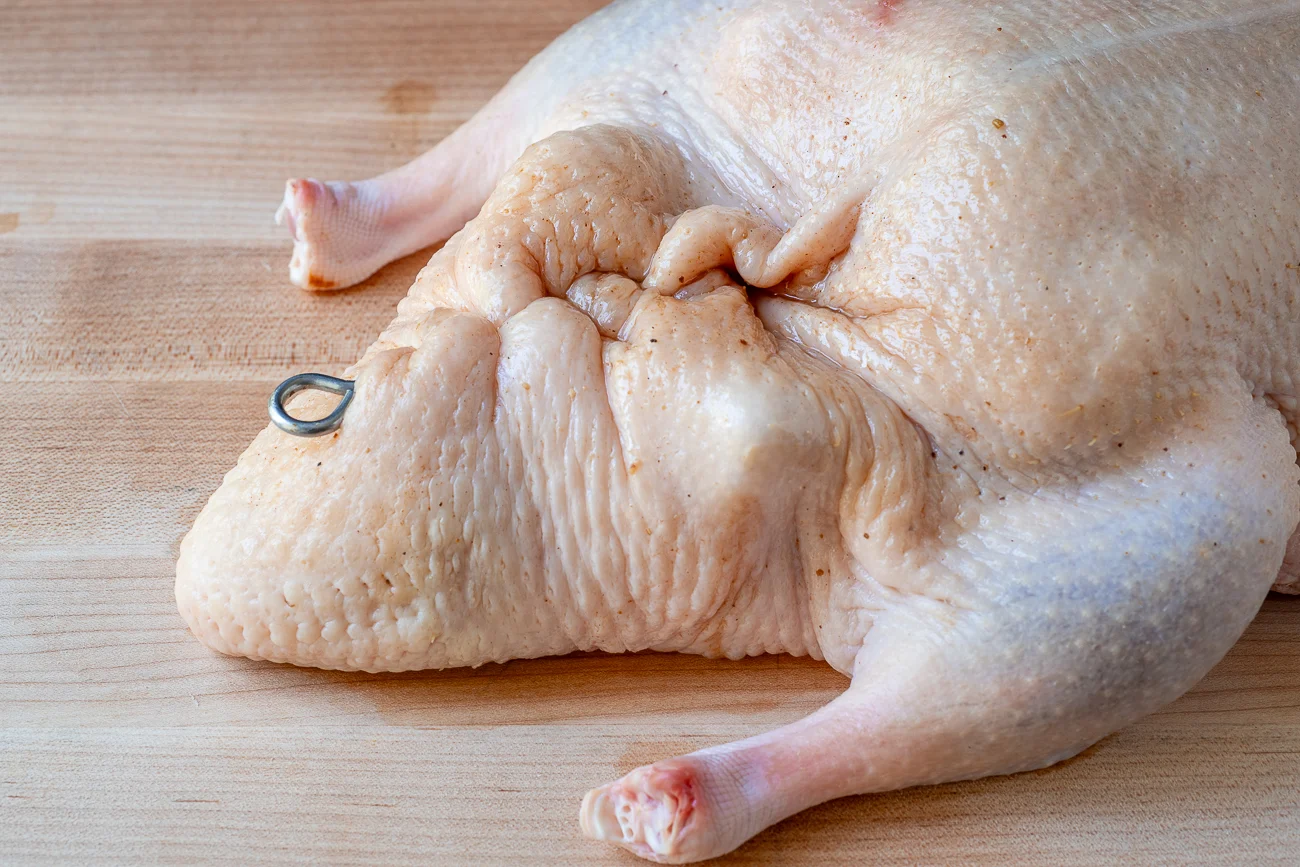
Step 11: For the skewer route only, turn the skewer back over the skin and insert it again just above the first stitch. Continue weaving across the opening until the cavity is completely sealed, then push any remaining skewer length safely into the cavity.
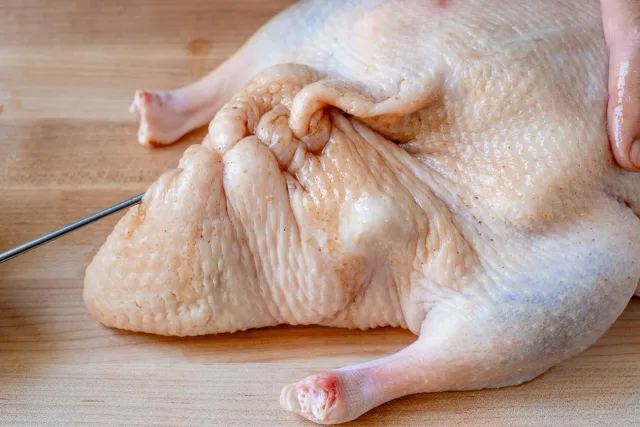
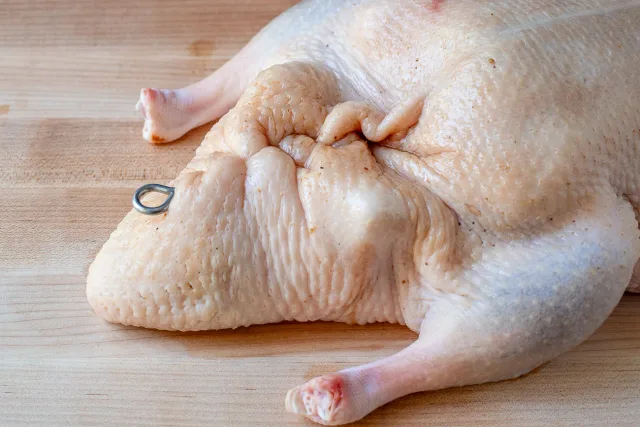
Step 12: If choosing butcher’s twine, take the marinated, unsealed duck from step 9 and sew the cavity tightly closed with butcher’s twine and a trussing needle. If choosing the metal skewer, use the duck already sealed in step 11 without sewing it again. Check that the single chosen seal is airtight before inflation.
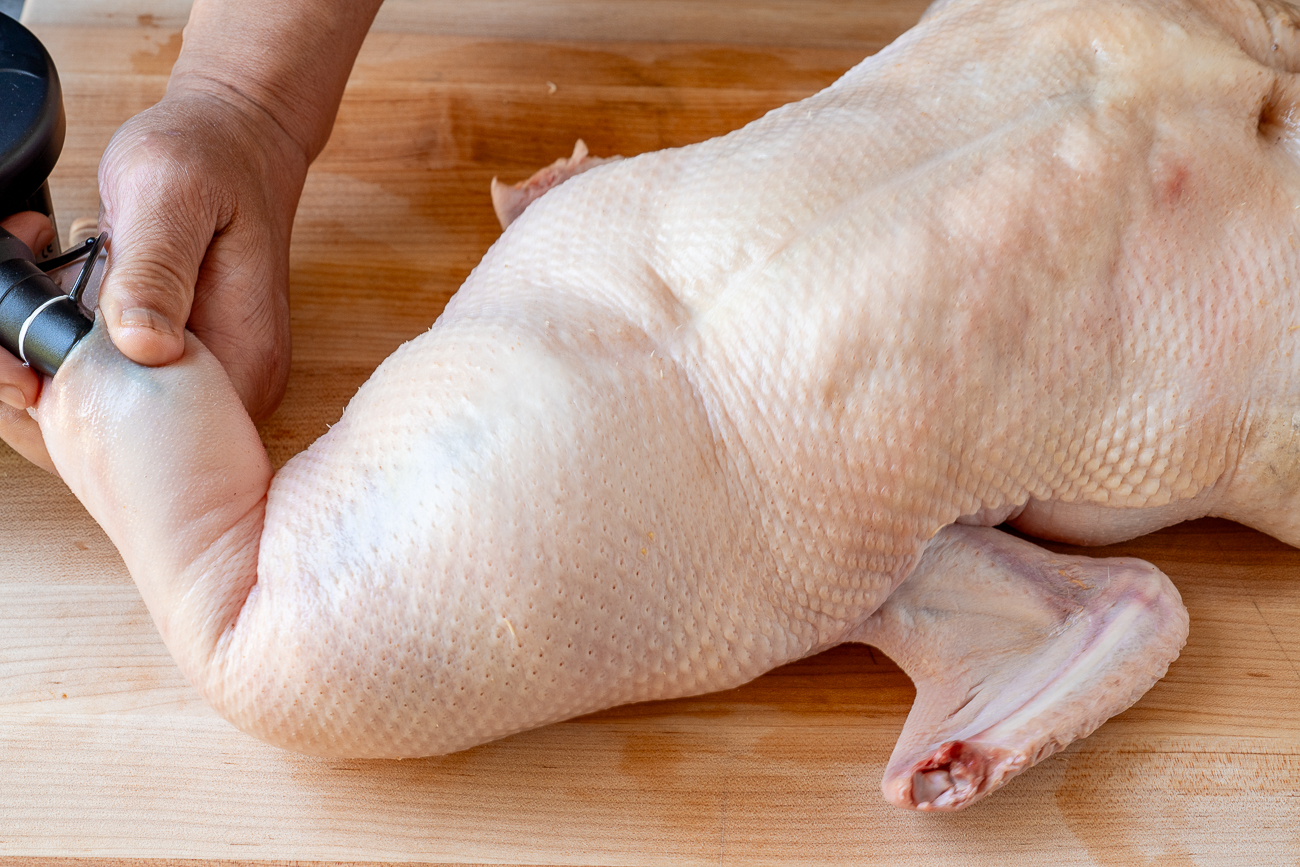
Step 13: Use a clean air pump with clean tubing suitable for contact with food. Insert the tube through the neck opening between skin and meat, and close your hand around the neck and tube to form a tight seal. If the neck opening is too wide, partially close it with skewers or twine before inserting the tube.
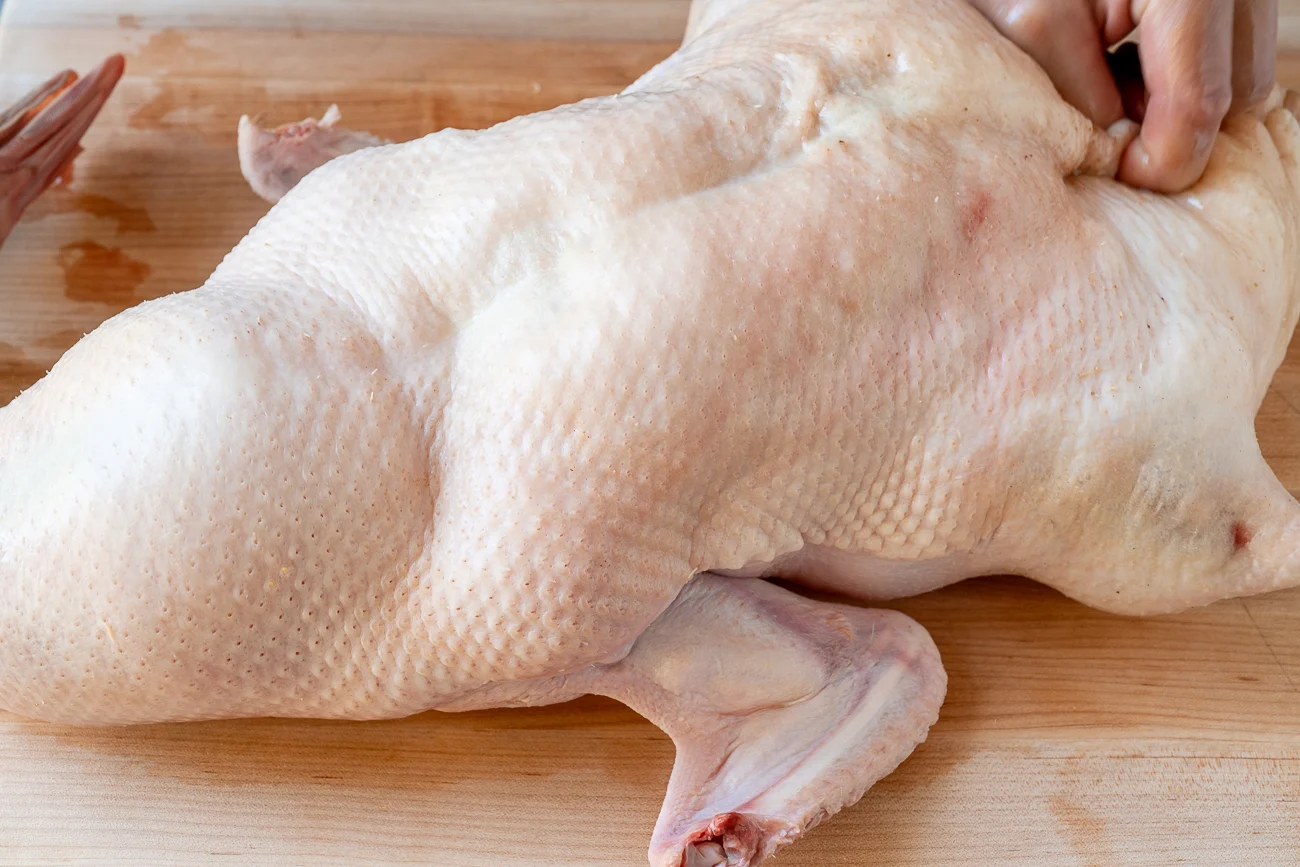
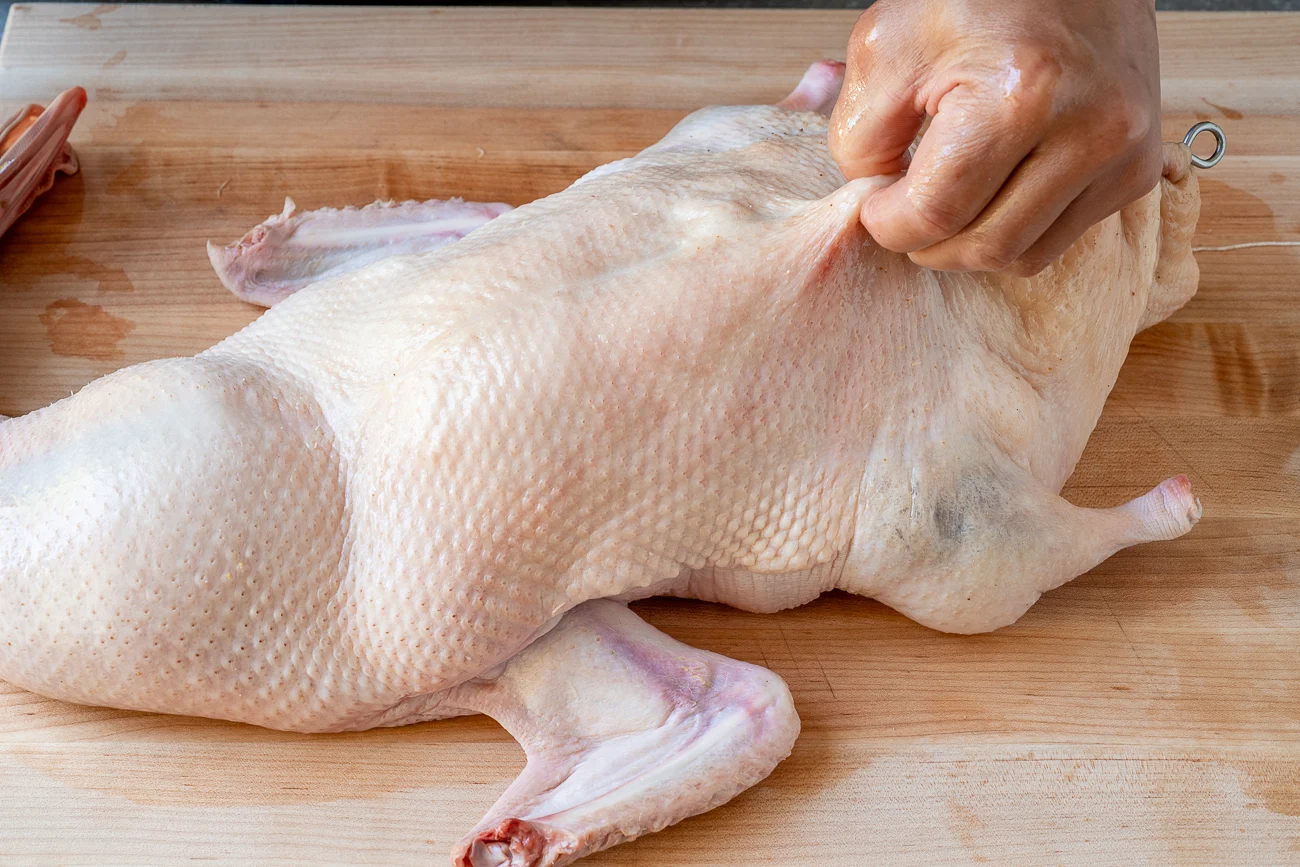
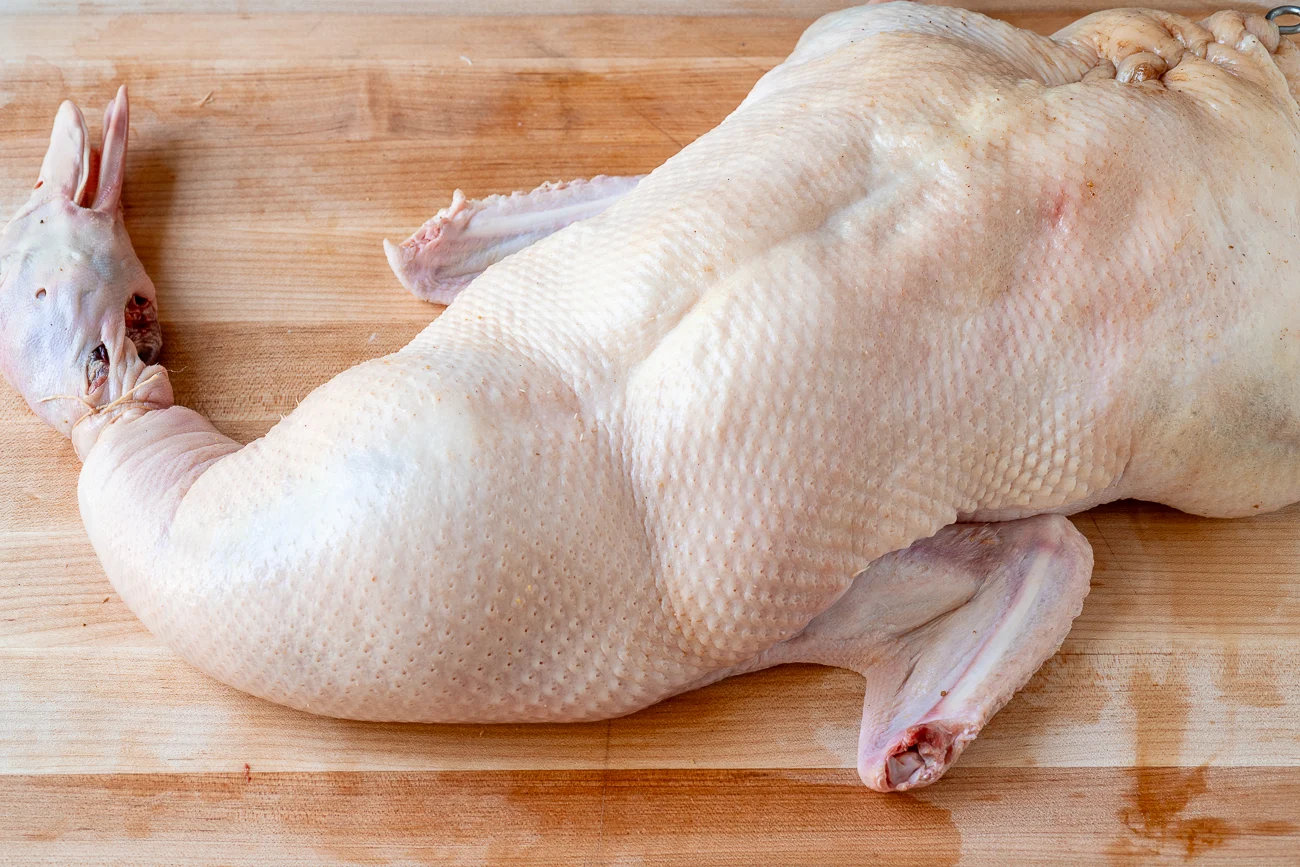
Step 14: Pump air under the skin until it visibly separates from the meat down to the drumsticks. Maintain the tight neck seal so the duck stays inflated.
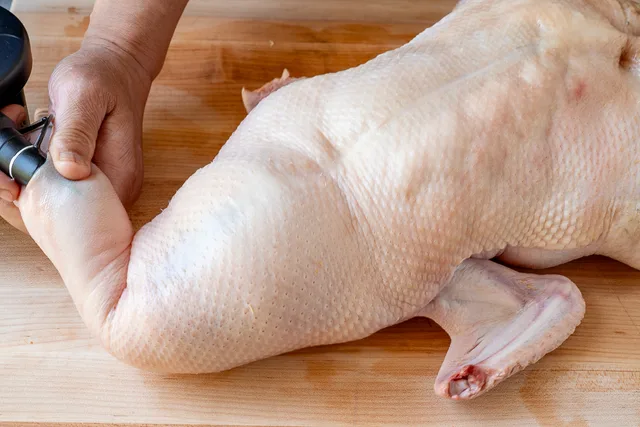
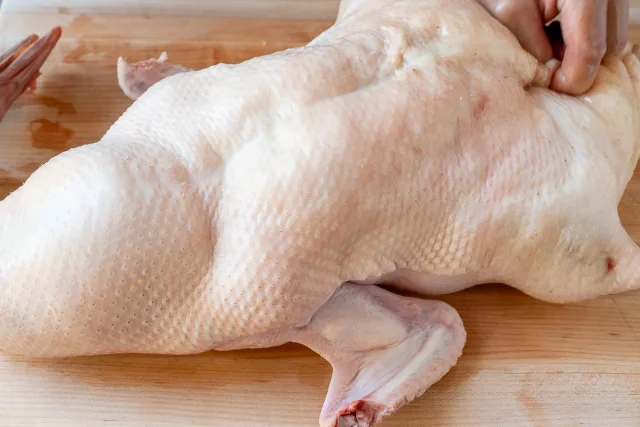
Step 15: If the cavity seal opens, hold it shut while inflating. Gently lift skin that remains attached, especially around the breast, and reinflate. Turn the duck over and repeat until the skin is separated on both sides.
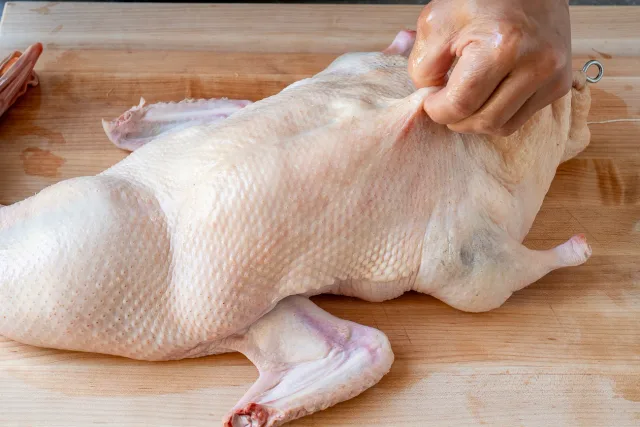
Step 16: With the pump still running, use a 6–8 inch (15–20 cm) length of kitchen string to tie the neck tightly and trap as much air as possible. Remove the tube once the neck is tied.
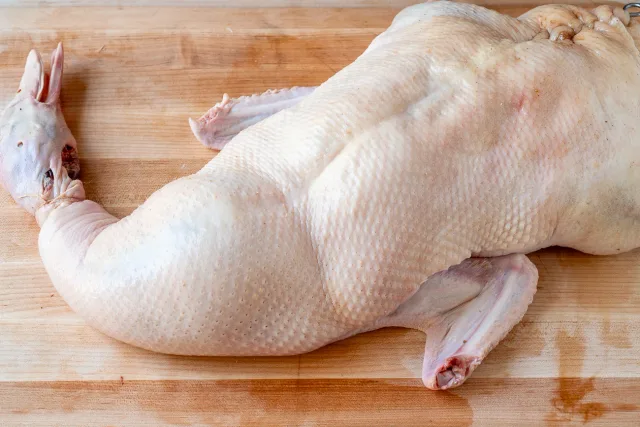
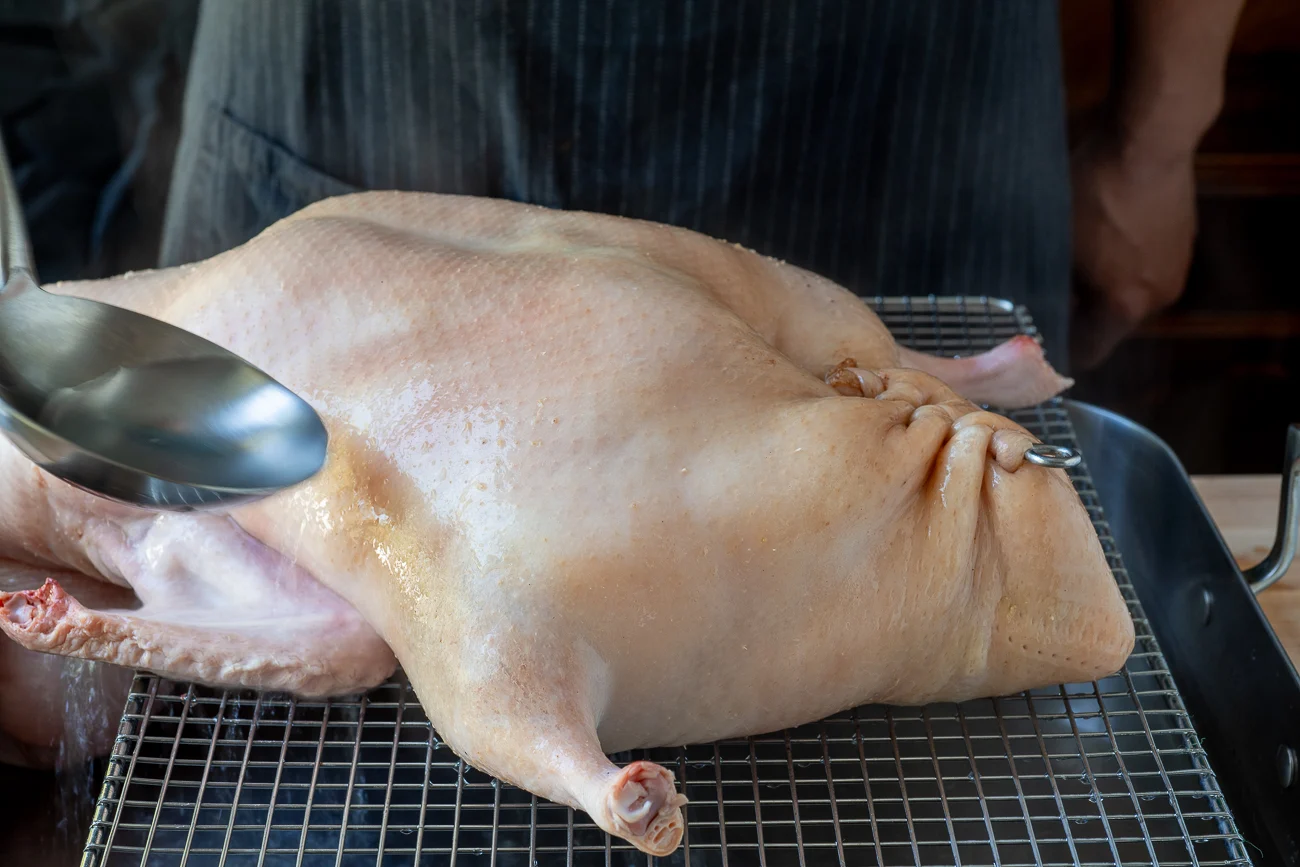
Step 17: Bring 4 cups from the bath-water supply to a full boil, then turn off the heat. Set the duck on a rack over a deep roasting pan or wok. Carefully ladle half the boiled water over one side to shrink the skin, turn the duck and pour the remaining half over the other side. Move the duck to a tray and discard this water.
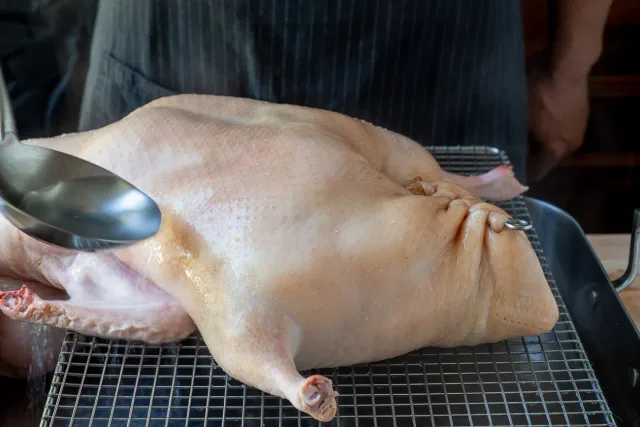
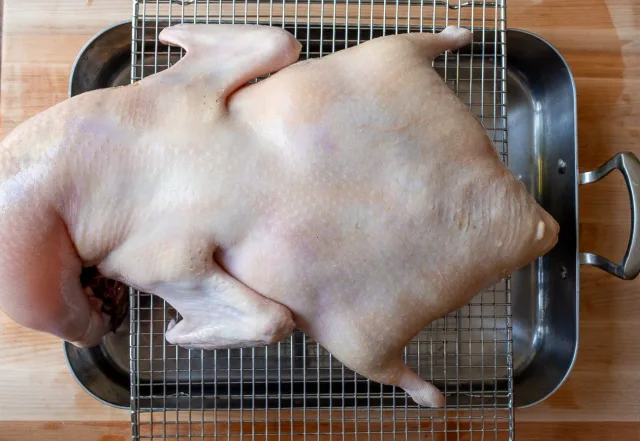
Step 18: Combine the remaining 2 cups bath water, 3 tbsp Chinese red vinegar, 2 tbsp maltose and the separate 1½ tsp bath salt in a saucepan. Bring to a simmer, stirring until the maltose and salt dissolve, then remove from the heat.
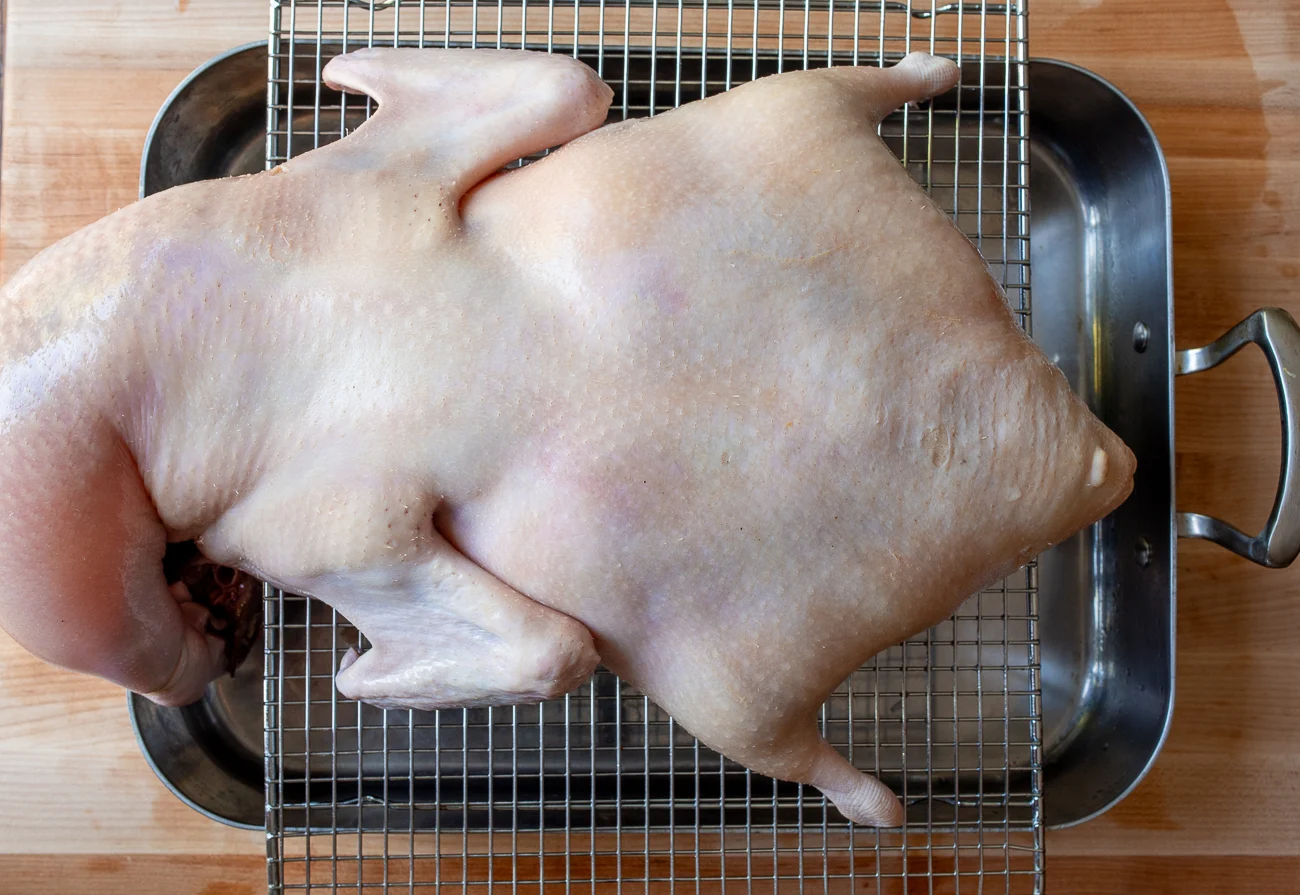
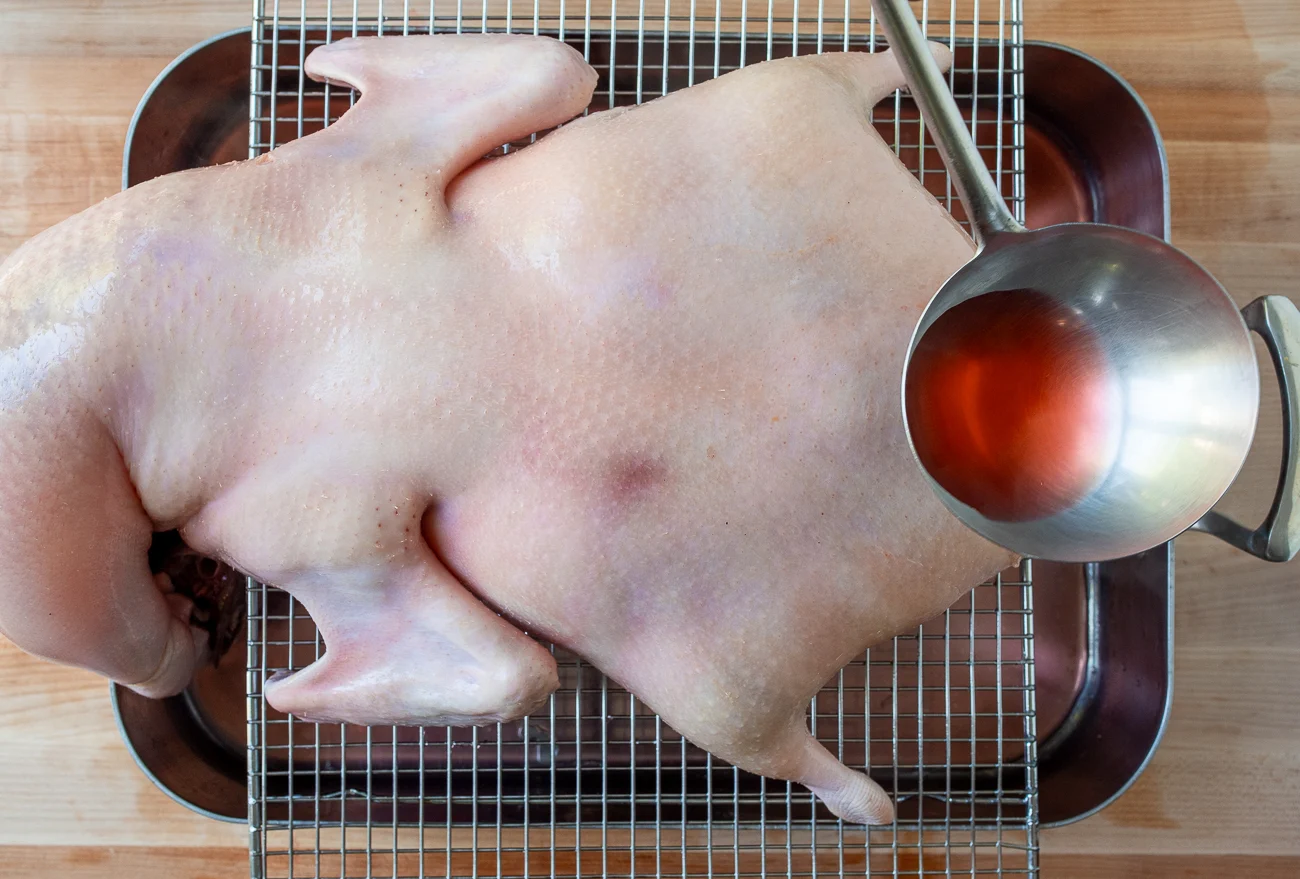
Step 19: Place the duck breast side down on the rack over the empty catch pan. Carefully ladle all the hot vinegar bath evenly over the exposed skin, catching the runoff below.
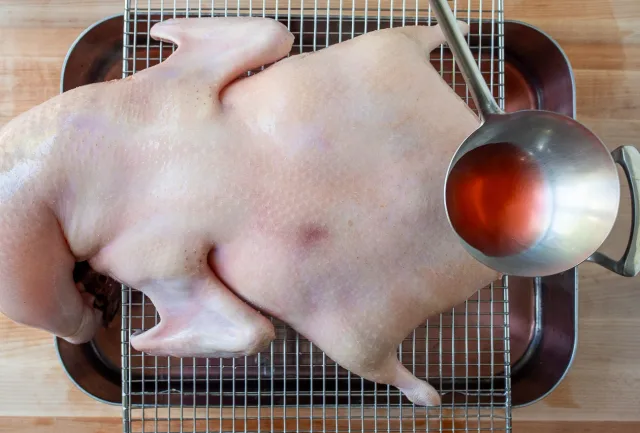
Step 20: Set the duck briefly on its tray and collect the caught vinegar solution into a bowl. Return the duck to the rack breast side up and ladle that same solution over all the remaining exposed skin. Discard the spent bath after both sides are coated; it is not a serving sauce.
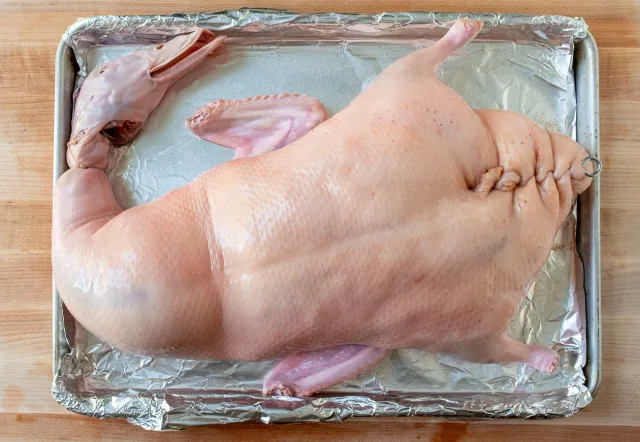
Step 21: Let the coated duck air-dry for 30 minutes, keeping it away from ready-to-eat food. Keep preparation brief and return the raw duck to the refrigerator during pauses; in a hot kitchen, do this drying stage in the refrigerator.
Step 22: Place the duck breast side down on a clean dry tray and refrigerate overnight, uncovered, until the skin is dry. Keep it below ready-to-eat food so raw juices cannot drip onto other food.
Step 23: Keep the dried duck in the refrigerator while preparing and preheating the oven. Take it out only when ready to set up the roasting pan and put it into the hot oven.
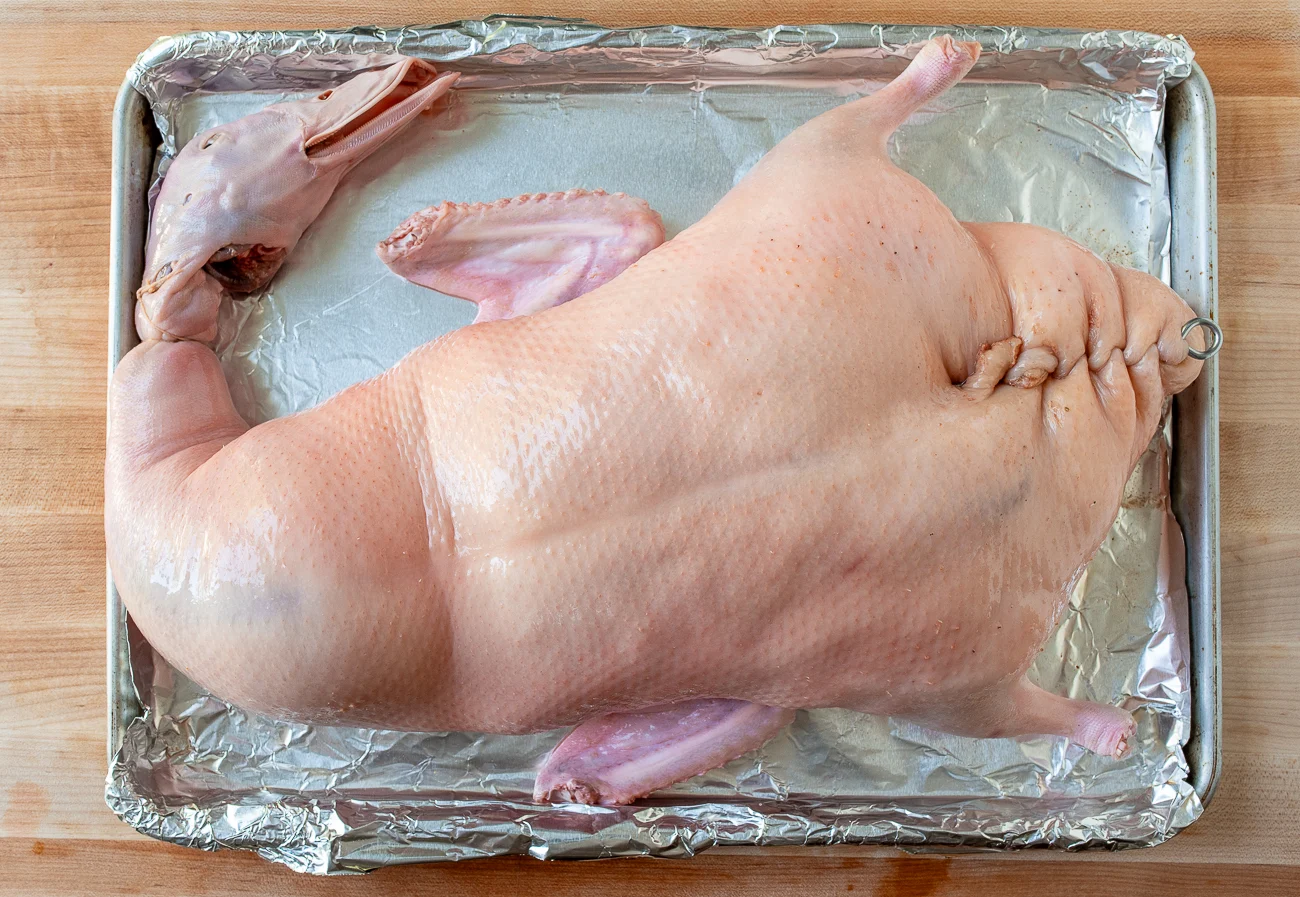
Step 24: Position the oven rack centrally and preheat to 175°C/350°F. Line a deep roasting pan with heavy-duty foil and fit a roasting rack. Set the duck breast side down on the rack and wipe off any marinade leaked onto its skin. Add the separate ½ cup hot roasting-pan water below the rack, then put the duck straight into the hot oven.
Step 25: Roast breast side down at 175°C/350°F for 25 minutes, then rotate the pan for the next roasting phase.
Step 26: Rotate the pan 180 degrees and continue roasting breast side down for another 25 minutes. The skin should begin to colour evenly reddish brown. Use clean heat-resistant gloves or suitable utensils to turn the duck breast side up without tearing the skin.
Step 27: Roast breast side up at 175°C/350°F for 20 minutes, then rotate the pan before the final roasting phase.
Step 28: Rotate the pan 180 degrees and roast breast side up for another 20 minutes. Check the thickest breast, innermost thigh and cavity filling with a clean thermometer, avoiding bone. Continue roasting until each reaches at least 74°C/165°F and the skin is evenly dark golden brown. Shield areas that brown too quickly with foil.
Step 29: Once the duck and cavity filling have reached 74°C/165°F, lift the duck onto a clean board or tray, tent loosely with foil and rest for 20 minutes.
Step 30: After the 20-minute rest, remove all cavity-sealing skewers or twine carefully. Pour the fat and juices into a fat separator. Separate the fat and strain the juices into a saucepan. Bring the strained serving juices to a full boil before serving. Keep the cooked duck ready for carving; cool any separately reserved rendered fat promptly and refrigerate it.
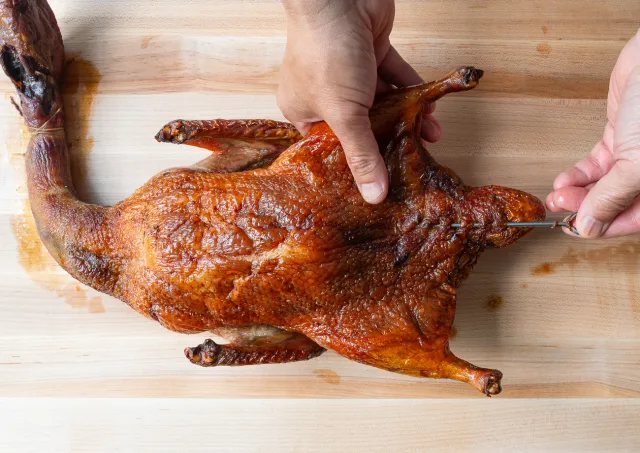
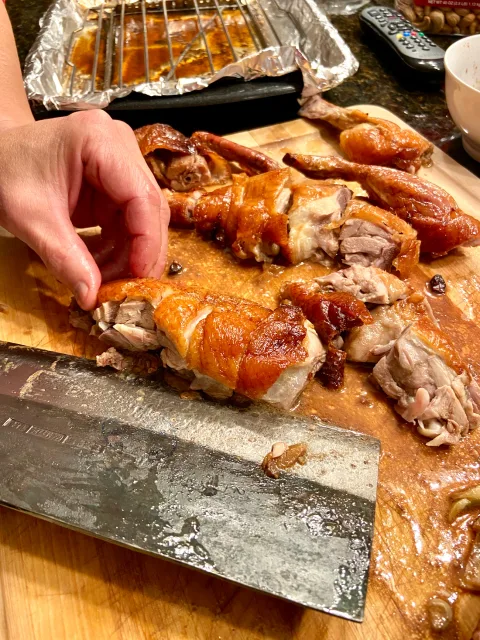
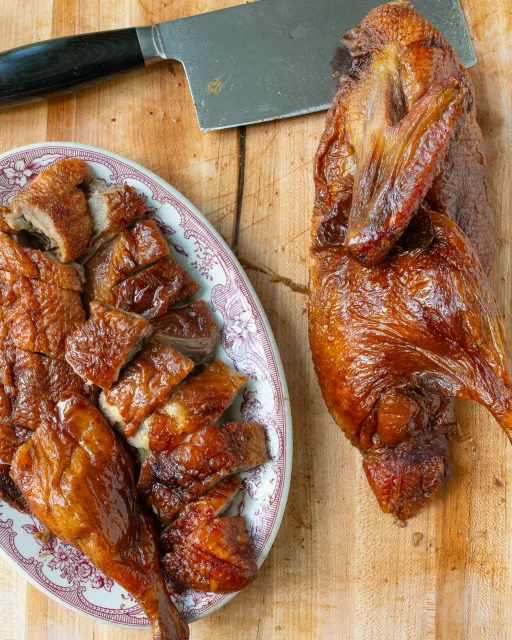
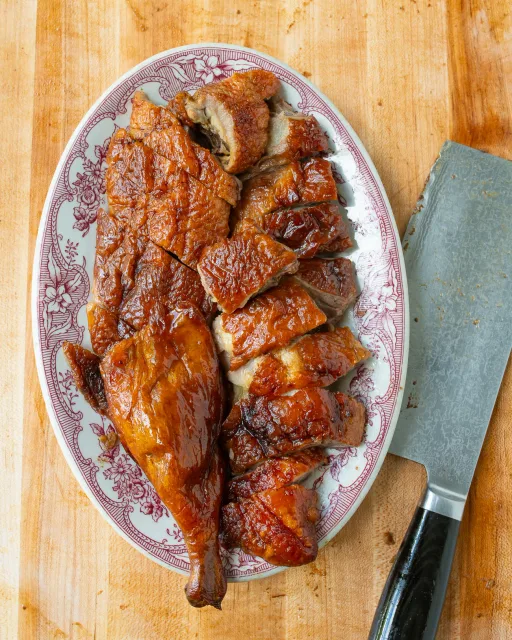
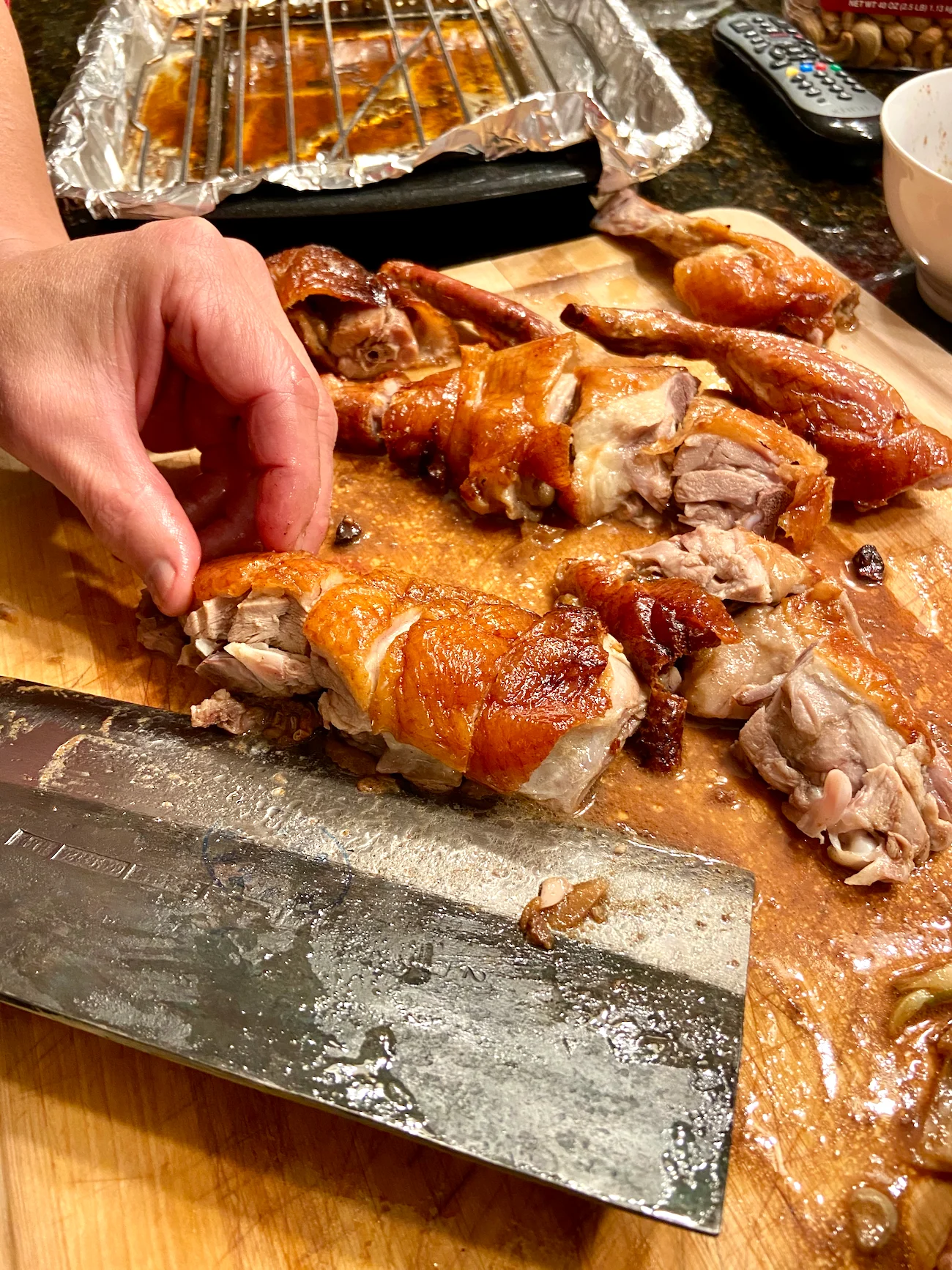
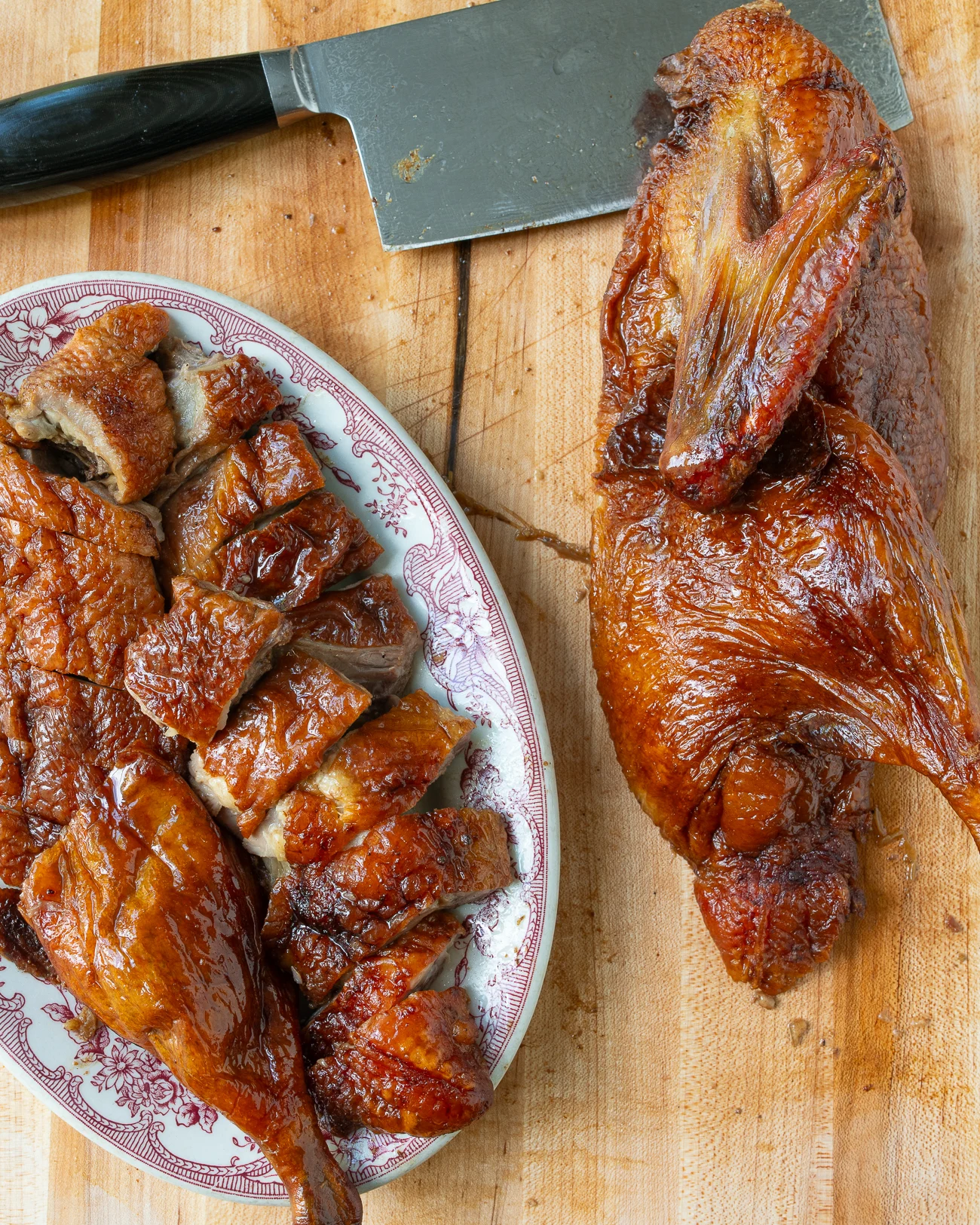
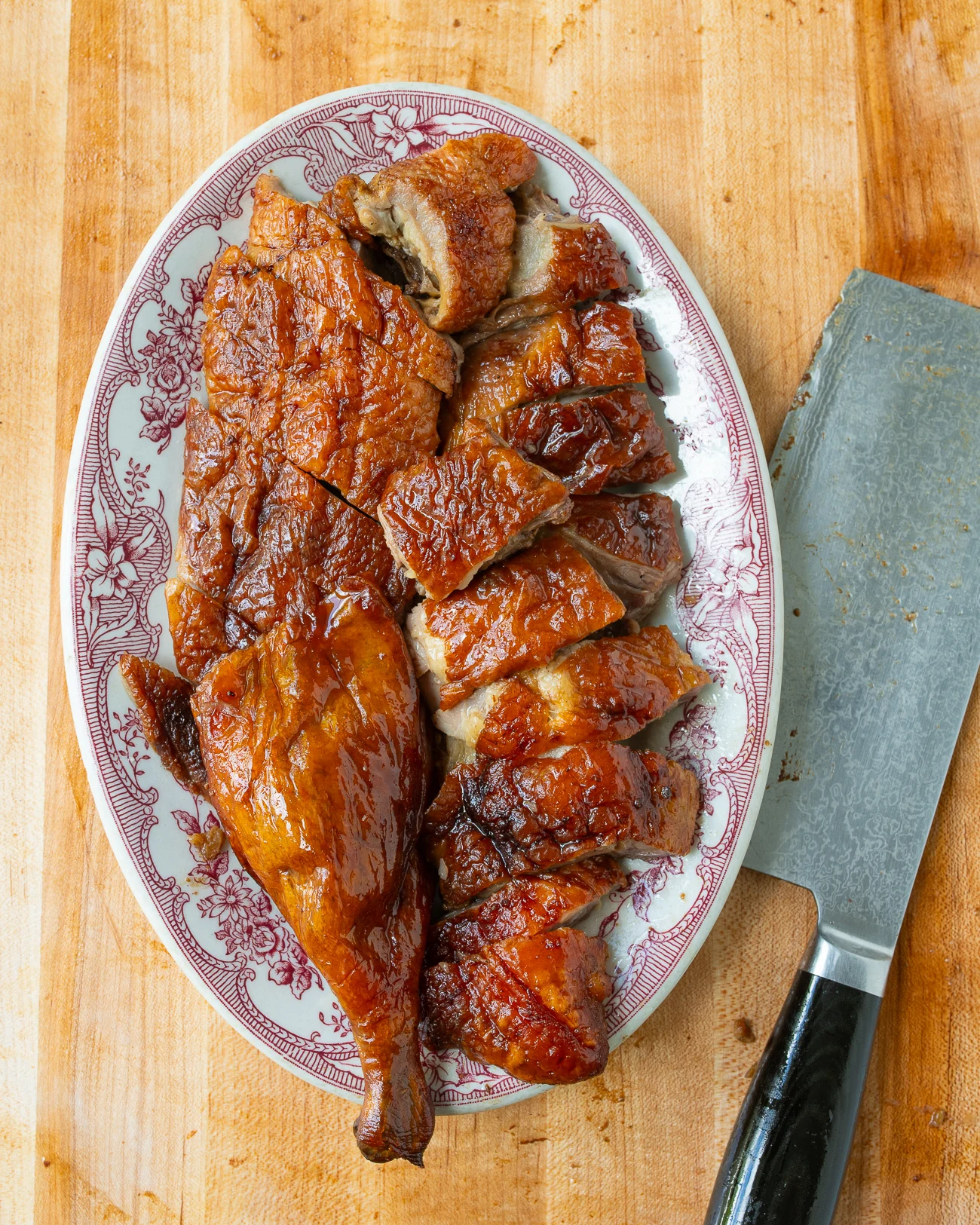
Step 31: Remove the neck string and any remaining skewers. Halve the duck lengthwise along one side of the backbone and discard the cavity aromatics. Cut along the other side to remove the backbone, separate wings and leg quarters, then chop or carve the duck into serving pieces. Serve the six portions with the boiled strained juices on the side. Refrigerate cooked leftovers promptly in shallow containers.
Photos (1)
Comments
0 threadsSign in to join the discussion.
No comments yet. Start the discussion.