
Japanese · Side
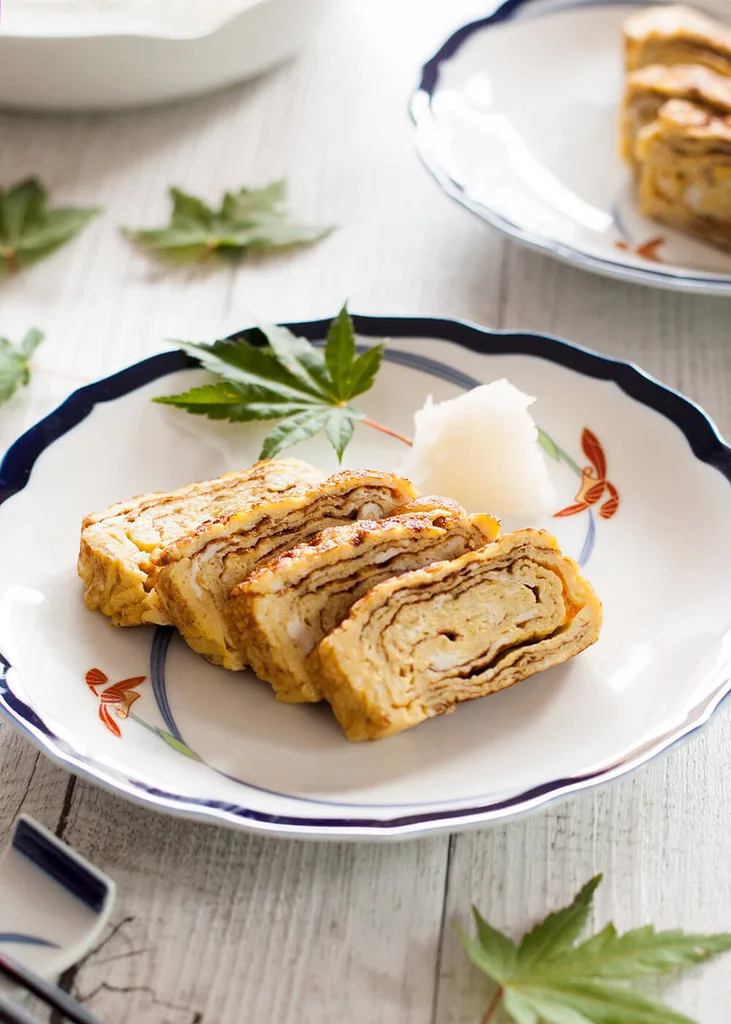
Dashimaki Tamago (Japanese Rolled Omelette)
From the zcook collection
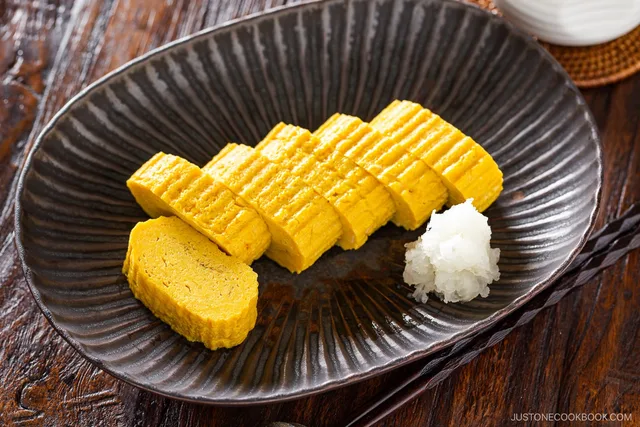
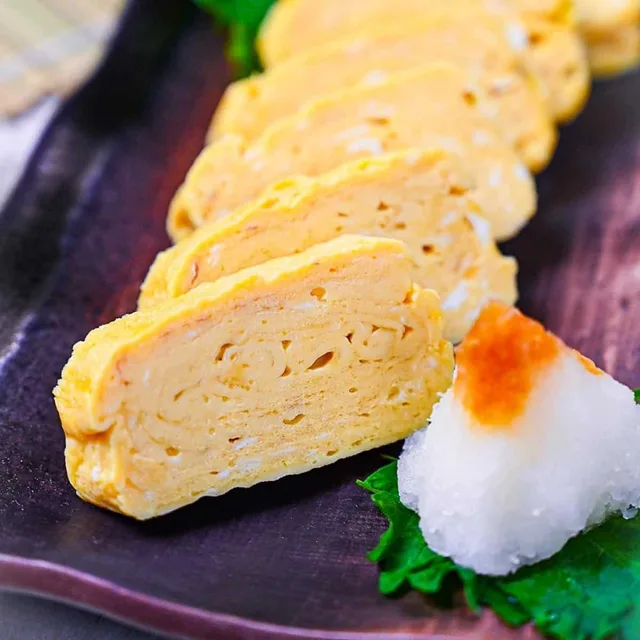
A gently sweet Japanese rolled omelette made from thin layers of egg and dashi, with optional grated daikon. A round non-stick pan or rectangular tamagoyaki pan can be used.
- Dairy-free
- Japanese
- Side
- Total
- 20 min
- Prep
- 5 min
- Cook
- 15 min
- Serves
- 2 servings
- Level
- Medium
Method13 steps · about 20 min
Step 1: Gently beat the four small eggs in a bowl or large measuring cup. Move chopsticks or a fork sideways to break up the whites without whipping in excessive air.
Step 2: Add the prepared dashi, light soy sauce (½ tbsp), sake (½ tbsp) and sugar (2 tsp) to the beaten eggs. Mix gently until the sugar dissolves.
Step 3: Put the 1½ tbsp oil in a small bowl and use a folded paper towel to apply a thin film to a non-stick round frying pan or tamagoyaki pan. Heat over medium-low to medium heat, keeping the oil and towel for later layers. A tiny drop of egg should sizzle gently; lower the heat if it cooks instantly.
Step 4: Pour about one fifth of the original egg mixture into the heated pan, covering the bottom in a thin layer. It should start cooking gently and form some bubbles. With a smaller pan, use smaller pours to keep the layers thin.
Step 5: Poke any large bubbles with chopsticks or the edge of a spatula to flatten the egg layer.
Step 6: When the surface begins to dry but is still partly wet, fold the two rounded sides inwards if using a round pan. Starting at the far edge, lift and fold a strip about 1.5 cm wide towards you with a spatula to begin the roll.
Step 7: Continue rolling the rest of this layer around the first fold until the roll reaches the edge nearest you.
Step 8: Use the spatula to even the width of the first roll, pressing gently if its surface is uneven.
Step 9: Use the reserved oiled paper towel to wipe a thin film of oil on the far side of the pan. Slide the roll there, then lightly wipe the rest of the exposed pan.
Step 10: Pour another fifth of the original egg mixture into the exposed pan. Lift the roll slightly so fresh mixture runs beneath it, rather than pouring it over the roll.
Step 11: Flatten large bubbles, let the new layer partly set, fold its rounded sides inwards if needed, and roll it around the existing roll towards you. Shape evenly, wipe the exposed pan lightly and move the roll back. Repeat with the remaining egg mixture in thin pours until it is all used, finishing by shaping the roll. Continue gently cooking until the centre is set and reaches 71°C / 160°F on a food thermometer.
Step 12: Transfer the cooked roll to a cutting board. If needed, shape it while hot through baking paper, or wrap it gently in a sushi rolling mat to round the corners. Slice or dice it and divide between two serving plates.
Step 13: If using the daikon (2 tbsp) garnish, squeeze out its excess water and place it beside the omelette slices. Serve.
Photos (1)
Comments
0 threadsSign in to join the discussion.

No comments yet. Start the discussion.