
Singaporean · Dinner
Hainanese Chicken Rice
From the zcook collection
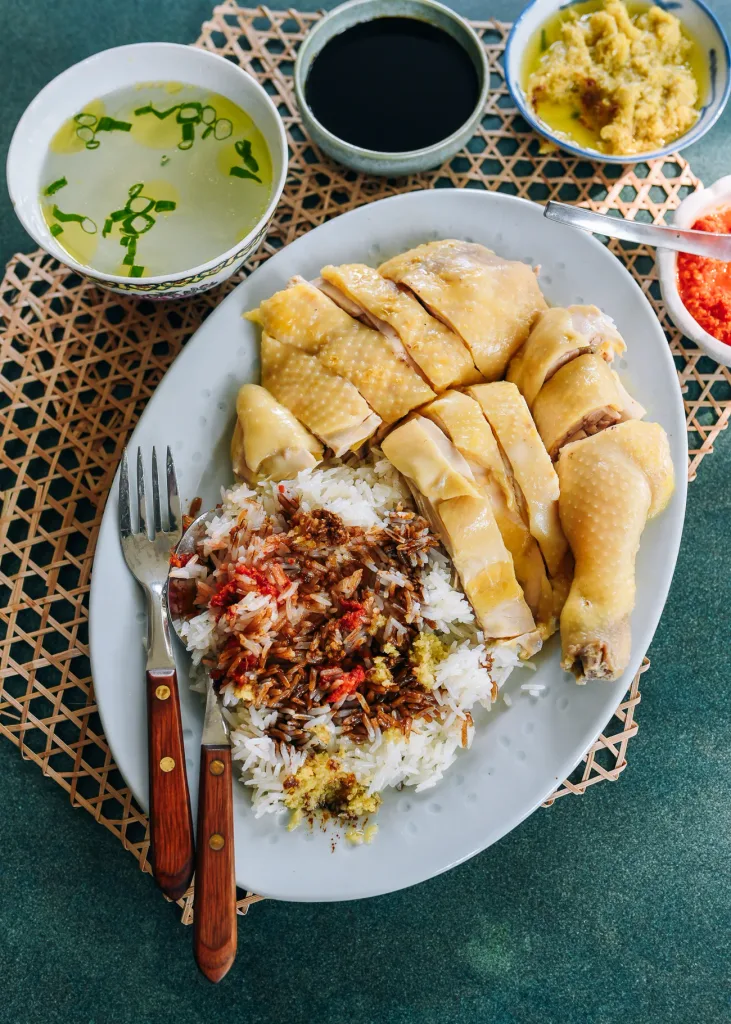
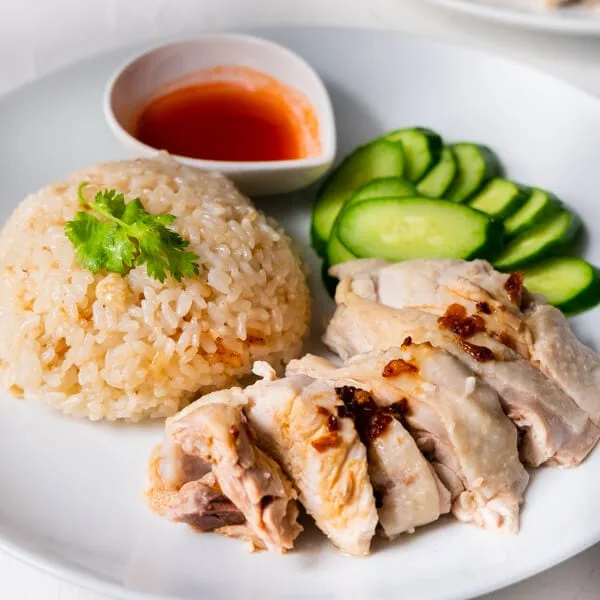
Gently poached whole chicken with jasmine rice cooked in its broth, served with ginger-garlic, sweet dark soy and chili sauces. This version uses the stovetop rice route.
- Dairy-free
- Spicy
- Singaporean
- Rice
- Chicken
- Prep
- 30 min
- Serves
- 6 portions of chicken, rice and sauces
- Level
- Hard
- Energy
- 746 kcal
Method18 steps
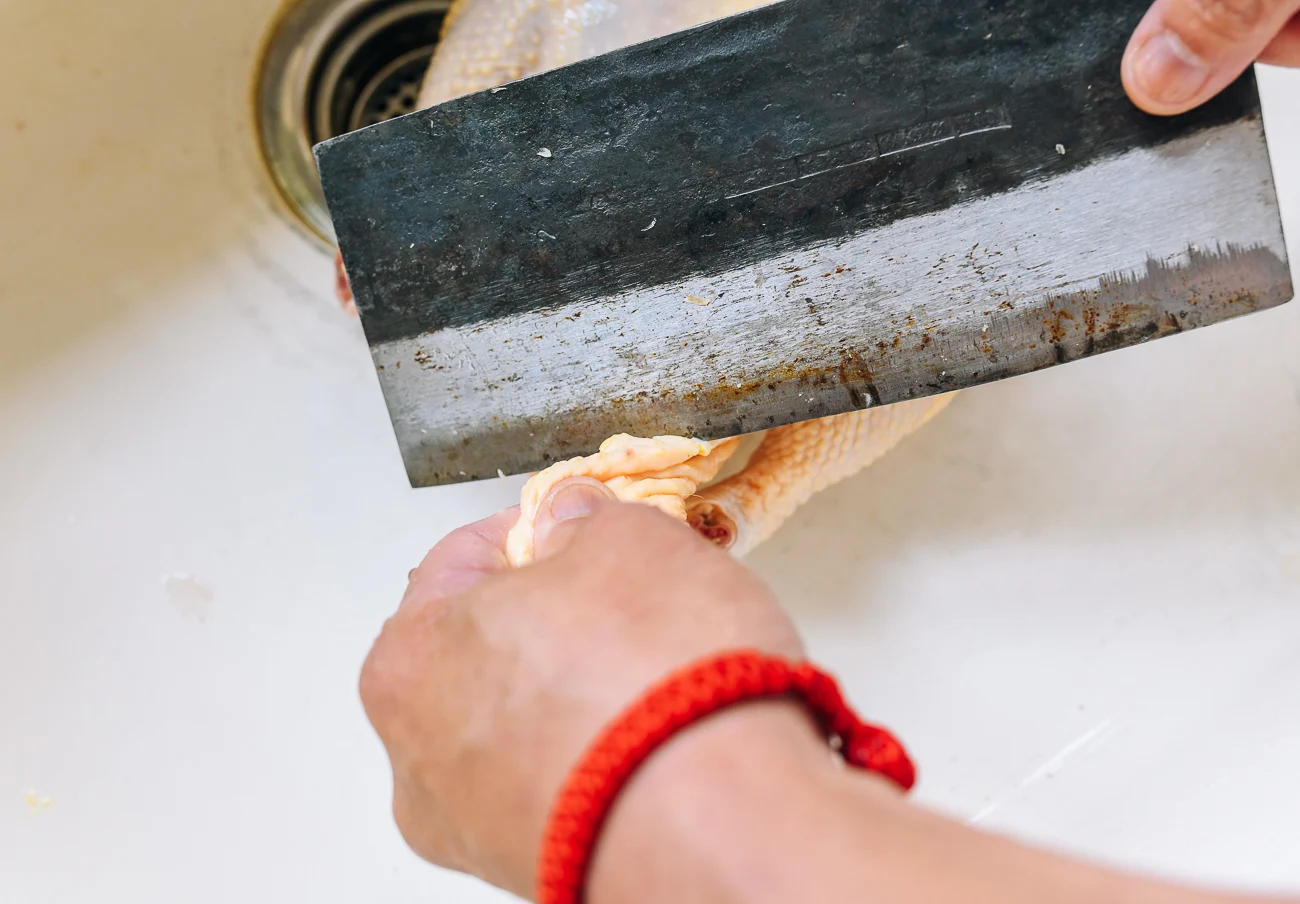
Step 1: Trim the whole 3–3½ lb chicken without rinsing raw poultry. Remove and reserve 2 oz cavity fat for the rice, then pat the chicken dry and rub it with all 1 tbsp salt. Keep the reserved fat chilled until rendering. Before heating, mince the rice garlic, roughly chop the sauce ginger and garlic, and have the sauce seasonings ready. Wash the 3 cups raw jasmine rice with clean water and drain, discarding the wash water.
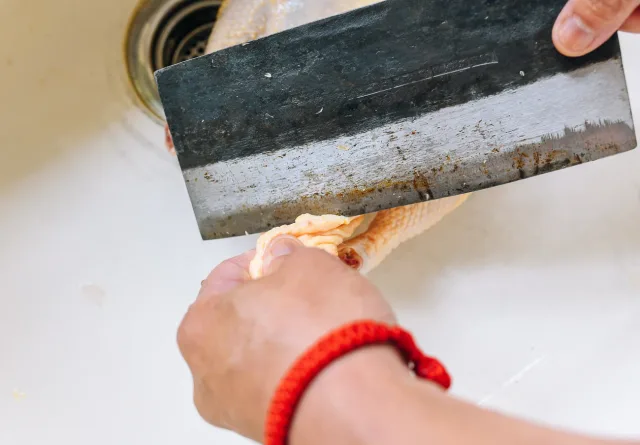
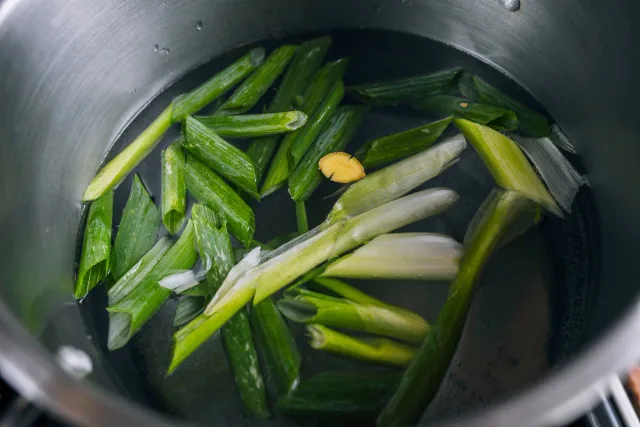
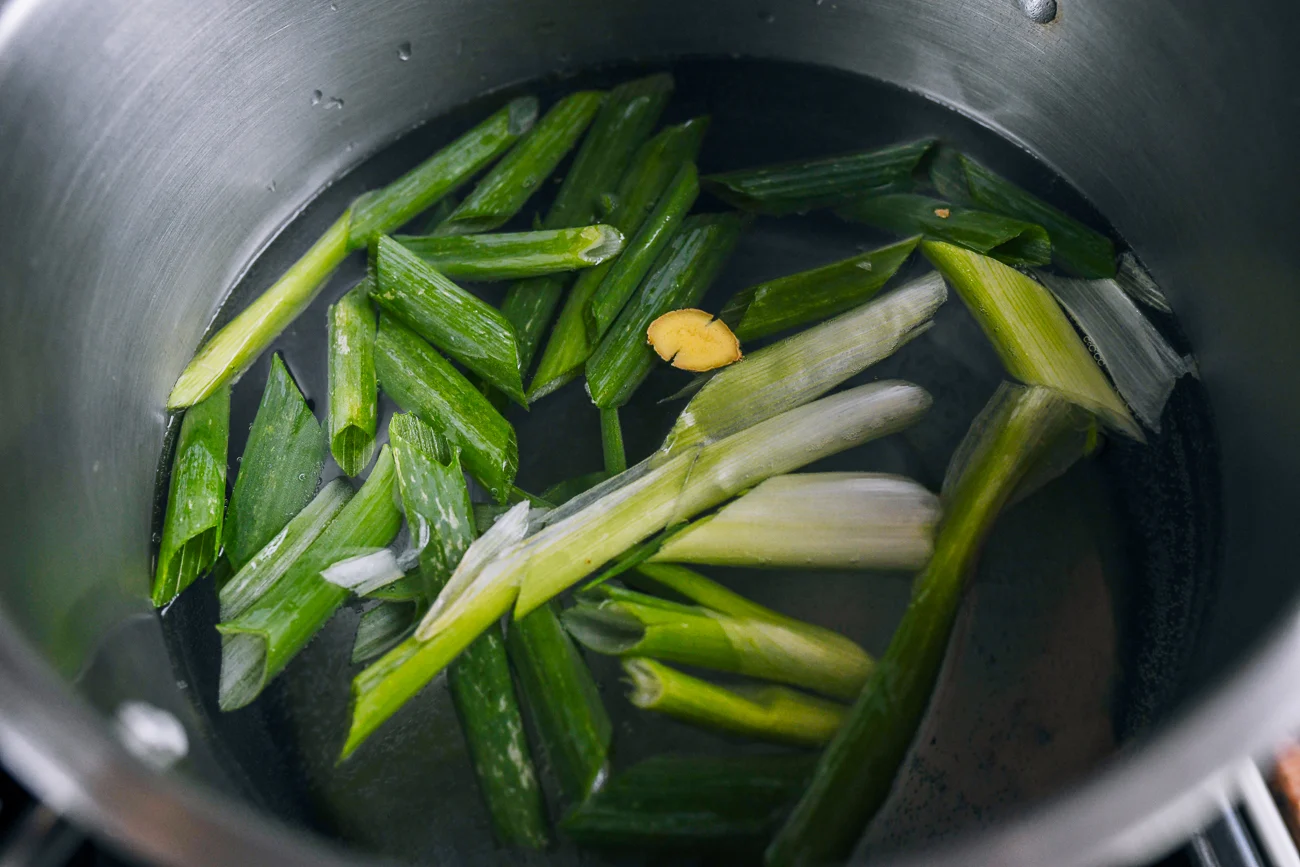
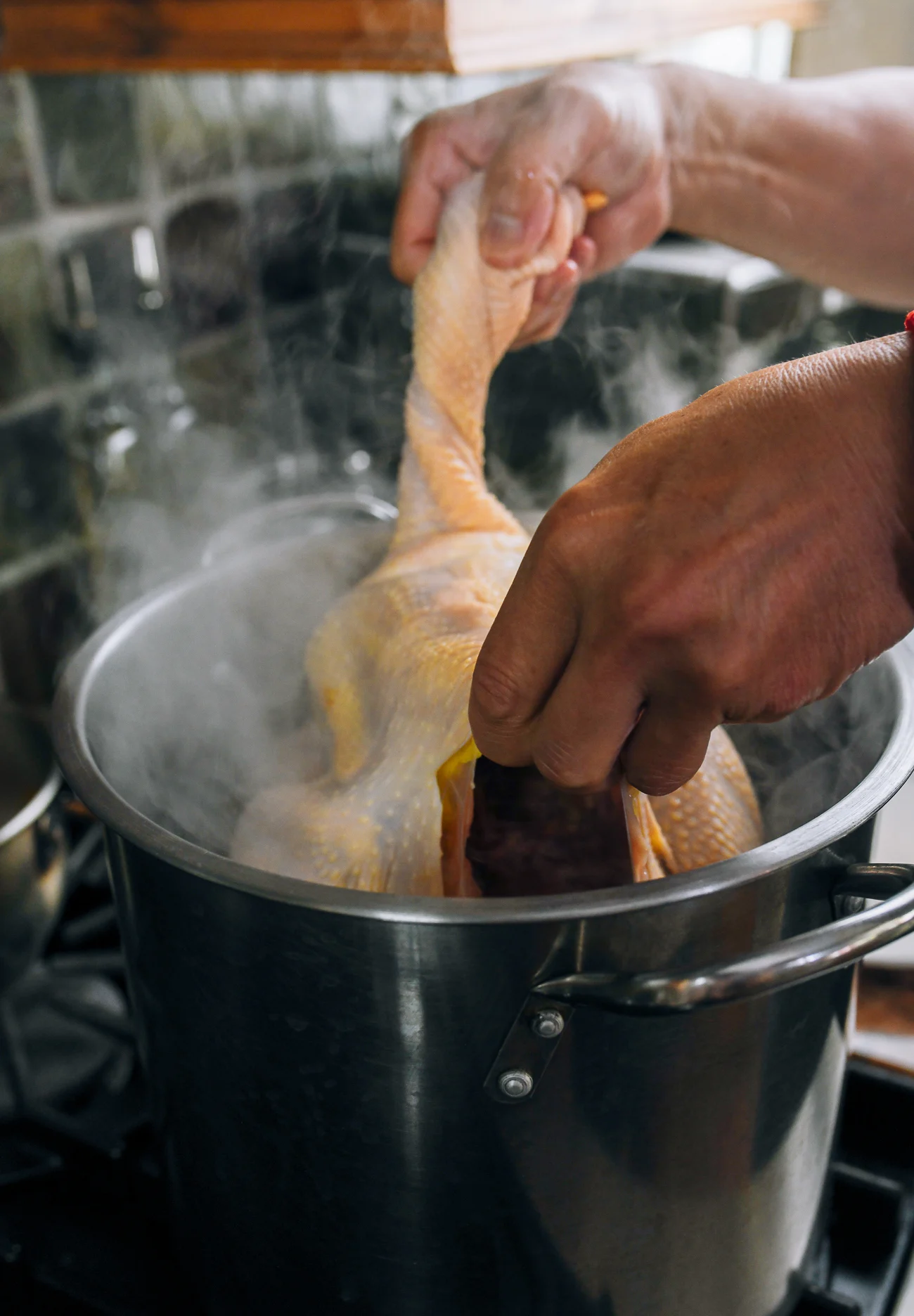
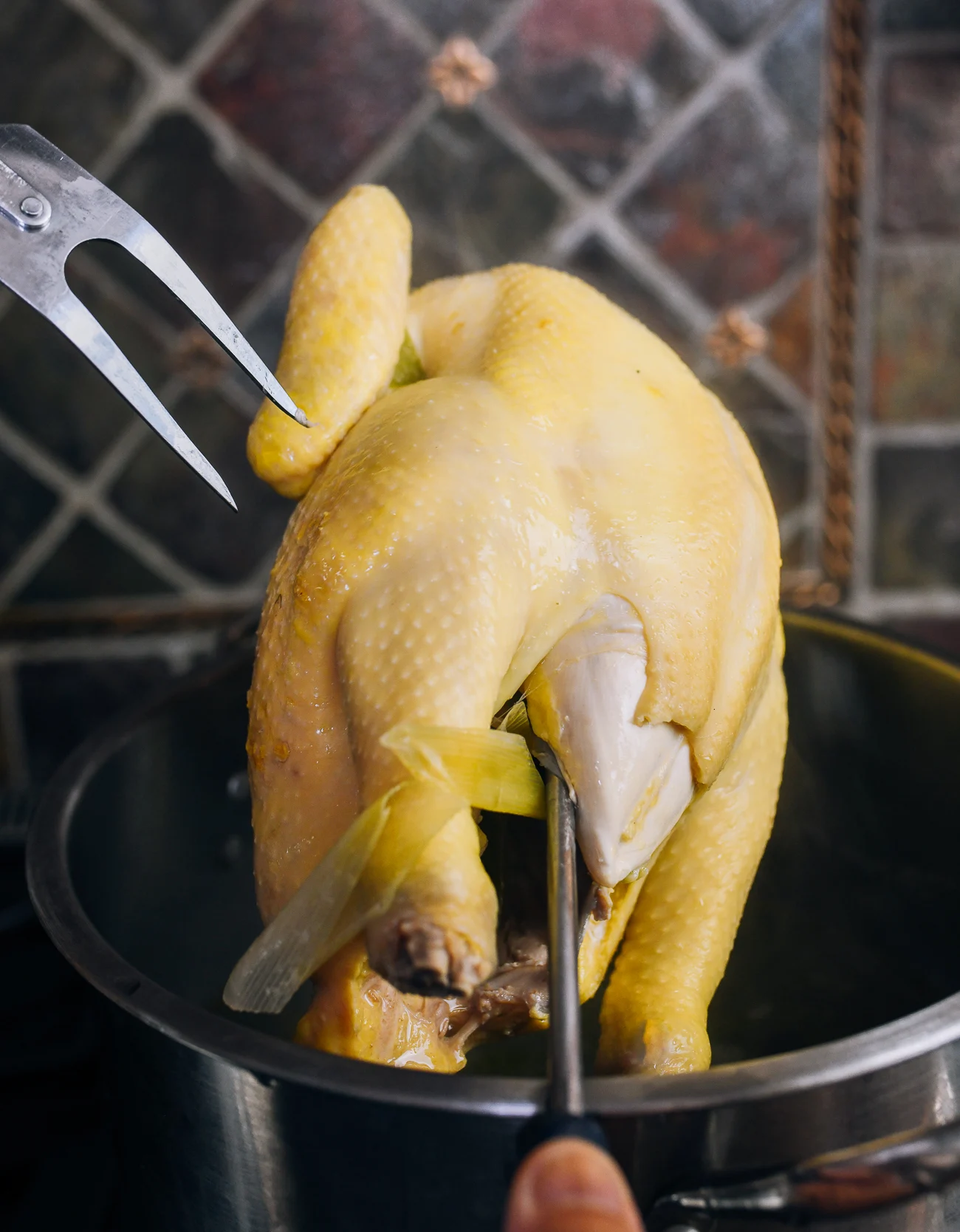
Step 2: Bring the 12–14 cups poaching water, 4–5 ginger slices and 2 whole scallions to a boil in a large stockpot. Carefully lower the prepared chicken from step 1 into the boiling water breast-side up. Adjust the water level, using optional top-up water only if needed, so the breast just rises above it.
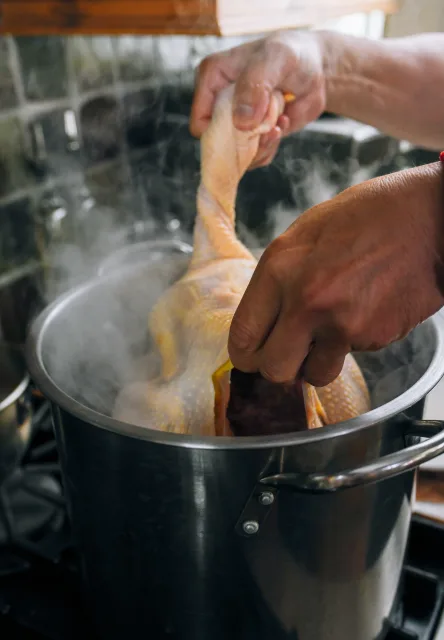
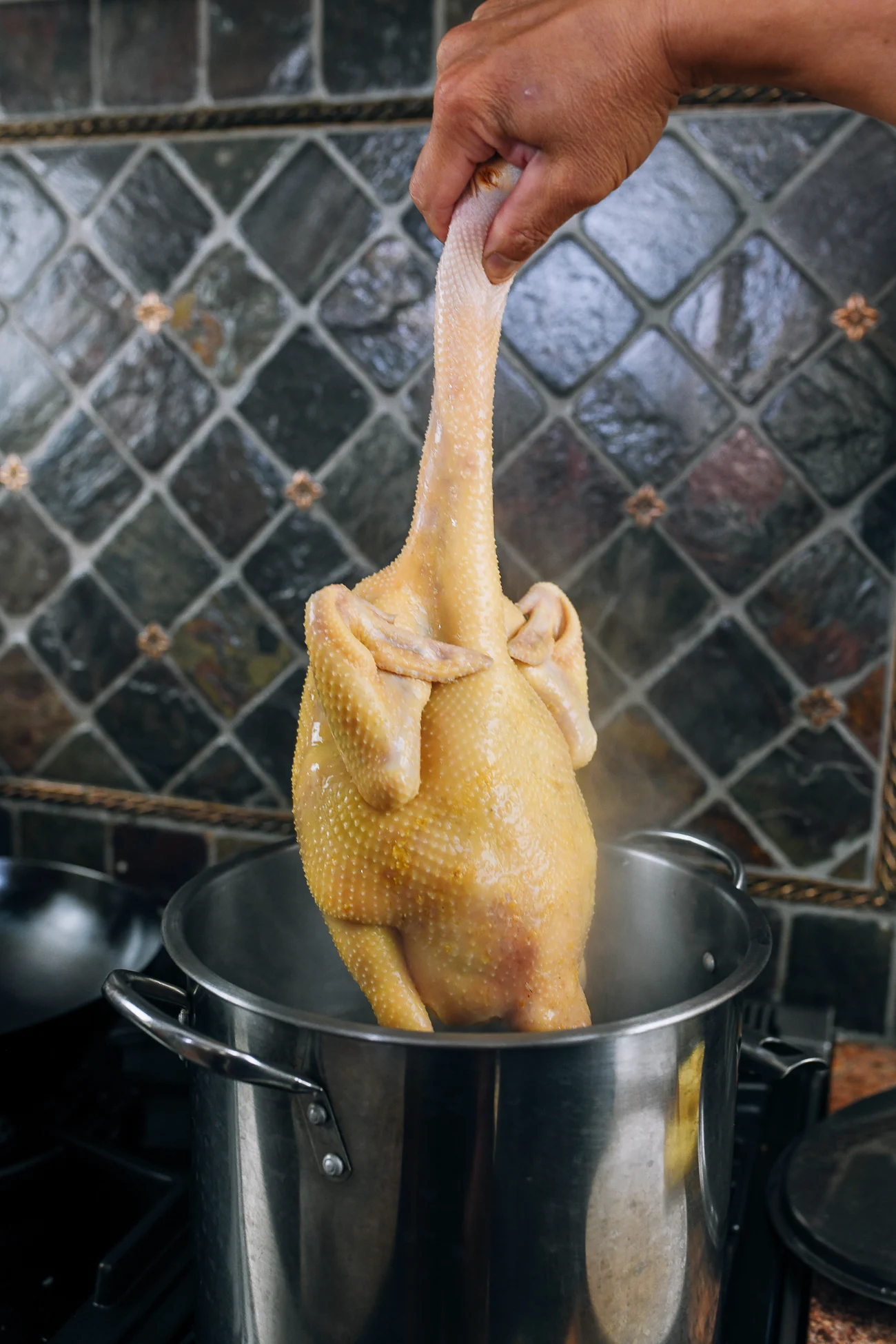
Step 3: Let the chicken pot from step 2 return to a boil. Carefully lift the bird so the cooler water drains from its cavity, then return it to the pot. When the water just starts boiling again, reduce the heat to a very gentle simmer with slight movement in the water. Cover and maintain that gentle simmer.
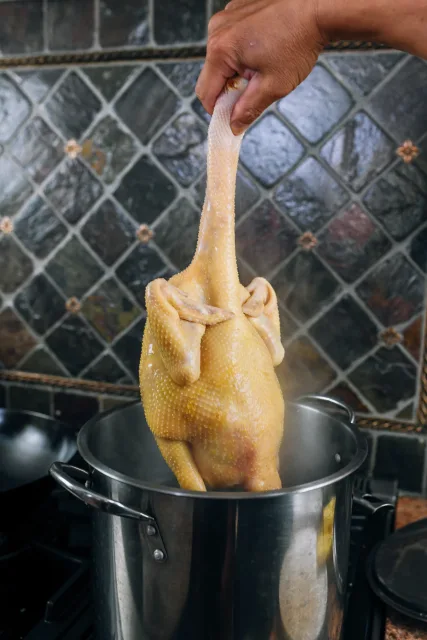
Step 4: Gently poach the covered chicken from step 3 for about 30–35 minutes for this 3–3½ lb bird, checking from 30 minutes. Keep the water barely simmering rather than boiling vigorously. The guide is not a completion guarantee; check the chicken in step 5 and continue poaching if necessary.
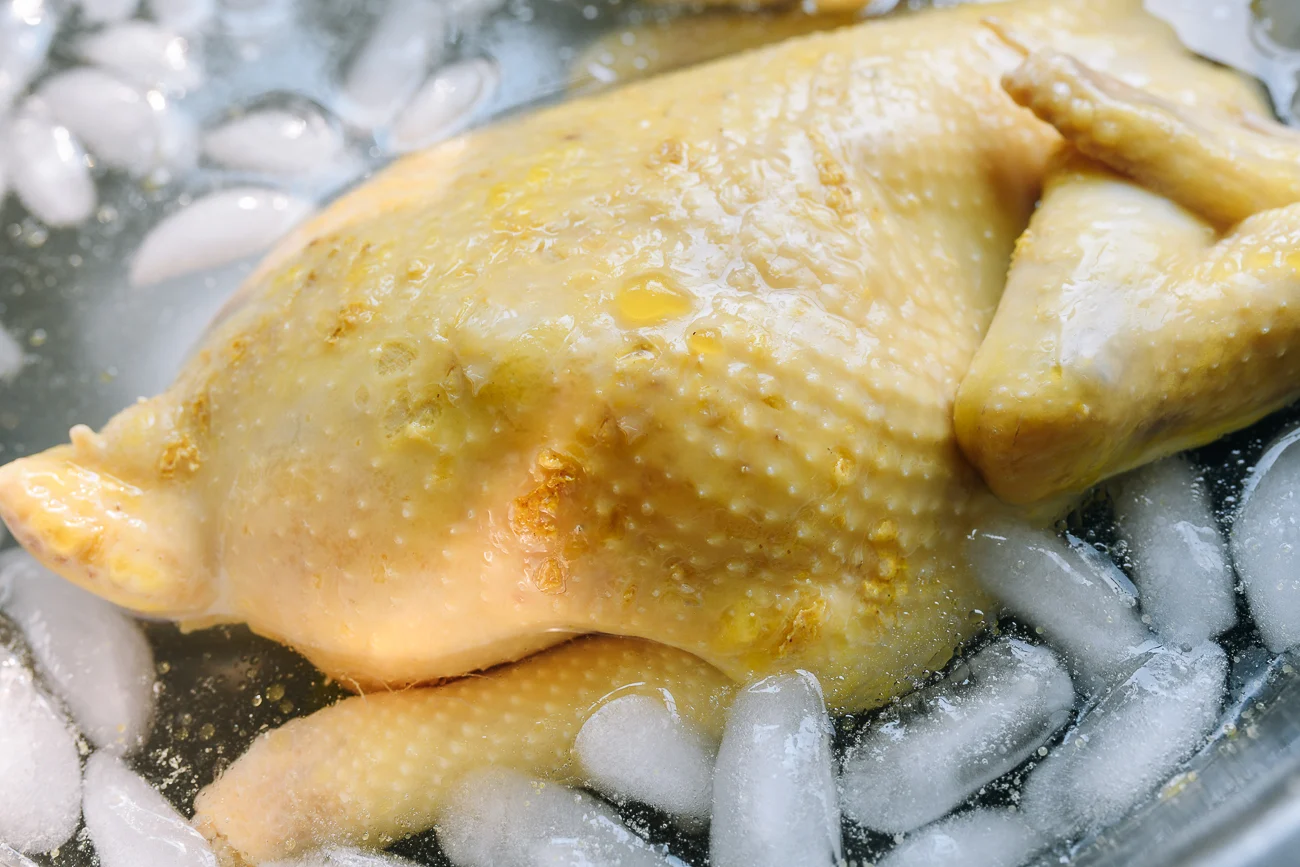
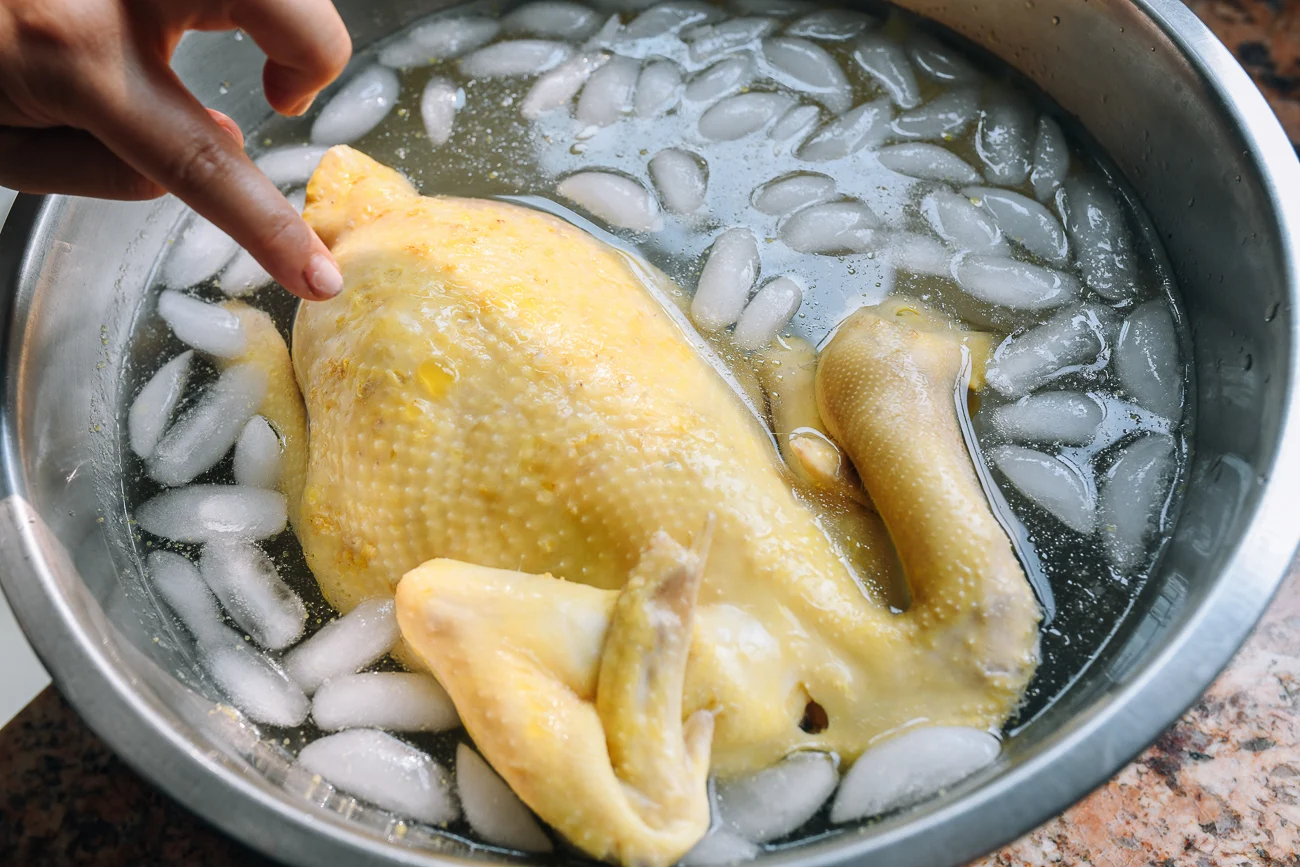
Step 5: Prepare a large clean bath of water and ice. Check the chicken from step 4 with a food thermometer in the thickest breast and thigh, away from bone; both must reach 74°C. Continue gently poaching if needed. Once fully cooked, lift the chicken, drain its cavity back into the pot, and lower it carefully into the ice bath without tearing the skin. Cool for about 15 minutes, keeping the bath cold with ice, then drain and check cooling in step 6. Keep the poaching broth from the pot in step 4 separate from the ice bath, for the rice and sauces.
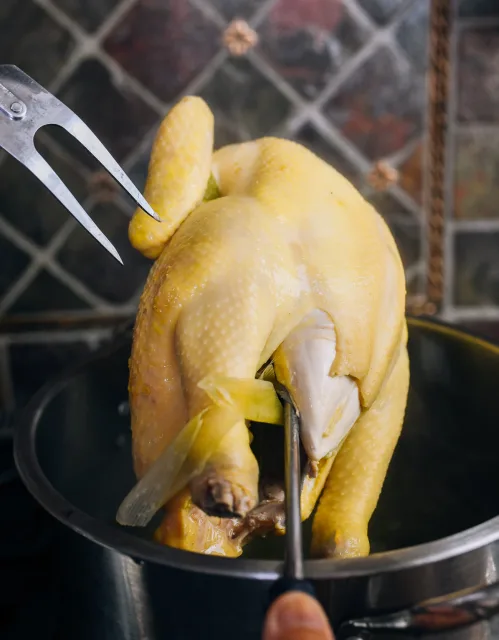
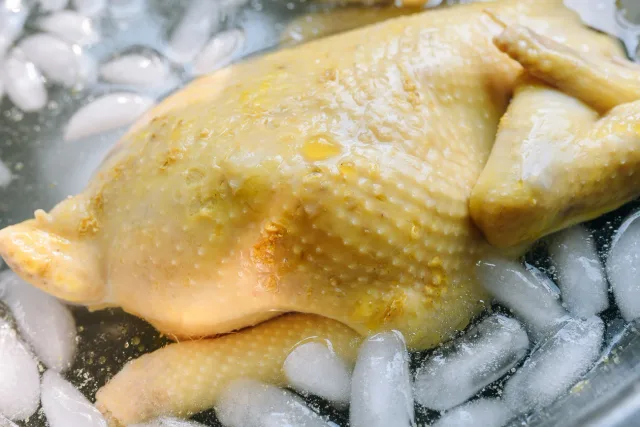
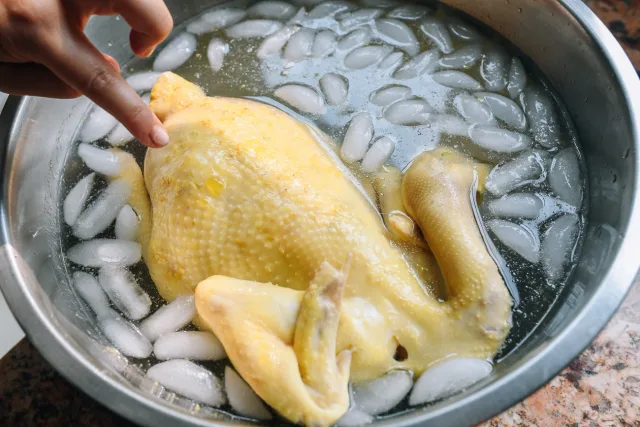
Step 6: After about 15 minutes, lift the chicken from the clean ice bath in step 5 and drain it. If still warm, continue cooling with fresh ice as needed. Cover when cooled. If it will wait while the rice and sauces are prepared, carve into smaller portions and refrigerate promptly in shallow containers; keep the cooled chicken chilled until serving and do not leave it out for more than 2 hours, or 1 hour above 32°C.
Step 7: Keep the poaching broth remaining in the pot from step 5. If a more concentrated stock is wanted, simmer it uncovered to taste; reduction is optional and has no fixed duration. Reserve enough for the measured 4-cup rice draw and the small sauce draws that follow.
Step 8: While the chicken cools, heat a wok or large skillet over medium heat. Add the reserved 2 oz cavity fat from step 1 and all 1 tsp neutral oil for rice. Cook for about 1–2 minutes, until the fat renders into a small pool; look for roughly 1 tbsp rendered fat, allowing for variation in the fat pieces.
Step 9: Stir all 4 minced garlic cloves into the rendered-fat pan from step 8. Fry briefly over medium heat until fragrant, watching closely so the garlic does not burn.
Step 10: Add all the washed and drained rice from the 3-cup raw stock in step 1 to the garlic-and-fat pan from step 9. Stir continuously over medium heat for about 2 minutes to toast the rice.
Step 11: Turn off the heat under the toasted rice from step 10. Transfer the rice with its garlic and rendered fat to a medium-large stovetop pot, leaving any remaining solid lump of cavity fat behind. Use this stovetop route for the rice.
Step 12: Add 4 cups broth drawn from the poaching pot in step 7 and all 2 tsp rice salt to the toasted rice in step 11. Stir briefly and soak for 20 minutes before bringing the pot to a boil in step 13.
Step 13: Cover the pot of soaked rice and broth from step 12 and bring it to a boil. As soon as it boils, reduce the heat to its lowest setting. Simmer covered for 15 minutes, then check that the rice is tender and the broth has been absorbed. Continue gently if needed, watching that the bottom does not burn.
Step 14: Finely mince the 4-inch piece of ginger (1 piece) and its separate 2 garlic cloves. Heat all 3 tbsp sauce oil in a small saucepan and gently fry the ginger and garlic until aromatic and lightly caramelized, with their raw sharpness gone. Stir in the pinch of sauce salt and transfer to a sauce dish. If it has become too thick, take it off the heat and stir in a little hot poaching broth from step 7 to loosen it.
Step 15: In a separate small saucepan, heat all ¼ cup sweet-sauce water with the 1¼ oz rock sugar over medium heat. Stir until the sugar dissolves and the liquid thickens into a syrup. Stir in all ¼ cup dark soy sauce and transfer to its own sauce dish.
Step 16: Finely grind the 3 red chilies with the separate 1½-inch ginger (1 piece) piece and 2 chili-sauce garlic cloves, scraping down the food processor as needed. Add all ¼ tsp sesame oil, ½ tsp chili-sauce salt, ¼ tsp chili-sauce sugar, 1 tbsp lime juice and ½ tsp rice vinegar. Pulse to combine; a mortar and pestle can also be used.
Step 17: Transfer the chili paste from step 16 to a bowl. Stir in broth from the poaching pot in step 7, 1 tbsp at a time, until it reaches the sauce consistency you want; about 2 tbsp is the author’s initial guide, but use less for a thicker paste or more as needed.
Step 18: Carve the cooled chicken from step 6 if it has not already been carved. Serve promptly with the cooked rice from step 13 and the ginger-garlic, sweet soy and chili sauces from steps 14, 15 and 17. Offer sauces to taste. If desired, heat some remaining poaching broth from step 7 to serve alongside, seasoning it with the optional salt and MSG to taste.
Photos (1)
Comments
0 threadsSign in to join the discussion.


No comments yet. Start the discussion.