
Cantonese · Side
Braised Napa Cabbage (Wong Bok) with Dried Scallop
From the zcook collection
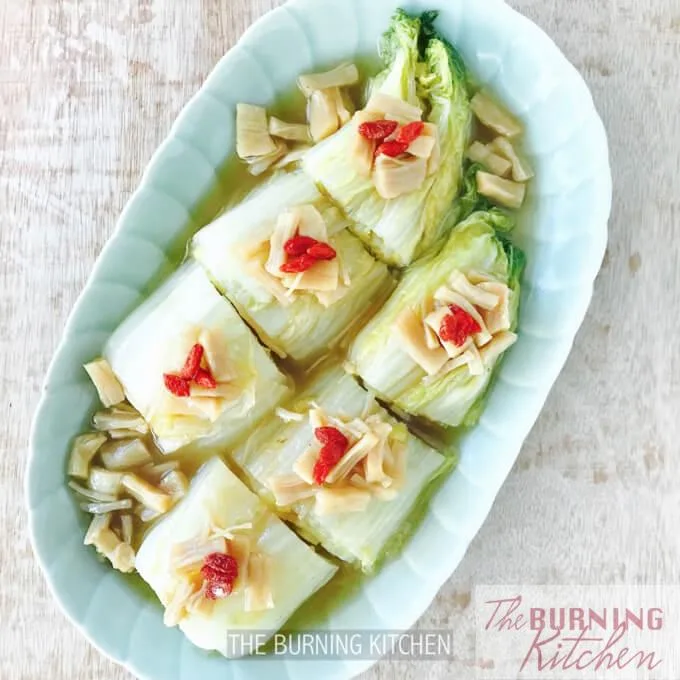
Tender napa cabbage, lightly caramelised and topped with softened dried scallops, wolfberries and a glossy oyster-sauce glaze.
- Dairy-free
- Cantonese
- Chinese
- Side
- napa cabbage
- dried scallops
- Prep
- 10 min
- Serves
- 6 side servings
- Level
- Hard
Method15 steps
Step 1: Wash the napa cabbage and drain well. Cut it in half lengthwise and place both halves, cut sides down, on a heatproof plate that fits the steamer.
Step 2: Rinse and drain the dried scallops (60–70 g). Put them in a bowl with the 300 ml boiling water and ½ tbsp Shaoxing wine. Soak for about 25 minutes; keep the scallops and all their soaking liquid for the following braise.
Step 3: Peel the quarter thumb-sized piece of ginger and slice it thinly.
Step 4: Mix the 1½ tsp cornstarch with the separate 1 tsp water into a thick paste and set aside. It will be stirred again before it goes into the hot sauce.
Step 5: Rinse the wolfberries (1 tbsp), drain well and keep them ready for the sauce finish.
Step 6: Bring the external steamer water to a boil below the plate. Put in the cabbage plate, cover and steam for about 20 minutes from steady steam, until tender. Keep the sweet liquid released on the plate separately for the glaze. Keep the base from boiling dry, adding hot water below the plate only if needed. Meanwhile, start the scallop braise in step 7 in a separate small pot.
Step 7: While the cabbage steams, transfer the soaked scallops and all their liquid to a separate small pot. Bring to a boil, then maintain a gentle medium-low simmer for about 30 minutes until the scallops are soft. Turn off the heat and keep both the cooked scallops and their broth for the separate later additions.
Step 8: Once the cabbage and scallops are ready, empty and dry the steaming wok safely, or use a separate dry wok. Heat the 2 tbsp oil over medium-high heat and fry the prepared ginger until aromatic.
Step 9: Add the two steamed cabbage halves to the fragrant ginger and oil. Fry for about 2 minutes, turning once, until lightly browned and caramelised.
Step 10: Pour in the retained scallop broth and the sweet juice collected on the cabbage plate to deglaze the wok. Simmer for about 5–10 minutes, checking from 5 minutes, until the cabbage is tender and the glaze has developed.
Step 11: Stir the 2 tbsp oyster sauce into the glaze. Taste before adding salt because the scallop broth and oyster sauce are already salty; add only what is needed from the ¼ tsp allowance.
Step 12: Lift the cabbage onto a serving plate, leaving the sauce and ginger in the wok. Cut the plated cabbage into sections about 4 cm wide.
Step 13: Add all the softened scallops to the sauce left in the wok and bring to a boil over medium heat.
Step 14: Add the rinsed wolfberries. Stir the cornstarch paste again; if needed, loosen it with a small spoonful of the hot sauce, then stir the whole paste back into the wok. Bring the sauce back to a gentle boil and stir until it thickens and loses its raw starchy appearance.
Step 15: Pour the hot scallop and wolfberry glaze over the plated cabbage and serve hot.
Photos (1)
Comments
0 threadsSign in to join the discussion.



No comments yet. Start the discussion.